Home Blog Page 130

8 Ways to Get Mentally Prepared for Any Dive

0
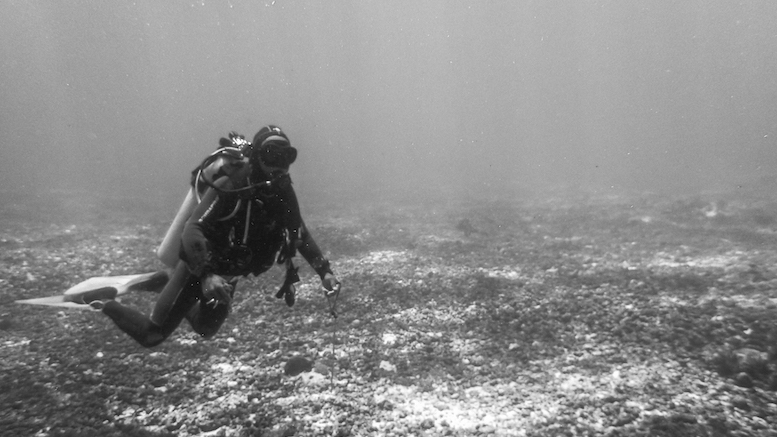
A diver at Manta Point, Komodo National Park © UW360

From fast-drift dives to going under the ice, Simon Pridmore, author of Scuba Fundamental – “Start Diving the Right Way”, offloads eight tips to getting mentally prepared before a dive:

During a scuba dive you are immersed in water – an alien environment – relying on your equipment, skills and knowledge to keep you alive. But an equally important tool that you can use to ensure that you make the most of the experience and stay safe is your attitude, your state of mind, something we can refer to as your mental conditioning. Your mental conditioning determines the level of your performance in any sport and scuba diving is no exception. We should not underestimate the degree to which our thoughts and moods affect our performance, the level of enjoyment we derive from an activity and how well we deal with the stress of an emergency.

Here are eight ways to get mentally prepared for diving:

Improve your Skills

Practice your self-rescue skills to the point where they can be performed automatically, so you know that in an emergency you will not have to think about the correct thing to do, you will just do it instinctively.

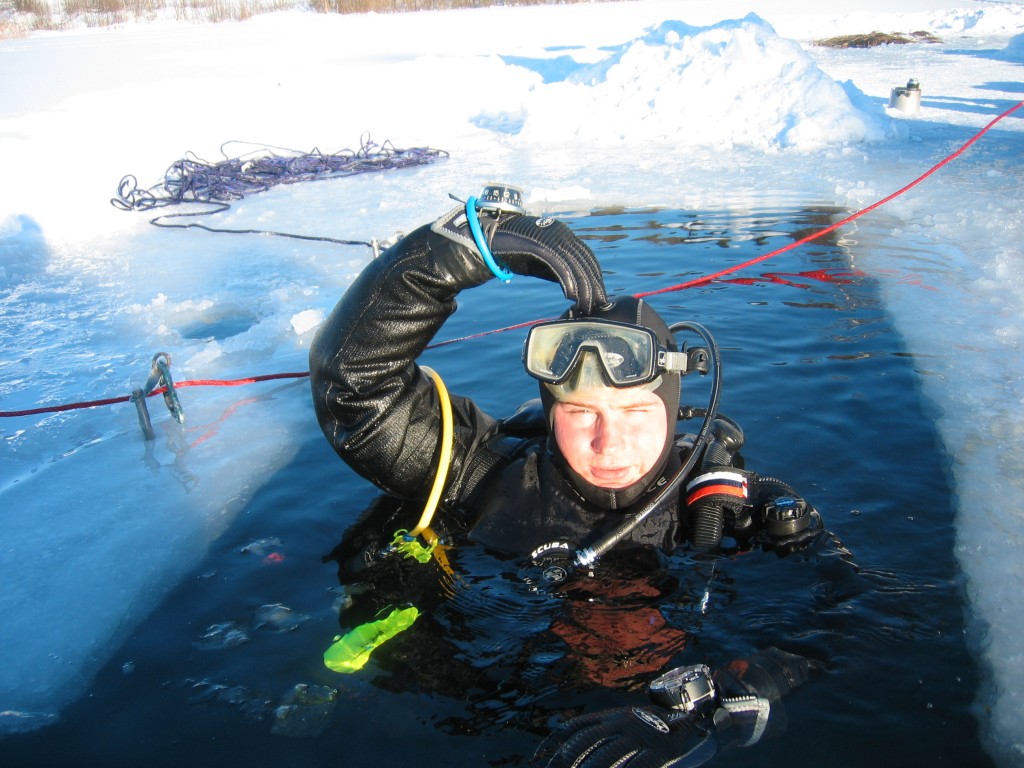
A diver signalling "Okay" during an ice dive © Wikimedia Commons
A diver signalling “Okay” during an ice dive © Wikimedia Commons

Build Water Confidence

Get more used to being surrounded by water, not just by doing more diving, although that is always a good idea. Go snorkelling, do some free-diving, swim more often, spend more time at a pool or the beach!

Be Comfortable

The tendency to panic on a scuba dive can be increased by a number of external factors, chief among which are fatigue, alcohol, cold and discomfort. So don’t drink and dive and make sure you wear enough thermal protection for the environment. Replace your wetsuit regularly; frequent exposure to pressure crushes neoprene, reducing its efficiency. A new suit does not only make you look better, it keeps you warmer.

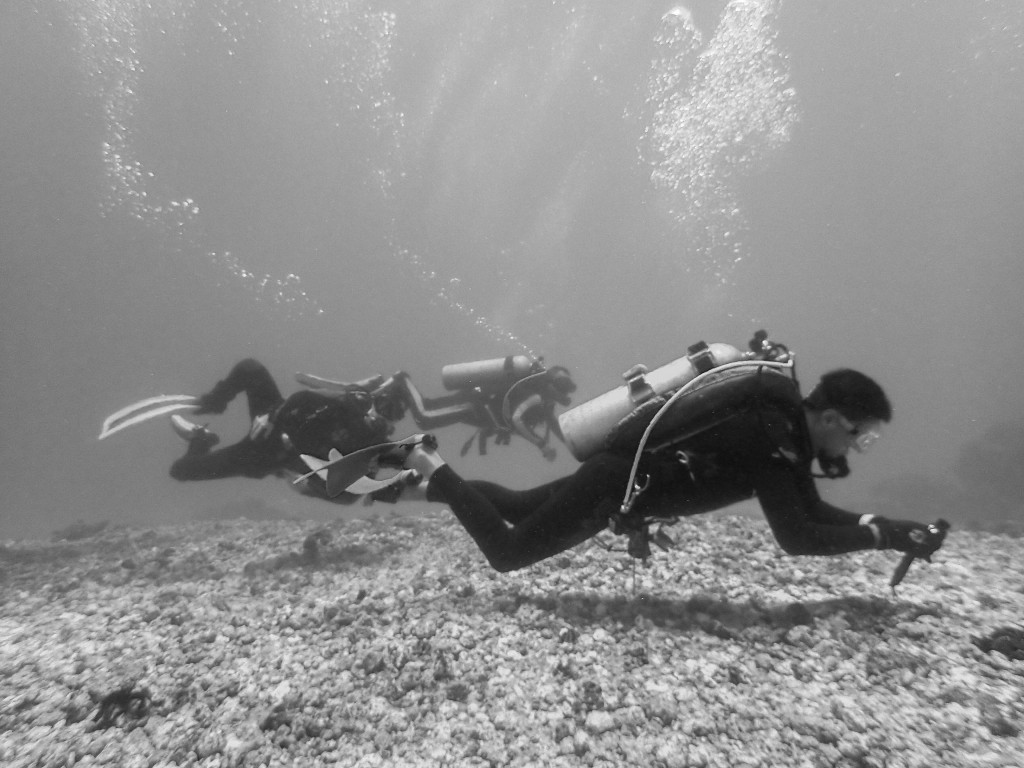
By just looking at the bubbles you can see the strength of the current. In the foreground a diver gets comfortable with a reef hook. © UW360

Get Fit

You need to be physically fit for diving as well as mentally fit. The better your fitness, the better you will deal with the rigours of swimming against a current or making a difficult shore exit in full-gear. And the more efficiently you will breathe and the longer your air supply will last.


Breathe Correctly

Correct breathing helps you keep a clear head if a potentially stressful incident arises. The ideal diving breathing cycle begins with a long exhalation with your stomach pulled in enabling your lungs to expel as much tension-inducing carbon dioxide as possible. Follow this immediately by a long sustained inhalation with your stomach pushed out to allow your lungs to expand as much as they can. With practice, each diving breath in and out could last 7 seconds or so, giving you a 15 second breathing cycle. That means only four breaths a minute! As well as helping you think clearly, this will make your air last longer too!

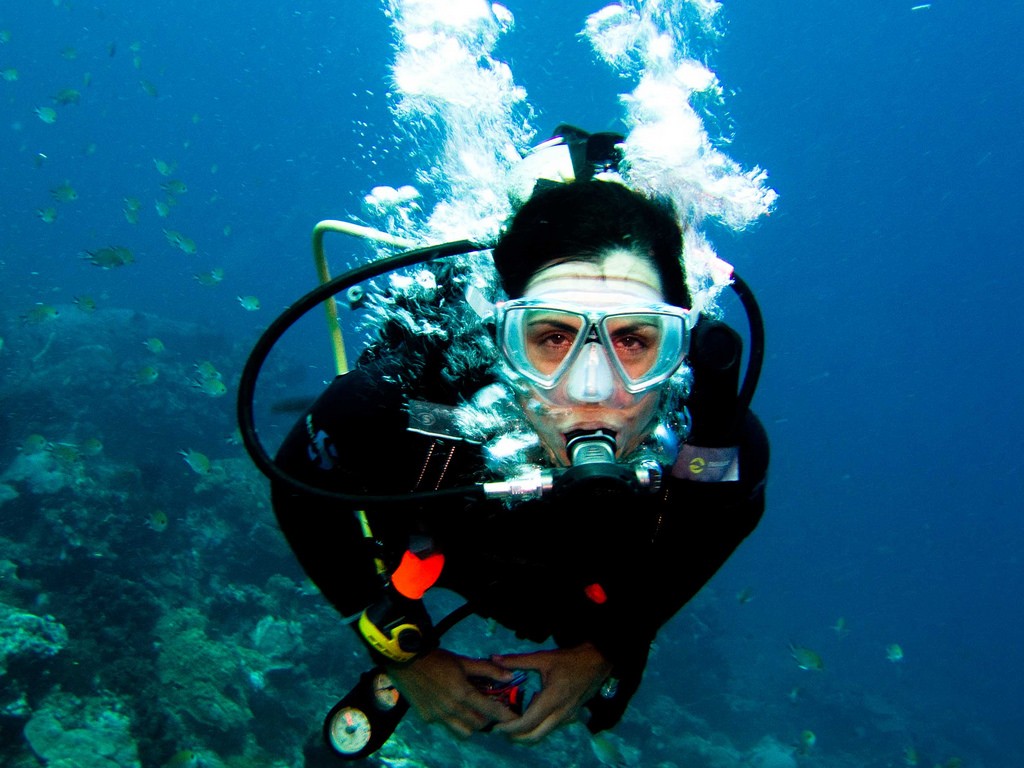
Diver breathing in Bali, Indonesia. © Flickr

Visualise

Before a scuba dive, do as the technical divers do. Sit in a quiet place and think about the dive ahead. Think positive thoughts; imagine all the wonderful things you are going to experience and picture a successful dive in your mind. See yourself early on as you descend, in control, checking all your gear is in place, relaxing your breathing rate, maintaining good buoyancy and staying in touch with your dive team. Then focus your thoughts on the dive itself. Visualise yourself feeling comfortable, checking your computer and SPG frequently, then making a slow, safe and controlled ascent with a safety stop, finally establishing buoyancy on the surface and ending the dive with plenty of air.

Remove Apprehension

Apprehension is a feeling of uncertainty about your ability to cope with a situation and it can be dangerous to begin a dive in this state of mind, as it does not take much for the apprehension to turn into panic. By thinking during your visualisation about what could happen and how you would deal with it, you can build your self-confidence and approach the dive with a positive, relaxed attitude.

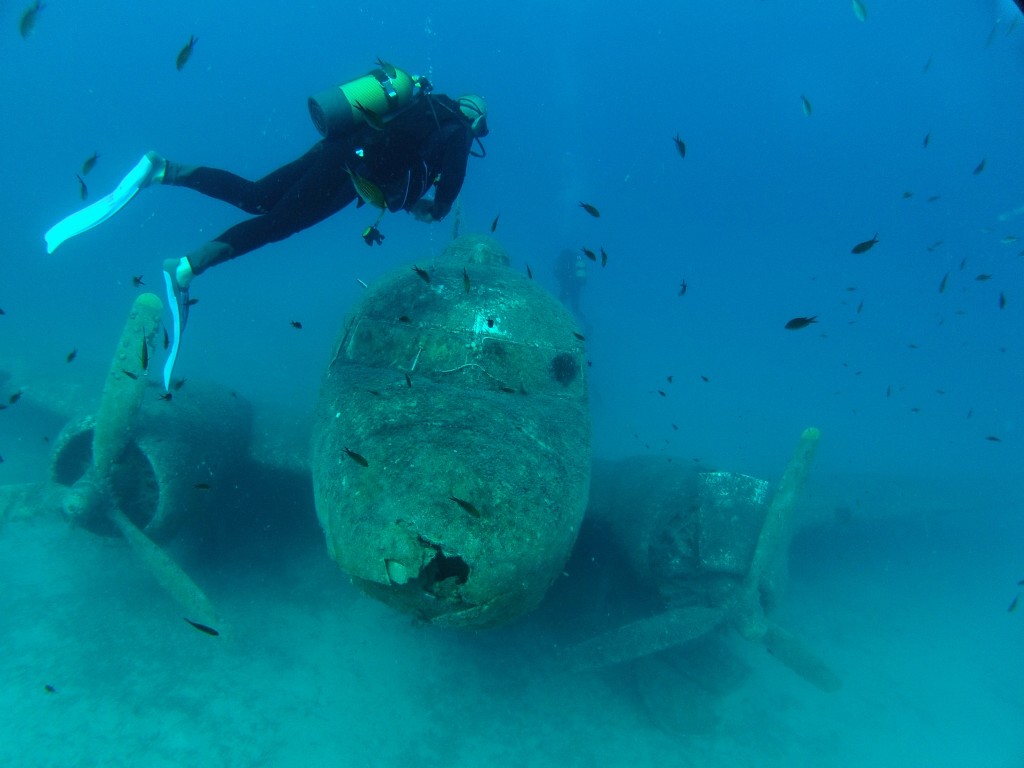
A diver checks out the artificial wreck of a Douglas DC-3. © Wikimedia Commons

Take Notice of Premonition

Premonition is a powerful feeling of foreboding. If you ever get the sense before a dive that something bad is going to happen and you just cannot shake it off or you just feel that you are not ready or in the mood to do the dive, then strongly consider either sitting out the dive or at least changing the plan.

A Final Word

As long as you have been well taught for the level of diving that you are engaged in and have kept up your skills, then by maintaining a clear head and a positive state of mind you can be confident of dealing with any situation.


scuba-confidential-cover-1Simon is the best-selling author of Scuba Confidential – An Insider’s Guide to Becoming a Better Diver, Scuba Professional – Insights into Scuba Diver Training & Operations and Scuba Fundamental – Start Diving the Right Way. All are available from Amazon and other online bookstores worldwide. See his website www.simonpridmore.com for more.

Divers' Monthly Party (October 6,2016)

0

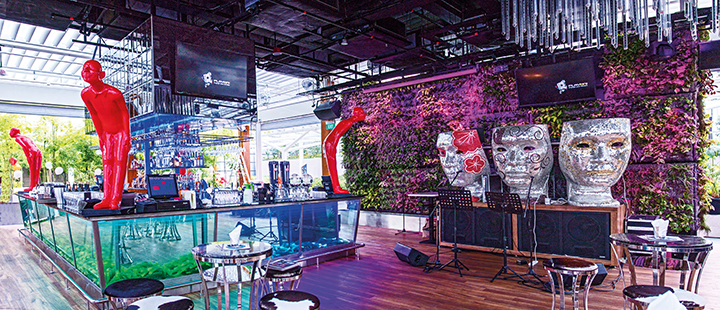
oct-divers-party-poster-2Underwater360 is bringing you the divers party of the month, once again! Taking place at Arn Nan Alfresco Bar + Bistro by IndoChine Group, the party brings together anyone who has a passion for the ocean, regardless of whether you are a diver or not.

With special guest appearances covering anything related to the ocean, it’s the ideal party to lead up to Asia’s largest diving event, ADEX! Speakers include: co-founder of Zen Freediving Chris Kim, Competitive freediver Michelle Ooi and Singapore’s first mermaid and founder of the Singapore Mermaid School Syrena.

Alongside the talks, there are fabulous lucky draw prizes to be won from dive trips to dive gears – it’s a party you simply cannot miss! 

Lucky Draw prizes

  • 2 x Certified divers 2D/1N on MV Kangaroo by Cairns Dive Centre (worth S$1,112)
  • Mares Puck Pro dive computer (worth S$326)
  • National Geographic Snorkeller (worth S$50)

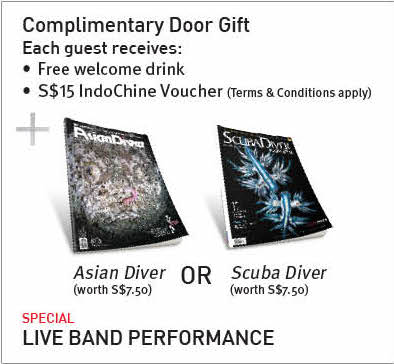
oct-divers-party-poster-magazinesEach guest will receive a complimentary door gift which includes a FREE welcome drink, a S$15 IndoChine Voucher (Terms & Conditions apply), and the choice of one of our current issues (Asian Diver or Scuba Diver). Adding to this ideal night for divers to buddy up and discuss the world below the waves, is a live band performance to add a rhythm to those flowing drinks and finger food.


Address:

Arn Nan Alfresco Bar + Bistro

By IndoChine Group

3 Temasek Boulevard #03-304/305 Singapore 038983

(15 minutes walk from Esplanade/Promenade MRT)

pic-2

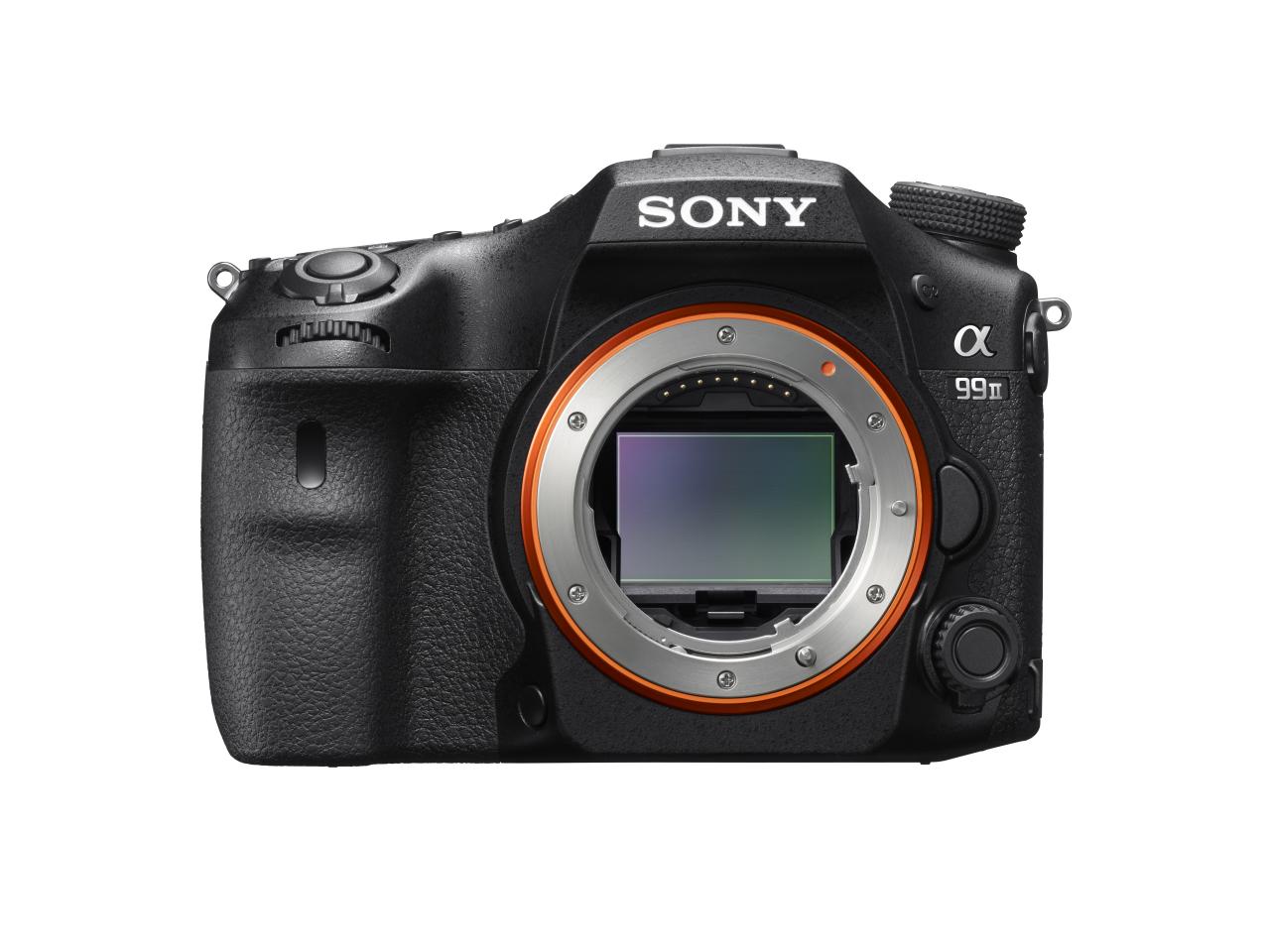
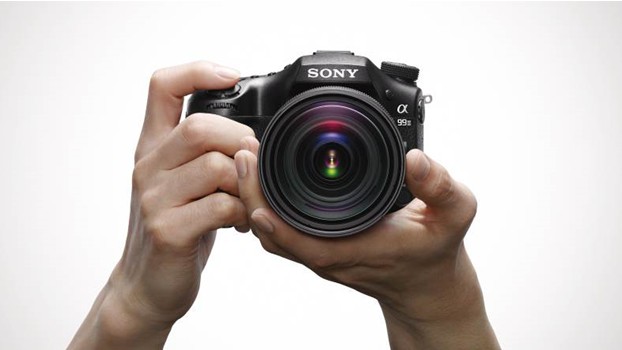
Sony Launches Flagship A-Mount Camera, the a99 II

0

Sony has revived its Alpha SLT (single-lens translucent) system with the flagship A-mount a99 II. For those who thought that the system was kaput, the new-look camera will come as a welcome surprise. Featuring a 42-megapixel full-frame sensor – capable of shooting at an incredible 12fps at full resolution – the new a99 II boasts a maximum ISO of 102,400, 4K video at 100Mbps, and a magnesium alloy body that is dust and moisture sealed. 

With the a99 II’s Hybrid Phase Detect autofocus system, there’s also a new level of AF performance being brought to the table, with 79 dedicated phase detect points plus 399 focal plane phase detection points delivering precise, speedy autofocus and advanced subject tracking right across the image. Sony claims that the a99 II can capture detailed images even with fast-moving objects in challenging light conditions. A large buffer and sophisticated data processing mean these detailed shots can be viewed immediately after shooting.

The a99 II is shipping in November and is expected to retail for about US$3200.


Press Release

  • Full-frame 4D Focus: Innovative Hybrid Phase Detection AF system with accurate 79 hybrid cross AF points enabled by 79-point dedicated and 399-point focal-plane AF sensors and continuous shooting at up to 12fps
  • High resolution 42.4 effective MP 35mm Full-frame Exmor R™ CMOS sensor
  • Newly developed optical 5-axis in-body image stabilisation system
  • Outstanding operability and reliability in newly designed downsized body
  • Internal 4K movie recording in XAVC-S format with host of pro-orientated movie features

(SINGAPORE, 21 September 2016) – Reaffirming its commitment to produce industry leading A-mount interchangeable lens cameras, Sony today launched a new flagship ɑ A-mount model, the a99 II. A successor to the highly acclaimed ɑ99, the new a99 II combines the best of Sony’s latest digital imaging innovations including a new Hybrid Phase Detection AF system with exclusive Sony A-mount features such as Translucent Mirror Technology™ (TMT). The result is a supremely specified, professional level camera that will be particularly appealing to sports and wildlife photographers.

Redefining Autofocus

The newly developed Phase Detection AF System is capable of ‘full-time AF’ and is the first implementation of 4D FOCUS in the full-frame ɑ series, bringing a supreme new level of AF performance to ɑ99 II users. The Hybrid Phase Detection AF System is enabled by combining a precision 79-point[4] dedicated phase detection AF sensor with 399 focal plane phase detection AF points1 to produce a 79 hybrid cross AF point[5] array. These cross points deliver incredibly precise autofocus performance and advanced subject tracking of any moving objects right across the image, at high speed. In addition, as there is no moving mirror, TMT enables continuous AF operation and the finder image remains unaffected during any type of shooting, including live view and movie recording.
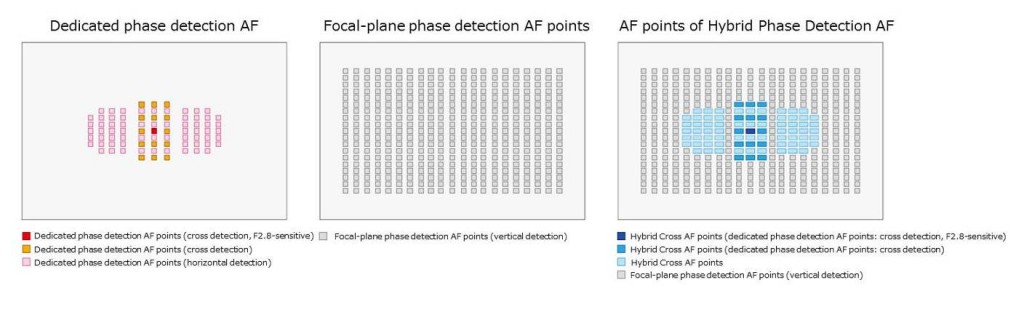
20sep16_a99_2

Low light conditions present no problem to the ɑ99 II. The precision AF system will function properly down to EV-4[6] brightness levels where most other cameras struggle. 

Data flow through the ɑ99 II has been redesigned to allow for high resolution and continuous shooting at high frame rates. A new front-end LSI works with the image sensor and BIONZ X image processing engine, as well as a newly designed shutter unit, to enable continuous shooting at up to 12fps2 with AF/AE tracking[7], all whilst harnessing the sensor’s 42.4MP capabilities. The result is an ultra-fast camera that will deliver incredibly detailed shots, even with fast moving objects in challenging light conditions. Thanks to a large buffer and sophisticated data processing, these shots can be viewed immediately after shooting even when in high speed continuous shooting mode and if shots are being taken indoors under artificial lighting, flicker is automatically detected and the shutter is timed to minimise its effect on the end image[8].

Improvements to the EVF display algorithm now deliver continuous live-view shooting at up to 8 fps[9] with AF/AE tracking with minimal display lag so that the viewing experience is essentially no different from that of an optical viewfinder. Exposure, white balance and other camera settings are displayed in real time in the viewfinder and continuous live view shooting can be set in 3 stages to match a variety of subjects: 8 fps, 6 fps and 4 fps.
20sep16_a99_3

Pixel Power

The back-illuminated full-frame 42.4MP[10] Exmor R CMOS sensor benefits from a gapless-on-chip design and allows for fast readout of large volumes of data as well as being extremely efficient in its light gathering ability. The net result is very high sensitivity with low noise, wide dynamic range and 42.4MP resolution across an ISO range of 100-25600, expandable to ISO 50 – 102,400[11].The ɑ99 II has been designed without an optical low-pass filter to allow the finest natural details and textures to be captured with unprecedented depth and realism and the photographer can select compressed or uncompressed RAW files, as required.

5-axis SteadyShot™ INSIDE Image Stabilisation

Having proved to be incredibly popular in the ɑ7 II series of cameras, Sony has designed a new in-body 5 axis image stabilisation system for A-mount cameras which debuts for the first time in the ɑ99 II. In addition to movement in the pitch and yaw axes that tend to occur at longer focal lengths, this system effectively detects and compensates for shift blur that can occur on the X and Y axes when shooting close-up, and roll blur that is often apparent in still images and movies that are shot at night. Newly implemented precision gyro sensors are capable of precisely detecting even tiny camera movements that can cause blurring, providing a 4.5 step[12] shutter speed advantage that can help realise the full potential of the 42.4MP sensor, in both stills and movies. The effect of image stabilisation can be monitored in the viewfinder or on the LCD screen during live view when the shutter button is half pressed or the Focus Magnifier functions are used. This allows framing and focus to be accurately checked via live view when shooting at telephoto focal lengths or macro distances.
20sep16_a99_4

Improved design and operability

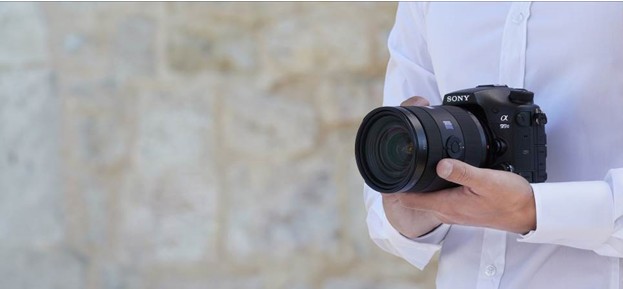
The design of the new ɑ99 II has noticeably evolved compared to its predecessor, based upon feedback from professional users. The new model is 8 per cent smaller than the original ɑ99 and has a newly designed grip, magnesium alloy body, dual SD[13] card slot and other upgrades that improve both hold and operation. All major buttons and dials are provided with seals and the media jack cover and enclosure edges feature tongue and groove – the result is a bod
y that is both dust and moisture resistant[14] and can be used in the toughest and most challenging shooting conditions.

In addition to being designed for faster response, the new shutter unit is also more durable and has passed endurance tests in excess of 300,000 shutter operations[15]. The XGA OLED Tru-finder has a ZEISS® T* Coating and has a 4 element lens group that includes a double sided aspherical element whilst offering a powerful 0.78x magnification, delivering outstanding clarity from corner to corner. It also has a fluorine coating on the outer lens to prevent fingerprints, dust, water, oil and dirt from sticking, thus ensuring a clear view.

The silent Multi Controller introduced in the original ɑ99 has been improved so that in addition to allowing control of aperture, shutter speed, ISO, exposure compensation, AF area, AF mode and other settings, it now features a click-stop ON/OFF switch. When ON, the preferred setting for still image shooting, the control clicks, providing a tactile indication of the length of rotation. When OFF, the control turns smoothly and quietly, ideal for movie shooting. Location data acquisition has also been made possible via Bluetooth[16] connection to a compatible mobile device and it is now possible to select whether the storage location should just be on a tethered computer or also on camera for easy review without leaving the shooting position. Based upon feedback from a number of ɑ users, the menu structure of the ɑ99 II has also been updated to deliver a smoother navigational experience.

Movie Magic

The ɑ99 II enables internal 4K movie recording[17] featuring full pixel readout, without pixel binning[18], for ultimate high resolution video in the pro friendly XAVC S format. It is capable of recording high quality footage at 100Mbps for 4K recording. A new ‘Slow and Quick’ mode[19] (S&Q) supports both slow motion and quick motion. Frame rates from 1 fps to 120 fps (100 fps) can be selected in 8 steps for up to 60x (50x) quick motion and 5x (4x) slow motion recording[20]. A number of features designed for a professional movie production workflow are included such as picture profiles, time code and HDMI clear output and the new ɑ99 II now also offers gamma assist for real time S-Log monitoring and a zebra mode for easier exposure adjustment. S-Log3 and S-Log2 gamma are now included, making wide dynamic range shooting possible with blown highlights or blocked shadows making the ɑ99 II easily integratable into a fully professional movie production workflow.

The new ɑ99 II will be available at all Sony Stores, Sony Centres and selected Sony authorised dealers from November 2016.


About Sony Electronics (Singapore) & Sony South East Asia

Sony Electronics (Singapore) was established on 1 October 1999 with business activities comprising engineering and manufacturing, sales and marketing, and information systems. As part of Sony Electronics (Singapore), Sony South East Asia is responsible for the marketing and sales of consumer products in Singapore, as well as for business and professional products in Singapore and other countries in the South East Asia region. It also handles export business for consumer products from Singapore to various parts of Asia. Since establishing our presence in Singapore in 1973, we have grown steadily over the years to become a leader in the consumer electronics market. For more information on Sony’s products and services in Singapore, please visit http://www.sony.com.sg/


[1] The number of usable AF points may depend on the lens and shooting mode. Up to 323 focus points are selectable. Not available for movie recording.

[2] Continuous shooting mode set to ‘Hi+’.

[3] Class 10 or higher SDHC/SDXC memory card required for XAVC S format movie recording. UHS-I (U3) SDHC/SDXC card required for 100Mbps recording.

[4] The number of usable AF points may depend on the lens and shooting mode.

[5] Hybrid Phase Detection AF active. The dedicated phase detection AF sensor or focal-plane phase detection AF sensor may be used independently in certain photographic situations.

[6] Central focus point.

[7] The supported focus area will depend on the shooting mode and lens used. Furthermore, when “Continuous Shooting: Hi+” is selected, focus will be fixed at the first frame shot when Hybrid Phase Detection AF is active at aperture settings of F9 or higher, or when Hybrid Phase Detection AF is not active at aperture settings of F4 or higher

[8] When Anti-flicker Shoot. is ON. Flicker detection at 100 Hz or 120 Hz only. Continuous shooting speed may decrease. Does not function during bulb exposure or movie recording

[9] Continuous shooting mode set to ‘Hi’

[10] Approximate effective megapixels

[11] Still images only

[12] CIPA standards. Pitch/yaw shake only. SAL135F18Z lens. Long exposure NR off.

[13] One slot can hold an SD card or a Memory Stick.

[14] Not guaranteed to be 100 per cent  dust and moisture proof.

[15] Electronic front curtain shutter activated.

[16] Requires pairing with compatible mobile devices running the PlayMemories Mobile app. Supported devices are Android smartphones running Android 5.0 or later and compatible with Bluetooth 4.0 or later. iPhone/iPad: iPhone 4S or later/iPad 3rd generation or later.

[17] SDHC/SDXC memory card of Class 10 or higher is required for movie recording in XAVC S format. UHS-I (U3) SDHC/SDXC card is required for 100Mbps recording.

[18] In Super 35mm recording mode.

[19] Sound cannot be recorded. SDHC/SDXC memory card of Class 10 or higher is required.

[20] In NTSC (PAL) system.

Understanding the Mariana Trench

0

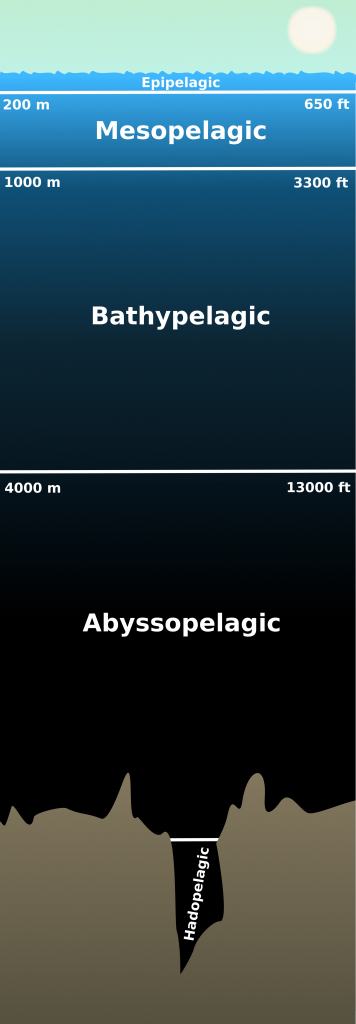
Deep in the ocean is where things get really interesting. Descend below one kilometre to the bathypelagic zone and the creatures take a weird turn. Descend even further to 11 kilometres – the bottom of the Mariana Trench – and the marine life becomes completely surreal.

The Mariana Trench is the unexplored world, the seemingly never-ending abyss, and oceanographers have debated much about it in modern times: What sounds echo up from down there? What lives under those rock formations? With so many questions left unanswered about this crescent-shaped scar that measures more than 2,500 kilometres long and 69 kilometres wide, this “wound of the Earth’s crust” may just hold the secrets to our underworld, and life’s very beginning.

2000px-pelagiczone-svgInto the Deep

The trench was first discovered in 1875 by the British ship H.M.S. Challenger, which managed to record a depth of eight kilometres using a weighted sounding rope. This was followed in 1951 by another British vessel, H.M.S. Challenger II, which used an echo-sounder to remeasure the trench – resulting in a recorded depth of nearly 11 kilometres. At extreme depths, the bottom of the Mariana Trench is hidden by total darkness – kilometres out of reach of any light.

To shed some of their own light on what exactly was hiding in the depths of the trench, in 1960 Jacques Piccard and Navy Lt. Don Walsh took on the dangerous task of exploring the trench in a U.S. Navy submersible, a bathyscaphe called the Trieste. After a five-hour-long descent, the pair spent just 20 minutes at the bottom. Incredibly, at nine kilometres deep one of the windows of the submersible cracked – but turning back was not an option and the pair continued on their mission. Unfortunately, when at the bottom, no photographs were taken due to clouds of silt stirred up by their landing. In an environment so harsh, with pressure so high, the pair were amazed to find – illuminated by their submersible’s floodlight – a creature moving that vaguely resembled the look of a flatfish. Finally, that pressing question of whether life could exist so deep was answered.

For decades, the Mariana Trench was left alone, and it wasn’t until 2012 when film director James Cameron began preparations to explore the deep. A submersible was designed especially to reach the deepest point of the trench. Named, Deepsea Challenger, the craft was equipped with scientific sampling equipment and 3D cameras. It was more technologically advanced than its predecessor, the Trieste, featuring over 180 other on-board systems, including life support, LED lighting, thrusters, and a sophisticated underwater communications system.

Although it was the most advanced submersible ever built, the mission was not without risk. There was no knowing for sure whether the vessel would be able to handle the extreme pressure – and not simply crumble in on itself. After a number of successful and unsuccessful trial dives, Cameron finally reached the bottom of the trench – Challenger Deep – clocking a depth of 10,908 metres. What he witnessed reminded him of images that he saw of the moon landing, barren and lifeless. During the three hours he spent at the bottom, Cameron did encounter types of jellyfish and shrimp-like critters – but not the huge deep-sea predators he had hoped for. However, on reviewing the footage captured by his vessel, scientists did make out camouflaged sea cucumbers on the seabed, and the fact that they had adapted to use camouflage to prevent being eaten by predators suggested that there could be larger creatures patrolling the deep.

Life in the Abyss

During Cameron’s dive, 68 new species were discovered. Among the incredible animals that have adapted to life at such extreme depth: the telescope octopus, a transparent cephalopod with solid rotating eyes; and the well-known anglerfish, which can grow up to one metre long and uses an elongated dorsal spine that uses bioluminescence to attract its prey.

Later, in 2014, the Schmidt Ocean Institute collaborated with a team of scientists aboard the oceanographic research vessel RV Falkor and conducted a comprehensive study of the trench. At a depth of over 8,000 metres, an unseen species of snailfish was discovered, along with amphipods that were discovered just under 11 kilometres deep.

Scientists aboard the RV Falkor discovered “the deepest living fish” – an unknown type of snailfish – at a depth of 8,143 metres (via YouTube)

Each new trip brings new findings of marine creatures and occurrences. Recently, a microphone was sent down to the bottom of the trench to discover what such a depth sounded like. Kept there for three weeks, the microphone picked up sounds from mainly earthquakes and boats, but most interestingly it also recorded what they believed to be whale sounds.

With so much still to discover about the depths of our oceans, this incredible trench – formed over millennia by the geologic process of subduction – is key to understanding how life can survive against such impossible odds. 

Wildlife of the Week: Humpback Whale

0
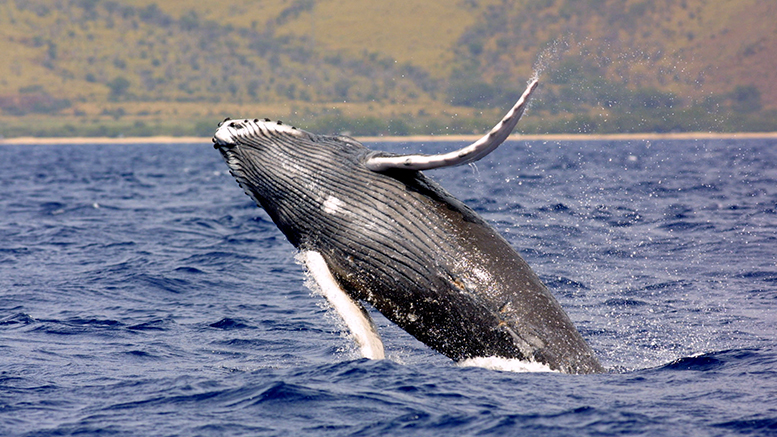
A humpback whale breaches near the coast © NOAA

Few experiences can compare with the exhilaration of witnessing a humpback whale breaching the surface of the water at close quarter. Beneath the waterline, these massive mammals are perhaps an even more impressive sight to behold, and having the opportunity to observe the tender interactions between a mother and her calf is a highly sought-after experience by divers and underwater photographers alike. For all these reasons and more, the majestic humpback is our Wildlife of the Week:

Species: Megaptera novaeangliae

Class: Mammalia

IUCN Status: Least Concern

Diet: Consists almost exclusively of krill, although also known to eat small fish

Size: Adults are up to 18 metres long, with females larger than males, while newborns are about 4.5 metres in length

Behaviour: Active in the water and display a range of spectacular surfacing behaviours. Experts believe that some of these behaviours help them work out their position in relation to land, or allow them to communicate with other whales

Distribution: Humpbacks inhabit all the world’s oceans. In summer, they can be found in high-latitude feeding grounds. In winter, they migrate to breeding grounds in subtropical or tropical waters. There is a population in the Arabian Sea that does not migrate, remaining in tropical waters year round

5 Fast Facts:

  • There are many theories as to why whales are extremely active at the surface. Experts believe that fin slapping may be a warning of danger nearby, and another is that whales launch themselves out of the water and fall back with a splash to rid themselves of skin parasites
  • Humpback whales are so named because of their large hump on their backs
  • They are well-known for a unique fishing technique called bubble netting, where a pod of whales form a circle underneath a school of fish and begin to blow bubbles. After circling in smaller and smaller circles to force their prey into the centre, the whales will suddenly drive towards the surface and consume all the fish at one time
  • Humpback whales communicate through an amazing range of vocalisations which can travel long distances, researchers have determined that individual whale pods have a particular song which serves to identify pod members to each other
  • Newborn humpbacks weigh about a tonne, and fully grown adults can tip the scales at some 36 tonnes
 

Migaloo: The World’s Most Famous Humpback

It appears the famed white whale, Migaloo, has made quite a name for himself. One sighting off Hervey Bay, Queensland and a dedicated webpage later and the name Migaloo has become a household name within the homes of ocean enthusiasts. A title bestowed upon him by elders of an Aboriginal tribe in the Hervey Bay region, literally translating to mean “white fella”. 

About 14 metres long, Migaloo is not a proven albino due to the brown colour of his eyes (for true albinos, this is red). Some scientists have suggested that he may just be “hypo-pigmented” (loss of skin colour).

Until recently, Migaloo was thought to be unique, the only albino humpback in existence. However, in 2011, another white whale was spotted – a calf – and christened Migaloo Junior.

Migaloo off Port Douglas from Tim Henry on Vimeo.


SEABOB: The World’s Fastest Multi-Functional Water Sled Enters the Diving World

0

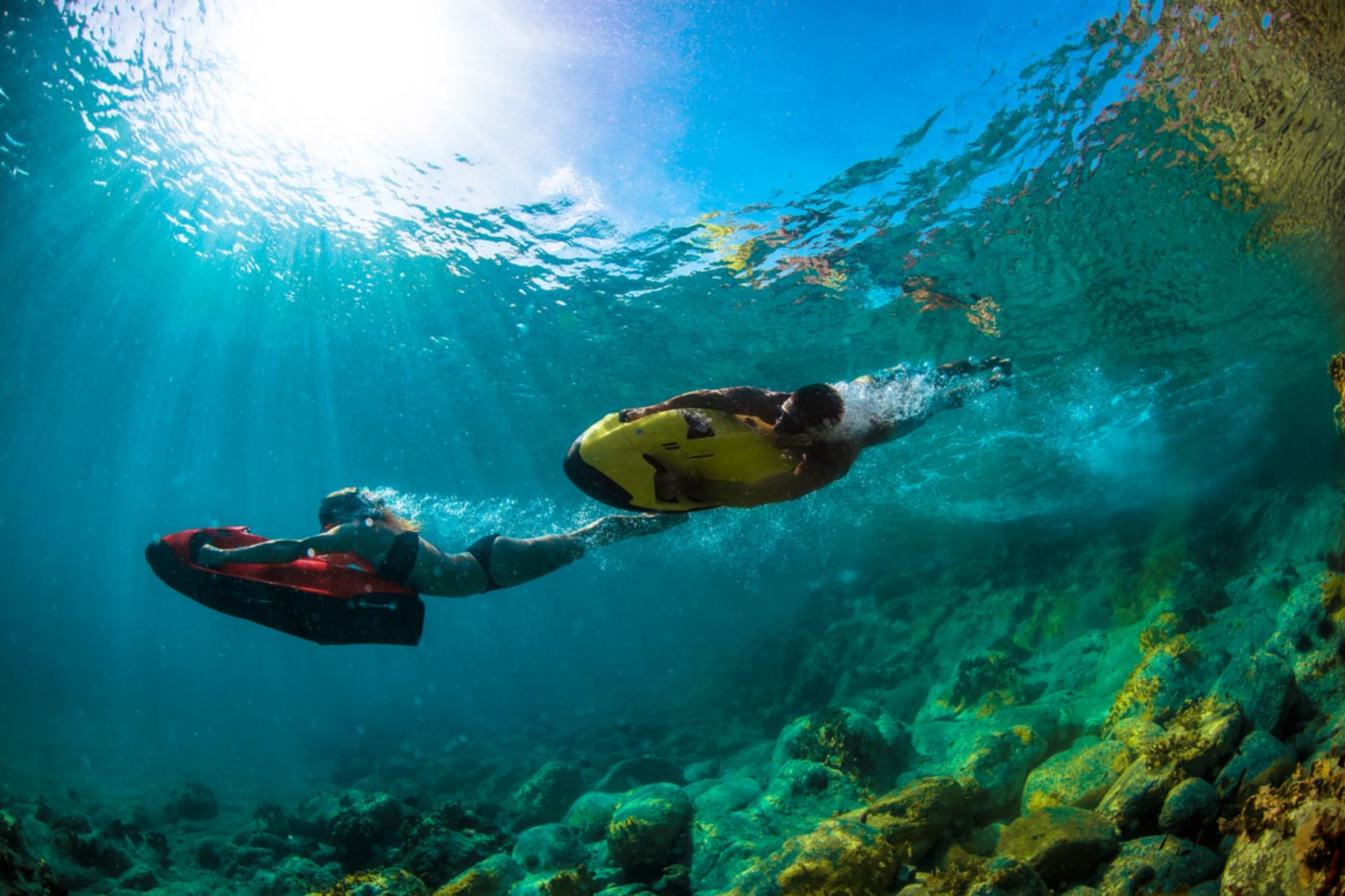
Taking dive experiences to a new level, the world’s fastest multi-functional water sled has finally entered the world of diving. A state-of-the-art and sophisticated lifestyle product that promises outstanding fun, with the option to push diving limits, it’s able to operate at depths of up to 40 metres. Due to minimal effort used by divers, resulting in lower oxygen consumption, adventure-seekers can enjoy the thrills of diving for longer.

The equipment offers a variety of power systems that allow responsible drivers to either glide along at a relaxed pace in a low gear – slowing down to peep under corals – or the chance to speed up to keep up with those mantas in strong currents. We’re excited to announce SEABOB has officially entered the industry.


Press Release

By connecting technological innovation with award winning design made in Germany, the SEABOB fascinates worldwide audiences with its incomparable performance. An increasing number of professional and freedivers favour the SEABOB as their diving scooter and are convinced of its unparalleled hydrodynamic achievements – one of many reasons for Cayago AG to present the SEABOB at some of the world’s largest diving fayres. In its first major introduction to the international diving market, CAYAGO AG is planning to unveil the SEABOB at the 2016 DEMA show in Las Vegas, November 16th through to the 19th.

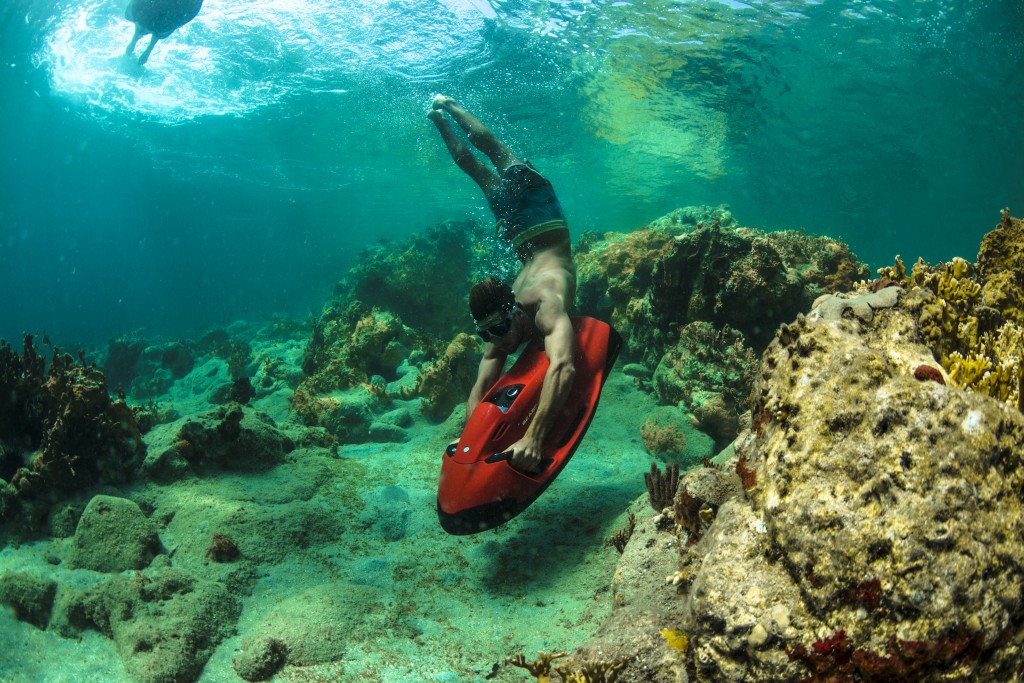
red-seabob-high-res

World renowned diving and Apnoe experts, as well as a variety of specialised media, confirm the brilliant diving abilities of the SEABOB. It enables diving to an approved depth of up to 40 metres, all the while conserving the riders’ energy output. Due to minimal effort used by divers, resulting in lower oxygen consumption, adventure-seekers can enjoy the thrills of diving for better and longer. Additionally, multiple settings on the SEABOB grant significant expansion of a traditional diving radius, and the further advancement into unknown territories.

Thanks to the emission-free and extremely quiet worldwide patented E-jet power system, divers can enjoy exploring their surroundings while remaining especially eco-friendly. The power for the drive mechanism is provided by highly efficient lithium-manganese accumulators. High-quality components made of carbon, special ceramic coatings, and saltwater-resistant precious metals contribute to its lightweight design. The newest models, SEABOB F5 and F5 S weigh in at just 29 kilograms and 34 kilograms, respectively. By using simple and intuitive handling via two control grips with Piezo buttons, and a TFT colour display on the mini dashboard, one can start cruising through the underwater world immediately. Optimal handling and performance underwater, and lightweight transportation above the water truly makes the SEABOB one of a kind.

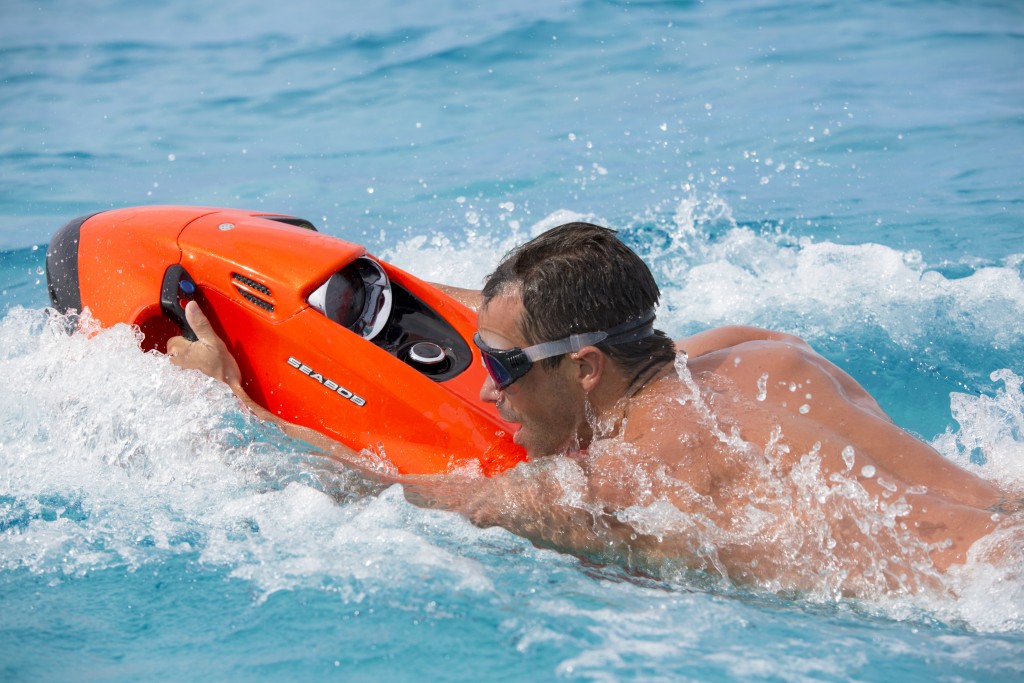
orange-above-water


CAYAGO AG

Founded in 2007, CAYAGO AG is the technology specialist for the development and production of exclusive and innovative water sport vehicles with its headquarters in Stuttgart, Germany. In the production facility located in Bad Salzuflen, the world’s fastest water sled is manufactured with the highest level of precision: SEABOB – a high-performance sea toy made in Germany. The SEABOB was developed in line with the brand’s claim “LUXURY SEATOYS,” to satisfy customers highest demands. True to the company’s philosophy “High-Performance Technology,” quality products are continually being developed further with innovation and great passion to fulfill the highest demands placed upon technology and design.

5 Incredible Cave Dives

0
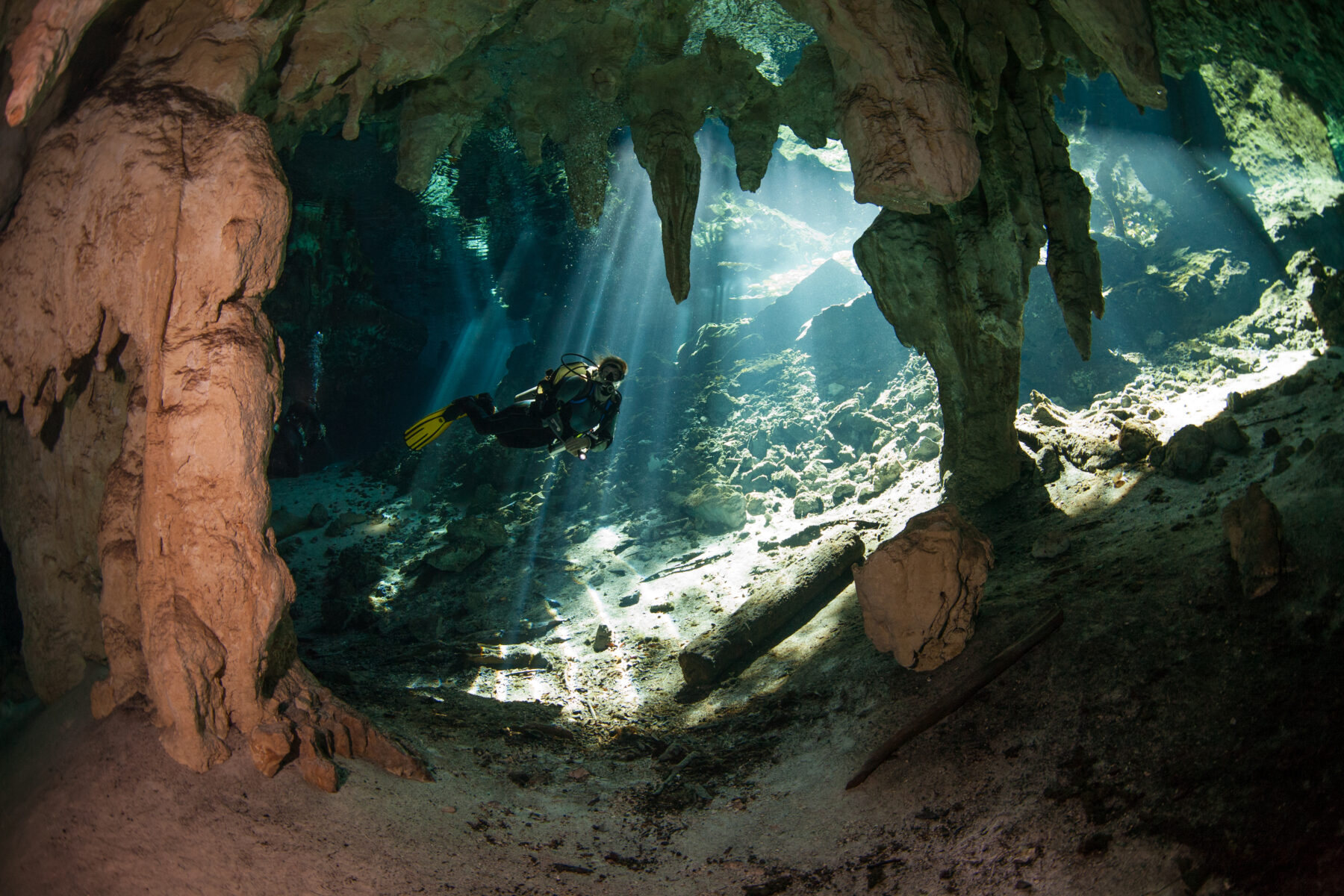
Diving in the incredible cenotes © Shutterstock

And down they go into unexplored waters. Pulling themselves through cracks and narrow passages to see a corner that nobody has ever seen, a sight unknown. Chasing that special feeling of being the only person to witness what you’re witnessing. These are the cave divers, the explorers who choose passion over risk to see what lies in this quiet, undiscovered world. How far the cave goes down, or east, or west – nobody knows.

What they do know is that cave diving is dangerous, a high-risk game played only by those who have trained years to participate. Jill Heinerth, one of the world’s greatest cave explorers, has dived some of the planet’s most testing caves. We asked Jill to share with us five of her favourites:

Dan’s Cave, Abaco, Bahamas

It’s little surprise that one of the most aesthetically pleasing topside destinations on Earth also hosts some of the most beautiful underwater caves. Heinerth simply calls this the “prettiest cave on Earth.” Filled with incredible diversity, these ocean caves are literally filled with marine life such as sponges, lobsters, crabs and shrimp. The cave interior is so vulnerable that a single, reckless fin-kick can shatter mineral formations thousands of years old.

Source: Gary Schaut

Sally Ward Spring, Florida, USA

With diving prohibited only to research teams, many divers respect Sally Ward Spring cave as a particularly tricky dive. A tight entrance requires a hole needed to be dug out in order to fit through, but when you do and pass through the narrow corkscrew passage, the “most surprising room [appears] when you reach the balcony”. The little ledge is the entrance to a huge cube room, around 24 metres wide and 30 metres high. It’s like floating into an empty stadium, and even with a group of divers attempting to light the place with torches, most of the room remains dark.

Source: FastLaneDivers

Deep Blue Cave, Bermuda

Bermuda itself ranks high in the recent history of deep-sea exploration, and the destination now has a very active scientific diving community. Heinerth comments on its “stunning speleothems”, alien-like structures such as stalactites and stalagmites that divers have to carefully navigate through, along with “a beautiful entrance in Walsingham Preserve”, which is the first thing that divers get to see before embarking into the dark and narrow underworld.

Source: Ramon Llaneza Technical Diving

Sistema Dos Ojos, Quintana Roo, Mexico

This flooded cave system is close to Heinerth’s heart due to its endless beauty and because of her previous exploration efforts there. The name, which translates to “two eyes” in English, refers to two neighbouring cenotes which connect into a very large cavern zone shared between the two. One of the longest caves in the world, it is has been documented to stretch 61 kilometres, and offers divers the chance to surface into a bat cave.

Source: Absolute Adventure Mexico

The Shaft, near Mount Gambier, South Australia

Heinerth chooses this one for its uniqueness. It goes to show that underwater caves feature in the most unlikely of places: To access this cave divers have to enter through a tiny hole in the middle of a cow pasture. Even with incredibly powerful lights, the cave is so massive that there is often nowhere near enough light to illuminate it adequately. Upon descending into the sinkhole, the cave opens up into an incredible flooded theatre.

Source: Cave Diving Down Under