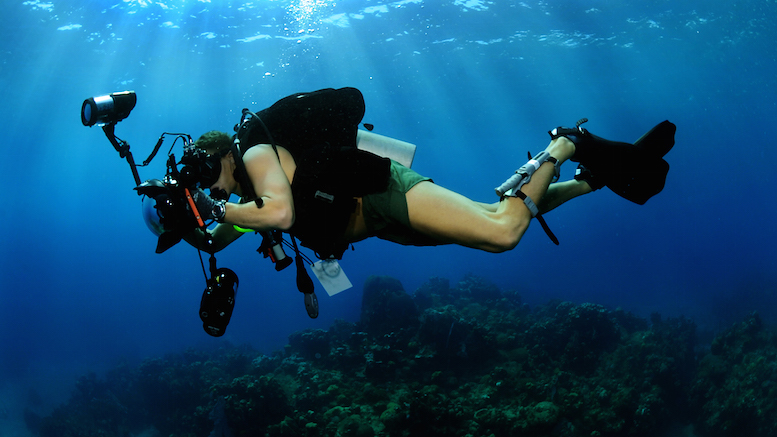
For those divers who are looking to break the mould of diving the more conventional sites, consider liveaboard diving. With spacious and comfortable cabins, top-class meals and facilities, and exemplary service – not to mention the opportunity to reach some of the world’s most remote locations – it’s no wonder that liveaboards are fast becoming the favoured option when planning a dive holiday. To get you into the groove of diving with liveaboards, we bring you five of Asia’s best destinations where you can do exactly that:
Raja Ampat, Indonesia
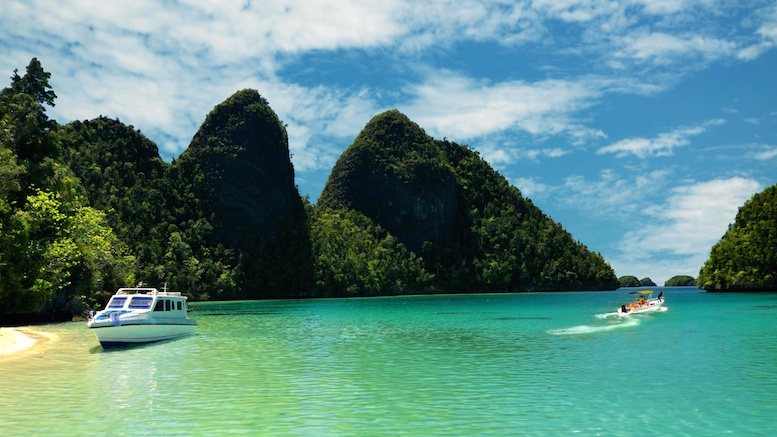
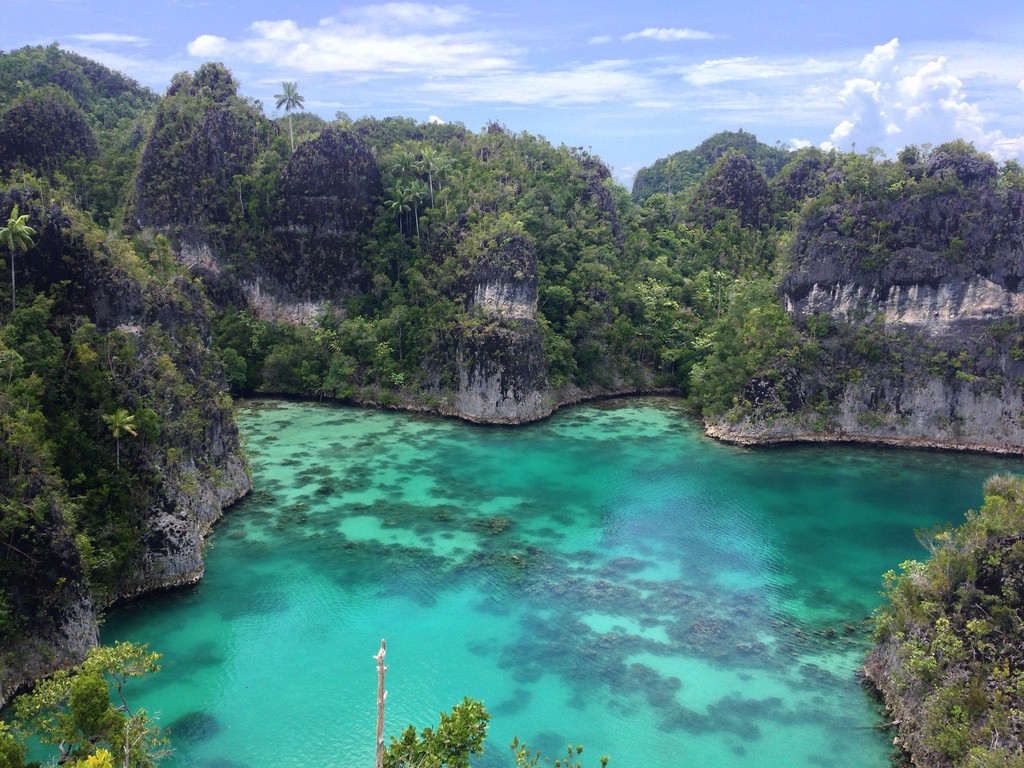
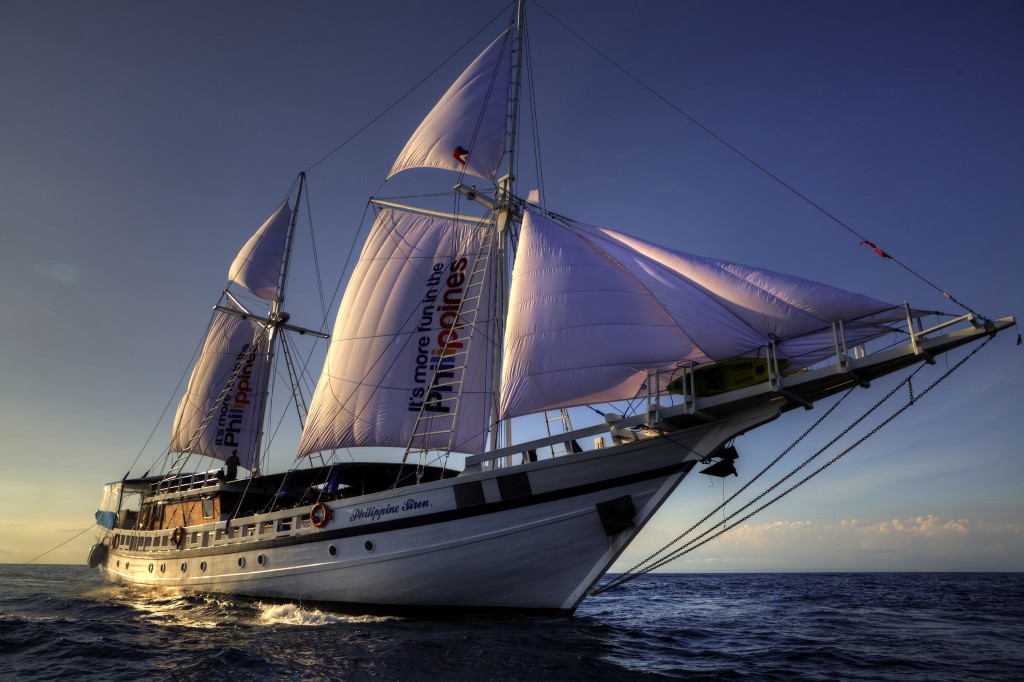
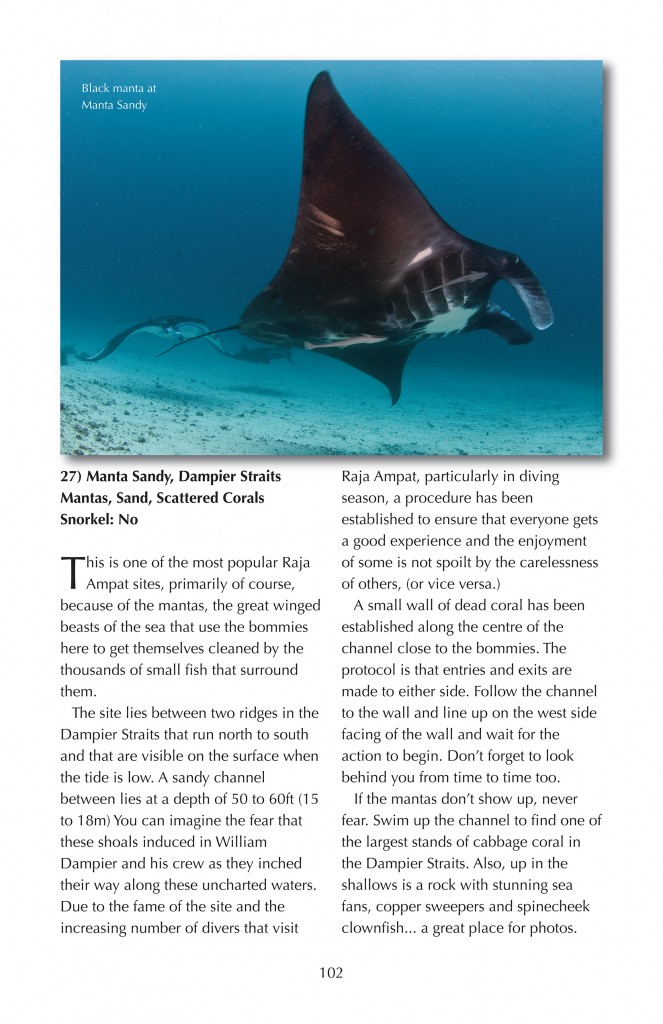
A group of islands synonymous with “world-class diving” and “unspoiled seas”, and arguably the heart of the Coral Triangle, Raja Ampat is known to have the richest coral reef ecosystem in the world. The archipelago comprises of over 1,500 small isles, cays and shoals surrounding the four main islands of Misool, Salawati, Batanta and Waigeo – also known as the Four Kings. The unique topography of the region means only divers taking liveaboards can fully utilise and explore its vibrant waters.
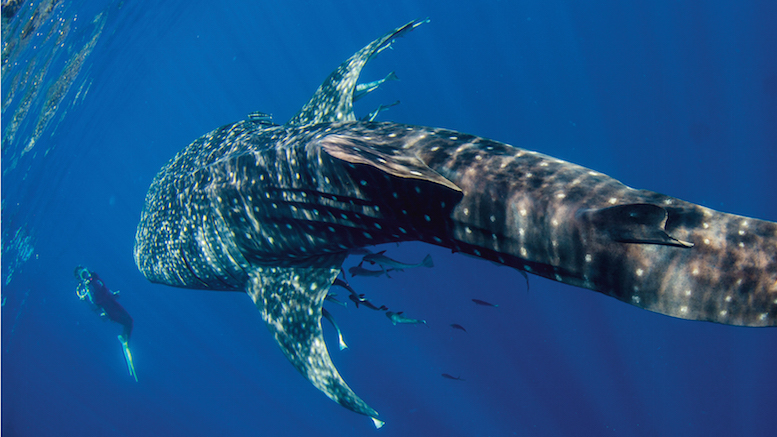
Located in the middle of the Sulu Sea and many nautical miles away from the nearest port, Tubbataha Reef is only accessible by liveaboard. Discovered in the late 1970s, it has become recognised as one of the most remarkable coral reefs on our planet, and is frequently ranked among the top dive sites in the world. Due to its isolated location, divers can experience a dramatic – almost untouched – underwater terrain and encounter large marine animals such as sharks, turtles and manta rays.
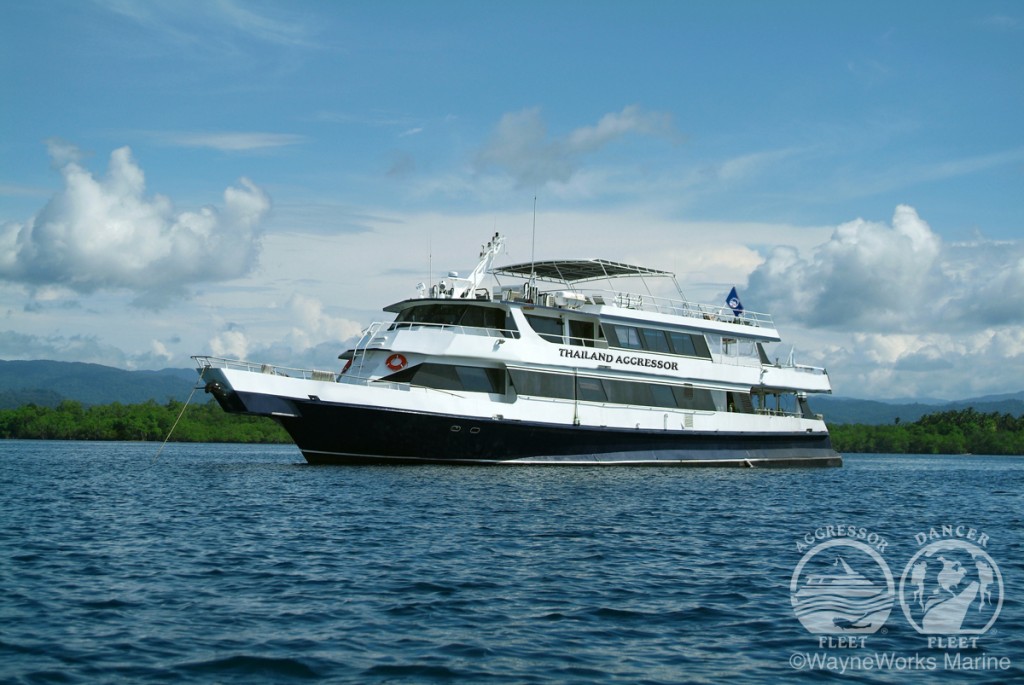
Divers and underwater photographers consider the Similans among the best dive destinations in Thailand, if not among the best in the world. Taking a liveaboard allows you to experience more than just an afternoon dive – staying the night on the boat within the region, you’ll get exclusive access to the site and first dibs on any large marine creatures that come visiting. A variety of coral reef structures, impressive visibility (20-30 metres) and an abundance of marine life make the Similan Islands a top choice.
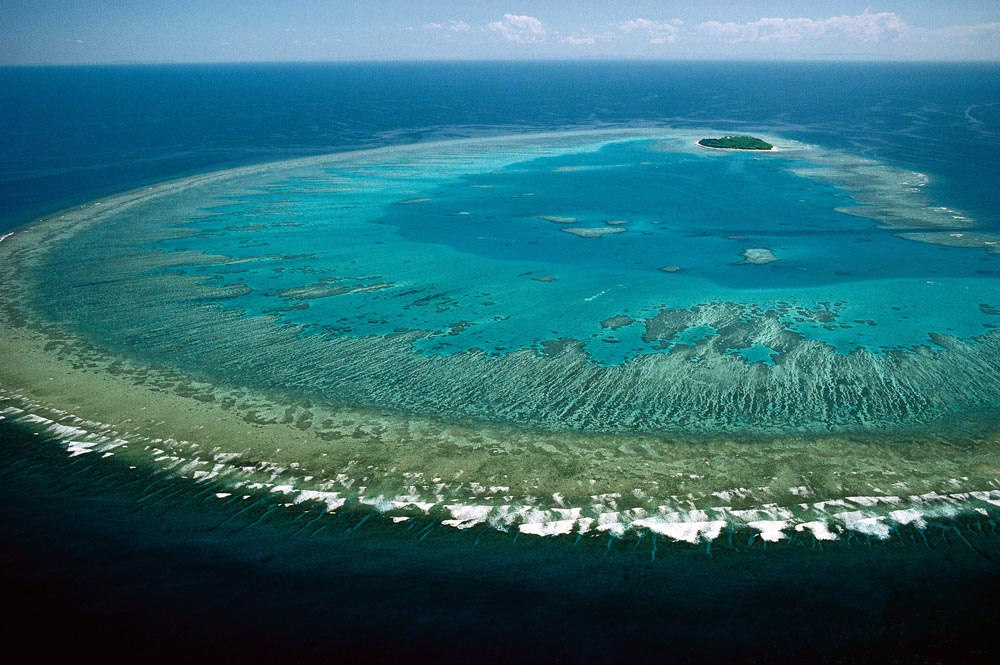
The planet’s largest coral reef system (so large it can be seen from outer space), the Great Barrier Reef deserves to have you spending the maximum amount of time in the water – which is exactly what a liveaboard trip offers. There are dive spots for both novice and experienced divers, as well as an astonishing diversity of marine life that will have you coming back for more. Discover everything from dwarf minke whales, sea turtles and sharks, to moray eels, sea snakes and tiny macro life. Great visibility and outstanding underwater topography make this one of the best liveaboard destinations in Asia Pacific.
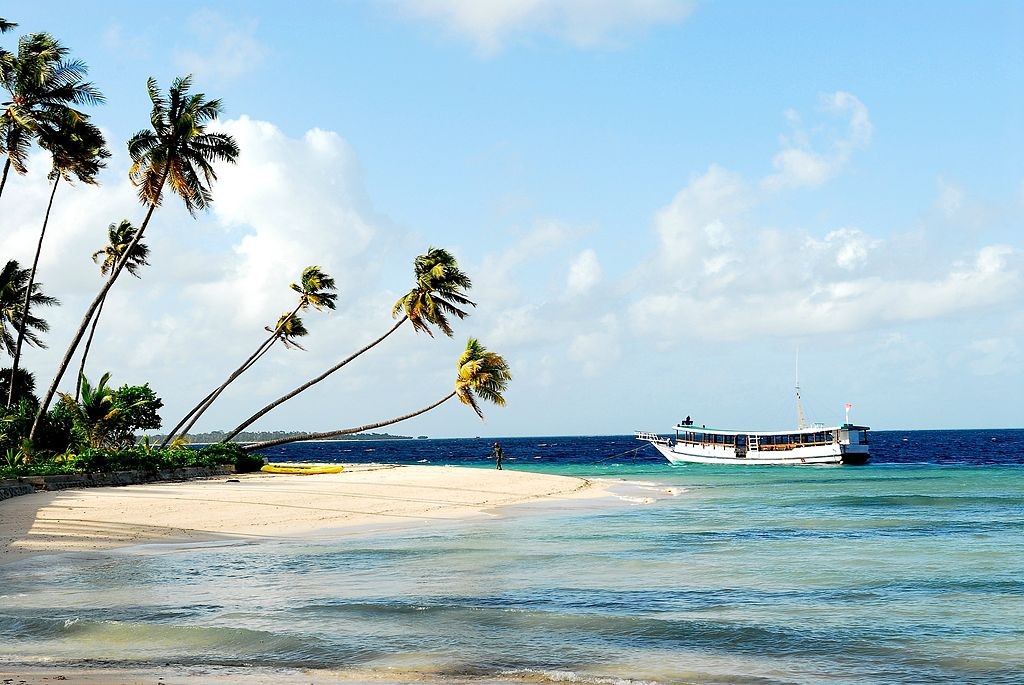
The third largest marine national park in Indonesia, Wakatobi hosts a range of multicoloured and tropical species that live both around and within the coral structures. It is widely recognised as having the highest number of reef and fish species in the world; as well as boasting an abundance of dolphins, turtles, and sharks. Around 143 large and small islands make up the region, and only seven are inhabited. Your liveaboard adventure will allow you to have the more-remote and untouched corners of this stunning marine park all to yourself.
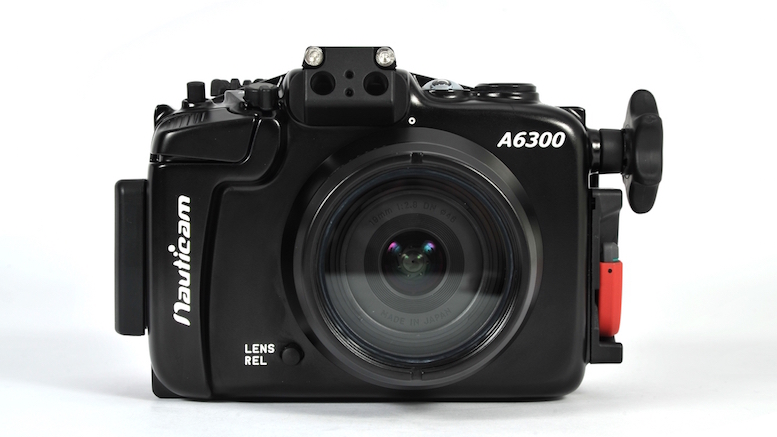
Sony a6300 is one of the most versatile high performance mirrorless interchangeable lens camera released to date, and it may be one of the most fun to use. The camera has the same 24 megapixels found on the preceding a6000, and a body with similar cosmetics, but overall auto focus and the image making experience is dramatically improved. The a6300 is in a totally different league, and when paired with the ergonomic, rugged, and down right good looking Nauticam housing creates a combo that excels at fast action still photo shooting, 4K video, and everything in between.
The Nauticam NA-A6300 Underwater Housing
Nauticam is the industry leader in mirrorless interchangeable lens underwater camera support. Nauticam has housed more mirrorless cameras, and more Sony E (NEX) Mount cameras than any other housing manufacturer. This experience results in the most evolved housing line with broadest range of accessories available today.
Pioneering optical accessories elevate performance to a new level. Magnifying viewfinders, the sharpest super macro accessory lenses ever made, and now the most versatile wet mount wide angle lens (the WWL-1) combined with the NA-A6300 housing form a complete imaging system.
Nauticam is known for ergonomics, and the user experience. Key controls are placed at the photographer’s fingertips. The housing and accessories are light weight, and easy to assemble. The camera drops in without any control presetting, and lens port changes are effortless.
Nauticam build quality is well known by underwater photographers around the globe. The housing is machined from a solid block of aluminum, then hard anodized making it impervious to salt water corrosion. Marine grade stainless and plastic parts complete the housing, and it is backed by a two year warranty against manufacturing defects.
Key Features
Integrated Vacuum Monitoring and Leak Detection
Circuitry included as standard equipment provides constant monitoring of water tight integrity when combined with an optional Nauticam M14 Vacuum Valve II (PN 25624).
Shutter Release Extension
Cold water divers rejoice! The housing ergonomics are finely tuned for operating with the right hand gripping the housing, but in situations with thick wet or dry gloves that method of operation isn’t ideal. The shutter release extension, included with every housing as standard equipment, provides an oversized, easy to operate trigger that is perfect for these situations.
Patented Port Locking System
Lens ports are securely locked in place with our iconic port locking system. This system was launched on our very first DSLR housing in 2009, and provides effortless port mounting for quick lens swaps without twisting. Lens ports are securly locked in place, and won’t twist in the mount even in extreme conditions (like surf).
Stainless Steel Handle Brackets
Stiffening handle brakets are included with the housing, providing a solid “wobble free” attachment when using Nauticam Flexitray W II (PN 71209) with heavy lighting systems. Multiple lanyard attachment points are included in the brackets.
WWL-1 and CMC-1
Two in house Nauticam optical designs, designed by founder and Managing Director Edward Lai, are the perfect lenses to complete an a6300 underwater system. Both lenses are engineered for use in water, providing the highest level of performance available today in a wet mount optic.
WWL-1 is a wide angle conversion, compatible with several lenses in the Sony system. The field of view is widest when paired with the Sigma 19mm f2.8 DN Lens, providing 130 degree diagonal field of view. WWL-1 is also an ideal match for the Sony E 16-50mm F3.5-5.6 PZ OSS lens providing over 100 degree diagonal field of view with full zoom through! With either lens, class leading center sharpness, corner sharpness, and contrast result in the clearest wide angle images possible underwater.
The magic of the wet lenses is their tremendous versatility, paired with outstanding in water performance. Both macro and super wide angle optics are available to the underwater photographer on the same dive. When matched with a mid-range lens, WWL-1 has a larger zoom range, better overall sharpness, and less purple fringing than any Sony wide angle lens we have tested behind a dome! Their truly is no performance sacrificed to achieve this flexibility.
Viewfinder Options
A clear view for fine focus and composition is critical for successful underwater photography, and nothing beats a magnifying viewfinder. These viewfinders use distance, not closeup vision, and provide a large, clear view of the high resolution Sony electronic viewfinder. Available in angled 45º (PN 32205) and Straight (PN 32204) formats, both viewfinders have external dioptric adjustments for dialing in perfect correction matched to the photographer’s eyesight.
45º and 180º Magnifying Viewfinders provide a large, clear, corner-corner view of the Sony 2.36 mdot OLED Electronic Viewfinder.
Integrated Vacuum Check and Leak Detection System
The Nauticam vacuum check and leak detection system is available with NA-A6300 as standard equipment. Combined with an optional vacuum valve (PN 25624), this monitoring system provides constant updates on the water tight and safe-to-dive status of the housing. A simple coded LED lighting system lets the user know that the vacuum is solid, or that the housing is losing vacuum. Leak detection is built into the same circuit, so if there is water intrusion, an audible and visual indication will occur.
Flash Connectors for Inon S-TTL
Reliable automatic flash exposure is available with the NA-A6300 and a variety of optically fired flashes. The Inon Z-240, D-2000, S-2000, and Sea & Sea YS-D1 strobes provide automated lighting, precisely reproducing the camera’s onboard flash at a proportionally greater intensity. This system yields accurate automatic TTL flash performance – even in manual mode – with no electrical sync cables to flood! The NA-A6300 comes fibre optic ready and accepts standard Sea & Sea style bushing connections. Nauticam Fibre Optic cables, available for both Inon and Sea & Sea strobes, provide the best light transmission and therefore more accurate TTL of any fibre optic cable on the market.
Strobes can be attached to the housing via optional strobe mounting balls secured to the handles of the Nauticam accessory tray systems or a single strobe mounting ball location on the housing. The housing also features a cold-shoe mount for a focus light or other accessory mounting options.
Electrical strobe triggering (with power set manually on the flash head) is still an option for those with an investment in legacy lighting gear.
Recommended Accessories
WWL-1 (83200)
CMC-1 (81301)
M67 to Bayonet Mount Converter (83213)
180º Enhancing Viewfinder for MIL Housings (32204)
45º Enhancing Viewfinder for MIL Housings (32205)
Flexitray II W with Left Handle (71209)
Adjustable Right Handle II (71208)
M14 Vacuum Valve II (25624)
HDMI Out for External Monitors (25028+25032+25046)
Nauticam Nikonos 5 Pin Bulkhead With Universal Hotshoe (25056)
Complete line of flat/dome ports for all major lenses, available in acrylic and glass
Fiber optic cables for Inon (26214) and Sea&Sea (26215)
Full line of mounting accessories for lighting, including mount balls, strobe adapters, arms, clamps, and specialty items
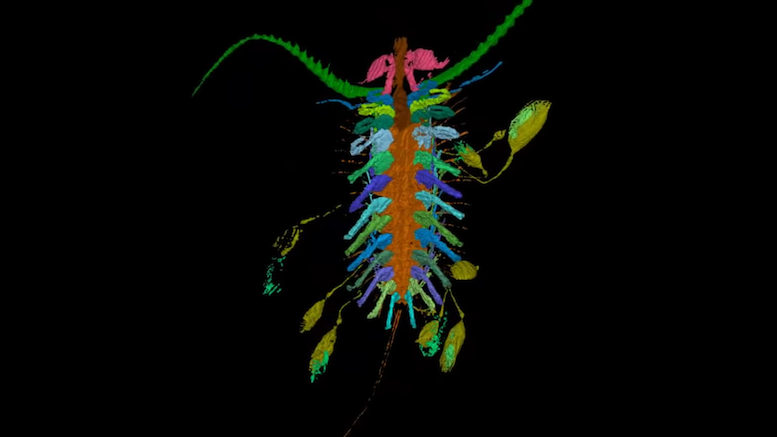
Computerised version of Aquilonifer spinosus, screenshot attributed to PNAT research centre
A 430 million-year-old sea creature – predating the dinosaurs – has been discovered by scientists in the UK, and apparently has one extremely odd method of keeping her kids under check during maternity: dragging her offspring around on strings like kites.
The fossil has been given the nickname “kite runner” and ten capsules hitched to its back appear to contain young offspring, all at different stages of development. “There isn’t an animal today that it’s essentially related to,” David Legg told the BBC, a palaeontologist from the Oxford University Museum of Natural History states. As reported in the journal PNAS, the many-legged, eyeless, one centimetre animal is not directly related to any living species.
“It’s what we refer to as being on a stem lineage. So it belongs to a group that would have evolved and diversified before the modern groups did.”
The fossil was discovered from a site in Herefordshire – green hills that roll past the horizon, sheep that graze on riverbanks and cottages “skewiff” in micro-canyons, before being taken to Oxford and computerised. The process of building a 3D reconstruction of the specimen involves cutting up the specimen, bit by bit, and photographing each of those sections.
Then, the quirky animal is pumped full of life and colour onto computer screens. Graffitied with hues vaguely reminiscent of those of the Queen “Hot Space” album cover, and furiously waggling its skimpy legs, “kite runner” looks more like something scientists would discover on the far-flung planet of Kepler-186f than in the British countryside.
With the creature crawling around the thousands of pixels on his computer screen, Dr Legg and his colleagues set about categorising it using “compositional phylogenetics”.
The process suggested that Aquilonifer spinosus was a mandibulate: It belongs to the same broad group as modern insects, crustaceans and centipedes – but is not a direct ancestor.
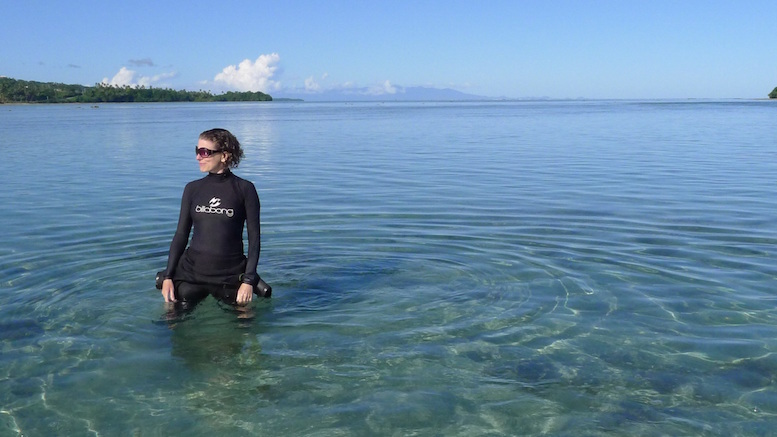
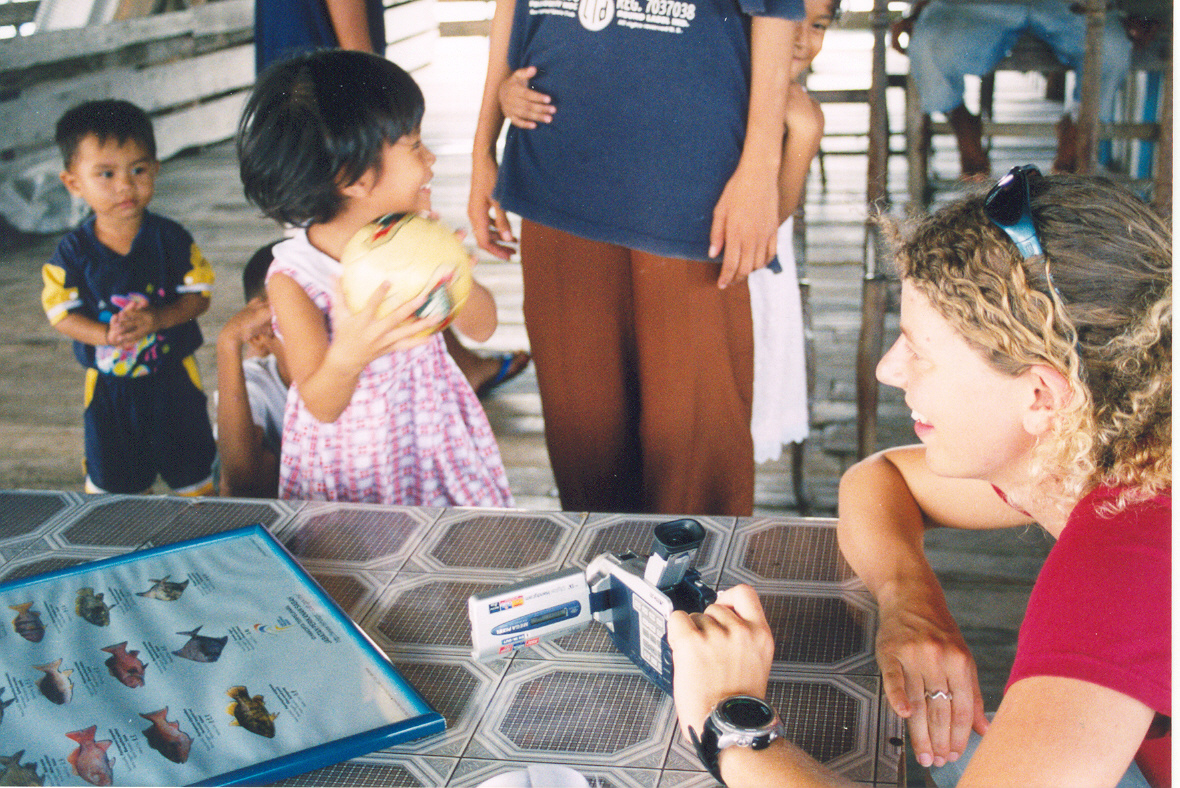
Helen Scales a freelance writer, broadcaster and marine biologist from England is this week’s “Defender of the Ocean”. Her PhD research consisted of studying the majestic humphead wrasse and its exploitation for seafood restaurants across Asia. For a decade she has worked for conservation groups, including WWF in Malaysia. Now she writes books and articles about the oceans and makes documentaries for BBC Radio.
What got you into marine biology, and passionate enough to write about it?
As a kid, I was always an outdoors junky. I especially loved our family holidays to Cornwall, the South-Western toe of the United Kingdom, a place that feels more wild than the rest of the country. It actually wasn’t until I learned to scuba dive as a teenager that I suddenly realised that the oceans were for me. Until then, I had my heart set on saving the rainforests (a big issue when I was growing up was deforestation). But as soon as I caught a glimpse firsthand of the underwater world, I was utterly hooked and my vision turned from green to blue.
My passion to write about the oceans grew as I travelled and dived and learned more about these wild and endangered places. I gradually realised that my true passion lies in telling people about the wonders that hide out of sight beneath the waves, and how they are suffering in the modern world in so many ways.
What’s the hardest thing/best thing about your job?
One of the tough parts of my job is staying optimistic about the future of marine life as scientists keep on finding out more and more about the impacts of human activities on the underwater realm. There are days when it seems like everything is doom and gloom. I have to keep reminding myself that there are still great wonders in the oceans and all is not lost.
On a more personal note, one of the hardest things I find as a freelance writer and broadcaster is having to constantly push out new ideas and finding the next thing to do. In a funny way, though, that’s probably the best thing about my job too; the fact that I have freedom to follow ideas and stories I love, and that there’s no one telling me what to do. Also, of course, I love that my job allows me spend lots of time underwater. I couldn’t live without that.
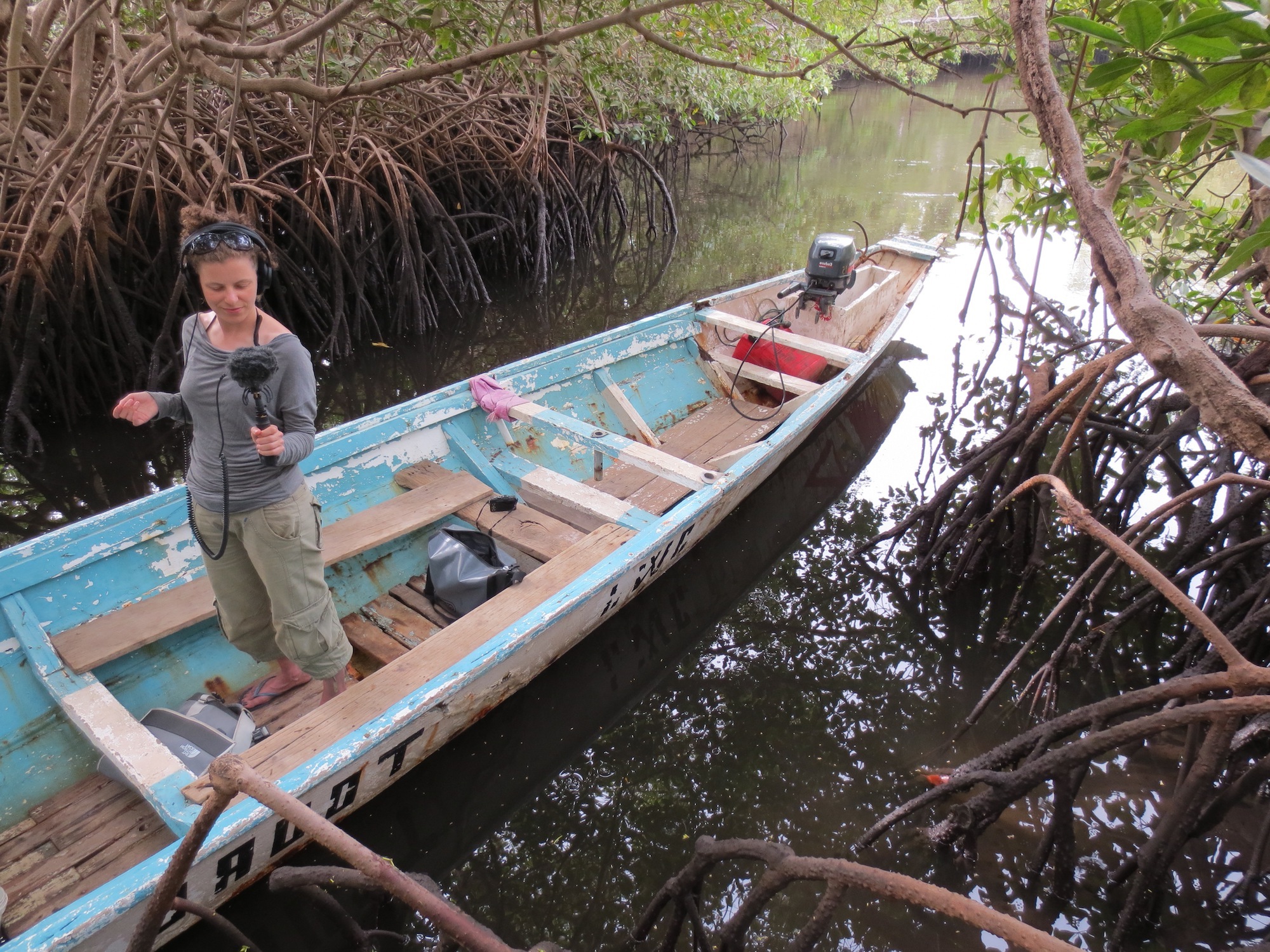
Helen carrying out research within the mangroves
What’s the craziest thing you’ve ever seen/discovered while on the job?
It’s really hard to pick out just one thing, so I’m going to cheat and give you a couple.
In Fiji a few years ago I went diving with bull sharks. They were being carefully fed by a local dive company, who donate some of the money from their dive outfit to local fishing communities in exchange for their promise not to catch sharks. I have some reservations about feeding wildlife, but seeing dozens of these beautiful, powerful predators up close was a truly extraordinary experience. The sharks were so controlled and careful, and showed me that they can certainly learn things – they know where to go to get food, and they even queue up for it!
One of the craziest things I’ve experienced is a fish bomb going off underwater. I was diving near Kudat, in the north of Sabah, when a fisherman threw a bomb in the water. I think it’s illegal to use fish bombs in Malaysia now, it certainly is in other parts of the world, but fisherman desperate to make money still use them to catch little fish, which are then used as bait or made into fish meal for farmed fish.
The sound from the explosion was so loud it shook my insides and I was sure if the fisher threw in another bomb any closer it would deafen me. My buddy and I immediately (and carefully) surfaced, only to see that the fisherman was a long way off. No wonder these homemade bombs have wreak havoc on coral reefs, blowing the corals apart.
What do you help to achieve through your work?
In everything I do, I’m driven first and foremost by the hope that my work will help show people the wonders of the ocean. I want to inspire people to be interested and to care for this incredible place and all the things that live there. After that, I hope my work helps inform the public about the problems the oceans face, and give them ideas of how they can do their bit to help.
Who is your marine biology role model?
I have a few marine biology heroes who inspired me to do what I do now. Probably greatest of all, though, is Eugenie Clark. She was a wonderful ichthyologist and shark specialist who sadly passed away last year. She was in her 90s and still diving and exploring the underwater world; she never lost her sense of wonder and joy in the oceans.
I loved reading her books when I was a kid and was captivated by her stories of travelling around the world studying fishes; this was back in a time when women didn’t really do that sort of thing, but she went ahead and did it anyway. I was very lucky to have a chance to meet Eugenie a few years ago. They say don’t meet your heroes, but she was even more fantastic in person than I imagined she would be; so kind, caring and inquisitive, and above all passionate about the oceans. If I can be a fraction of the person she was, then I’ll be very happy indeed.
You are currently in the mix of researching and writing From the Eye of the Shoal, the follow up to Spirals In Time… what can readers expect to learn about the secret wonders fishes?
In a way, I want to do for fishes what I did for molluscs in Spirals in Time, namely to shine a light on an amazing group of animals that many people might not realise are diverse, complicated, ancient, noisy, clever and above all utterly fascinating. Readers will find out what it means to be a fish, how they evolved, how they see, swim, eat and hear, and the latest scientific insights into their lives in oceans all around the world.
I will also to trace links between fishes and people. For molluscs, those links to human lives are mainly their shells that people have collected and treasured for millennia. For fishes, I want to trace other ways these animals loop into our world, and not just via our stomachs.
I will seek out the most unusual and little-known uses of fishes, to show readers that our relationship with these scaly creatures goes much deeper than predator versus prey. Among many stories, readers will see how people have used fish scales to make fake pearls and their swim bladders to make beer that sparkles. And I will seek out the truth about whether voodoo priests really do use puffer fish to make zombie potions that convince people they have turned into the living dead.
Helen, by Ria Mishaal
What made you decide to write From the Eye of the Shoal?
Ever since I did my first open water scuba dive many years ago, I’ve been an avid fish-watcher. I find myself being totally mesmerised by them, by the way they move so effortlessly and gracefully underwater, by their colours and shapes and by their complex behaviours.
I went on to study marine science and became an ichthyologist, and still today I take every opportunity I can go find fishes and watch them for as long as I can. This book is a logical step in my writing, to share my passion for these captivating animals and to reveal to readers the incredible and unexpected scientific findings surrounding them.
Is there a particular message
you’d like readers to take away from the book?
My biggest ambition is for the book to encourage readers to treasure fishes as wildlife. I want as many people as possible to see that fishes are worthy of our attention, compassion and protection, like many people do already for marine mammals, like dolphins and whales.
I also hope the book will spark a new craze for fish watching. I want to encourage readers to go out and admire the wildness and wonders of fishes. There are plenty of bird watchers out there, so how about us fish watchers get together and show them how it’s done underwater!
What do you think lies ahead for marine ecosystems?
There’s no doubt that the oceans and the creatures that live there face an array of human problems, like never before. Overfishing, pollution, rising water temperatures and ocean acidification are the big ones, and they’re all acting together, in concert. So, it’s easy to get quite gloomy about the future of marine ecosystems.
I think the ray of hope lies in protection and the hundreds of committed people around the world who are fighting to save marine life. If we can reduce as many pressures as possible, in as much of the oceans as possible, it will keep those ecosystems as healthy as possible and raise the possibility that they will be resilient to the onslaught of human activities. We need well-enforced marine reserves, protecting ecosystems from the tropics to the poles. The oceans have an amazing ability to recover, if we can just give them a chance.
What can the average person do to help protect life in the oceans?
There’s lots you can do.
Plastic waste is a huge problem in the oceans, from turtles choking on plastic bags to micro-plastics winding up inside barnacles and fish. And you don’t have to actually live on the coast to make a difference; a lot of our garbage that we throw out can end up blowing from landfill into the oceans.
So, cut down your use of plastic as much as possible: take reusable bags to the supermarket, recycle and reuse whenever you can, don’t buy face wash with micro-plastic beads in it, and get yourself a refillable water bottle instead of buying a single-use, throwaway plastic bottle each time.
If you eat seafood, you also have the chance to pick only sustainably caught fish. Check out the Seafood Watch programme at the Monterey Bay Aquarium or the Good Fish Guide from the UK’s Marine Conservation Society for ideas about better seafood choices, and what to avoid. Learn to ask questions at supermarkets and restaurants. If they won’t tell you what the fish is, where and how it was caught, then don’t buy it.
What next for you?
I’ve only just begun work on From the Eye of the Shoal, so that will keep me busy for a while including a long journey around the world when I plan to do as much fish watching as possible. I also have plans to do other writing, perhaps even a novel, which I expect will still involve the oceans some how.
Image edited to fit the requirements of uw360 layout
As part of their series of 2016 Diving & Snorkelling Guides, authors Tim Rock and Simon Pridmore have produced a brand new guide to Raja Ampat & Northeast Indonesia.
Diving or snorkelling in this remote region at the edge of the Pacific Ocean is a life affirming, bucket-list-topping experience! Abundantly rich in marine life, these seas are proving to be a gift for divers that keeps on giving. Raja Ampat is the superstar destination, but other areas such as Cenderawasih Bay, Triton Bay and Southwest Halmahera are shining brightly too and acquiring similarly mythical status.
This richly illustrated, detailed and informative guide is the first to cover all of these incredible places! It tells and shows you – the adventurous travelling diver – what to expect from this remote, fascinating and often downright astonishing part of the world. It will help you plan your trip, enhance your experience when you get there and provide you with the best possible souvenir of your visit.
And once you have been there, it will whet your appetite for adventures ahead – because you WILL be back!
The guide includes over 100 dive and snorkel sites, 240 colour images, travel advice, dive safety tips, topside attractions, diving terms in Indonesian and much, much more.
Tim Rock is an internationally published photojournalist who specializes in the ocean realm. Based on Guam in the Western Pacific Ocean, Rock is the author of numerous Lonely Planet Diving & Snorkeling guides and has awards for print and TV work. An Indonesia visitor for four decades, he has visited the Raja Ampat area over 20 times. His website: www.timrock.photoshelter.com
Simon Pridmore is the bestselling author of Scuba Confidential – An Insider’s Guide to Becoming a Better Diver. Now living in Indonesia, he has spent the last 20 years at the sharp end of the scuba diving scene in Asia, pioneering mixed-gas deep diving, running an instructor training agency, organizing expeditions, developing dive equipment and writing for divers and travellers. His website: www.simonpridmore.com
Tim and Simon have previously collaborated on the Diving & Snorkeling Guide to Bali, now in its fifth edition for 2016.
Ninety nine percent of 500 coral reefs surveyed in the Australian Great Barrier Reef’s pristine north are being hit by a global bleaching event that’s already slammed reefs in the Pacific islands of Hawaii, Vanuatu, American Samoa, and Fiji, as well as parts of the Caribbean, Florida Keys, and Indian Ocean.
The Great Barrier Reef’s aerial survey team reports it’s the worst mass-bleaching event in the reef’s history.
Scientists in the water have recorded coral mortalities of up to 50 percent in some areas, with reefs around ecotourism destination Lizard Island among the worst hit. The island had average sea surface temperatures of 33 degrees Celsius during February.
The Great Barrier Reef Marine Park Authority (GBRMPA) ranked the bleaching event at the most severe level, Incident Response Level 3, which indicates “severe regional bleaching or moderate or severe widespread bleaching.”
“Every reef except four in 1,300 kilometres are bleached and most of them are bleached in the most extreme category, which is more than 60 percent of the corals,” reef scientist Terry Hughes of James Cook University, who is leading the aerial and sea surveys, told Mongabay. He added that reefs with 60 percent or more bleaching would have “heavy mortality.”
“There’s a huge hit happening in the northern reef. It’s like 50 cyclones happening in the same week,” he said.
Starting March 22, aerial surveys flew a total of 4,000 kilometres to survey 500 reefs from Cooktown in Queensland’s north to Papua New Guinea. A second mission flew further south from Cairns to Townsville looking for the southern limit of the bleaching. Hughes told Mongabay the surveys will continue south next week until they find where the bleaching stops.
The bleaching is not predicted to worsen because the ocean temperature has started to drop with the onset of fall.
In October, the U.S. National Oceanic and Atmospheric Administration (NOAA) announced that the third global mass-bleaching event in history was underway. The event, which started in 2014, is caused by record high global sea temperatures due to a strong El Niño combined with global warming.
Hughes convened Australia’s National Coral Bleaching Taskforce, comprising 10 research institutions, in November in response to the forecasted arrival of bleaching in the Great Barrier Reef. For the monitoring, the taskforce had to charter planes, helicopters, and boats because “budget cuts had curtailed the GBRMPA’s capacity,” Hughes told Mongabay.
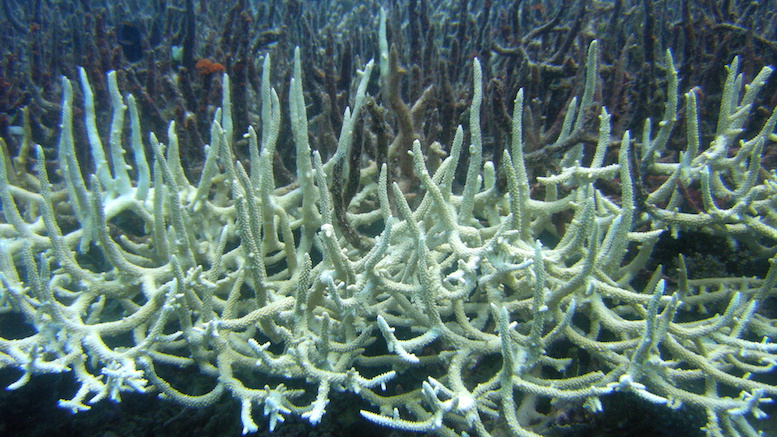
The Great Barrier Reef extends for 2,300 kilometres along Australia’s northeastern coast. In the world’s first global bleaching event in 1998, 5 to 10 percent of the Great Barrier Reef’s coral died. The reef was spared the impacts of the second global bleaching event in 2010. This is the worst event so far.
Coral bleaching is caused by water temperatures rising over one or two degrees Celsius above the seasonal average. With global sea temperature in 2015 and 2016 at record-breaking levels, water temperatures in the Great Barrier Reef have persisted at 1.35 degrees Celsius above average since January.
When a coral bleaches the algae that gives the coral its colour leaves. If the temperature drops the algae return after a few months. If high temperatures persist the coral dies and falls away from its skeleton.
When the time comes to book a trip or a course, how do you choose which dive shop to use? Here are some tips based more around trying to extract a laugh than anything actually constructive…
What do you want?
First of all, why do you need a dive shop? The shop you should go for is the one that will best suit your needs. If you’re a newly qualified diver and you walk in to be greeted by a mad-eyed beard surrounded by rebreather parts who refers to any sub 60 metre dive as a ‘noddy bimble’ then just return his glassy smile and back slowly out of the shop. That said, if you’re a teccie then crack on. I once went to the most amazing tec facility, there were racks of twinsets and banks of premixed trimix, although we did have to wait for 20 minutes whilst they went through every bag in the back trying to locate a BCD for someone to use.
Research
This is the bit where you look at the Internet. Do they have a nice website? Having a nice website isn’t exactly a guarantee of quality but if it’s still one of those HTML sites from around 2002 then it does relay a certain lack of urgency in the owners, which might translate through to other things like the décor of the shop or the condition of their underwater life support equipment.
Perhaps you could look at some reviews but don’t get sucked down the rabbit hole because someone somewhere hates everything. I once dived with a centre that had a one star review on Tripadvisor because the customer didn’t like the lunchtime sandwich. That’s like complaining about a successful medical procedure because you didn’t like the surgeon’s shoes. (The sandwich was grim though.)
How’s their social media? Do they have lots of snaps of happy divers at the end of their courses or is there just an old picture of a man trying to light a fart next to a half eaten kebab in the gas room?
Lots of dive centres advertise the fact that they do things properly.
This reminds me of a famous standup routine which, to paraphrase, points out that this is not something worth promoting as you are supposed to do things properly. You might as well have “We don’t actively try to maim or kill the divers in our charge” as a company slogan.
First impressions
You’ve decided to make contact and say hello. Every single dive centre is the “friendliest dive centre in location x”. To succeed as a dive centre all you need to do is be friendlier than the other centres. This began in the mid 70s with the result that friendliness in dive centres began to increase exponentially until the mid 90s when friendliness plateaued at a level of such suffocating warmth, empathy and camaraderie that the only way forward would have been to introduce an uncomfortable sexual note into the proceedings.
Then the Internet arrived and all human interactions could be performed digitally. There followed the “Great Scuba Friendliness Crash of 1999”. Since then some centres have been rediscovering friendliness but sadly sometimes confuse breathtaking displays of rudeness with “banter”. This has resulted in two equally “friendly” centres one of which will greet you with “Hello, sir, and how may I help you today?” whilst the second will use the opening gambit: “What’s an idiot like you doing in my shop?”
Incidentally, I am the friendliest Course Director in the UK.
Let’s get wet!
You’ve made your decision to dive but there are still a few things to watch out for: How helpful are the guides? What’s the general condition of the kit? Is the BCD like a crispy, brown, leather waistcoat? Are the regulators obscured by a pervasive fizz of bubbles? Are the 5mm wetsuits compressed to the thickness of Lycra with a strong whiff of ammonia? Does the mask have a thick fungal ring of feculence narrowing the field of vision? What are you doing with my kitbag?
Support the dive shop!
Of course, in reality, most dive centres are run by passionate divers who work incredibly hard and will do anything for their customers. If you find a good dive centre then use them. Don’t buy your kit from faceless online box stackers or do your courses with the cheapest volume-orientated, scuba sausage-machine. Support your local dive centre and in return they will support you with great training and great diving experiences!





 Diving or snorkelling in this remote region at the edge of the Pacific Ocean is a life affirming, bucket-list-topping experience! Abundantly rich in marine life, these seas are proving to be a gift for divers that keeps on giving. Raja Ampat is the superstar destination, but other areas such as Cenderawasih Bay, Triton Bay and Southwest Halmahera are shining brightly too and acquiring similarly mythical status.