Home Blog Page 180

Photographer of the Week: Peter A. Reiserer

0

We take a look at the fantastic life and times of Peter A. Reiserer:

Peter Alexander Reiserer may never have set foot into a formal photography classroom, but he was still one of the art’s greatest pupils. The German-born underwater photographer first grabbed a camera and housing as a way to pass time on long dives serving in the navy. But through years of experimentation and practice, Reiserer would transform photography with his avant garde take on the world beneath the waves.

“I didn’t want to be a reporter of the real world,” said Reiserer, perhaps best known for his images of “Aquanauts.” “I want to be a creator of a fabulous world – my world underwater.” Born in Rosenheim, Germany in 1935, Reiserer honed his diving skills over nearly two decades training and serving in the navy. His photography abilities, on the other hand, were purely self-taught.

He began taking pictures underwater in 1955, at a time when diving was still an adventure and divers were considered a rare breed. His job as a naval diver brought him to places like the Red Sea and Indian Ocean. Working underwater for long hours, Reiserer couldn’t resist taking a camera down with him.

Early years

Reiserer started his underwater photography career with a Robostar camera, followed by a Rolleimarin – at that time, the king of the underwater cameras. In these early years of underwater photography, Reiserer’s intuitive craftiness proved invaluable. As the underwater photographer must be ready for any situation, Reiserer was always ready to play handyman. Not the kind of underwater photographer to just mercilessly shoot the flora and fauna in front of him, Reiserer hand-crafted the photogear and props he needed to create the underwater world of his imagination.

In 1975, Reiserer moved to Ibiza, Spain, where he opened a diving school called Subfari. By that time he had changed from the two-eye reflex to a one-eyed Hasselblad. But it wasn’t just his camera that changed after the move, but his entire photographic style.
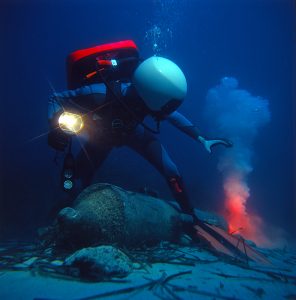
Plundering can be dangerous, as we never know what effect our technology may have on this new planet and what might be hiding here.

Ibiza inspiration

Reiserer started off like other underwater photographers at the time, taking snapshots of colourful fish in his Mediterranean backyard. But when he met Israeli photographer David Pilosof, everything changed. Pilosof was beginning to incorporate models (more or less dressed) into his portfolio. Reiserer started to work with models as well, exploring the feeling of weightlessness and the use of a variety of artificial lights in his images.

All of his subjects began to melt into the blue of the subsea, and with artificial lights, Reiserer fought to bring out a greater variety of hues. “Colour doesn’t exist except for the period of time when you bring necessary lights, and it disappears quickly with a subjects’ distance,” Reiserer said of using colour and lighting.

Forging ahead

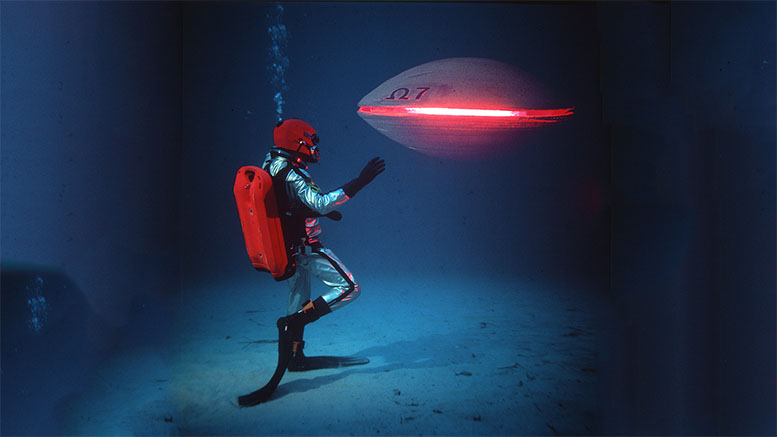
The wide-angle lens soon became his most important tool for generating exaggerated perspectives, as only a 40mm Distagon on a Hasselblad would do. Years later, many underwater photographers began using wide-angle lenses and models, but none with the force that Reiserer was exacting, equipping his models with diving suits and futuristic costumes.

While Reiserer never learned photography formally, he still understood the art down to the smallest detail – especially since shooting underwater brought with it countless technological and artistic challenges at the time. Instead of fighting the difficulties that came along with shooting underwater, Reiserer used water’s properties in his photography, linking its weightlessness to that of space exploration, and visually transformed aquanauts into astronauts on inter-planetary explorations. His images tell stories in ways that few others have attempted.

Reiserer’s use of futuristic paints and unusual fluorescent colours appear underwater like explosions, accentuated his heavy use of filters that emphasised the reds and saturated the blues. “It is hardly necessary to go very deep in the water for this kind of image, ten meters or so is enough,” explained Reiserer. “But what is necessary above all is water that is as clear as possible, and lighting set up artistically in order to avoid the appearance of suspended particles.”

The complexity of Reiserer’s photography made it impossible for the German photographer to work alone. Instead, most times Reiserer worked with the aid of his guests from his diving school in Ibiza. In fact, Reiserer even installed a veritable underwater studio, fitted with multiple lights that attracted attention as much for its novelty as for its creativity. Students flocked to Reiserer not to dive with fish, but to have the opportunity to assist one of the true pioneers – a master of experimental photography – in his photographical quest for the cutting edge.

Even after his passing in 2010 after a long battle with cancer, Reiserer’s legacy continues to shine. As one of the first photographers to produce commercially viable underwater images, Reiserer opened up the niche art to a new audience, and inspired a generation of underwater artists. Reiserer is still regarded as one of the most innovative European photographers, and his work still has a timeless importance that transcends his era.

Viewing his work today, Reiserer’s imagery still holds up against similar photographic concepts that are nowadays supported by digital technology and mass-produced underwater lighting tools. The execution of these photographic concepts would today be much simpler than they were in his day, but the artistic vision is still uniquely his. Reiserer’s images continue to inspire, immersing us in the underwater universe of his singular imagination.

We take a look at his work:

[smartslider2 slider="3"]

This article feature in Scuba Diver Through The Lens (Issue  03/2012) – Words by Javier Pierro Ruis and Alain Sebastian Wienkoop
32 Million Metric Tons of Global Fish Catch Goes Unreported Every Year, Study Finds

0

Official estimates substantially underestimate global fisheries catch, according to a new study published this week in Nature Communications.

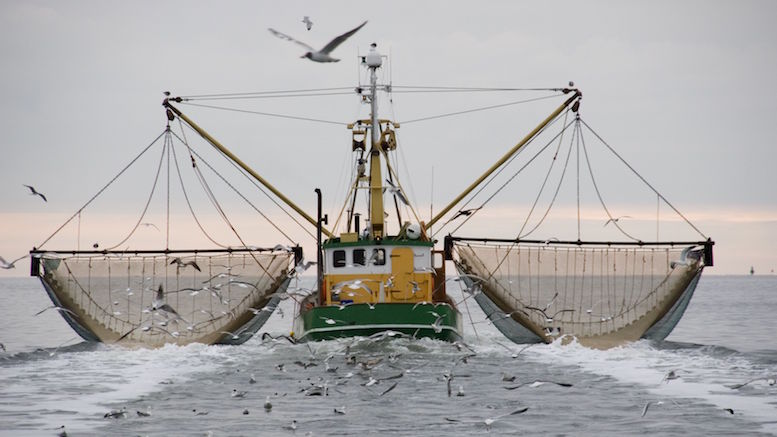
Researchers have found that between 1950 and 2010, the “true” global fisheries catch — or the amount of fish taken from the world’s oceans — was likely more than 50 percent higher than what member countries voluntarily reported to the Food and Agriculture Organization (FAO) of the United Nations. Moreover, since mid-1990s, fisheries catch has been declining more sharply than what FAO’s data seems to suggest.

This decline is not due to countries fishing less, but because they are overfishing and exhausting fisheries stocks rapidly, researchers from the University of British Columbia in Canada found.

Currently, member countries mostly collect — and report – fisheries catch data of industrial or large-scale fisheries. A large part of fisheries catch data however, goes unreported, according to the study.

For example, estimates of catch from small-scale or artisanal, subsistence, and recreational fisheries, discarded bycatch, and illegally caught fish are generally not reported to the FAO, researchers say. Consequently, FAO’s official statistics underestimate the actual global fisheries catch. In fact, according to the study, FAO’s official data underestimates global fish catch by around 32 million metric tons every year.

“The FAO doesn’t have the mandate to correct the data that they get,” lead author Daniel Pauly said in a teleconference. “Countries have the bad habit of reporting only what they see.”

When countries report “no data” for certain fisheries, FAO records them as zero, Pauly said. And the result is a systematic underestimation of the fisheries catch, which can be very high, “up to 20 to 30 percent in developed countries, and 200 to 300 percent especially in small island states.”

To find out the magnitude of this underestimation, Pauly and Dirk Zeller of the University of British Columbia’s Sea Around Us research initiative, supported by The Pew Charitable Trusts, and Vulcan Inc., together with an international network of 400 colleagues, reconstructed and estimated historic catches of more than 200 countries between 1950 and 2010.

9276714_xxl

They scanned through a broad range of direct and indirect sources including academic literature, industrial fishing statistics, local fisheries experts, fisheries law enforcement, human population, and other records such as documentation of fish catch by tourists, and compared their reconstructed estimates with those released by the FAO.

According to FAO data, starting in 1950, global fisheries catch increased steadily to 86 million metric tons in 1996, and then remained relatively stable or declined only slightly, by nearly 0.40 million metric tons per year. In 2010, fisheries catch fell to 77 million metric tons, according to the FAO.

In contrast, Pauly and Zeller’s independent estimates show that the catch peaked at 130 million metric tons in 1996, and then declined more strongly, by 1.2 million metric tons annually since then, to 109 million metric tons in 2010.

“These new estimates provide countries with more accurate assessments of catch levels than we have ever had, along with a far more nuanced portrait of the amount of fish that are being removed from the world’s oceans each year” Joshua S. Reichert, executive vice president and head of environment initiatives for Pew, said in a statement.

At the global scale, the researchers found that while industrial fisheries catch declined since mid-1990s, artisanal, subsistence and recreational catches have continued to increase.

However, some researchers, including the FAO, have questioned the study’s estimation methods. But Pauly said that his team is quite confident of the results. “This is not based on a few studies here and there and then extrapolation,” he said. “It is the result of 200 studies that were conducted over a decade by a network of 400 people in all countries of the world.”

Pauly and Zeller write that their reconstructed catch data could contribute to formulating better policies for governing the world’s marine fisheries. The first step in this would be to “recognize the likely magnitude of fisheries not properly captured in the official national collection systems.”

“This recognition will hopefully contribute to improvements in national data collection systems, an aspiration that we share with FAO,” they add. “It is hoped that this type of data [from recreational fisheries], and other missing data (for example, subsistence catches), will be included in future national data reports to FAO, as is the case for some other countries such as Finland.”

Citation:

Article published by Shreya Dasgupta. Source: Mongabay

Wreck Diving: 5 of the Best Sites to Dive into History

0

Nothing that sinks to the depths of the ocean is truly forgotten. The classic scene in the Titanic; when the stranded passengers, wrapped in sodden blankets on rescue boats, stare back at the sinking vessel – its bow 45 degrees in the air as the stern slides deeper and deeper into a seemingly endless void, appears as if lost forever.

Yet, years later at the depths of the ocean, the RMS Titanic was discovered. From downed WWII aeroplanes, to throwaway beer barrels, the ocean holds onto human history like a war veteran with a battered combat diary.

For those looking to dive into history, we bring you five of the best wreck dives:

San Francisco Maru, Micronesia

To those who know, San Francisco Maru is the “million dollar” wreck. An almost untouched, alternative war history museum that lets you get up and close to history. Dive through time and see burnt-out tanks, supply trucks, moss-covered mines and piles of unused bombs. The San Francisco Maru was sunk in Eten Anchorage in 1944, and lay unnoticed for over 20 years before legendary French frogman, Jacques-Yves Cousteau discovered the wreck.

8934867_xxlS.S. Thistlegorm, Red Sea

A crumpled wasteland on the ocean floor with vehicles scattered as far as the naked eye can see (or visibility will allow). Schools of reef fish weave through Norton 16H motorcycles as if customers in a bike shop, air bubbles rise from under broken car tyres and coral flowers attach themselves to the “Pinnochio noses” of old AA-guns. This fascinating wreck is of a British armed merchant Navy Ship sunk by two bombs in 1941.

USAT Liberty, Bali

The famous USAT Liberty wreck, downed in 1942 by a Japanese submarine, is one of Indonesia’s most popular dives. A 120 metre body, broken in many places and overgrown with soft corals of various colours. The ship is the host of more than 400 species of fish, including thousands of bigeye jacks, which can be found circling above the shipwreck like a halo.

S.S. President Coolidge, Vanuatu

This site is much like an underwater ski resort, with dozens of mapped routes ideal for beginners, intermediate and advanced divers. The world’s largest underwater wreck allows you full access to every part of the sunken vessel; pass through old toilet cubicles, squeeze into dorm rooms through the many portholes or take a peek into the medical supply room.

SMS Markgraf, Scapa Flow, Scotland

The cold, dark depths famous for the seven out of 78 German Navy vessels that remain under Scapa Flow waters today, are a must dive. Check out the 26,000 ton, 177 metre long, SMS Markgraf which has its hull opened up, allowing divers the unique chance to get up and close to a drowned torpedo room, and the chance to swim right through the stern.

Pioneer of the Week: Hans Hass (Part Two)

0
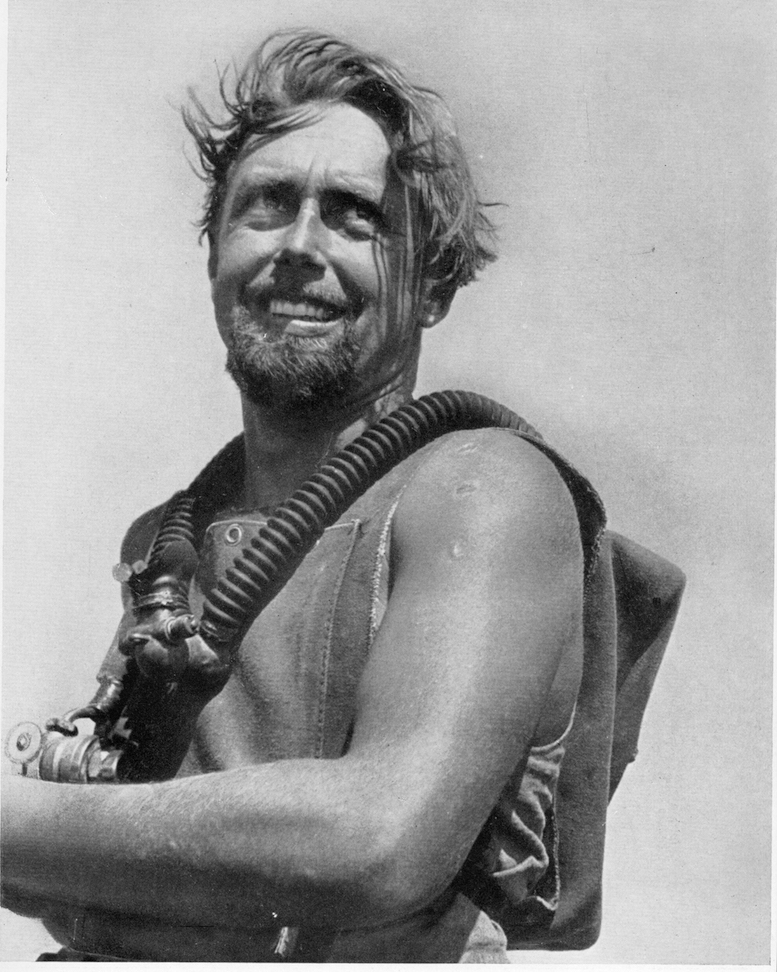
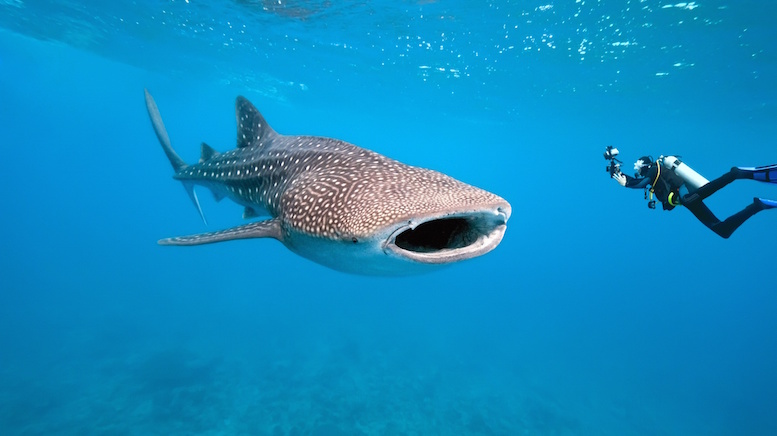
1950, Red Sea. Hans' photograph of a whale shark with a diver in the background on his second Red Sea expedition.

We continue on from last week’s article of the incredible life and achievements of Hans Hass:

Despite his ship being a casualty of war, Hans Hass’ adventures continue, as his reputation and fame begin to build…

Although he had lost his research vessel, Hans gained a wife when, in 1945, he married the German actress Hannelore Schroth (1922-1987), whose career on stage, film and TV spanned over 50 years. It was Hannelore’s second marriage and in 1946 they had a son, Hans Hass Junior, but the relationship did not last and they divorced in 1950.

As Austria slowly recovered from the ravages of the war, Hans reapplied himself to writing, and his fourth book, Drei Jaeger auf dem Meersgrund (Three Hunters on the Sea Bottom) was published in Zurich, Switzerland in 1947. This recorded the adventures of the 1939 expedition to the Caribbean and also Hans’s time in America as he made his long journey back to Austria.

During this period he steadily worked at returning to diving as royalties from his popular books started to accumulate, and by 1949 his fifth book on diving was published. Titled Menschen und Haie (Men and Sharks), it was again published in Zurich, Switzerland.

By November 1949 he had positioned himself to return to diving and took one major step that would eventually place him on cinema screens around the world and bring universal attention to his research work. He packed his Gegenlunge and underwater cameras and headed to the Red Sea on a solo expedition. Working out of the Sudan, Hans captured amazing images of the rich underwater life and scenery, and, once back in Vienna, set about funding a major expedition back to the Red Sea to make a full length documentary film with a support crew.

To gain the required funding he would eventually have to modify his scientific documentary approach to filmmaking to include a storyline that would ultimately include a female crewmember. Lotte Beriel was his office assistant and through her careful manipulation of the situation, she was able to land a spot on the expedition crew. She would later publish her experiences in her book, Girl on the Ocean Floor (1972, Harrap, London). There was no American printing of this book.

During 1949 Hans also started working with the German camera company Franke & Heidecke and this relationship would eventually produce the Hans Hass Rolleimarin System underwater camera housing in 1954. During 1950 he also developed an underwater housing for the Leica camera.

International Recognition

By 1950 Hans had secured sufficient funding and support to return to the Red Sea with underwater film cameras. He and his crew survived many adventures diving with their oxygen rebreathers, and the result of the footage they captured was to be his third film, Under The Red Sea. The German title for the film was Abenteuer im Roten Meer. The film was a great success and launched Hans on a decade of scientific diving. The expedition had brought Hans and Lotte much closer together and they were married in November 1950. Their daughter Meta was born in 1957.

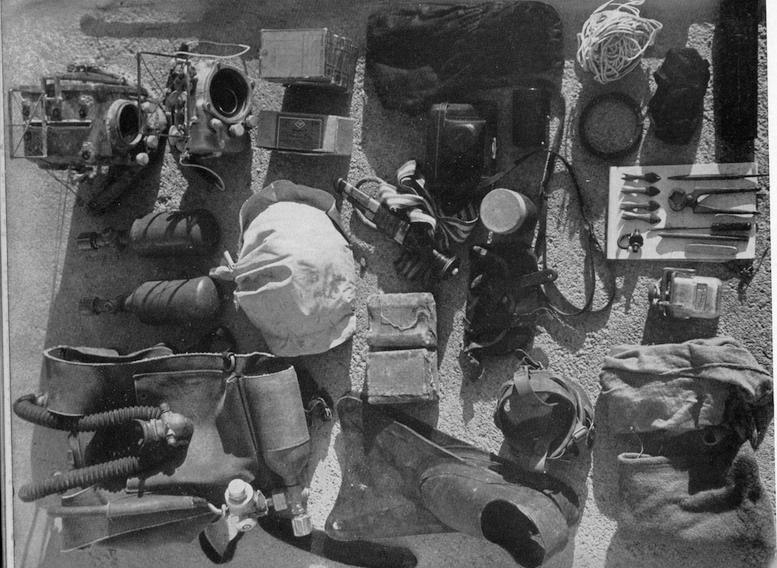
1948. The equipment that Hans took with him on his solo expedition to the Red Sea. "My equipment includes the respirator (upper right), oxygen cylinders, submarine cameras, fins, mask, light gauge, film-changing bag, and harpoon barbs. The bag in the centre contains enough caustic soda for only twenty-five descents of an hour each." (Leslie Leaney Archives)
1948. The equipment that Hans took with him on his solo expedition to the Red Sea. “My equipment includes the respirator (upper right), oxygen cylinders, submarine cameras, fins, mask, light gauge, film-changing bag, and harpoon barbs. The bag in the centre contains enough caustic soda for only twenty-five descents of an hour each.” (Leslie Leaney Archives)

With a major film in the works an increased interest in Hans’s career began in America. His 1947 book, Drei Jaeger auf dem Meersgrund, recording Hans’s pioneering diving adventures up to and including the 1939 expedition to the Caribbean, was translated into English and published as Diving to Adventure (1951, Double Day, New York). The publication of the book helped prepare the American market for the release of the film, Under the Red Sea. Skin diving was also get more national attention in America, and enthusiasts got their own national magazine in December 1951 when the first edition of The Skin Diver was published.

In 1952 his book covering his first solo expedition to the Red Sea was published in England, as Under The Red Sea, and in German as Manta, Teufel im Roten Meer. American publication followed a year later and was titled Manta, Under the Red Sea with Camera and Spear (1953, Rand McNally, Chicago). This was his second book in English and quickly went to two printings in the USA.

Under the Red Sea was released in America in 1952. The German version had already received the International Prize for feature-length documentaries at the 2nd Mostra Internazionale del Film Scientifico e del Documentario d’Arte in Venice. However, it must be noted that Hans was very, very unhappy with the American version of his film, which had been given the “Hollywood treatment.” Some of the scientific elements of the film were disregarded and certain sequences edited in a way that distorted their original scientific results.

The posters for the movie promoted sensation more than science and Hans came away from the experience with a great deal of mistrust for the American film industry. The film was a success, however, and he later noted that, “…it was shown in nearly every civilised country – and in a lot of uncivilised ones – and a portion of the admission money handed over by spectators of every shade of skin colour eventually, and after a great many deductions, came to us.”

From America to the Great Barrier Reef

The film’s American distributors invited Hans and Lotte to New York for the premiere of the film and then to appear at the opening of the film in other American cities. They took along their diving equipment to exhibit at the openings and in television interviews. Hans had always wanted to visit Australia’s Great Barrier Reef and he and Lotte used this American visit as a stepping-stone to achieve that goal by flying from San Francisco to Sydney. From December 1952 to February 1953 they visited Australia and the Great Barrier Reef and learned more about sharks from the nation’s divers, who encountered them on a regular basis.

Hans Hass on expedition.

Having a successful film and book available in the English language now opened up a completely new audience for Hans. With the added media royalties coming in from his film, Hans was finally able to acquire a vessel for scientific diving expeditions to replace Seeteufel. In Denmark in 1952 he purchased the hull of a sailing ship that had been built in 1926 for the Singer family, who had made their fortune manufacturing sewing machines. He brought the vessel to Hamburg for an overhaul and refitting to the requirements he needed for an ocean going scientific research vessel. He gave his new ship her original name, Xarifa, which was the Arabic word for “beautiful,” and it would carry Hans and his team on two major scientific expeditions.

To be continued…

Words by Leslie Leaney, all photos © The Hans Hass Institute, except where noted. All Rights Reserved.

This article featured in SD OCEAN PLANET (Issue 8/2014)

Needed: Old-age homes for coral reef fish

0

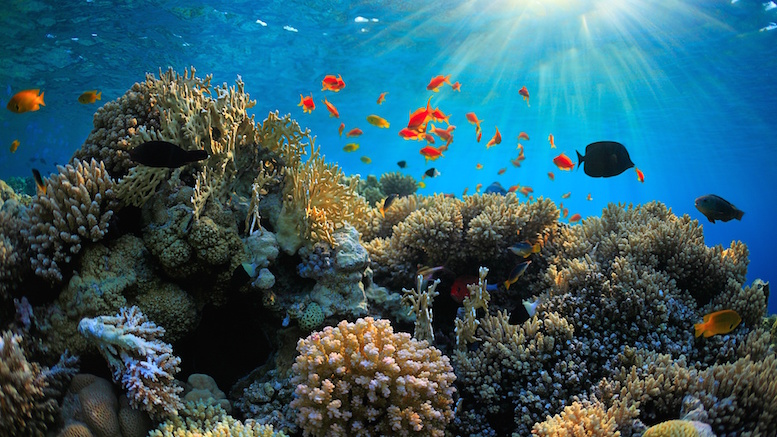
Reef fish may take longer to recover from overfishing than previously thought. While smaller fish with short life spans tend to rebound quickly in protected reefs, larger, slow growing fish may need more than 100 years of strong protection to fully recover, a new study concludes.

The study was published online this month in the journal Proceedings of the Royal Society B. Tim McClanahan, senior conservationist for the Wildlife Conservation Society, and Nick Graham, a researcher with James Cook University in Australia, analyzed fish survey data from 324 coral reef sites in the Indian Ocean, spanning eight countries. They classified the study sites into six management categories ranging from large, uninhabited, remote protected areas down to reefs open to fishing with no restrictions on gear, which included destructive dragnets and explosives.

For the fish at each site, the researchers evaluated family-level life history characteristics, such as body length, growth rate, age of maturation, and mortality. Previous research into reef-fish recovery rates primarily investigated biomass — the collective weight of fish in a given area — and tended to conclude that fish communities in protected reefs had recovered when their biomass levelled off, often after about 20 years. But many life-history metrics of a reef community continue to change for decades after biomass levels off, the study found, and the full recovery process may take over a century.

“Fish biomass has been the common way to evaluate fish communities, but what our research shows is that it does not tell the entire story,” McClanahan said in a statement.

“Analyses based primarily on fish biomass produces [sic] an incomplete and somewhat misleading scenario for fast recovery from overfishing. What we found was a slow and continuous reorganisation of the fish community well past the stabilisation of biomass,” he said.

The distinction between calculating reef-fish recovery rates based on biomass versus life history metrics is only one aspect of the study with potential implications for fisheries management and coral reef conservation. In its evaluation of reef-fish recovery rates, the study also distinguished between protected reef areas by size, age, and level of protection.

Three of the six management categories that the researchers divided their 324 study sites into comprised protected reef areas. The first category, which served as the baseline system for the study, consisted of 36 sites in the massive, uninhabited, remote protected area of the Chagos Marine Reserve, part of the British Indian Ocean Territory. The second category was for high-compliance marine reserves. And the third category of protected reefs was for young and low-compliance marine reserves, including those without regular or effective patrols or enforcement.

“Categorising management effectiveness helped to tease apart the various influences and led to a better understanding of how fishing changes the life histories of fish communities,” the researchers write in the study. The findings of the new study “would not have been evident unless high compliance closures were present in the region and evaluated separately from low compliance closures,” they write.

Coral reef fish communities recover even more slowly and less completely in low-compliance and young marine reserves than in high-compliance reserves, they found. While they expect that the recovery process in high-compliance reserves would take more than 100 years, they predicted that life-history metrics for reef fish in low-compliance reserves would never reach pre-fishing levels.

The age of marine protected areas clearly plays a role in reef fish recovery, but so does size. Reserves should be at least five to 10 square kilometres, according to the study. “Reducing closure size slowed recovery rates, particularly in the low compliance and young closures,” the study states. Reef fish that do not recover well in small, new, or low-compliance reserves include parrotfish, triggerfish, and groupers.

“The effective protection of the full suite of fish species and life history characteristics will depend on the establishment of large reserves with strict enforcement,” Graham said in the statement.

The study findings come at a critical time, just past the halfway point between 2010, when governments around the world committed to protecting 10 percent of the oceans under the Convention on Biological Diversity, and 2020, when they are to meet that goal. As of late 2015, only 3.6 percent of the planet’s oceans were protected in some way — and significant commercial fishing is permitted in a full half of that area.

Citations

McClanahan, T.R., Graham, N.A.J. (2015). Marine reserve recovery rates towards a baseline are slower for reef fish community life histories than biomass. Proceedings of the Royal Society B 282: 20151938.

Source: Mongabay, published by Rebecca Kessler.

Wildlife of the Week: Flashlight Fish

0

Were it not for the one feature that practically qualifies these little guys for a part in a science fiction movie, the flashlight fish would be an easily overlooked, unremarkable little species.

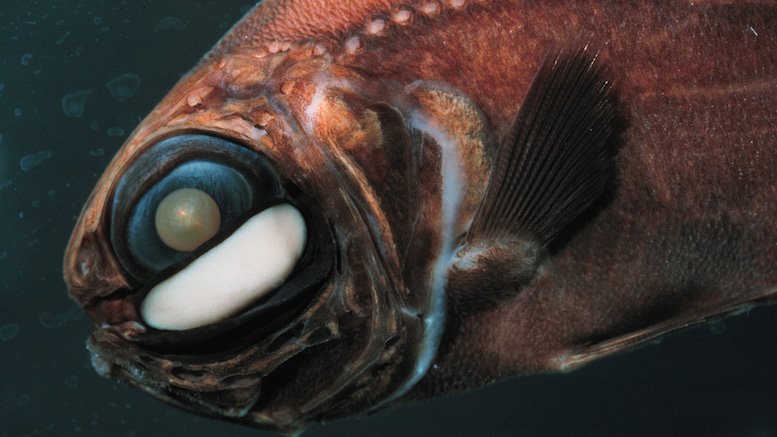
Underneath their eyes these fish have a glowing pocket of bioluminescent bacteria that can be covered with an opaque “eye lid” at will, enabling them to emit flashes of light for a number of different purposes.

This amazing light can be seen from around 30 metres away. It is used to attract and locate the small crustaceans, polychaetes, and zooplankton on which they prey. It is also used for communication; these are social fish, usually found in pairs or small schools rather than alone. The females are territorial, seeing off invaders with a luminous threat display. This flashy behaviour is also applied in some nifty escape techniques, confusing potential predators by blinking their lights and then turning them off and swimming away quickly, leading predators to an empty pocket of water.

Many flashlight fish are deep-water dwellers, but Photoblepharon palpebratum lives at shallower depths, hiding in coral caves during the day and emerging at night to feed. They are found throughout the Indo-Pacific.

This article featured in Scuba Diver OCEAN PLANET (Issue 8/2014).

6 Things Not to Do If You Love Sharks

0
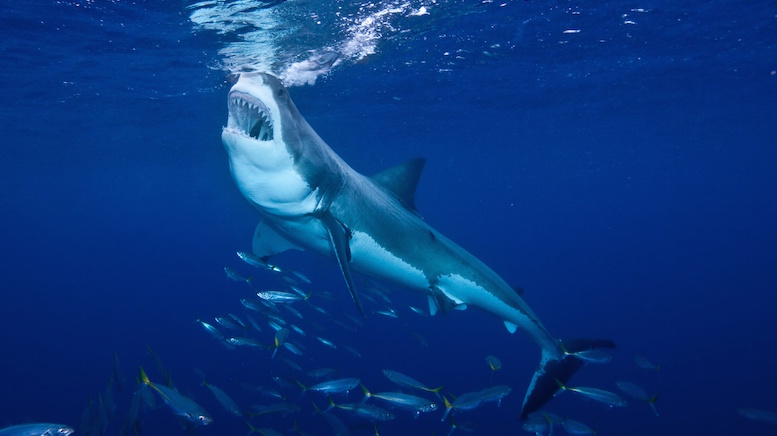
"Out in the blue, opportunities to dive with great whites! © 123rf.com

Jenga. A tense game in which a player tests the strength of a structure by slowly removing one piece from it at a time. Take one wrong piece, and the entire structure collapses. The game ends. As the game goes on, and more pieces are taken away, it becomes more and more likely a “wrong piece” will be pulled and the entire structure will break.

The structure of the ocean, how it lives, dances and survives can be likened to Jenga; it can survive with a few pieces missing, but take one wrong piece and an entire ecosystem collapses. Now, it’s no secret that sharks have such an important role within the ocean’s living structure that they can be identified as a “wrong piece” to pull. Just like in the game, for some reason you still want to test the “wrong piece”. Even when your friends warn you of the consequences, just like scientists warn of the potential disasters, you pull it because you think the structure can take one more hit – an ocean without sharks. You pull that piece, and the structure collapses.

Love sharks? Here are six things not to do to help save them:

Consume or purchase shark

There’s more to it than just the nefarious shark fin soup… shark steaks or meat including imitation crab, lobster or shrimp all come from the average 100 million sharks that are pulled out of the ocean every year. For what? To be the “wonder ingredient” behind an overpriced, scientifically unproven medicinal treatment method, or to be a substitute for lobster and crab.

Eat at restaurants or shop from stores that sell sharks

Eating at restaurants or purchasing from stores that sell shark gives businesses an economic incentive to continue fishing for sharks. Take a stand, research into a store’s products before buying from there. If you find anything fishy, voice your concern and take your business elsewhere.

8774140_xxl (1)

Use products that contain Squalene

Never use any products (including makeup, lotions an deodorants) that contain Squalene – shark liver oil. In fact, try and just buy cruelty free.

Use plastic, a lot

While plastic bags, and the small, thin transparent ones you get given at supermarkets are the worst culprits, all plastic products are problematic for the ocean and sharks. Entering the ocean’s food chain, both plastic suffocates marine life when consumed, and poisons them with its toxins.7604151_xxl

Dump rubbish on the roadside

Because of the thousands of waterways that cut through the majority of the Earth’s land mass, many things that are discarded, even far inland, have a tendency to make their way to the oceans. Floating on the surface, trapping fish or suffocating pelagic species, your waste may well be deadly to marine life. Plus, you don’t want any of your rubbish entering the ocean to add another metre of terra firma to the infamous Garbage Continents in both the Pacific and Atlantic Ocean.

Share shark attack videos or anything that depicts sharks as bloodthirsty killer on the internet

Sharing shocking YouTube videos of provoked shark attacks to any social media platform promotes the idea that sharks are bad. If people see them, quite wrongly, as intensely evil beings, they will be far from interested in ever wanting to protect them.