Home Blog Page 181

Post-trip report: Scuba Diver in the Maldives with Nadine Chandrawinata

0

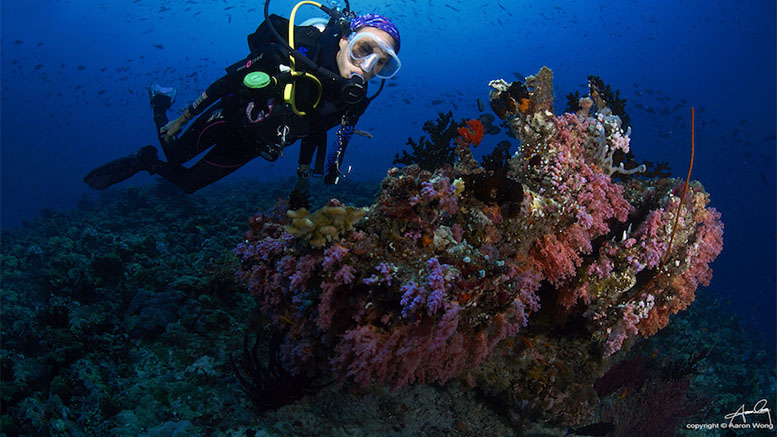
We take a look back at Scuba Diver’s post-ADEX 2014 expedition to the Maldives. Where the fantastic ADEX Ocean Ambassador (2014-2015), actress and beauty pageant winner (known best for representing Indonesia in the 2006 Miss Universe Pageant), Nadine Chandrawinata joined an experienced dive team, including ADEX Ambassador of Photography Aaron Wong, to explore the vast underwater megalopolis of the Maldives.

They recount their experiences:

Alice Grainger, Editor Scuba Diver AUSTRALASIA, ASIAN DIVER

“Kicking away from the reef at around 25 metres, I follow Pierre as he heads out into the blue. For a few minutes all we see is water, until a huge school of chevron barracuda pass by below us.

Then, around three metres under us, a shiver of around 20 grey reef sharks emerges from the left, while, from the right, a school of about 10 eagle rays comes soaring in. Pierre dives down, parallel to the rays and into the middle of what becomes a chaos of species.DSC_9338
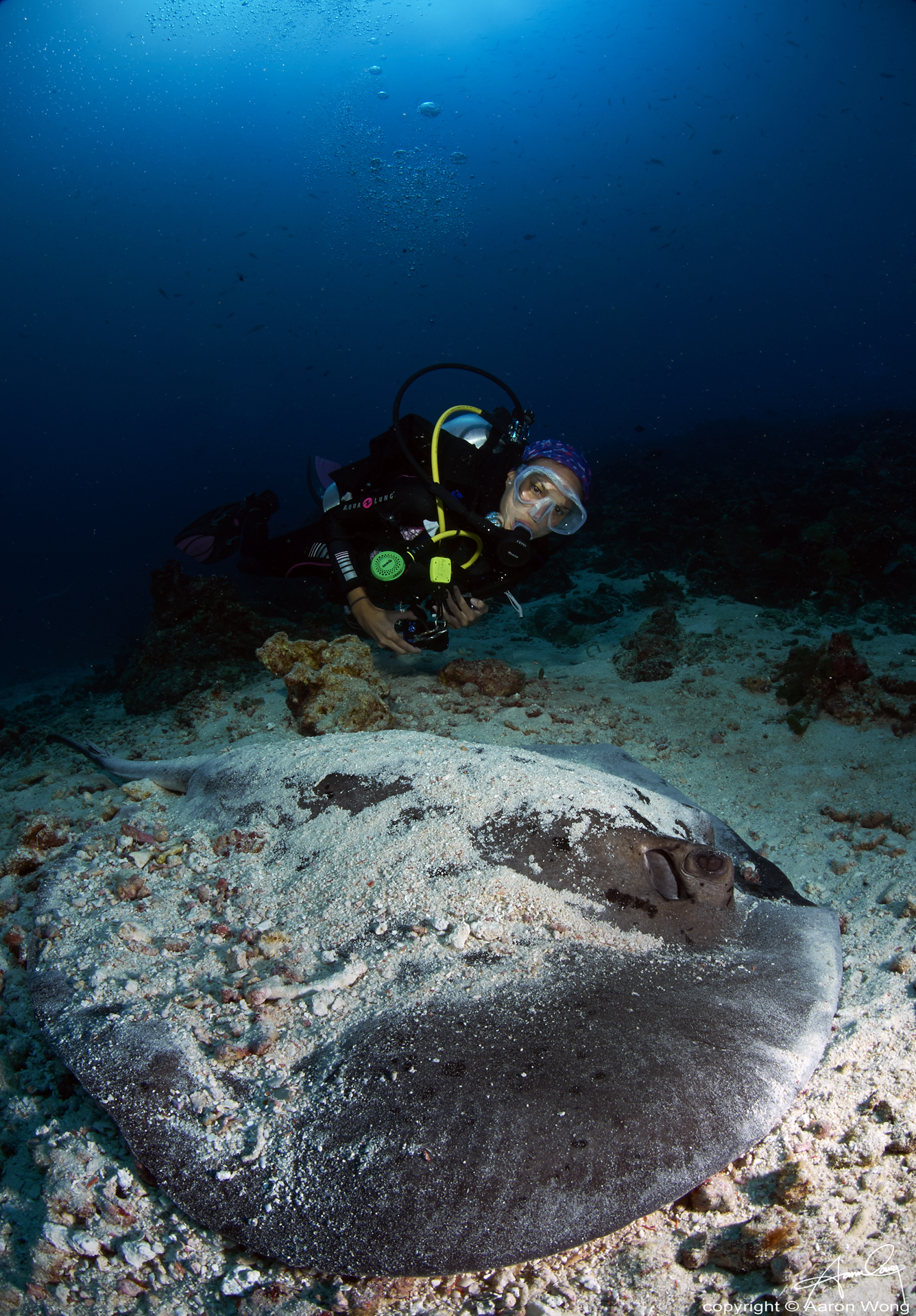
Trying to avoid the bubbles, the rays turn, swerving into the path of the grey reefs, literally crashing into the sharks that nonchalantly shrug off the collisions and continue on their way.

“Only in the Maldives…” said William Ban, fellow liveaboarder.

Big names with big passion for the underwater world, one big, luxury boat and some big underwater animals – it doesn’t get much better than this. The first Scuba Diver Group Expedition was a phenomenal experience.”

Pierre-Yves Cousteau, Conservationist

“The whole atmosphere was just awesome. But the highlight for me was meeting the very beautiful and interesting Nadine, and the talented Aaron Wong. Followed closely by experiencing a pod of more than 30 dolphins. It was just incredible, hearing them approaching for about five minutes, getting louder and louder, the anticipation building, and then seeing them pass overhead, silhouetted against the surface…”

Aaron Wong, ADEX Ambassador of Photography 2014

“Diving is not all about the underwater experience, but also the time you spend above the water – the company, the boat, the set-up. It’s the icing on the cake and this trip had it all”
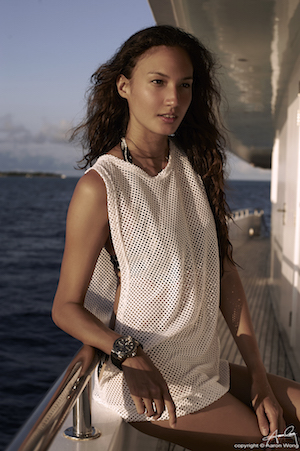
DSC_9503Nadine Chandrawinata, ADEX Ocean Ambassador 2014-2015

“I felt like I met a whole new family – everyone with a passion for the ocean, with the same mindset.

“The Maldives is the place to come for the big fish. The thilas make it so different from anywhere else. But I will never forget the afternoon we spent on Sexy Beach. Such an incredible place and we arrived at the perfect time; the light was beautiful. Being surrounded by great people with such wonderful energy, everyone smiling – unforgettable.”

Michael Ma, Hospitality Magnate, Owner of the IndoChine group

‘I loved the night dive with the new LED and UV lights – this new technology brings out colours in the reef that I have never seen before. And with the new cameras, I’m able to capture the kinds of images I couldn’t have captured before. It’s got me hooked on diving again!”

Keiichi Aratani, Owner of Hydro Sapiens, Thailand

“Dropping into the middle of a very strong current, the water full of plankton and looking up to see the shadows of quite a number of sharks moving in the water, it was like watching it on a screen.”

Watch this space for more in

Images by Aaron Wong. To see more of his incredible work, click here.
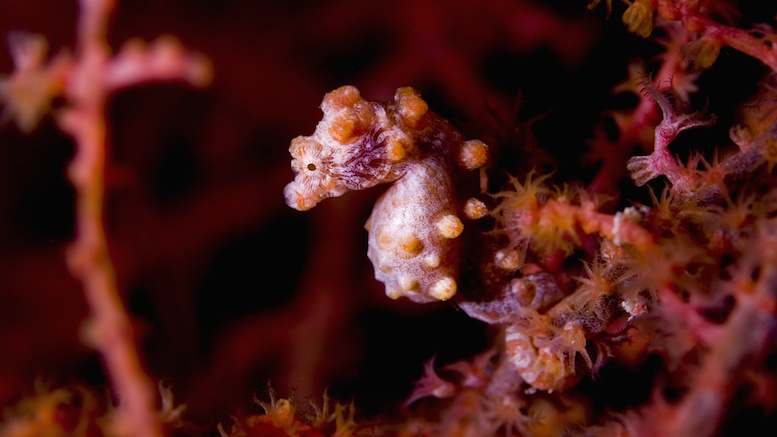
ADEX 2016: 4 Things You Need To Know About Seahorses

0

As we all already know, ADEX 2016 will be dedicated to seahorses. Here are four things you need to know about these unique and tiny creatures of the sea:

What are Seahorses?

There are over 40 species of seahorses. The scientific name for seahorses is “Hippocampus” which was derived from two separate Greek words, “Hippo” meaning horse and “Kampus” meaning sea monster. Although seahorses have large “horse-like” snouts that point downwards and differ in appearance from the common looking fish, seahorses are actually a type fish; they live in water, possess swim bladders and breathe through gills.

Seahorses come in various sizes; for the smallest species, the height of an adult seahorse is only slightly longer than 1 centimetre – about the length of your finger nail! For larger species, they can grow up to 20 centimetres tall.

Diet

Seahorses feed mainly on small crustacean such as mysid shrimps, which can be found crawling on the sea bed, they have also been seen feeding on small invertebrates floating in the water. Their snout acts as a vacuum which siphons prey directly into their digestive system without chewing. Adult seahorses consume around 40 pieces of food a day; from plankton to small crustaceans.

Survival

Lacking in manoeuvrability, seahorses are vulnerable to many types predators which include larger fishes, stingrays and even birds (such as penguins) that dive down into the sea for food. To avoid being eaten, seahorses are experts at camouflage. They are able to change their colours very quickly to blend into their surroundings, making it difficult for predators to detect them.

Under the sea can be a harsh place to live in, their curvy hook like tails help them cling onto coral, seaweed and grass preventing them washing away in heavy currents.

Human Threat

Sadly, humans pose the largest threat to seahorses. Over a hundred million seahorses are deliberately captured each year and dried to be used in the traditional Chinese medicinal trade or made into crafts and jewellery to be sold as souvenirs.

We dedicate ADEX 2016 to the seahorse, spreading awareness of these beautiful marine creatures, and aim to preserve and protect their habitat.

For more information on ADEX, please visit www.adex.asia.


12,000 year old massive underground tunnels are real and stretch from Scotland to Turkey

0

Is it possible that ancient cultures were interconnected thousands of years ago? According to thousands of underground tunnels that stretch from North Scotland towards the Mediterranean the answer is a big yes. While the reason behind these sophisticated tunnels remains a mystery, many experts believe that this huge 12,000 year old network was built as a protection against predators and other dangers 12,000 years ago. Some experts believe that these mysterious tunnels were used as modern-day highways, allowing the transition of people and connecting them to distant places across Europe.

In the book Secrets Of The Underground Door To An Ancient World (German title: Tore zur Unterwelt) German archaeologist Dr Heinrich Kush states that evidence of huge underground tunnels has been found under dozens of Neolithic settlements all over the European continent. These tremendous tunnels are often referred to as ancient highways.

According to Dr Kusch, the fact that many of these tunnels still exist today, after 12,000 years indicates that the tunnels must have been both complex and huge in size.

“Across Europe there were thousands of them says Dr Kusch,” in Germany we have discovered hundreds of meters of underground tunnels. In Austria we have found hundreds more. These underground tunnels can be found everywhere across Europe and there are thousands of them.” Said the German archaeologist.

While some of the tunnels are relatively small- some of them measure over a meter in width, there are other tunnels that have been found with underground chambers and storage areas.

The fact that these tunnels have been found points towards incredible ancient ingenuity which is anything but what history books tells us today. Ancient mankind had the knowledge and tools to build complex structures over ten thousand years ago. Evidence of that are the Pyramids of Bosnia in Europe and their incredible underground tunnels that go on for kilometres.

Dr Kusch states that ‘Across Europe there were thousands of these tunnels – from the north in Scotland down to the Mediterranean. They are interspersed with nooks, at some places it’s larger and there is seating, or storage chambers and rooms. They do not all link up but taken together it is a massive underground network.’

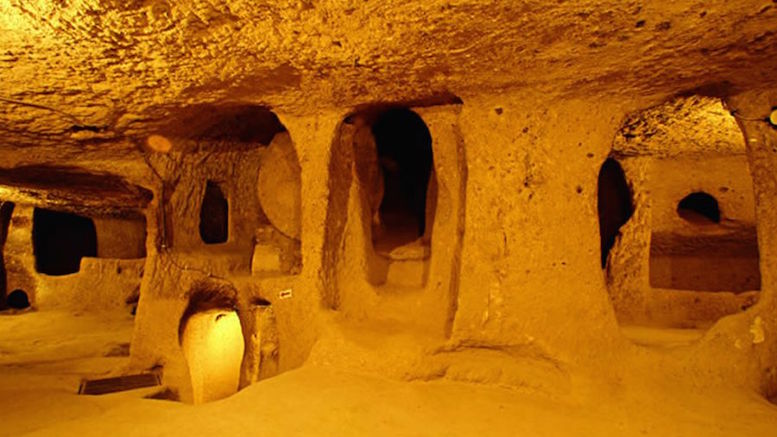
Cappadocia in Turkey is another incredible example. The underground city of Derinkuyu is another piece of evidence which points towards the perfection and long-lost construction methods of our ancestors. The underground city of Derinkuyu is perhaps one of the greatest achievements in underground construction together with the huge network of tunnels. The geological features of the stone from Derinkuyu is something that is very important; it is very soft. Thus, the ancient builders of Derinkuyu had to be very careful when building these underground chambers providing enough pillar strength to support the floors above; if this was not achieved, the city would have collapsed, but so far, archaeologists have not found evidence of any “cave-ins” at Derinkuyu.

Other ancient monuments such as Gobekli Tepe are more pieces of crucial evidence that point towards incredible skills and knowledge by people who inhabited our planet over ten thousand years ago.

According to Dr Kusch, chapels were often built at the entrances to the underground tunnels because the Church were afraid of the heathen legacy the tunnels might have represented, and like many other things, the church wanted to make sure word about the tunnels was kept as a secret.

In some of the tunnels writings have been discovered which refer to these underground tunnels as gateways to the underworld.

Source: Ancient Code

Marine Biologist of the Week: Dave Harasti

0

From recollecting the time he watched his friend wrestle with a bobbit worm, to discussing the future of marine ecosystems, we talk to Dave Harasti, a celebrated marine biologist who works in marine conservation, particularly marine protected areas and threatened marine species. Diving for over 20 years, Harasti is an award winning underwater photographer and has a divine passion to search for the unknown.

Madagascar: Protecting the Indian Ocean's Underwater Marvels

0

Text by Laura Robson, Images by Garth Cripps

With over 5,500 kilometres of coastline spanning more than 14 degrees of latitude, Madagascar boasts a diversity of marine habitats unrivalled in the Indian Ocean. Not only do these waters attract scuba divers from around the world, they also support the livelihoods of millions of small-scale fishers who inhabit the shores of this island nation.

Grassroots groundswell

Like so much of our blue planet, Madagascar’s marine ecosystems face a precarious future, assailed by a growing plethora of stresses, not least increasing fishing effort and destructive fishing practices. Fortunately though, the country is witnessing an astonishing groundswell in community-led initiatives designed to rebuild these fisheries and safeguard marine biodiversity.

This grassroots movement has been spawned by the viral spread of a temporary octopus fishery reserve model, whereby villages periodically close off portions of their gleaning grounds for a few months, which boosts landings and revenues upon opening. This has been fuelling interest in more ambitious management efforts, to the extent that Madagascar now has 63 locally managed marine areas, collectively covering more than 10 percent of the island’s continental shelf.

Velondriake is one such locally managed marine area; one of the very first to be created in Madagascar. Its name means “to live with the sea”, and its ethos reflects a radical new way of thinking about marine conservation. Not only have its 25 member villages spearheaded the octopus fishery reserve model, acting as a demonstration and learning site for hundreds of other communities along this southwest coastline and beyond, they have also challenged their partner organisation, Blue Ventures, to improve access to health services and livelihood alternatives as an integral part of local marine conservation efforts.

The freedom to choose

Blue Ventures’ work in Velondriake began over a decade ago, initially focusing on surveying the region’s coral reefs. With medics on hand to provide care for scuba diving expedition staff and volunteers, it soon became clear that their expertise could serve community needs too.

Responding to requests for reproductive health services, and with widespread community support, Blue Ventures started running a weekly family planning clinic in 2007, offering information and contraceptive options to couples in Velondriake’s central village of Andavadoaka. Since then, this initiative has expanded to serve 40 villages in and around the locally managed marine area.

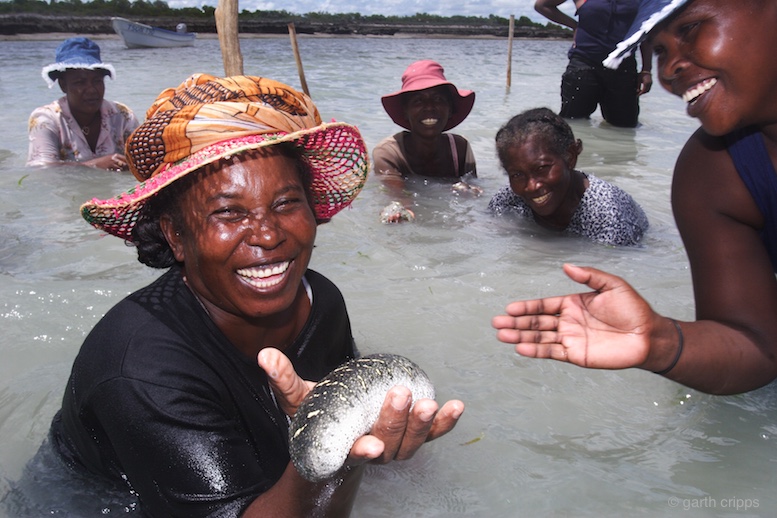
The Woman's Assocation, in charge of setting up the enclosures, weigh and measure the sea cucumbers

Blue Ventures employs a midwife who travels from village to village conducting outreach clinics, and 30 local women have been trained as community-based distributors of contraceptives. Couples are now able to choose freely the number and spacing of their births, and it is estimated that over 900 unintended pregnancies have been averted to date among a population of 15,000. Girls can delay their first pregnancy until after they have finished school or even university (with scholarships sponsored by Blue Ventures’ expedition alumni), while women have more opportunities to be economically active.

Farming the sea

With the majority of families in Velondriake utterly dependent on fishing and octopus gleaning for food and money, the community association governing the locally managed marine area was convinced that alternatives would be needed to reduce pressure on their marine ecosystem… Enter the remarkable – yet distinctly uncharismatic – sea cucumber.

Sea cucumbers are bottom-dwelling echinoderms (close relatives of starfish) that are prized and consumed in Asia for their purported medicinal and aphrodisiac properties. Much like a garden earthworm, they play a crucial role in recycling nutrients in sediments, forming the bedrock of complex marine food chains. Although they once littered Madagascar’s ocean floor, wild stocks have crashed in recent years, driven by growing demand from Asian markets.

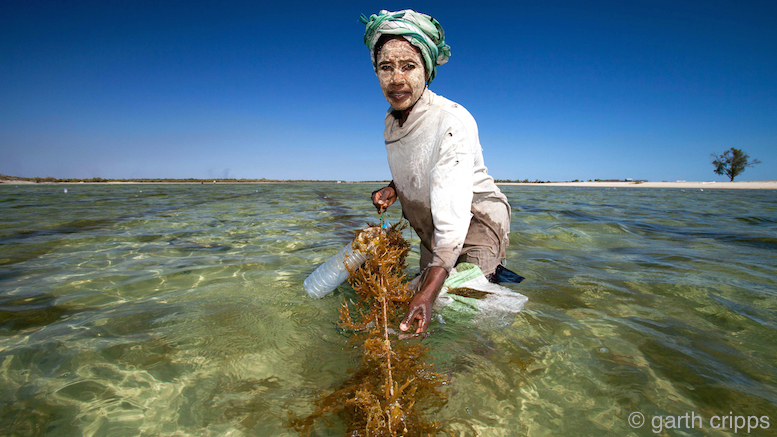
Velondriake communities are profiting from this trend by procuring juvenile sea cucumbers produced in a hatchery using patented technology by regional marine institute IHSM, then growing them out in basic mesh pens across shallow bays and selling the fullsize adults back to seafood exporting company IOT. Blue Ventures facilitates these partnerships and business skills training for the farming teams. Alongside sea cucumber rearing, seaweed farming is also emerging as an environmentally sustainable and economically important complement to fishing across Velondriake.

A sustainable balance

The evolution of this deeply pragmatic approach to marine conservation, blending fishery reserves with family planning and aquaculture, has been guided by the sagacious leader of the Velondriake locally managed marine area. Standing in the middle of the sandy quad between the Safidy health clinic, community education centre 2 and Blue Ventures conservation office in the village of Andavadoaka, Mr. Roger explains the logic:

“Family planning lets couples choose how many children they have, while marine reserves help to increase fish catches. If our population isn’t growing so rapidly and the fish catches are increasing, then we can have a better balance between fish stocks and our population. This means that people and the environment can live together, and we all benefit from this.”

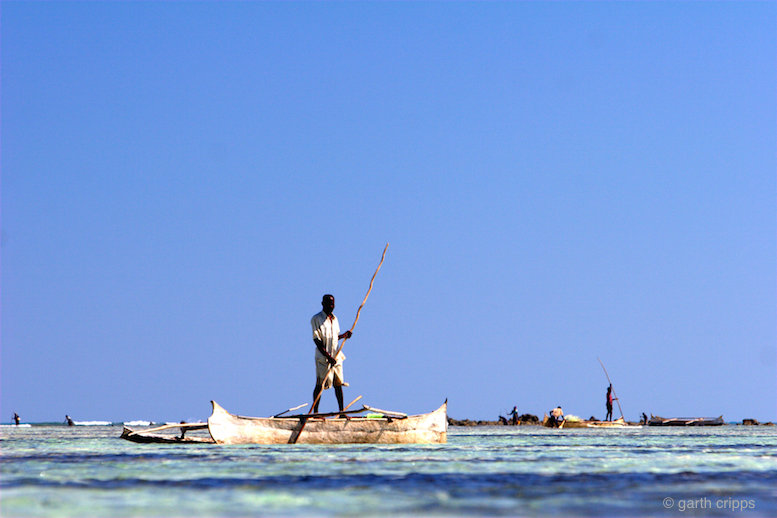
Man in pirogue © Garth Cripps

Andavadoaka itself is a hive of activity at the epicentre of these efforts, with Blue Ventures’ interdisciplinary team gathering weekly for coordination meetings; a chance to identify opportunities for working together more efficiently through boat pooling and shared activities. The local community welcomes visitors regularly – other fishers, government officials, funders, conservation organisations, journalists and scuba diving enthusiasts – all eager to learn from their experiences.

Making waves

This 360° response to the multidimensional challenges of conserving Madagascar’s staggering marine biodiversity is making waves around the island and across the western Indian Ocean. Traditional fishers, octopus gleaners, sea cucumber farmers and midwives are rallying around Velondriake’s vision to generate a triple win for ecosystem health, coastal livelihoods and community health. A new national network of conservation and health organisations, supported by Blue Ventures, is advancing this holistic approach throughout Madagascar.

This article featured in SD OCEAN PLANET (Issue 8/2014)

13 scuba diving safety tips you need to know

0

Dan Asia-Pacific provide us with their top 13 scuba diving safety tips:

All diving involves a degree of risk, because, after all, we are air-breathing mammals who have no “sensible” reason to journey underwater. If we accept this premise, and admit to ourselves that we are voluntarily entering an alien environment, we are more likely to approach our diving with a practical degree of caution. We must also acknowledge that we rely totally on our equipment while diving.

These safety hints apply to ALL dives, and should be read in addition to those hints for specific types of diving:

Be trained by a recognised agency

Such training will make you aware of the more common problems you will face underwater, and how to reduce the likelihood of these problems occurring.

Be medically assessed by a doctor who has appropriate training in diving medicine

Some medical conditions are not compatible with safe diving, while other conditions may allow you to dive safely with caution.

Thoroughly prepare and check your gear prior to diving

You rely totally on your equipment while underwater.

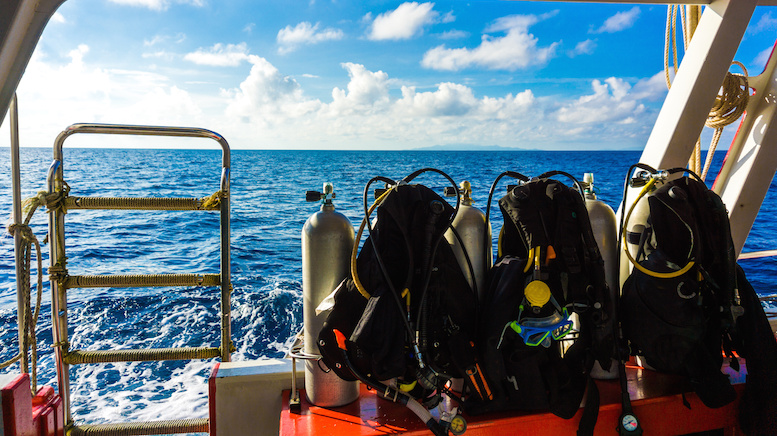
Scuba Diving kit set up ready for dive

Choose dives that match your training, experience and confidence

Always dive within your comfort zone. Listen to your inner voice. If you do not feel right while underwater, or you feel that you have exceeded your comfort level, abort the dive.

Check yourself

When you first reach the bottom, establish neutral buoyancy, ensure your ears are OK, check your air status and your depth, tighten your weight-belt, then signal your buddy that you are OK. Make these actions a standard part of ALL dives.

Watch your ascent rate on all dives

You should never exceed an ascent rate of 10m/minute when diving shallower than about 30m. An ascent rate of 5-6 metres per minute is recommended in the last 10m of ascent.

Complete safety stops on all dives that exceed 10m depth

Safety stops assist with reduction of excess nitrogen, which reduces the risk of DCI. They also slow your ascent rate, by forcing you to stop for a period of time. The rule of thumb is 3-5 minutes at 5-6 metres. An additional deeper stop of 2-3 minutes at 10-15m appears to be beneficial after deeper dives.

Always dive with a buddy

Your safety and your enjoyment will be enhanced by being with a companion while underwater.

Plan your dive

You and your buddy should agree on depth, time, air cut-off, and safety stops.

Plan your dive so you surface with a minimum of 50 bar

Don’t look at it as wasted air, but as insurance against the possibility of some emergency that causes your air consumption to increase.

Been a long time since your last dive? Don’t rush straight back into it

If you have had a layoff from diving, or you have been unwell, do some easier dives to regain your confidence and skill.

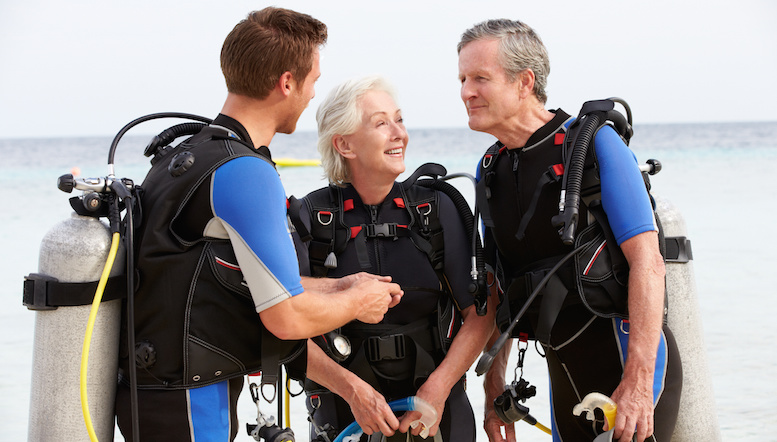
Senior Couple Having Scuba Diving Lesson With Instructor

Revise your skills regularly

Practise such survival skills as mask-clearing, regulator removal, and air- sharing regularly.

Log your dives

A record of your diving history may come in very handy should you ever seek higher levels of training.

By John Lippmann (DAN Asia-Pacific Founder, Chairman, Director of Research) and Stan Bugg (DAN Asia-Pacific Director)

Check out this incredible offer from DAN Asia-Pacific and UW360:

A brand new offer from Scuba Diver AUSTRALASIA + OCEAN PLANET and DAN Asia-Pacific now lets you get your dive safety, travel, education, entertainment, lifestyle and underwater photography, in one fell swoop and for a killer price.

Don’t miss out! If you live in the Asia Pacific region, become a Member of DAN Asia-Pacific and have the world’s best dive magazine land on your doorstep eight times a year, all for the special price of just SGD90!

Want to get your hands on this package? Click here.fd493c7d-1611-41db-b305-7f81ee2c24cc


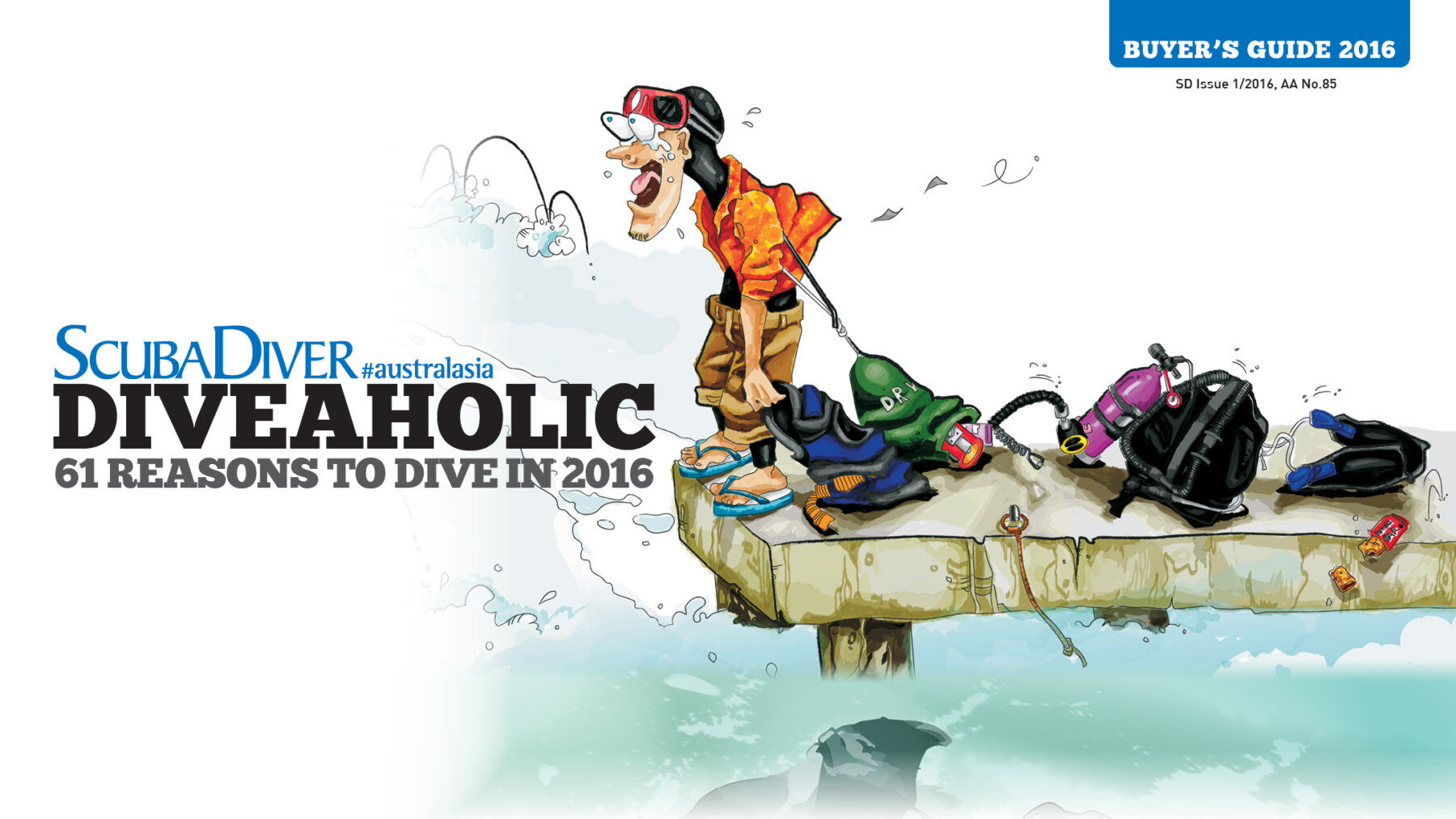
Scuba Diver AUSTRALASIA Diveaholic Buyer's Guide is out now

0

Why go diving? Well, that’s a HUGE question, normally answered by every dive addict with something along the lines of “Why not?”, or “How long have you got…?”.

Here at Underwater360 we are all true blue dive junkies and so, for 2016, we decided to put together 61 of the hundreds of reasons why diving is a great thing to be doing. “61 Reasons to Dive in 2016” is a bumper feature that, one by one, breaks down why exploring the watery world is so freakin’ fantastic. From the feeling of flying, to the fact that diving helps save life in the oceans, you can take your pick of ways to answer that most fundamental question. It’s also a great feature to help get you psyched up to make 2016 the year you go out and have the most fun possible under the waves.

You need two things to make that happen – decent gear and a decent place to dive. Scuba Diver AUSTRALASIA doesn’t mess about with its first issue of the year, bringing everything right back to basics and putting all the information you need right at your fingertips.

A mammoth spread of the latest and greatest kit to get on your wish list (or list of essential purchases, if you prefer!) immerses you in the world of dive gear as no other magazine can or does. There is something about new dive equipment that stirs the soul of every diveaholic, and the Buyer’s Guide will not disappoint, full of all the gear and gadgets that you need to fix your kit cravings.

But this issue is so much more: a veritable catalog of diving dreams. It contains the details of more than 80 operators plying the teeming seas of Asia Pacific, companies that can get you face to face with your bucket list critters, guides that will drop you into currents bursting with mantas, and instructors that will help you take your skills to the next level.

Its here, and it’s not to be missed. For everything you need for diving in 2016, get hold of SDAA’s Diveaholic Buyer’s Guide, and don’t suffer from scuba withdrawal for another moment.