Home Blog Page 29

No Foul Play – Ahmed Gabr is legitimately still the Guinness World Records holder for the Deepest Scuba Dive (Male)

0

Guinness World Records (GWR) recently concluded their comprehensive review into a series of anonymous claims on the legitimacy of Ahmed Gabr’s attempt in 2014.

Text by Lua Guan Sang & Nora Ismail
Photo credit: Ahmed Gabr


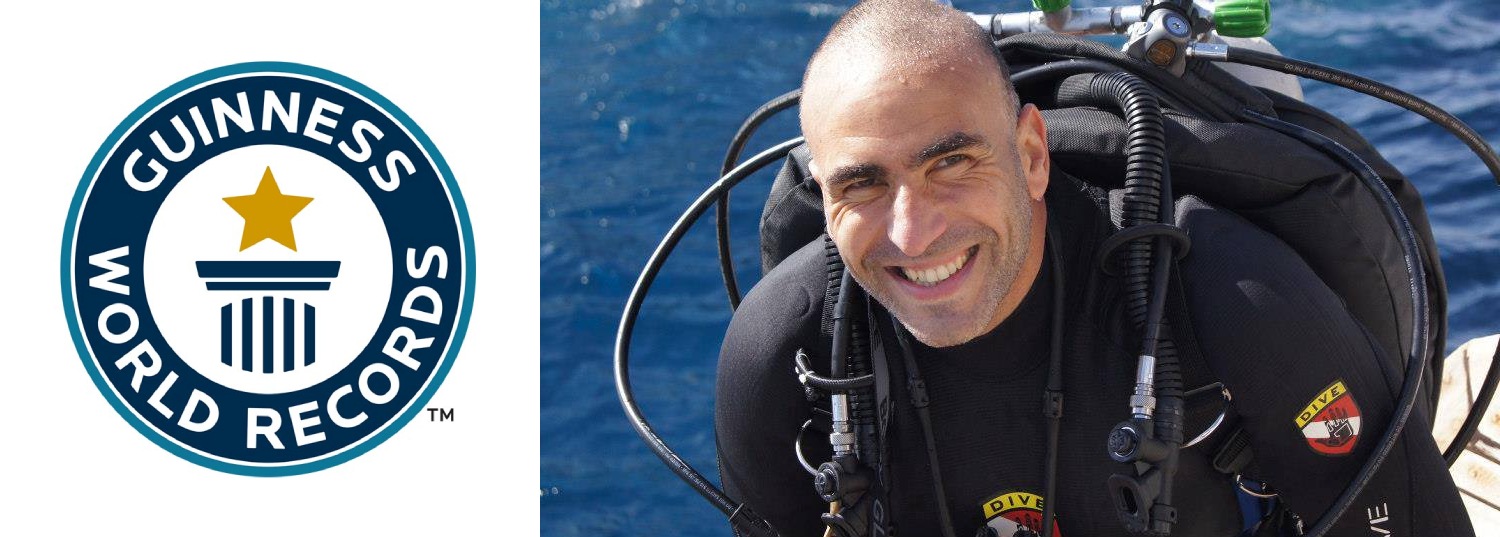
Ahmed Gabr, the 47-year-old Egyptian diver, former Egyptian Army Colonel, tech instructor trainer, ADEX Ambassador for Technical Diving and the current Guinness World Records holder for the deepest scuba dive (male) at 332.35 m (1,090 ft 4.5 in), was thrown into doubt in the summer of 2020 with allegations that questioned the legitimacy of the record and if the dive could have been faked.

A series of six instalments of email claims, made by a group of anonymous individuals using the byname “Scuba Sam”, raised questions about irregularities within the dive and dive plan. The gas mix observations during the dive, as well as readings and the displays of devices were suspect. Also called into doubt were the rope angle calculation and tag changing which determined and indicated the dive depth.

Albeit receiving the claims from an anonymous source, GWR takes into great account the integrity of each record title hence embarked into a comprehensive review to see if their standard appeals process were adhered to on that particular September 14.

The review took place between September 2020 and January 2021 and sought the expert, impartial advice from the British Sub-Aqua club regarding the dive plan and gas mixes. GWR also reinterviewed three independent witnesses of the attempt. Through these interviews, they focused on the tags, rope and angle calculation. Interviewing the on-location adjudicator again, GWR investigated the variances in the dive plan and dive, as well as any technical irregularities.

After the review, GWR determined that there was no conclusive proof that the record was faked or illegitimate. The investigation did highlight an opportunity for improvements regarding its procedures, which will be made to ensure the legitimacy and clarity of record attempts. As such, GWR affirms that there is “no foul play” and that the record is recognised and Gabr continues to hold world record for the deepest scuba dive (male) at 332.35m (1,090 ft 4.5 in).


The Guinness World Records (GWR) ended the announcement by welcoming all parties that support in reviewing and enhancing record guidelines, verification procedures and appeal processes in the maintenance and integrity of the record titles. For more details on the announcement by GWR, click here!

“We will never appreciate the good till we experience the bad.
I am sincerely relieved that the truth has finally prevailed. I am deeply
appreciative of the trust and great support from the
dive community and beyond, amidst these pandemic and trying times.”

says Ahmed Gabr after the announcement of the Guinness World Records
conclusive review on the claims made against him.


In the current issue of Scuba Diver Australasia + OceanPlanet , Issue 05/2020, The World of Tek Diving, we had the opportunity to conduct a ZOOM chat with Ahmed Gabr to retrospect and chat about his journey towards breaking the Guinness World Records for the Deepest Scuba Dive (Male) at 332.35 m (1,090 ft 4.5 in). Read more about it and get your hands on this limited collector’s issue here.

And for a limited time only, get the best e-magazine deals at USD7.99 for 6 issues*(Usual rate: USD29.94). Grab it NOW!


Spotlight on Ocean Citizen: From High Heels to Scuba Fins, Vanessa Vergara’s Story is Going to Make You Want to Save the Ocean as well

0

Interviewed by Elizabeth Lim

Video produced by Lua Guan Sang


Our Monthly Podcast about Everything Marine & Ocean Conservation!

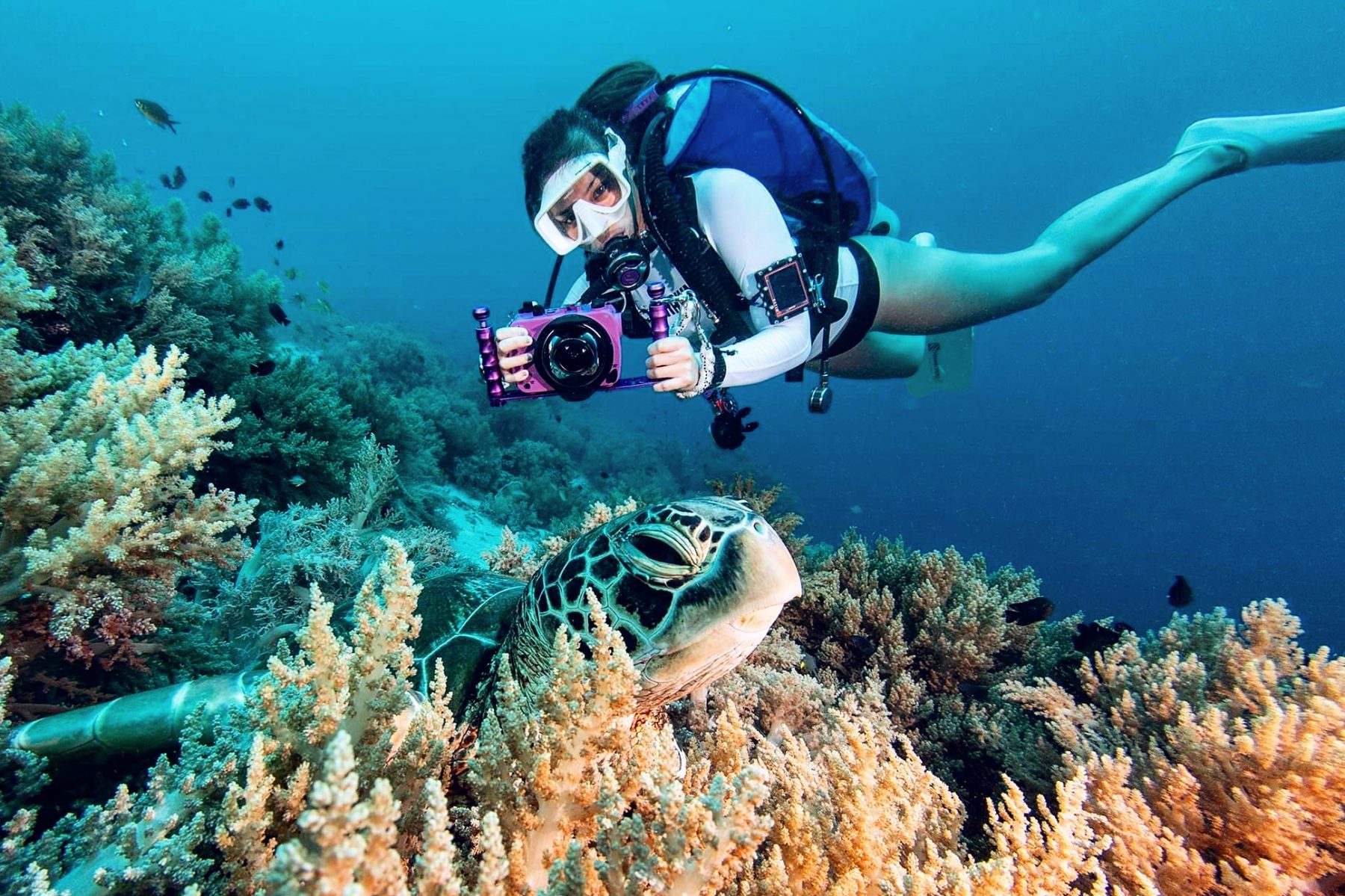
Underwater360 recently caught up with budding ocean conservationist Vanessa Vergara on how she made the decision to leave her career in the PR world, to go after her passion for marine conservation, and shares with us what her vision for the future looks like.


UW360: Tell me a little bit more about yourself. How did you find out about your love for the ocean?

VV: Well, I have always been and still am, absolutely obsessed with the ocean and growing up, I’ve always wanted to be a marine biologist, but you know life happens and when I reached the age where I had to start making adult decisions and life choices, I ended up taking a business course in college (with a marketing and PR background) instead. I also opened up several businesses during that time, but I still kept getting drawn back to the ocean and the moment I started scuba diving, I was hooked, and I just kept training and training – you know when you get your open water you just want to move on and get your advance.
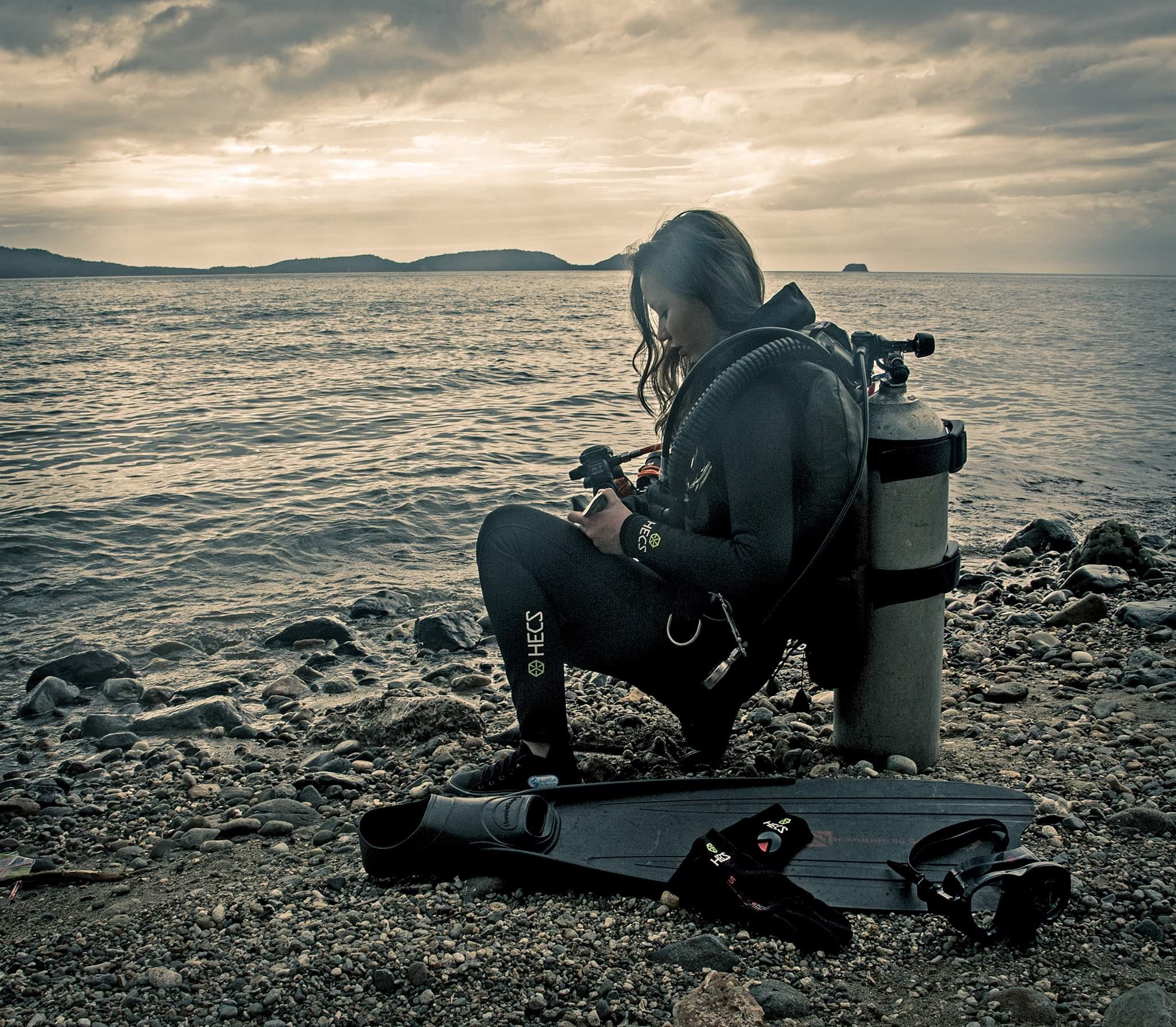


UW360: I understand that before pursuing ocean conservation, you were working in public relations, could you share with me a little bit more about that and how you eventually decided to get into marine conservation?

VV: I was doing PR, events and marketing for Estee Lauder companies and basically for beauty and fashion and it was really fun because I got to do shoots and go for product launches but the more I did it, the more I missed the ocean. I would go for these launches and then leave late at night around midnight, drive overnight to Anilao where I would sleep, and then go for training the next day. It was what I looked forward to. I enjoyed my career for sure, but when I reached the age of 25, I went into a quarter-life crisis thinking and questioning if this was the right job and if this was what I wanted. Eventually, I worked up the courage and decided to leave my job to pursue ocean conservation, and it all just fell into place.


“The organisation that I worked for at that time – Reef Check – needed restructuring and they asked me if I were interested in taking on the role in the Philippines and I thought this is perfect! I had just left my job and it was meant to be – the ocean really called!”


UW360:  So, what does marine conservation entail for you? What is the nature of your job and how long have you been doing this?

VV: So, I’ve been doing this for three years now, and in that time, I realised how lucky I am that I have had this experience in the corporate world because I use a lot of what I used to do, to create the structure for the non-profit conservation group (Reef Check Philippines) I work for. People think we can just leave all the work to the scientists and conservationists to solve the problem but right now, we’re so pressed for time, fighting against the effects of global warming and the use of plastic that you need every citizen involved in this. This is where marketing and PR come in because you’re able to go out and inspire people and empower them by breaking it down simply and letting them know that they can do something to help as well.


UW360:  Was it scary for you to make the career switch?

I always say this by Steve Jobs: “The people who think they are crazy enough to change the world, are the ones that do”

Growing up, it was ingrown in me that once you grow up, you have to get a (stable) career and then once you do so and you’re stable in your life, you get married, retire and then you can go into conservation. So, it was really scary to say, “ok bye bye career” and then do something out of the ordinary and so many people told me that I was crazy to let go of my stable job to go into this but look what happened now. You just gotta daydream about that idea, and even if it sounds crazy but feels right for you, just take the courage and it will work out.


UW360: You’re currently on the team for Reef Check Philippines, could you share with me a little bit more about your organisation and what you do?

VV: Reef Check is a global organization that is founded in more than 100 countries around the world and in the Philippines, we’re specifically protecting the reef, and the corals of our shores, and it’s really led by scientists. We go to reefs and corals around islands and shores and do a reef survey check and a check up on them – almost like a doctor, and after the survey, we can identify why the reef is dying.

My job is to basically bridge science and conservation and then use the information we gather, to teach stakeholders such as everyday citizens, resort owners, local communities, as well as work with local governments to protect the reefs.


UW360: Are there any projects that you are currently working on that you could share with us?

VV: We are now working towards more of action, where we go to different communities and teach the people who live beside the reefs why it is important to protect the reefs because, even if Reef Check team goes to places all over the Philippines, teaching everyday citizens is the most effective way of inspiring them to make a difference.

Additionally, we are looking to launch a children’s book in the summer which will touch on subjects such as how to go scuba diving, and the importance of the creatures in the reef, as well as including educational materials that are best suited to the grade level of the child. Most importantly as well for us, is to educate them on how to reduce single-use plastic and provide them with alternatives to reduce the harm it brings to the environment.


UW360: What was the greatest challenge for you whilst you were getting into conservation?

VV: The dive industry (and conservation world) is all mostly men who are all a lot older and mostly retired already, so really, coming in at 25, my greatest challenge really revolved around my age and my gender. Every time there was a project or meeting that involved a program underwater, I had to always prove myself that firstly, I was capable, and I could take care of myself underwater. They would doubt and sometimes wouldn’t believe that I was a dive instructor, so I had to keep proving myself and pushing because a lot of the time they think “oh she’s just here for now, maybe a few months and then she’ll move onto another charity when she gets bored” but after 3 years, I’m still here!


UW360: Any iconic marine conservationist that you look up to? If you have the opportunity to work with other conservation groups, do you see yourself just focusing on corals and reefs or are you looking at other aspects – locally or internationally?

VV: Locally, I really look up to Dr AA Yaptinchay, who started Marine Wildlife Watch in the Philippines by himself on Facebook, posting every morning good news or bad news on marine animals in the Philippines and the more he posted, the greater his following grew. It’s incredibly inspiring how he went from just one Facebook page to now writing laws in the Philippines and even pushing the senate and congress to sign bills to save the sharks in the Philippines.

I also definitely do dream about being able to work with big organisations such as Ocean Quest and Sylvia Earle’s organisation Mission Blue but right now, I would stay in corals and reef conservation because they are the foundation of life in the ocean and are very much the underdogs. Very few people work on coral conservation and now they’re disappearing so fast so as much as I’d love to work with a bigger organisation, the only time I would do so is when I feel confident that the corals and reefs are in good hands and in a good place, especially in the Philippines.


UW360: What’s next for Vanessa Vergara? 

VV: Wow I’m really not sure especially with Covid still around but the goal hopefully, is to spend more time in the different project areas and create local groups to continue my work for me especially when I can’t send someone from the team or be there. I want to just empower different parts of the Philippines to help out and not just rely on the organisation for conservation efforts! During the lockdown, I really learned that I want to empower people living on the coast, as well as those in the city areas, and if I can get the people who don’t even touch the ocean, to come and see the ocean, be inspired and to help in conservation work, that’d really be great.


UW360: What’s your vision for the future and if you could speak to the younger generation or even the generation right now about marine conservation, what would you say to them or advise them on?

VV: We’re in a really unique time of our lives where it’s not too late to change what’s happening in the world but we’re almost there. I always ask, “do we want to be the last generation to find Nemo or have really nice beaches or have fresh seafood?” because if we continue this way, by 2050, 90% of what we love will be gone and it’s empowering that our generation right now, has the potential to make the change.

With technology, we can do anything, and it really gives people a voice and especially in the past, people said conservation wasn’t cool and having a metal straw with you, people would think you’re weird. Now, more people are talking about it and conservation has become the “new cool” and I want to empower people. I mean I’m literally working on conservation and PR via internet in the middle of the ocean, and if we have the drive and inspiration to do something, maybe just maybe by 2050 we can avoid the loss of everything.
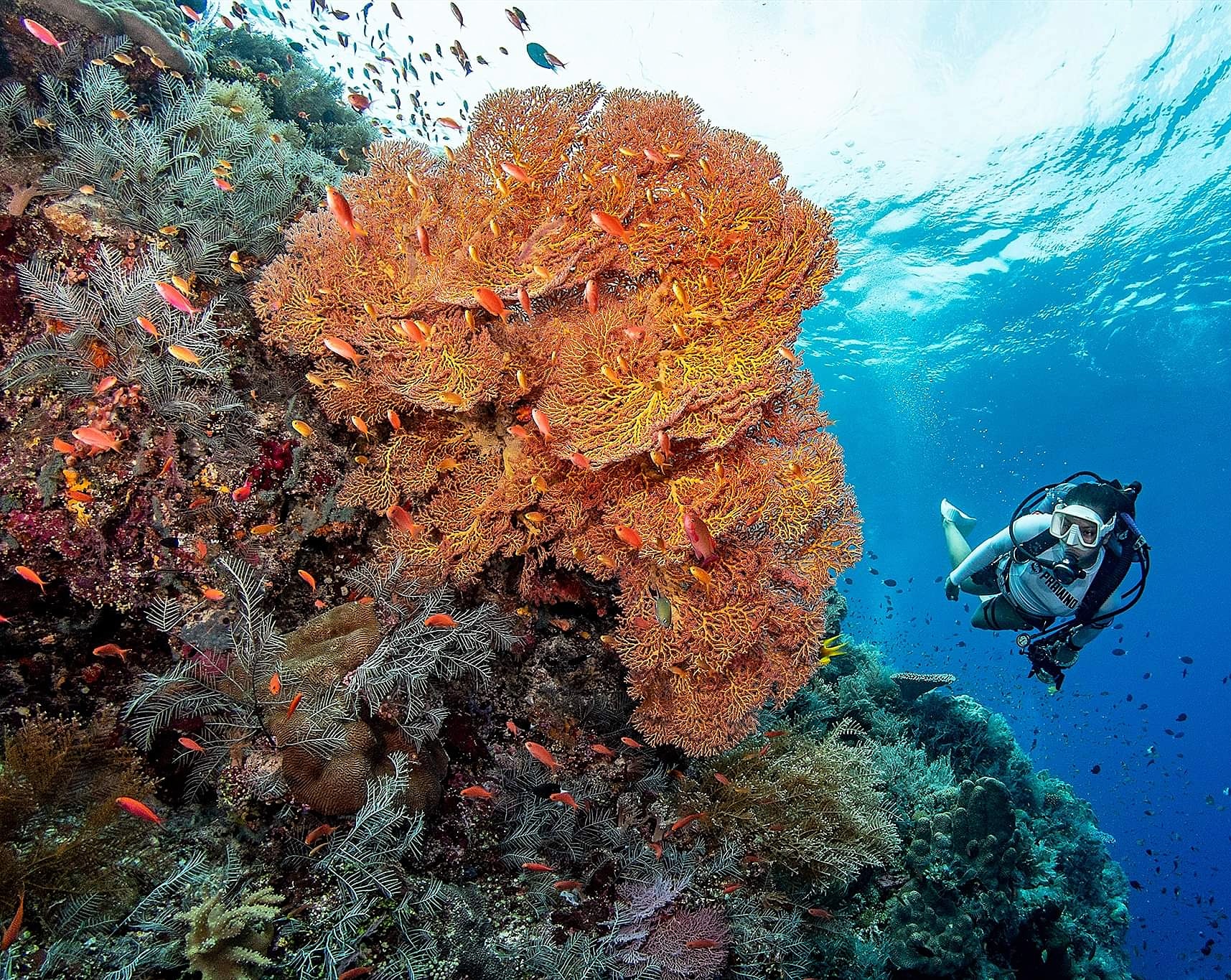


UW360: Lastly, is there any tips or encouragement that you would like to give to any mid-life crisis office worker or those facing a quarter-life crisis, for them to be brave and brazen to jump into the life of conservation? What would you tell them?

VV: I’d say to them – it is possible, don’t be afraid. For anyone looking for that career switch, you really need to take a step back first and figure out, is this really what you want to do, and if it is, then you can definitely make it work. My greatest challenge when I was doing this, was really myself. I had to learn how to balance my time because I had to give up a lot of social events and personal time, to try and make two things work – my career and my passion.

I’m telling everyone that it is possible, and if you really believe and are determined, once you’re ready the world will you give you signs, and just rip off the band-aid and go for it. Like I said before, the quote I always go back to when I think of this journey I was on, is that those who are crazy enough to change the world, are the ones that do and that’s what people have to think about because that’s how you’re going to pave the road for yourself.


Underwater360 would like to thank Vanessa Vergara for being a part of this interview. You can find her at her Instagram and Facebook!

Do stay tuned for next month’s podcast session!

Photo credits: Vanessa Vergara and Squires Bingham Sports, www.squiresbinghamsports.com

GUE Releases New Edition of “The Fundamentals of Better Diving”

0

20 YEARS AFTER INITIAL PUBLICATION OF ​THE FUNDAMENTALS OF BETTER DIVING, GUE RELEASES AN ENTIRELY NEW EDITION AVAILABLE IN SIX LANGUAGES

One of the most influential texts in diving is entirely rewritten, detailing a new vision for scuba diving with a clearer picture of the theory and practices behind performance diving strategies that support safe, efficient, and fun scuba diving. The new edition is available in English, German, Italian, Spanish, Korean, and Chinese.

​The newest revision of ​The Fundamentals of Better Diving charts a fresh course for those seeking to get the most out of their diving, demonstrating what is distinctive in both the theory as well as the practice of Global Underwater Explorers (GUE). This book is a treasure trove of useful information regarding skill enhancement, team orientation, and risk mitigation—invaluable for experienced technical divers as well as beginners.

While the first edition of this book defined and popularized the value of standard protocols, this edition provides a clearer prescription for divers seeking to adopt sound diving practices while augmenting their diving capacity and underwater readiness. Enhancing underwater competency reduces stress and results in a more joyful and expansive diving experience. Readers will find ten definitive chapters filled with everything from dive planning and underwater stability to refined propulsion and diving physiology.

The Fundamentals of Better Diving​ , available in six languages, can be purchased through ​GUE.com​ for ​$24.95/€19.95, as well as directly from GUE, ​some Halcyon Dealers, and GUE Dive Centers.

###

Global Underwater Explorers, a US 501(c)(3), began with a group of divers whose love of underwater exploration grew naturally into a desire to protect those environments. In 1998, they created a unique organization dedicated to high-quality diver education with the goal of supporting aquatic research that advances conservation and safely expands exploration of the underwater world.

15 Tips for Diving Responsibly with Marine Life

0
As divers, it is important we make informed decisions, both when organising our trips and while we are on them, to help ensure we limit our environmental impact. The following 15 tips shared by Environmental Officer for Suba Junkie SEAS, Cat Cassidy, will help you to ensure your next diving holiday is as environmentally-friendly as possible.


BEFORE YOUR TRIP


1. PICK AN ENVIRONMENTALLY RESPONSIBLE DIVE CENTRE

When making enquiries about your stay, you should ask about their conservation ethos. You want to make sure that your dive operator has responsible diving guidelines and takes a proactive approach toward conservation.


2. BUY REEF SAFE SUNSCREEN

NOAA estimates that 4,000– 6,000 tonnes of sunscreen washes off our bodies and onto coral reefs every year. Certain ingredients in sunscreens are toxic to corals and reef fishes, and can cause coral bleaching. There are now reef safe varieties that use alternative compounds that are much less detrimental to the marine environment. To note, you should look apply sunscreen at least 30 minutes before you enter the water.


3. PURCHASE PRODUCTS SUPPORTING CONSERVATION

Some of the major dive companies actively support marine conservation, and some actually generate their gear from ocean waste and recycling. This is a fantastic initiative because it not only acts against marine debris, but it also involves and supports local communities.


4. ASK THE EXPERTS HOW TO DIVE WITH CERTAIN SPECIES

When encountering marine animals, it is essential that they are respected. Find out what species you are likely to encounter and check with the experts for appropriate behaviour. Following their guidelines will not only ensure you do not disturb the animals, but it will also enhance your encounter with them.


5. SUPPORT MARINE CONSERVATION NGOS

Many major marine conservation organisations rely directly on donations and outside sources to carry out their work. You can support them by donating funds, by volunteering or by offering your skills.


DURING YOUR DIVE


6. BE STREAMLINED/PRACTISE NEUTRAL BUOYANCY

Make effort to ensure that all of your equipment is tucked in before and during your dive. Do not leave hoses or gauges dangling because they can easily catch on corals. Make sure that you are correctly weighted too, since this will make it easier for you to control your buoyancy.


7. DIVE SLOWLY AND DO NOT TOUCH MARINE LIFE

In order to improve your encounters and to give yourself the opportunity to witness natural behaviour, you need to relax, dive slowly and not try to chase the marine life. Also, whether it is for personal enjoyment or to show others, touching or harassing marine life is completely unacceptable behaviour. If the current is too strong or if the creature you want to look at is not in an ideal position, you should wait for a better opportunity to present itself before proceeding.


8. DO NOT TOUCH CORALS

Corals grow slowly and are fragile – they are easily damaged and take a long
time to recover. Corals have a natural barrier that protects them from disease. If you touch the coral, you break this natural biofilm, leaving them open to infection. Many divers think gloves give them free reign to touch everything – gloves do not protect coral.


9. TAKE PHOTOS RESPONSIBLY

Don’t take a photo at the expense of the natural environment – don’t move animals around in order to get a better shot, and don’t chase after or stress the animals out. Take photos according to your skill level and remember that for some animals, flash photography is a big no-no because it can stress and kill the animal.


10. BE A GOOD EXAMPLE FOR THE OTHER DIVERS

“Be the change you want to see in the world” – set an example to others and show them what it is to be a responsible, considerate diver.


11. TAKE NOTHING BUT PHOTOS

If it is found there, it should stay there. Do not collect shells or corals. The same applies for shells on a beach. These provide homes for a wide variety of marine life including crabs and octopuses. You should also dispose of litter properly – leave only bubbles in the ocean and footprints on the beach.


AFTER YOUR DIVE


12. PARTICIPATE IN HANDS-ON CONSERVATION ACTIVITIES

If an opportunity presents itself, you really should try to get involved! There are a range of activities you can do, from reef and beach clean-ups, to coral transplanting as well as data collection.


13. DO NOT SUPPORT THE TRADE OF MARINE SOUVENIRS

All species of marine life have a role to play in the marine ecosystem. If some are removed, it will disrupt the natural balance on the reef.


14. DO NOT CONSUME UNSUSTAINABLE SEAFOOD

According to the UN Food and Agriculture Organisation, 85% of global fish stocks are “overexploited, depleted or recovering from depletion”. If you want to continue to eat seafood, it is important that you make an informed decision. Find out where it 121 came from, how it was caught and what it is. You should avoid supporting indiscriminate commercial fishing practices, like long-lining or trawling, as well as destructive fishing practices such as dynamite or cyanide fishing. You should also avoid supporting the trade of endangered species.

15. SHARE YOUR EXPERIENCES ON SOCIAL MEDIA

Share your experiences of conservation and marine encounters online to help raise awareness of eco- friendly operations.


Cat Cassidy is an Environmental Officer for Scuba Junkie SEAS. After stints at Nature and Greenpeace NZ, she joined Scuba Junkie. Her current work involves running conservation outreach programmes and a turtle hatchery and rehabilitation centre in Sabah, Malaysia.

Want more tips to help you grow as a diver? Subscribe to Asian Diver here or download the digital copies of our magazine here

SEAHORSE – SAFE SCUBA

0

As divers, we have a duty to the species we go to see in their underwater realm and this duty is particularly important with seahorses

By Neil Garrick-Maidment, The Seahorse Trust


SEAHORSES ARE EASILY STRESSED and it is crucial that we keep our impact to a minimum, and not add to the stress they endure naturally, by adopting a best practice approach to diving with them. Only by doing this can we help not only the conservation of the seahorse, but also the habitat they, and so many other incredible species, live in.

Seahorses are protected in various countries around the world, so check out the local laws and regulations if you want to see them, and importantly, find a good local guide who knows the area and can help you find them. The following guidelines have been put together to make sure that seahorses stay safe, and that you as a diver can get the best out of your experience.


SEAHORSES AND FLASH PHOTOGRAPHY

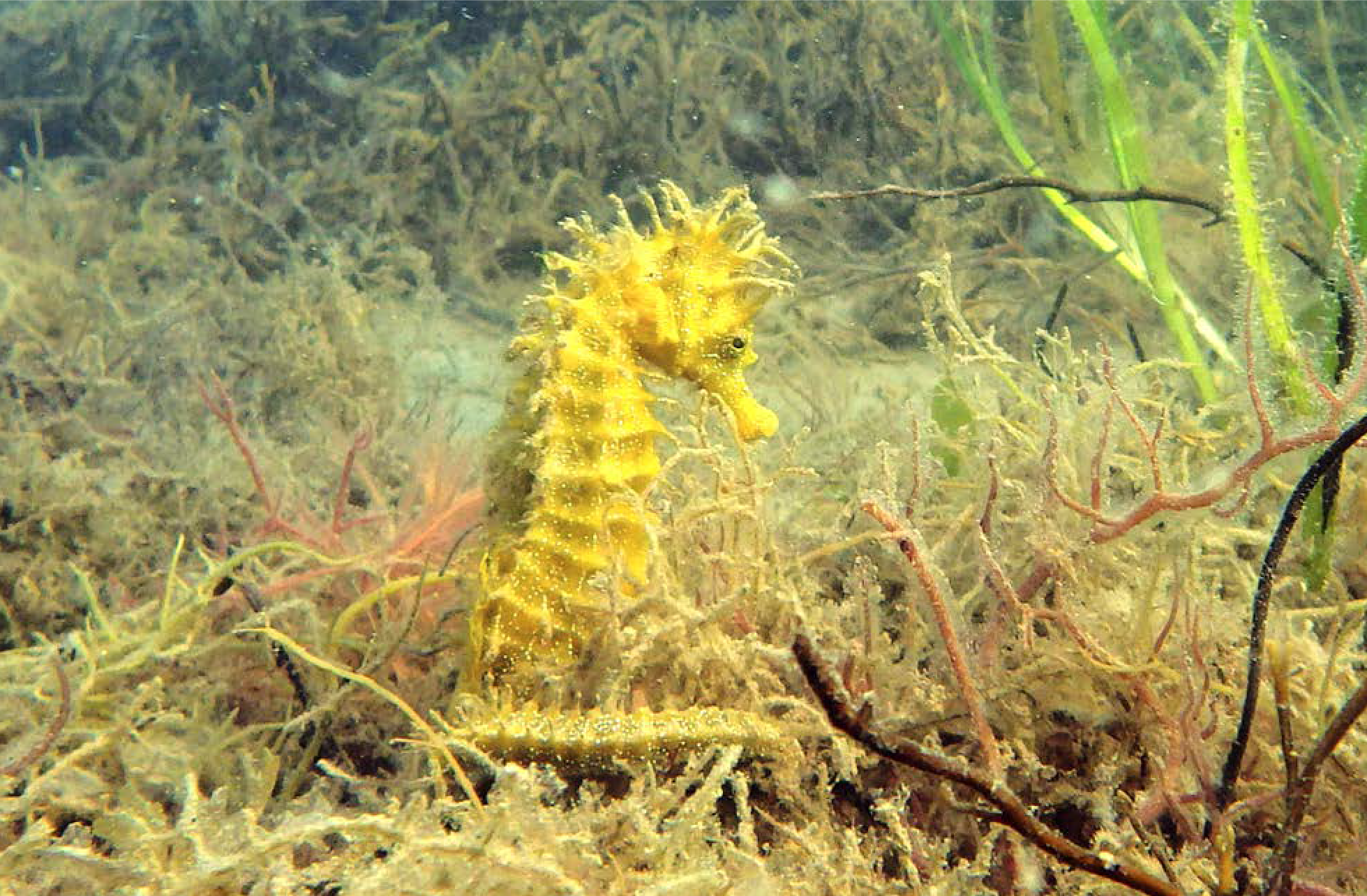
Those seahorses are highly prone to stress is a known fact, but few people realise that flash photography and even the use of lights can kill them. Seahorses’ have very good colour vision, and highly adapted eyes: A seahorse that lives in seagrass sees with a greenish tinge whereas a seahorse that lives on coral sees with a blue tinge; this is the perfect adaption to be able to see prey in these types of water. Seahorse eyes are also designed to see in very low light because they tend to live towards the bottom of the seabed. This means that any bright light or flash is blinding to them and causes stress.

Seahorses naturally contain a number of dormant diseases such as tuberculosis and vibrio in their body, which, under normal circumstances, do not affect them. However, if they become stressed, their bodies are weakened and these diseases can take hold and slowly kill them. So, if you have used excess flash on a seahorse (better to use none) or bright lights (again, better to use none) it will cause stress in their bodies which can allow these diseases to take hold and kill them. It will not happen immediately in front of you, but a week or two later when you have long gone and are showing friends and family that lovely picture you got. It is sad to think that the beautiful seahorses that you are showing pictures of could be dead.

Please be careful and avoid inflicting stress by not using flash or lights with these amazing, sensitive animals. Keep your movements to a minimum, and be relaxed around them, to help ensure they are here for generations to come.

DO

Notice that as a seahorse gets stressed, its colour starts to darken and it bends its head downwards to present less of a profile. Move away if you notice the animal displaying this kind of behaviour, as continuous stress can lead to the death of the animal.

DON’T

Hover over seahorses – this stresses them as they think there is a predator above them.

DO

Make sure that there are only a maximum of 8 divers around a seahorse at any one time (preferably less), and that divers are not completely surrounding the animal, but positioned in a semicircle so that the seahorse can move away if it wants to.

DON’T

Disturb, touch or chase seahorses – touching them is against the law in many countries and should not be done under any circumstances.


6 Tips On What To Do If Your Boat Leaves You Behind

0

Perhaps one of the deepest fears a diver can have is being left behind. That near-perfect dive holiday can suddenly turn into a disaster with a down-current or a heavy storm. After all, the liberty diving gives us is also a compromise, sometimes, of our safety.

Being left behind is a reality that some unfortunate divers have faced. Whether it is your fault or not, you’ll need to know how to get through it. We bring you six tips on what to do if you’re left behind in open water.


1. PLAN AHEAD

No matter how many checks and procedures you go through, separations can still occur.

  • Make certain that your entry into the water is properly noted by the people aboard the boat
  • Have another diver who is not your buddy double-check that you’re back on board before the boat leaves
  • If conditions are dangerous, don’t dive – the oceans will always be there


2. GET THE GEAR

Just you in your wetsuit is difficult to spot from the deck of a boat, and in a deep-blue ocean, you’re going to be almost impossible to pick out. Bright surface marker buoys (SMB) should be a standard in your dive kit, and there are other gadgets you can use to maximise safety


3. GATHER YOUR BEARINGS

When you come up and find that the boat is not where you thought it was, or completely gone, it is important to go through the procedure of gathering your bearings:

  • Spin full circle to scan the horizon for land, other boats, or anything that you could potentially cling to
  • If you can see something that will get you to safety, then drop your weights to swim on the surface – but keep your mask and regulator/snorkel, as this will help keep you buoyant
  • Still with your buddy? Latch yourselves together to stop you from drifting apart


4. CONSERVE ENERGY

As soon as you realise that you have been left behind, you need to begin to conserve energy:

  • If you are latched to your buddy, this will reduce the swimming that you need to do to keep together
  • Keeping streamlined will help conserve energy
  • If you have to swim for shore against the current, don’t swim directly into it as fighting a current will burn out your energy fast – if you must swim against the current, travel diagonally or perpendicular


5. STAY WARM

Staying warm is integral, as even in tropical waters you can get hypothermia. There are many ways in which you can try and stay warm:

  • If you start to feel cold, move your arms and legs to generate heat
  • To keep energy expenditure to a minimum, hug your knees to your chest and cross your feet to trap body heat and conserve your warmth
  • If you’re with a dive buddy, you can share body heat by staying close
  • Make an effort to keep your head out of the water


6. DON’T PANIC

As in all situations, especially in diving, the best way to deal with it is to stay calm and focused:

  • Thrashing around can lead 125 to drowning and wasting of energy – stay calm
  • Yelling and screaming can cause you to hyperventilate – go through the procedure
  • Take deep breaths and make intentional movements and decisions to keep your mind active


Want more tips to help you grow as a diver? Subscribe to Asian Diver here or download the digital copies of our magazine here

What It Feels Like Spearfishing in the Depths

0

Text by Simon Enderby

Images by Christian Loader 

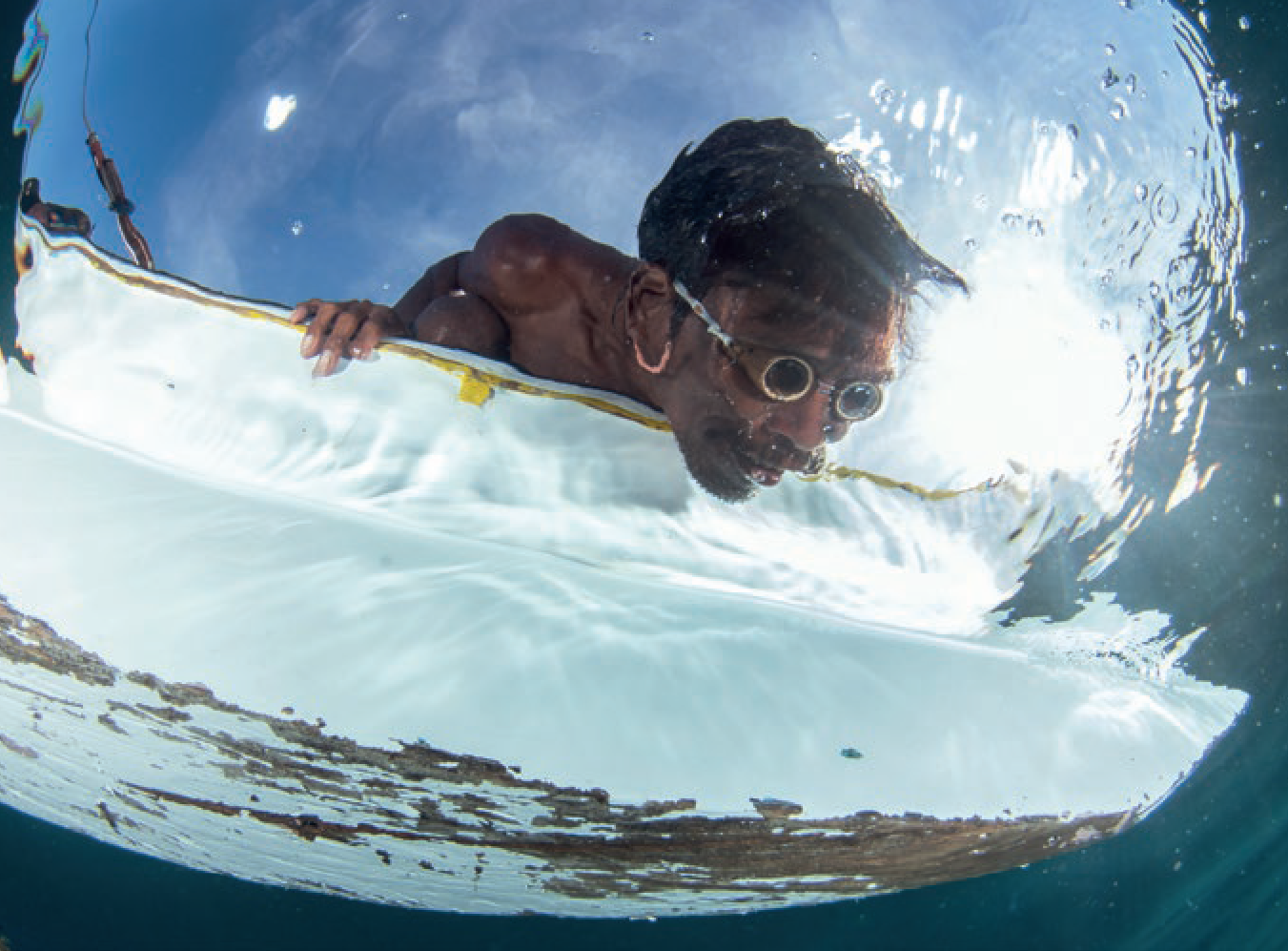
Whilst researching on the local Bajau Laut or ‘Sea Gypsy’ community for the upcoming BBC Human Planet series, I heard tall tales of local characters with seemingly superhuman traits; fishermen descending deep into the ocean on a single breath, hunting fish for over five minutes at a time.

However, after several visits and dives with the Bajau, it was clear these were just that: tall tales. That was until I met Sulbin. When we were first introduced, I was instantly drawn to his modest demeanour and shy, but welcoming smile. As he gathered his wooden goggles and homemade speargun from his simple hut on Mabul Island, off Sabah’s east coast, he seemed genuine, yet self-assured.

Sulbin headed straight out to a nearby reef, which instantly peaked my interest as I knew it lay in over 20 metres of water. This would be no easy “first-off freedive” in 5m–10m of water – depths the other well-known spear fishermen had taken me to. 


Bajau speardivers are colloquially referred to as the ‘sea gypsies’


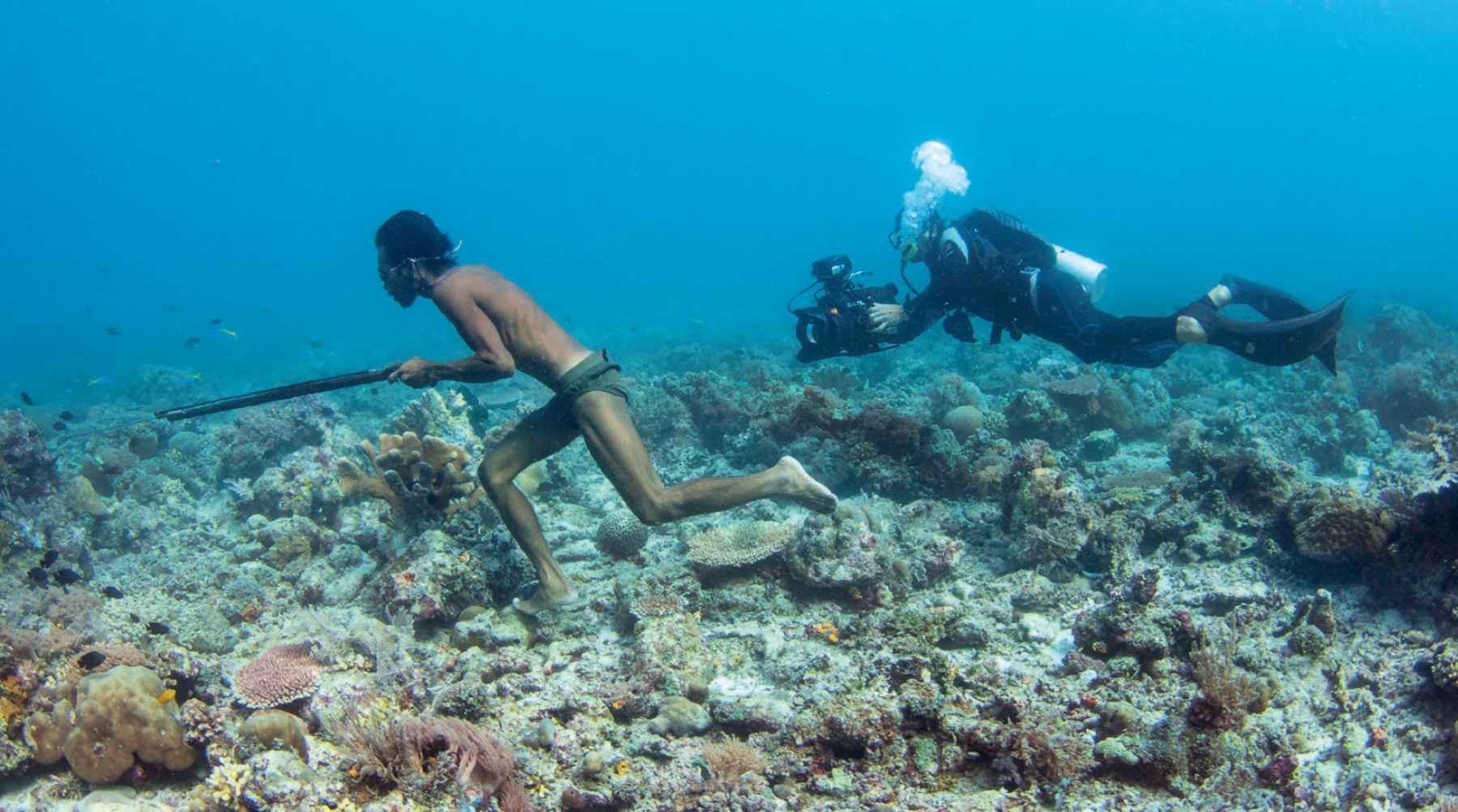
He took a long last drag from his cheap cigarette and tightened his goggles. After a few deep breaths, Sulbin slipped below the waves. In full dive gear and a camera in hand, I followed Sulbin down to the reef floor. With his spear gun held across his chest, Sulbin began to walk along the reef with the grace and silence of a prowling lion. He was now negatively buoyant. As he walked amongst the coral, his eyes searched the usual reef residents for today’s family meal. Being close to the island and its myriad of fishermen, the reef had been under intense handline fishing pressure, unfortunately diminishing the selection of prized groupers and large pelagic fish.

As the minutes passed, Sulbin pushed on and I wondered whether this would be a fruitless hunt. Then, just as my dive computer showed Sulbin passing his third minute on a single breath, he eyed a pair of rabbitfish ahead. With not an ounce of fat on his muscular frame and his lungs squeezed by the surrounding water pressure, Sulbin raised his spear gun slowly and took a few more steps before firing.

The spear and flailing fish kicked up a puff of sand. As it cleared, Sulbin reached forward and picked up the spear and impaled fish. He then took one last look around before kicking off from the bottom with one foot, slowly swimming back up to the sunlit surface.

I ascended with him, incredibly impressed with what I had seen. We had found our Human Planet character. Over the course of the next hour, Sulbin made four more breath- hold dives with his spear gun and came back with two more reef fish: not a big haul in the scheme of things but enough to feed his family today. When asked how he feels entering the sea, Sulbin simply replied, “if I see fish then I am happy.”

My admiration for Sulbin grew – here was a man going to extraordinary lengths to take care of his family. It’s not a spiritual quest, but a matter of survival. When we congratulated him on his breath-holding and hunting skills, he smiled shyly and shrugged his shoulders.

Sulbin’s modesty and incredible freediving skills translated perfectly onto screen, with the image of him walking along the sea floor becoming a defining image for the Human Planet series. And personally, it was one of my proudest moments in film-making. 


To read other stories, download a digital copy of Scuba Diver No. 110 Issue 4/2017 here! And for a limited time only, get the best e-magazine deals at USD7.99 for 6 issues* (Usual rate: USD29.94)