Home Blog Page 145

Megalodon: What We Know So Far

0
© Wikimedia Commons

Ruler of the seas for roughly 25 million years, megalodon is thought to be the largest predator in vertebrate history. With the discovery of 18-centimetre-long teeth, palaeontologists have managed to brace together a few surprising facts about these amazing extinct sharks.

Finding big teeth may seem a foolishly optimistic lead, and many of these findings and predictions are still being debated, but there are a few things that scientists are definitely in agreement on. We bring you everything we know so far about megalodon:
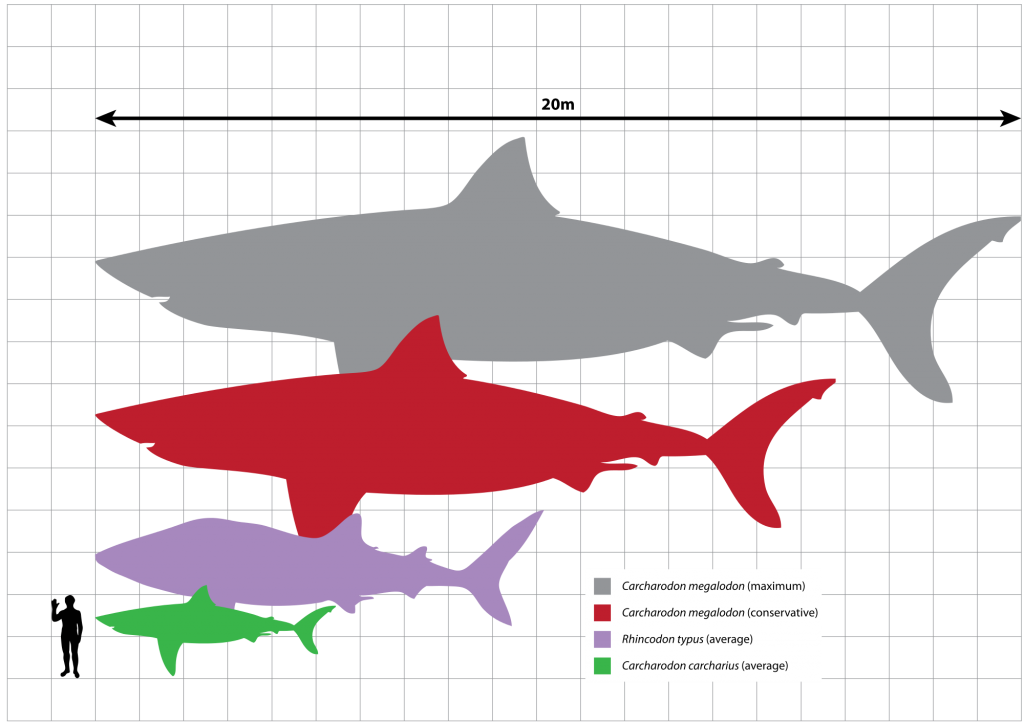
2000px-Megalodon_scale.svg

Appearance

The average great white shark – arguably the apex predator of the modern oceans – can range in length anywhere between four to six metres. But estimates of the length of its larger cousin, megalodon, range from 12 to 21 metres, with the upper estimate falling just short of the ever-impressive blue whale, at 30 metres. 

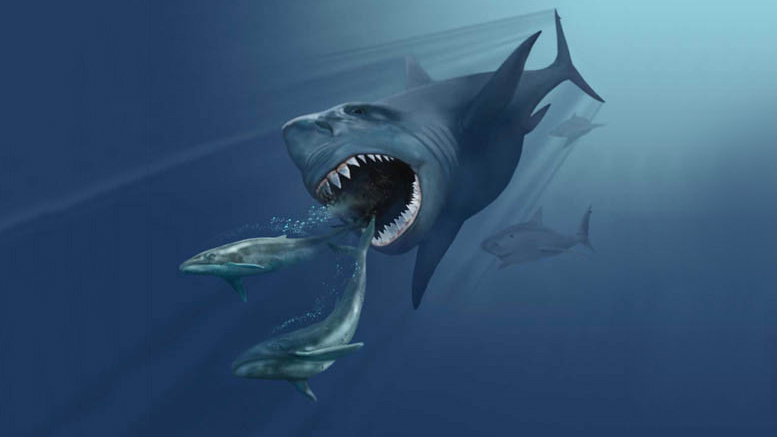
In some artists’ impressions, the gigantic fish has taken on the appearance of an oversized great white, with jet plane like pectoral fins, but some palaeontologists believe this to be an incorrect representation, and liken the creature to that of a sand tiger shark. 

Megalodon teeth look like huge, puffed up, blackish triangles with a bulbous root and resemble that of the tip of a fictional dragon’s tongue. They have a rough exterior that gets smoother at the tooth’s finely serrated edges, and are set in massive jaws that pack an estimated 10,900- to 18,100-kilogram bite force, enough to comfortably snap steel. Great whites, by comparison, can generate an estimated maximum bite force of a mere 1,800 kilograms.

Diet
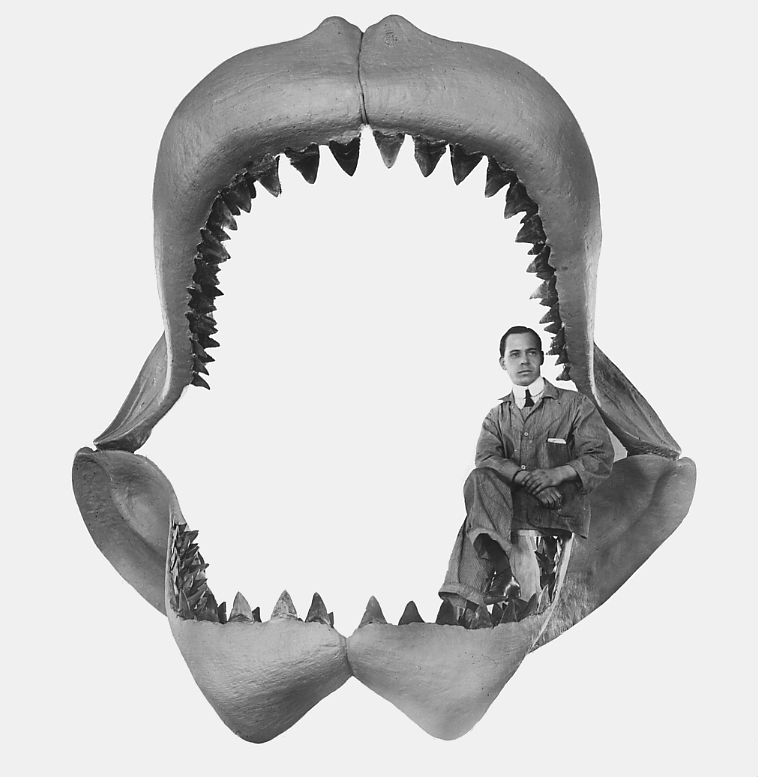
"They have a rough exterior that gets smoother at the tooth’s finely serrated edges, and are set in massive jaws that pack a 24,400 to 41,000-pound bite force, enough to comfortably snap steel." © WIkimedia Commons
“They have a rough exterior that gets smoother at the tooth’s finely serrated edges, and are set in massive jaws that pack an estimated 10,900- to 18,100-kilogram bite force, enough to comfortably snap steel.” © Wikimedia Commons

Huge jaws require huge prey to fill them. It is thought that megalodon was a specialist whale eater. Over the years, many fossilised whalebones have been discovered with signs of bite marks from teeth that match those of megalodon.

In the late 1900s, palaeontologist Dr Bretton Kent examined the remains of a 9-metre-long prehistoric baleen whale that was supposedly attacked by a megalodon. It shed light on the way the ancient shark went about attacking its prey – focusing mainly on the tough bony portions which it would crush along with the whale’s fragile organs. When it wasn’t feasting on whales, megalodon fed on seals, sea lions, giant sea turtles, dolphins, and others. 

Reproduction

2009 saw the discovery of a breeding ground for megalodon off the coast of Panama. It is only the second of its kind ever found. Experts collected fossils and compared them against other megalodon teeth that had previously been recovered. It was concluded that the teeth belonged almost exclusively to juvenile sharks. By studying the juvenile teeth, experts were able to determine the size of megalodon young, which they estimated to be around six metres – similar in size to large great white sharks.

Extinction – The many theories

No, despite fragmented tales from fishermen or 12-second YouTube clips of oversized ocean monsters, megalodon does not still exist. So what could have driven the world’s greatest predator to extinction? The most widely accepted theory is that the warm, shallow seas where megalodon hunted dried up and disappeared. As the global climate cooled at the start of the Ice Age, more and more water was locked up at the poles, and caused sea levels to drastically drop. This erased many of the shallow coastal seas where megalodon resided.

Another theory suggests that megalodon was either starved or frozen into extinction. Only being able to live and hunt in warmer waters, as the whale population moved into colder waters, the sharks had to remain in the warmer seas and thus starved to death. 

Some have blamed other sea predators like orcas and great whites. As sea levels lowered over time, megalodon might have been left without appropriate pupping grounds. With their young vulnerable to other sea predators, megalodon might have simply died out.

Megalodon will forever remain a hotly disputed mystery. But as ocean exploration develops, and humans journey deeper and further into the wide unknown of the open ocean, further evidence of prehistoric predators may come into view and one day answer our pending questions. 
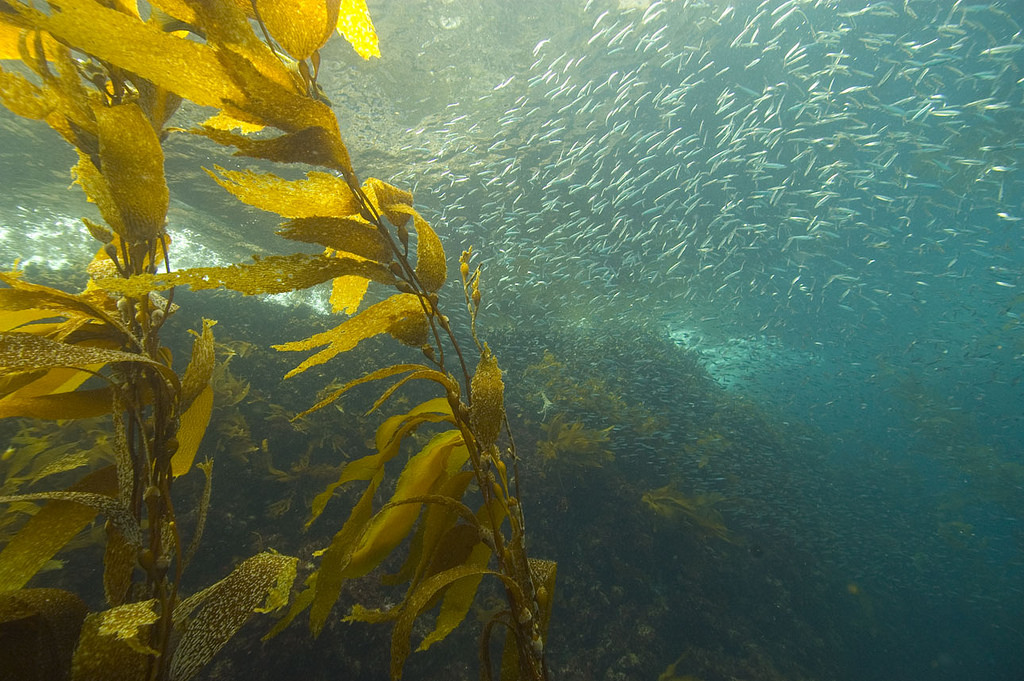
IOOS Awards $31Million for Ocean Observing

0
© Flickr.com

U.S. IOOS is proud to announce the awarding of over $31 million in grants to support ocean, coastal and Great Lakes observing efforts throughout the United States, Caribbean and Pacific.

4IOOS-Grants

Photo credit: IOOS

The funds are distributed primarily in the form of five-year cooperative agreements, augmented by funds from other federal offices and agencies, as well as outside groups including: NOAA’s Office Oceanic and Atmospheric Research (OAR), NOAA’s Ocean Acidification Program (OAP), the National Weather Service (NWS), NOAA Fisheries (NMFS), NOAA’s Office of Coast Survey (OCS), NOAA’s Office for Coastal Management, NOAA’sNational Centers for Coastal Ocean Science (NCCOS), NOAA’s Satellite and Information Service (NESDIS), theU.S. Geological Survey (USGS), NOAA’s Great Lakes Environmental Research Laboratory (GLERL), and the IOOS Association. Some additional funding is directed through the Ocean Technology Transition (OTT) project at IOOS, which sponsors the transition of emerging technologies to operational mode.

These cooperative agreements are a fundamental activity for IOOS. It not only fulfills requirements set forth in the2009 ICOOS Act, which establishes a national-level integrated system, but it also forms the foundation on which the system stands. An integrated system that serves global needs depends on cooperation, clear data standards, shared data, and the development and maintenance of projects and technology that address existing needs to build a system that addresses the needs of the many. By pairing regional systems who are connected to the communities where they work with the national system and working together, we’re able to establish and maintain a network of people, technology, and data, customized to real needs, that helps us understand and forecast changes in our ocean and climate, prepare for and respond to coastal disasters, and balance the needs of resource use, economic development, and environmental stewardship.

Goals for these new agreements are wide ranging, but focus on increasing the availability and accessibility of data, and on maintaining and expanding the ocean, coastal, and Great Lakes observing capabilities throughout the country.

The Woman Who Freedives with Tigers

0
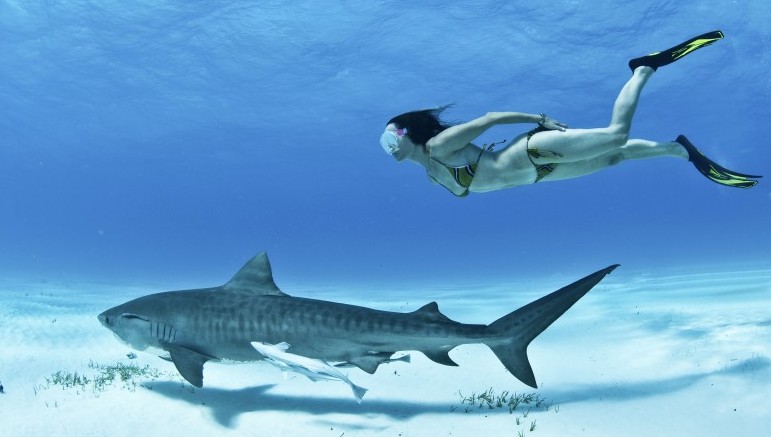
Lesley with a tiger shark © Mike Ellis

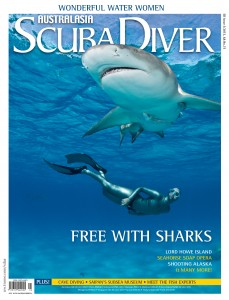
Lesley Rochat tells Scuba Diver AUSTRALASIA of her fascinating shark-freediving mission to debunk the “mindless killer” myth associated with tiger sharks:

“You have to use your snorkel Lesley,” says Scott Smith persistently, suggesting that free diving with tiger sharks, but without a snorkel, is a not a good idea. “You need to be looking behind you when floating on the surface all the time.” I’ve returned to shark lover’s paradise, Tiger Beach in the Bahamas, on another photographic expedition on board the Dolphin Dream, owned by Scott. I’m here for two weeks, working on gathering images and footage for a new video and a book project for the AfriOceans Conservation Alliance – an organisation that I founded and run.

Last year, when I first swam with tiger sharks, I felt nervous before I got in. Put a tank on my back and throw me into shark-infested waters and I’m in heaven. I’d done a bit of free diving with blacktip and lemon sharks and learned that a mammoth camera housing between a mighty shark and me gives the feeling of a little protection, should the shark get too curious. But with no camera, no bubbles, and nothing but my bikini on, I did feel very vulnerable with the tigers.

I did it because I feel that I need to walk my talk as a shark conservationist, and make myself as vulnerable as possible, to show people that sharks are not what they perceive them to be. I’d already gone to extreme lengths in helping to raise awareness about the plight of sharks. To begin with, and where it all started for me, I met a very special shark named Maxine that was held captive in Two Oceans Aquarium, which changed the course of my life. She was the catalyst for packing up my well-paying corporate career and dedicating my life to shark conservation. Because of her, I designed a shark awareness programme and research project for which Maxine became the icon.

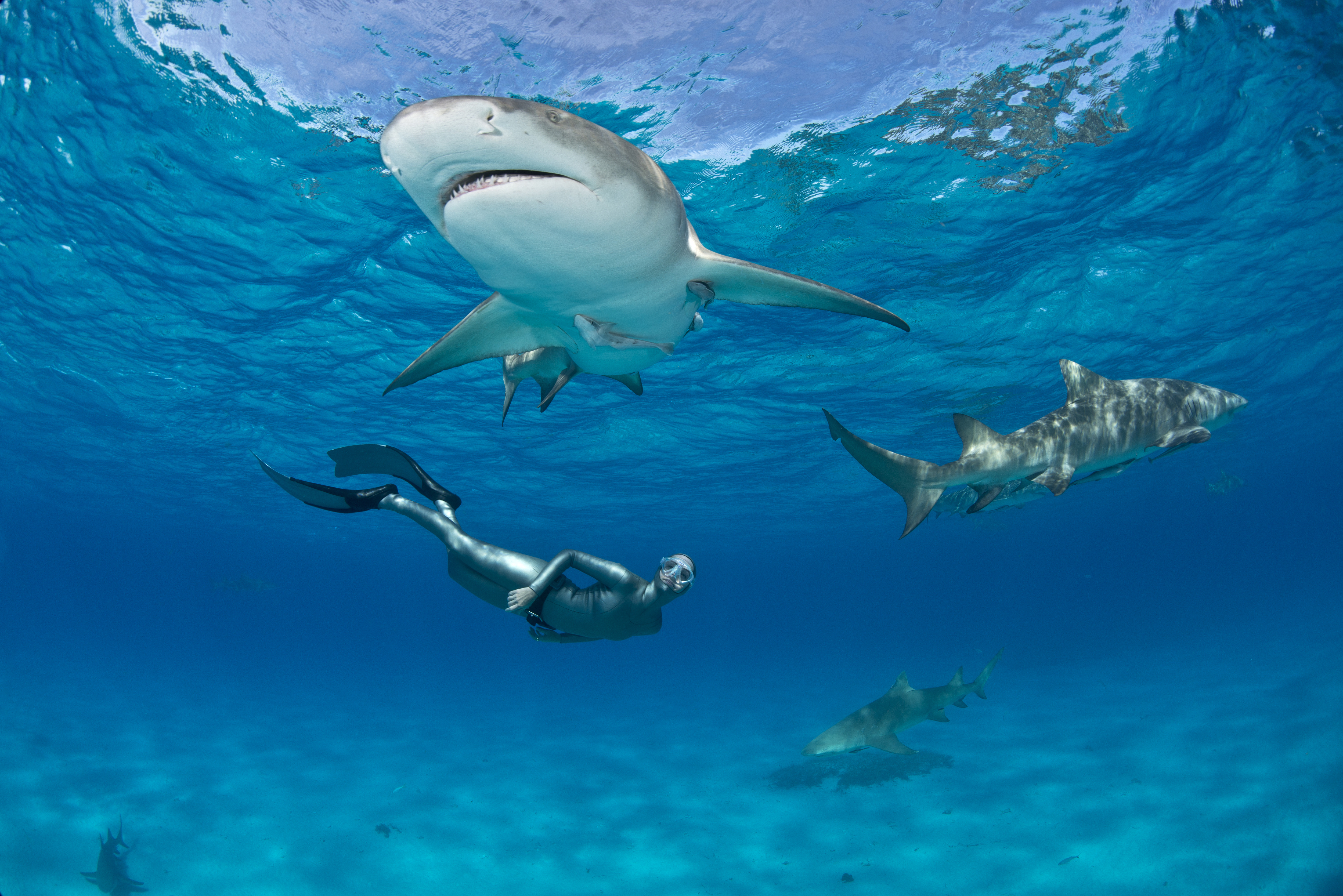
Just below the surface Lesley joins some lemon sharks, whose yellowish colour give them their name; they aggregate in small groups and are most active at dawn and dusk. © Scott Smith

Maxine’s Liberty

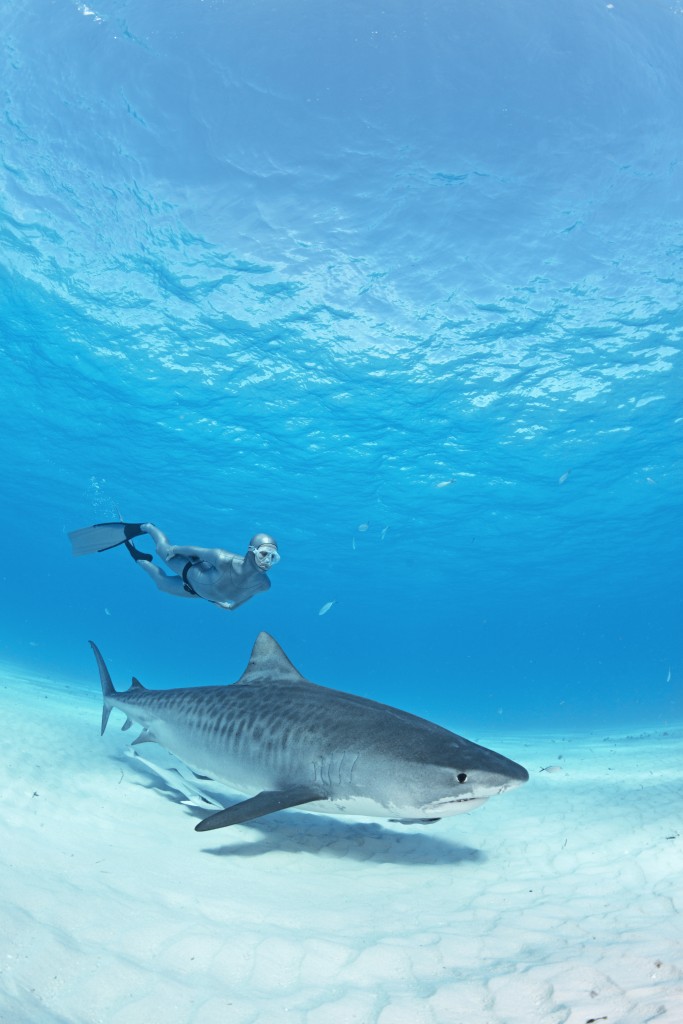
Lesley dived down a number of times to join this beautiful female tiger shark and swam beside her for over a minute at a time. © Scott Smith

After Maxine had spent nine years swimming around in circles, I influenced a decision to satellite tag her and release her back into the ocean. Maxine’s release was followed by the satellite tagging and releasing of other sharks she shared her tank with, as well as the satellite tagging of wild sharks, so we could compare their migration movements up our coast. This programme reached millions of people worldwide, and because of it, this aquarium does not keep sharks in captivity their whole lives anymore, but returns them after a few years and replaces them with newly captive sharks.

I had also boarded a shark longline vessel, filming and producing the award-winning Sharks in Deep Trouble. The film showed sharks being finned alive, shocking people worldwide. I had created numerous campaigns, including my Panda Award Rethink the Shark. I had even gone so far as to strip naked and tie myself up in nets for an anti-shark net campaign called Catches Anything, Kills Everything.

I knew the tiger shark images would be a powerful addition to my campaigning work – just a girl in a bikini with sharks all around her. But I confess, unlike all my other campaigns, this one put me out there and I was pretty nervous when I first got in. I was about to test my own words: “Sharks are not monster maneaters.” My misplaced fear dissolved into infinite turquoise the second I dived down to experience the simple joy of being free with the animals I love. It was then I caught the free diving bug and was determined to return with better skills one day.

Fast Forward

Eighteen months later and I’m super-confident. Fear is alien now. Having trained with Trevor Hutton, South Africa’s most accomplished free diver, and my partner, I’m enjoying more bottom time with the sharks and loving the freedom only free diving brings.

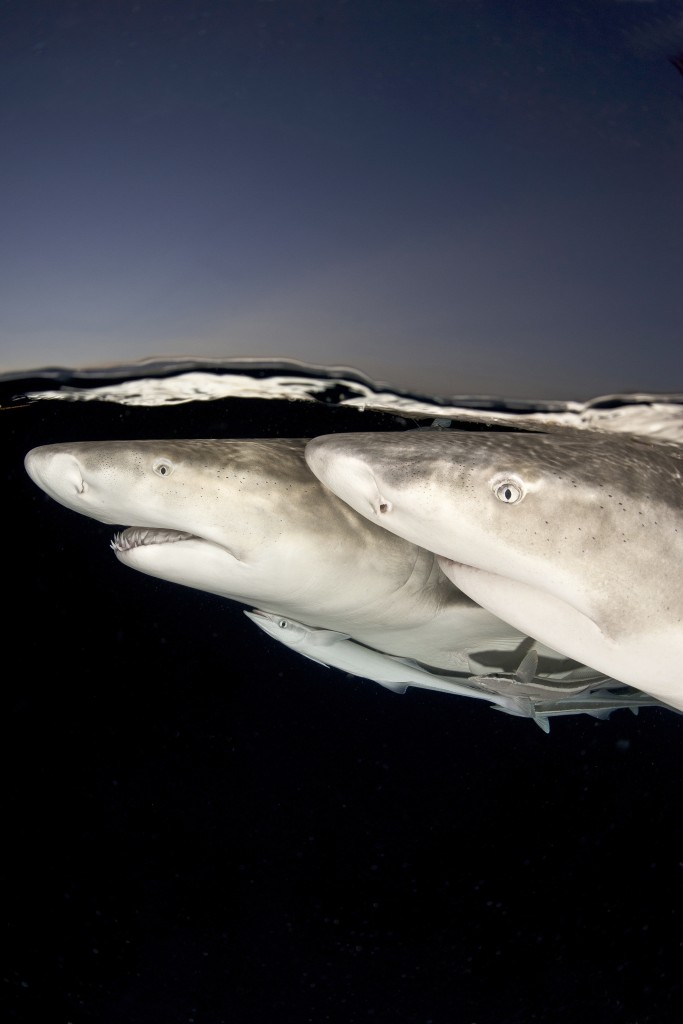
As the sun sets, the water turns an inky black, and there’s just enough light both above and below to allow the capture of this special portrait of two female lemon sharks. © Lesley Rochat

Tiger sharks’ sneaky behaviour is very familiar to me. I recall that making eye contact with one that was sneaking up from behind caused it to turn away. Mike Ellis, who took the free diving shots of me in the bikini, and who has spent hours underwater photographing the sharks, had it worked out: “What you gotta do is lie low on the sand, hide behind your camera and then when the shark comes close enough for the shot, quickly take the shot before she swims off.” It worked and I quickly mastered the art of getting the best shots I could of these beautiful creatures.

In my years spent diving with sharks I know it’s safer than sleeping in my own bed, considering the high crime rate in South Africa. I’m aware, however, that tiger sharks are often surface feeders, and sharks in general are very curious animals. The very, very small risk of a close encounter of the less-preferred kind is therefore higher when free diving than on scuba. After a tiger shark’s close inspection of my shoulder, I decided to pay heed to Scott’s advice. I put my irritating snorkel back.

In the Moment

I take in a breath and dive into the ocean’s familiar silence, down past some lemon sharks to greet a beautiful big tiger shark below. I’m concerned to see that she has a hook in her pectoral fin and another tiger shark has a hook in her mouth. Man’s destructive mark. It saddens me to know that although sharks are protected from commercial fishing in the Bahamas, recreational fishermen may still catch them.

Swimming beside this fine-looking animal I find the temptation too great, and I reach out to gently touch her. I must, however, remember the rules, and remember my place. I am a visitor in their domain that they graciously accept. Respect this and never get too bold or overconfident. They’re supreme predators after all.

I don’t handle bait or feed sharks and I do try to remember not to swim in the chum slick or down current. But after my hours in the water with all kinds of shark species, who have all been so gentle, it’s easy to forget that they have teeth, and big ones at that.

Freediving with the majestic tigers of the sea is a true privilege. The warm water on my skin and just the air in my lungs, her and me, side by side, surrounded by lemon sharks. I know I will do this till the day I die. Only about five people are killed by sharks each year. But if it’s God’s will that a shark takes me even with those slim chances, I’d still consider it the perfect way for me to go.

< img class="size-large wp-image-4416" src="http://staging.uw360.asia/wp-content/uploads/2016/06/Photo-Lesley-Rochat_DSC1728-1024x683.jpg" alt="Lemon sharks pack on top of one another for a unique shot, but taking this photo was tricky and risked scratching the photographer’s dome port. © Lesley Rochat" width="1024" height="683" /> Lemon sharks pack on top of one another for a unique shot, but taking this photo was tricky and risked scratching the photographer’s dome port. © Lesley Rochat

SDAA 05 no spineThis article featured in Scuba Diver AUSTRALASIA “Wonderful Water Women”
Shark Diving: 7 Species to Easily Spot

0
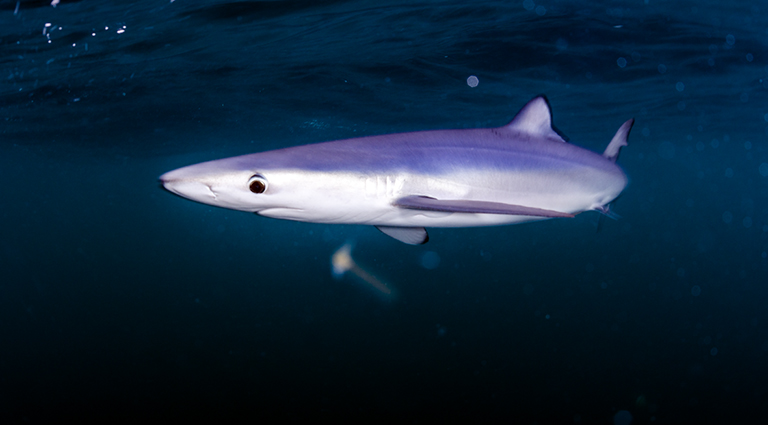
"The biggest threat faced by the blue shark, as most sharks, is that from fishing." © Gill McDonald

Underwater Photographer of the Week: Pasquale Vassallo

0
"In one of the last, during a night dive, I was focused closely on shooting a seahorse. Suddenly a big cuttlefish caught him right in front of my eyes, leaving my frame empty." © Pasquale Vassallo

Photographer and ocean researcher Pasquale Vassallo was born in the coastal city of Naples in 1970. He grew up with an adoration for the sea, spending his youth searching for octopuses and other marine creatures on single breaths of air, before developing a passion to explore the underwater world. He has since amassed an impressive trophy cabinet of awards including Best of Show at LAUPS and the Plongeur D’or of Marsiglia. We introduce to you our Underwater Photographer of the Week, Pasquale Vassallo:

What made you want to become an underwater photographer?
A passion for the sea first got me interested in underwater photography before I finally approached it. I discovered a new world living in the sea, that I could take home with me even when I didn’t dive.

"I discovered a new world living in the sea..." © Pasquale Vassallo
“I discovered a new world living in the sea…” © Pasquale Vassallo

Your first underwater shot?
It was a long time ago. I remember a shot of a scorpionfish and it was very hard to catch him in my Nikonos 3’s frame.

The story behind your most memorable underwater shot?
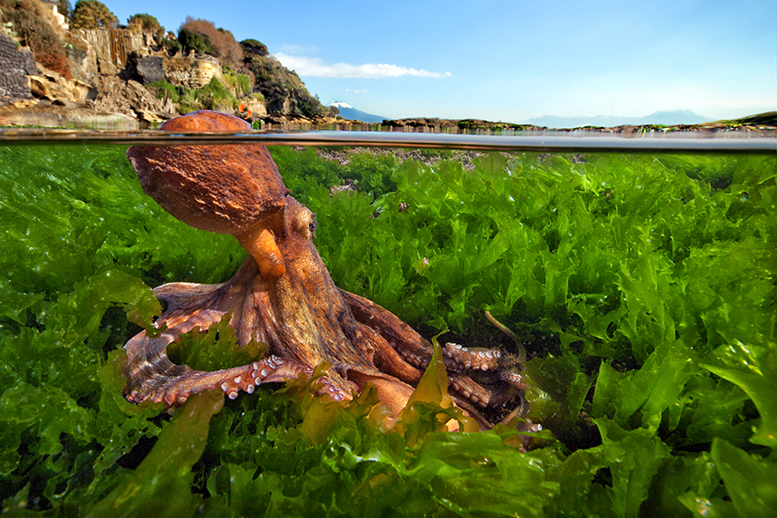
This picture was taken in the water of Posillipo, in Naples during the month of January. Finally after spending long days waiting, that morning Vesuvius was blanketed, the sky and the water was clear and, despite the cold, I felt that it was the right time to do it. After several shots in/out, I was rewarded by the arrival of an octopus who, without his knowledge, became the primary subject of the photo: “A View of the Gulf”.

I was rewarded by the arrival of an octopus who without his knowledge became the primary subject of the photo: “A View of the Gulf”.
“I was rewarded by the arrival of an octopus who, without his knowledge, became the primary subject of the photo: “A View of the Gulf”.” © Pasquale Vassallo

Where is your favourite dive destination?
There are many places where I have dived and it was fantastic. I love those places and destinations where you can find different and new photography subjects. Nevertheless my Mediterranean Sea is on top.

The site you’d most like to dive, but never have?
Cold Seas.

The weirdest thing you’ve seen underwater?
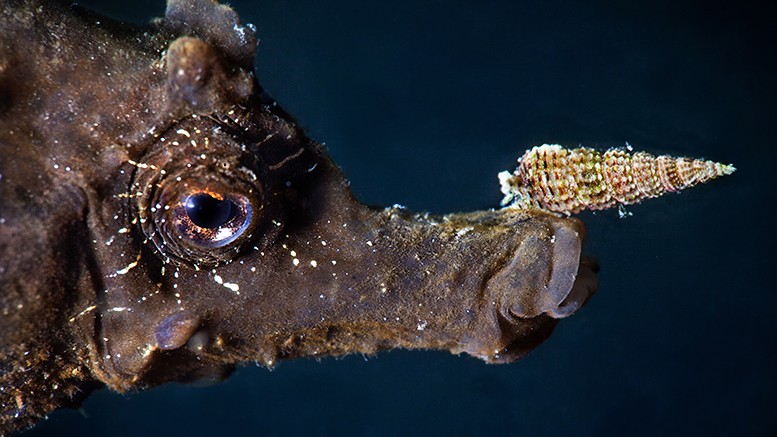
I have seen many different events during my dives over the years. In one of the last, during a night dive, I was focused closely on shooting a seahorse. Suddenly a big cuttlefish caught him right in front of my eyes, leaving my frame empty.

I am continuously searching for new images and new photo subjects. Constantly researching into the newest shots, to create different and hopefully better photographs. © Pasquale Vassallo
“I am continuously searching for new images and new photo subjects, constantly researching into the newest shots, to create different and hopefully better photographs.” © Pasquale Vassallo

What camera equipment are you currently using?
I currently have two cameras (Canon 5D Mark II and 5Dsr). My favourite lenses are Canon 8-15mm, 16-35mm and 100mm macro. I use Inon flashes and a Seacam housing.

What is the highlight of your career?
I hope that I have not found it yet.

…And the lowpoint?
I hope to have already passed it.

"I’m really happy for what I have achieved so far within the underwater photography world. Never stop and never give up." © Pasquale Vassallo
“I’m really happy for what I have achieved so far within the underwater photography world. Never stop and never give up.” © Pasquale Vassallo

Is there any particular shot that you still want to get?
I am continuously searching for new images and new photo subjects, constantly researching into the newest shots, to create different and hopefully better photographs.

Any upcoming photography projects?
I have many projects in my mind and I wish to achieve most of them. Anyway I’m really happy for what I have achieved so far within the underwater photography world. Never stop and never give up.

"I love those places and destinations where you can find different and new photography subjects." © Pasquale Vassallo
“I love those places and destinations where you can find different and new photography subjects.” © Pasquale Vassallo

Quick Tips for Great Underwater Macro Images

0
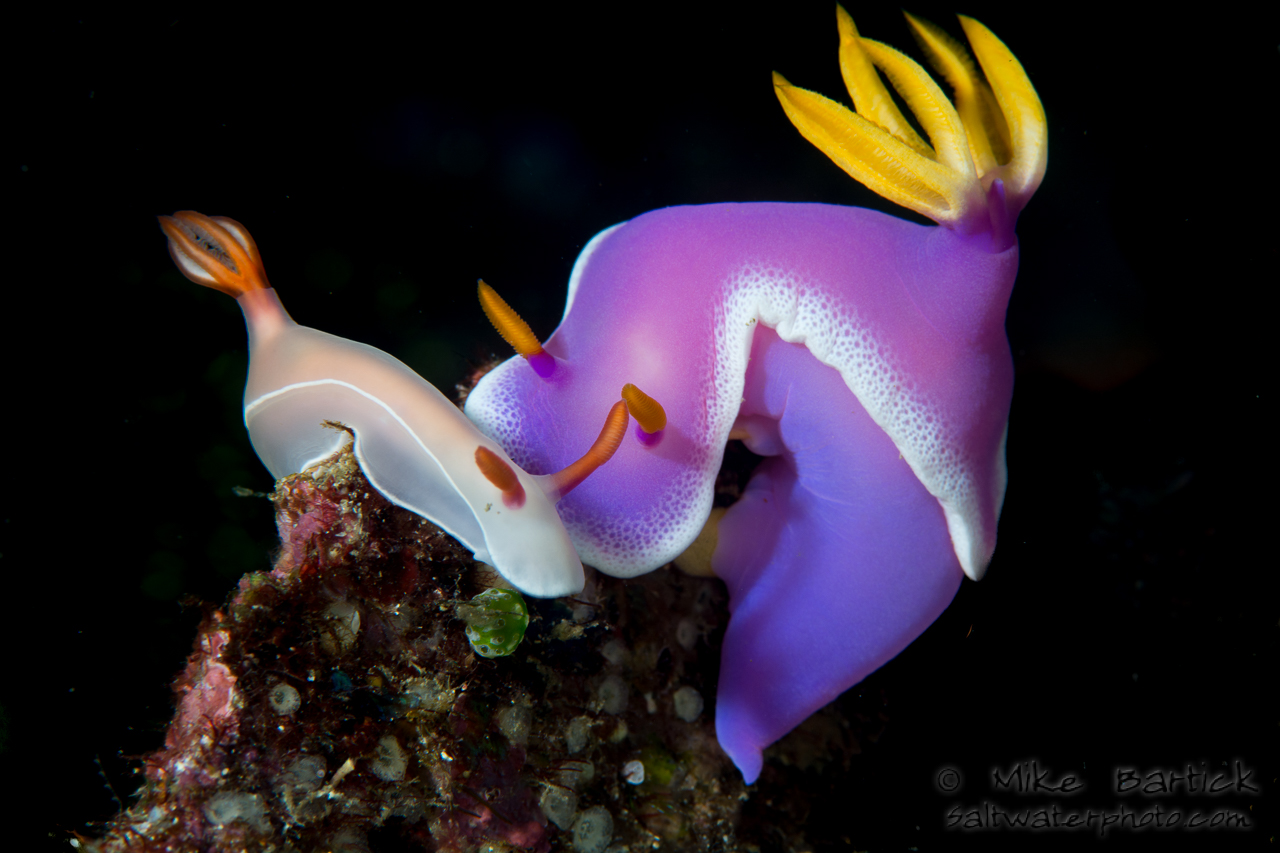
Nudibranchs offer perfect photogenic opportunities as they aren't running away so fast. They tend to be colourful and have amazing textures and some interesting symmetry. Practice makes perfect, so take your time.

Underwater photographer and small animal expert Mike Bartick gives three quick tips to improve your macro images.

Shooting macro is often the first step and introduction to underwater photography once a diver decides to shoot pictures underwater. With a decent macro lens, and a good critter spotter by your side, getting usable images isn’t too difficult.

But if you want to take your macro images to the next level, the mantra “Get Low, Get Close, Shoot Up” works really well, whether you’re a budding macro enthusiast or an experienced shooter. Use the following tips to help with your technique and to improve your mastery over your camera system:

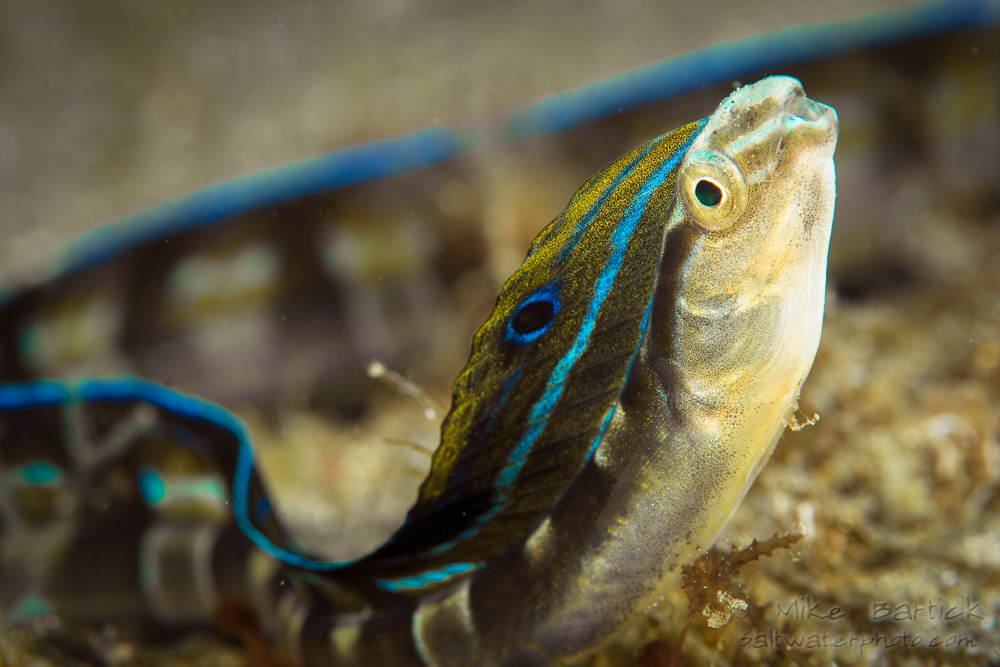
Snake Blenny (Lumpenus lumpretaeformis) in the open are not the easiest subject to work with and tend to spook easily if approached from above. Getting low will decrease their perceived threat and create eye contact. Stay with your subject and try to get the best composition possible. These unusual blennys live in narrow tubes in the sandy shallows and will poke their heads out in a curious manner to investigate you. Once engaged they can do all sorts of things so stay with them.
A snake blenny (Lumpenus lumpretaeformis) in the open is not the easiest subject to work with and tends to spook easily if approached from above. Getting low will decrease their perceived threat and create eye contact. Stay with your subject and try to get the best composition possible. These unusual blennies live in narrow tubes in the sandy shallows and will poke their heads out in a curious manner to investigate you. Once engaged, they can do all sorts of things, so stay with them.

Get Low
Shooting from a low angle helps to create a better perspective of your subject and will reveal details that aren’t regularly noticed. Eye to eye contact creates a unique moment of connection between the shooter/viewer and the subject, revealing the subject’s little world. Capturing that moment is what compelling macro images are all about. Relax and observe for a moment before shooting and ask yourself, “What is the story here?”

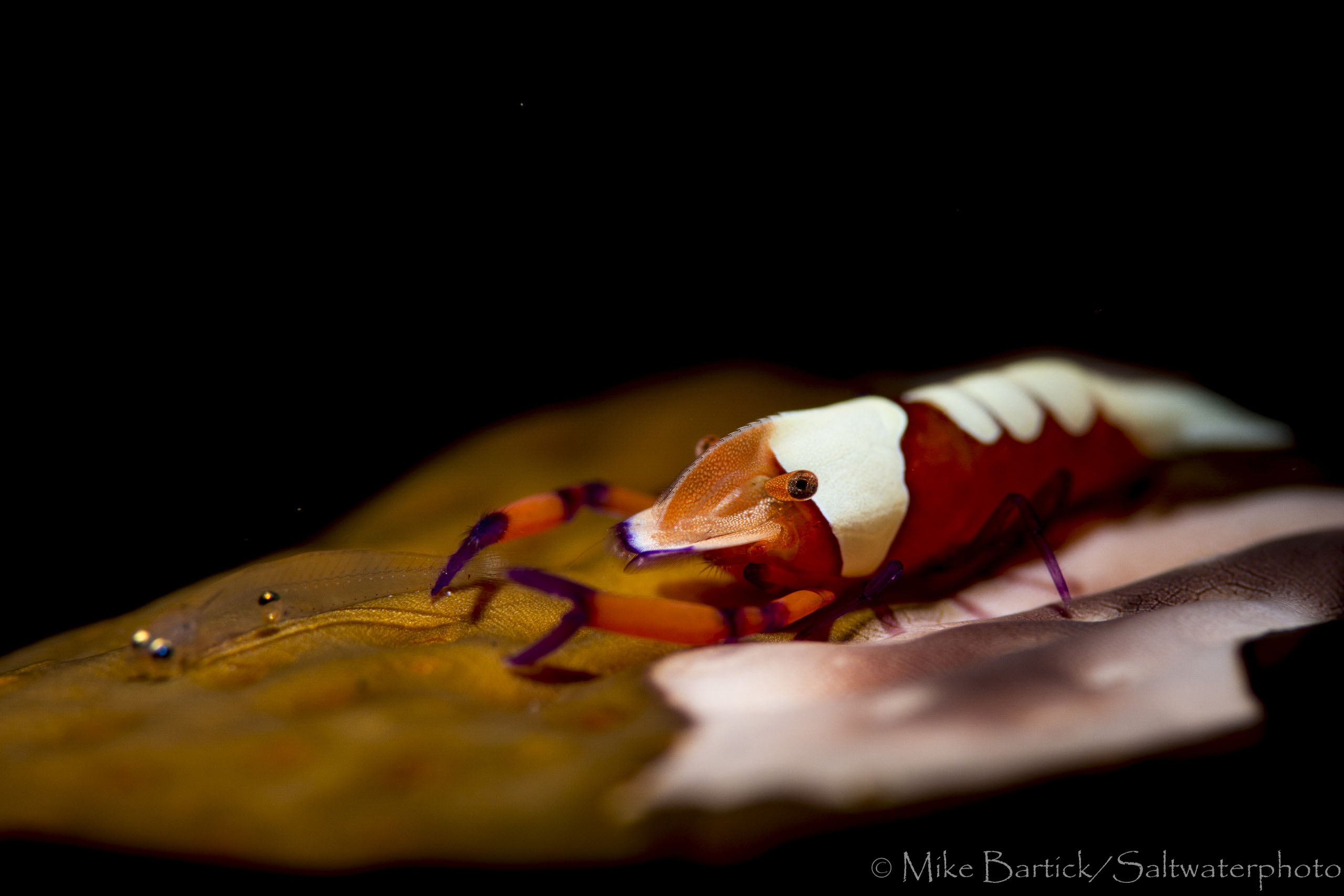
Imperial shrimp (Pereclemenis emperador) are a commensal shrimp that are not considered unusual that occur on sea cucumbers and occasionally on nudibranchs. I never knew they ate fish until i saw this one grab the ghost goby and run off tearing it apart. Getting low, in its world opens up a new perspective and will help push your images to the next level.
Imperial shrimp (Pereclemenis emperador) are a commensal shrimp that are not considered unusual and occur on sea cucumbers and occasionally on nudibranchs. I never knew they ate fish until I saw this one grab a ghost goby and run off, tearing it apart. Getting low, and into its world opens up a new perspective and will help push your images to the next level.

Get Close
You’ll be able to achieve a better portrait of your subject if you get as close as possible. Unless there is second animal interaction or a need for extra frame space, try to fill the frame with your macro subject. Getting close also helps with better lighting from your strobe flash, creating a more colourful and detailed image.

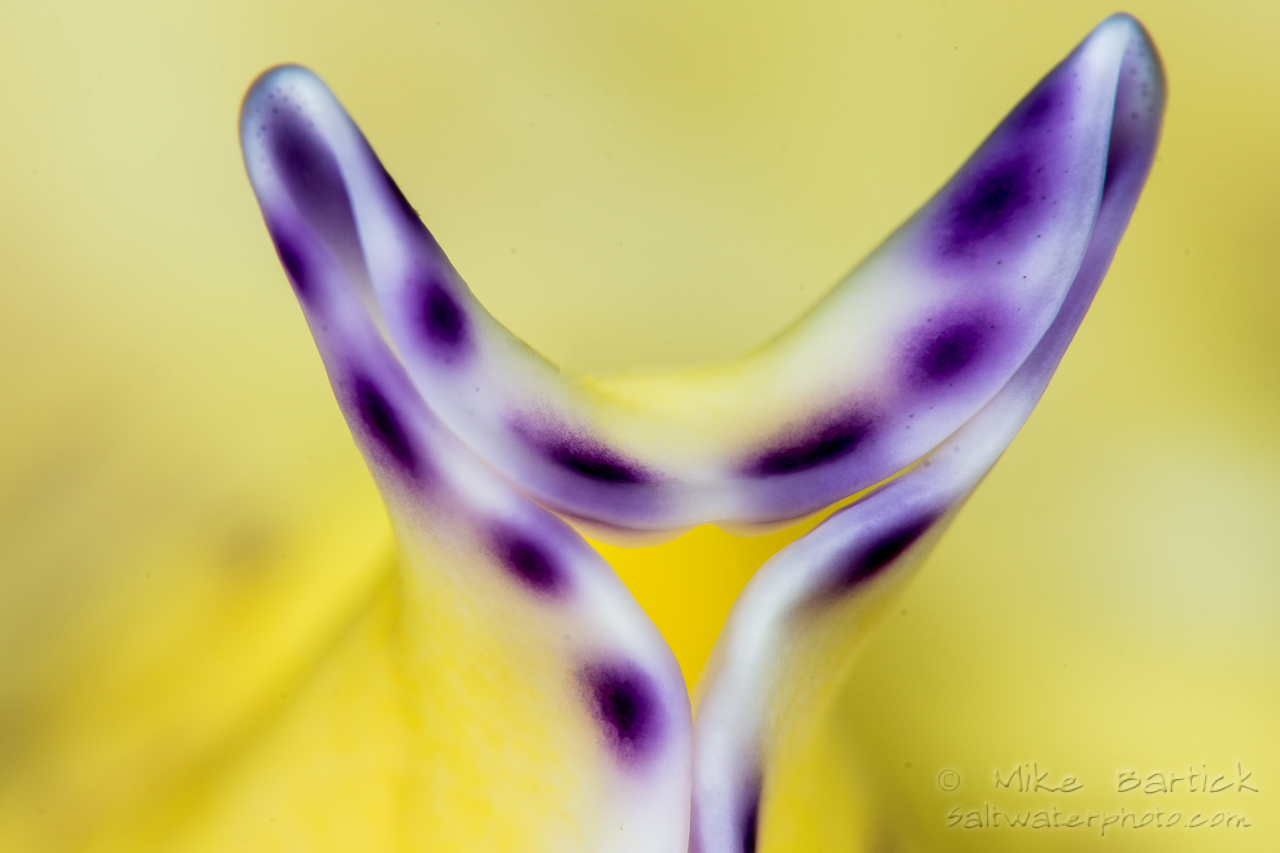
Polychaete flatworms can pose all sorts of challenges when trying to create something special. Getting low and close helps to “Fill the frame” with its bold colourations and reveal the details. Its furled mantle mimics a nudibranchs rhinophores and is of special interest for this image.
Polychaete flatworms can pose all sorts of challenges when trying to create something special. Getting low and close helps to “fill the frame” with its bold colours and reveal the details. Its furled mantle mimics a nudibranch’s rhinophores and is of special interest for this image.

Shoot Up
Forcing the perspective of your subject to appear larger than it actually is, shooting upwards is an old school technique that works really well with macro and other forms of photography. This will also aid you in creating a black background (with nothing behind the subject). 

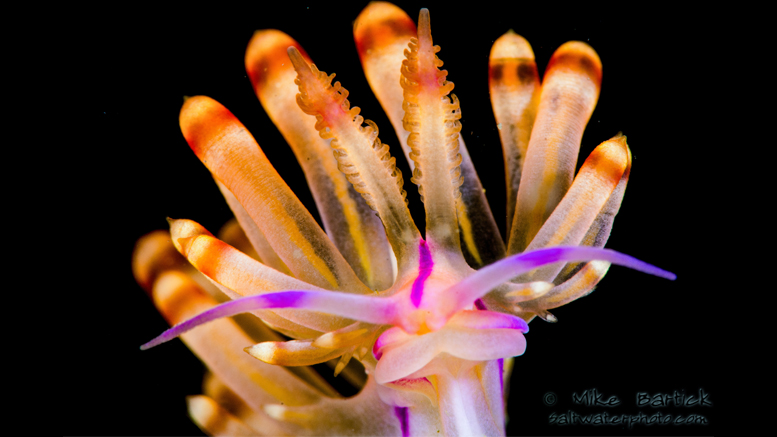
(Hypseledoris nudibranchs) Shooting at an upward angle can help to create a nice black background by avoiding any surrounding or low lying substrate. The angle doesn't have to be overly dramatic. And in the case of shooting a nudibranch photo, it helps with seeing through the finned rhinophiores.
Hypseledoris nudibranchs: Shooting at an upward angle can help to create a nice black background by avoiding any surrounding or low-lying substrate. The angle doesn’t have to be overly dramatic. And in the case of shooting a nudibranch photo, it helps with seeing through the finned rhinophores.


Macro image making doesn’t have to be overly complicated and filled with lofty ideas. The main goal is to challenge yourself. The principal ingredient should always be to have fun and remember to always be kind to the marine environment. After all, we don’t want to harm the subjects we’re trying to photograph.


Crystal Blue Resort 4In a tropical, oceanside setting, Crystal Blue Resort finally offers a finer quality of lodging perfectly placed to experience Anilao’s excellent scuba diving and underwater photography opportunities. Crystal Blue Resort is conveniently located in front of Arthur’s Rock Marine Sanctuary where scuba diving enthusiasts can have their once-in-a-lifetime underwater adventure.


13 Items to Revolutionise Your Wardrobe

0

Yes, you may carry the panache of a leopard seal when below the waves, elegantly spiralling and fin-kicking in your new wetsuit and trusty BCD. But back on dry land, in your tattered Hawaii-styled shorts and one-size-too-small T-shirt, the colour fading from the sun, you appear as ungainly as would your marine doppelgänger. Allow us to change that – we bring you the latest dive fashion trends to slip into and revolutionise the way you dress topside:

Catarzi Straw Matador Hat with Natural Straw Brim

bagggg
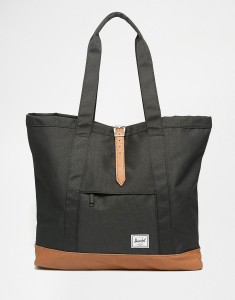
Herschel Supply Co Market XL Tote Bag

What beach holiday would be complete without a token straw hat? Balancing both tradition and modernity, this matador hat is the perfect companion to keep your face and neck out of the afternoon sun.

MSRP USD47
www.filippocatarzi.it

Herschel Supply Co Market XL Tote Bag

Size: 36 x 50 x 10 cm

Perfect for storing valuables, this trendy bag is an ideal beach bag or as a holiday carry-on.

MSRP USD70
www.shop.herschelsupply.com

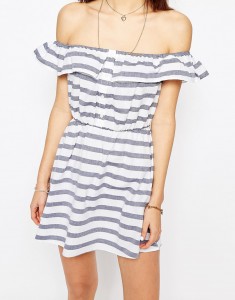
ASOS Bardot Stripe Button Front Beach Dress

beachdress
ASOS Bardot Stripe Button Front Beach Dress

Keep things cool and breezy with this beach dress, in lightweight striped 100% cotton. Ideal to throw on after a dive.

MSRP USD44
www.asos.com

Ted Baker Delta Contrast Cat Eye Sunglasses

With a classic cat eye frame and contrasting frame ends, these sophisticated shades add instant cool to your post-dive style.

MSRP USD174
www.tedbaker.com

ASOS Dede Canvas Trainers

Perfect for those tanned ankles, these canvas sneakers can be worn with both smart or casual attire. Perfect for completing any summer look.

MSRP USD23
www.asos.com

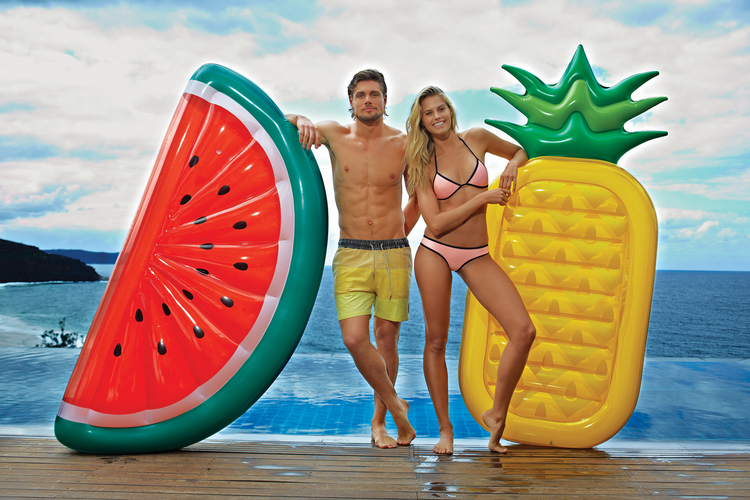
SunnyLife Inflatable Pineapple

Size: 90 x 16 x 197 cm

To match the pineapple in your post-dive cocktail, lay back and soak up the rays on this quirky and fun inflatable pineapple.

sulpipxy_inflatable-pineapple[1]
SunnyLife Inflatable Pineapple
MSRP USD58
www.sunnylife.com.au

SunnyLife Beach Paddles

Bring along these paddles to knock away any possible post-dive blues on the beachfront.

MSRP USD31
www.sunnylife.com.au

South Beach Navy Canvas Barrel Beach Bag

pinktopppp
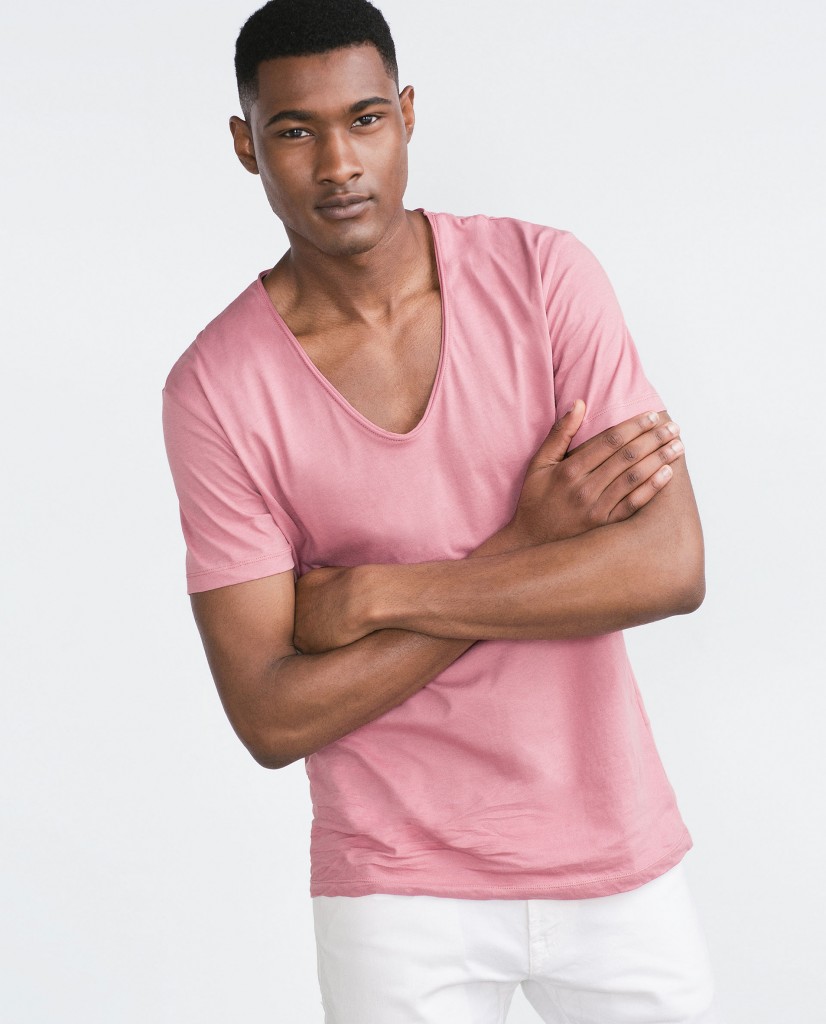
Zara V-Neck T-Shirt

Size: 20 x 48 x 22 cm

No more storing towels and goggles in plastic bags. With this hot new beach bag, you’ll be able to stow away dive and beach accessories in style.

MSRP USD16
www.southbeachofficial.com

SunnyLife Inflatable Watermelon

Size: 18 x 79 x 185 cm

If you’re not into the taste of pineapple this summer, there is always the option of floating on a cool giant watermelon instead!

MSRP USD58
www.sunnylife.com.au

Zara V-Neck T-Shirt

We’re keeping it simple for this beach look, putting the pink on top.

MSRP USD19
www.zara.com

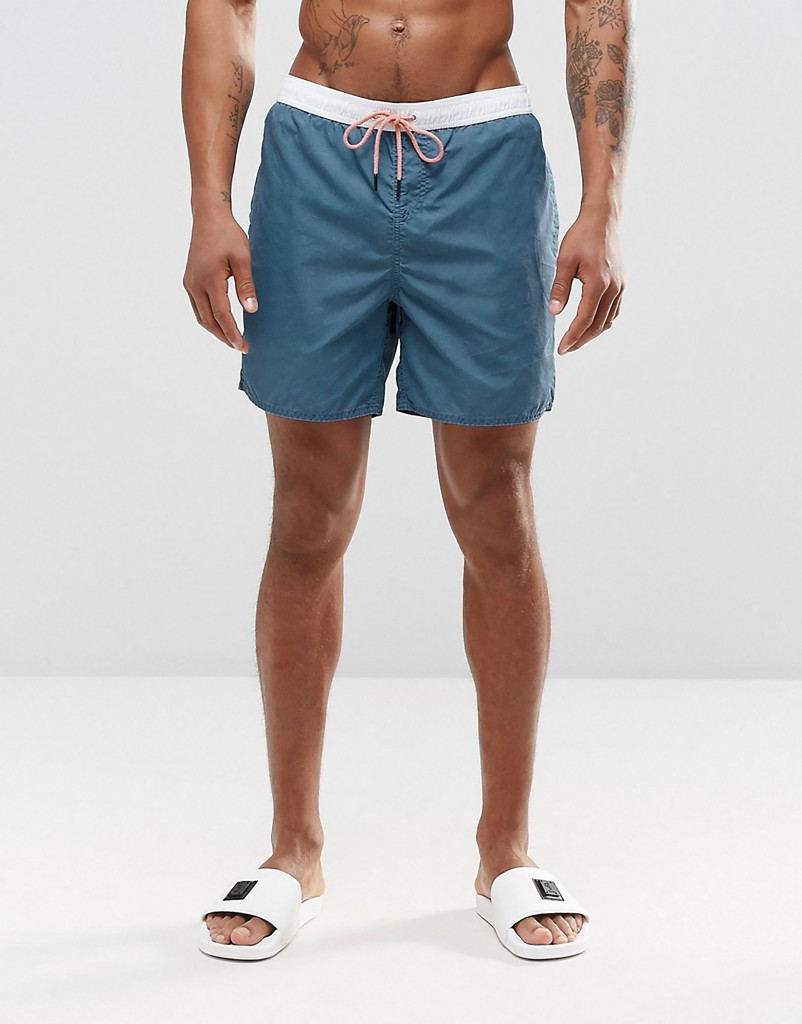
shortssss
New Look Swim Shorts in Blue with Contrast Waistband

ASOS Flatbrow Sunglasses in Stripey Tort

With total UV protection, these stripey tort sunglasses will save your eyes in style.

MSRP USD16
www.asos.com

Men’s Marbea SL Sandal

Hit the beach in these modest sandals, ready to complete your post-dive look.

MSRP USD38
www.famousfootwear.com

New Look Swim Shorts in Blue with Contrast Waistband

Relax after a dive in these stylish swim shorts, great for in the water and out.

MSRP USD20
www.newlook.com


This article originally featured in SD OCEAN PLANET “Budget & Luxury”