For over 200 years the most extensive political and social structure in Western civilisation, the Roman Empire, dominated the land and seas of the Western world. But like all great empires, it grew too vast. Over the many years of its decline, territory was stolen and land broken up like puzzle pieces, and its once great architecture, objects and emperors fell, even sank, to ruin – waiting to be discovered.
Ran Feinstein and Ofer Raanan had no idea that a routine dive would lead them to uncover the largest assemblage of Roman marine artefacts to be recovered in the past 30 years – marine cargo of an ancient merchant ship. They were diving in the ancient port of Caesarea, in Caesarea National Park, one of four past-Roman colonies in the Syria-Phoenicia region, located on Israel’s Mediterranean coast.
Having dived here many times, Raanan and his buddy had never found anything like this before. During the dive the pair thought nothing more of the first sculpture they saw on the seabed when they found it, but then they came across a second. Realising it was something special, they brought it to the surface and contacted the Israel Antiquities Authority (IAA) – a body of the Israeli government that regulates excavation and conservation.
Later, the IAA dived the site, recovering what was believed to be marine cargo of an ancient merchant ship that sank during the Late Roman period, around 1,600 years ago. An extensive portion of the seabed had been cleared of sand and the remains of the sunken ship could be seen peeping through. Iron anchors, remains of wooden anchors and items that were used in the construction and running of the sailing vessel, were recovered. An underwater salvage survey conducted earlier this month, using advanced equipment, discovered numerous items that would have been part of the Roman ship’s cargo.
“These are extremely exciting finds,” said Jacob Sharvit, Director of the Marine Archaeology Unit of the IAA, “The location and distribution of the ancient finds on the seabed indicate that a large merchant ship was carrying a cargo of metal slated for recycling, which apparently encountered a storm at the entrance to the harbour and drifted until it smashed into the seawall and the rocks.”
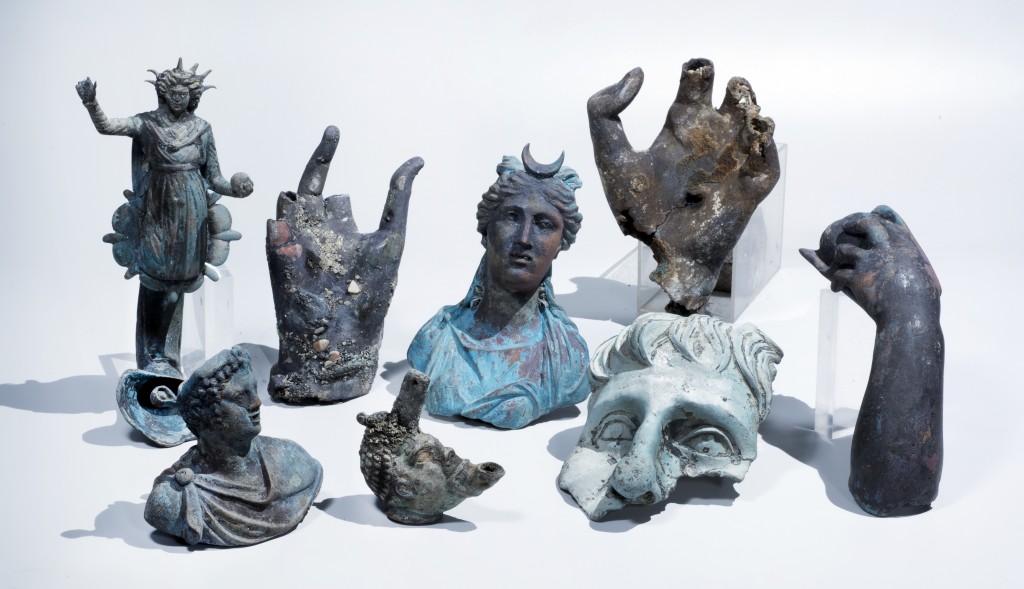
Many of the artefacts discovered are still in great condition: a bronze lamp depicting the image of the sun god Sol, a figurine of the moon goddess Luna, a lamp in the image of the head of an African slave. With life-size bronze cast statues, and objects fashioned in the shape of animals such as a whale, it’s a discovery that continues to drive the IAA’s exploration of the ancient Caesarea harbour. Only a year before, treasure of 2,000 gold Fatimid coins had been discovered by divers and the IAA.
“In recent years we have witnessed many random discoveries in the harbour at Caesarea. These finds are the result of two major factors: a lack of sand on the seabed causing the exposure of ancient artefacts, and an increase in the number of divers at the site.”
Built between 22 BC and 10 BC, Caesarea was to become a major port in the Mediterranean Sea, hosting the standard “recreational activities” that the Romans are famous for: Bathhouses, amphitheatres and glorious temples were all constructed for the residents to enjoy. Caesarea was a place that began to boom, and stood as the largest port on the eastern Mediterranean coast.
But in a seaside town that is delicately resting on the low-lying beaches of the Mediterranean, the risk of being washed away is always going to be a faint concern for those residing there. At some point in time the port was sunk, whether from seismic activity that tilted down the structures and caused them to settle into the seabed, or a tsunami flooded the shores, scientists cannot confirm.
This latest discovery is bound to ignite the imaginations of those underwater explorers keen to uncover further artefacts that may well be hidden away around the port, as well as give us a more informed view into the Roman history of the eastern Mediterranean. For recreational divers, it’s an exciting opportunity to add that special something to a dive – the chance to swim into ancient history.
In the aftermath of Tropical Cyclone Winston, which caused considerable damage to Volivoli Beach Resort in February of this year, the resort management is ready to announce the resort’s re-opening schedule.
“We are now pleased to announce that the Volivoli Beach Resort rebuild is well into its third month and on track. As we are making considerable progress we are confident that we will be reopening the Resort on 1st of November 2016. This is well ahead of our initial predictions immediately after the cyclone. Fiji is getting back on its feet and it will be business as usual at Volivoli from the 1st of November 2016, states Nick Darling (Darling family spokesperson and Resort General Manager).
He continued, “We are very fortunate as our background business is construction and this has enabled us to move forward with Volivoli Beach Resorts reopening. We are grateful for all of the support shown to our staff and family since TC Winston. Our key message is that Volivoli Beach Resort will open bigger and better than before the storm. We are extending our main building and renovating our kitchen, restaurant, dinning and guest services area. We will also be adding an additional 8 Luxury Ocean View Villas with individual swimming pools to our room inventory later in 2017″.
Reopening Schedule:
1st November 2016
Full resort reopening with accommodation available in our Ocean View, Deluxe Ocean View and Premium Ocean View Bures
Ra Divers has been fully functional since 16th April 2016
The Fiji Siren has been back in operation since mid April 2016 and is now on her 5th scheduled cruise since TC Winston
Volivoli Beach first opened its doors in November 2005, and since then we have been welcoming travellers from all over the world. The resort is owned and managed by the Darling Family who first came to Fiji from New Zealand in 1993. They fell in love with the friendly, laid-back atmosphere and the great climate, and decided to purchase Ra Divers, the popular dive business located at Volivoli Beach, in 2003.
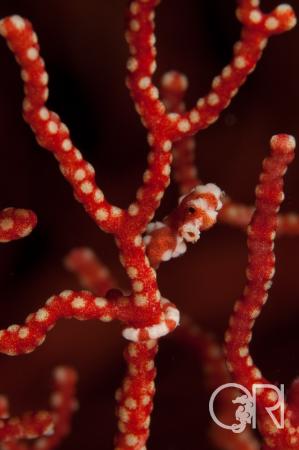
Masters of camouflage. Even when magnified through a macro lens to fit the page of a magazine, pygmy seahorses are tough to pick out due to the likeness in colour and appearance to their hosts. Now imagine divers searching for them in gorgonian sea fans over nine metres sub-aqua, and the whole ordeal becomes a champagne problem. Of course, the fragile nature and tiny size of these creatures means that divers have to be extra careful when searching – so no shaking whip coral like a martini to see if one pops out.
Dr. Richard Smith was the first person to complete a PhD on the biology of these delicate creatures. His own images of pygmies have shone a light on their existence, and the threats they face. UW360 approached the divine pygmy guru to ask him to select his top five places to dive with pygmy seahorses, and the types that you can see there:
Wakatobi Dive Resort, Indonesia
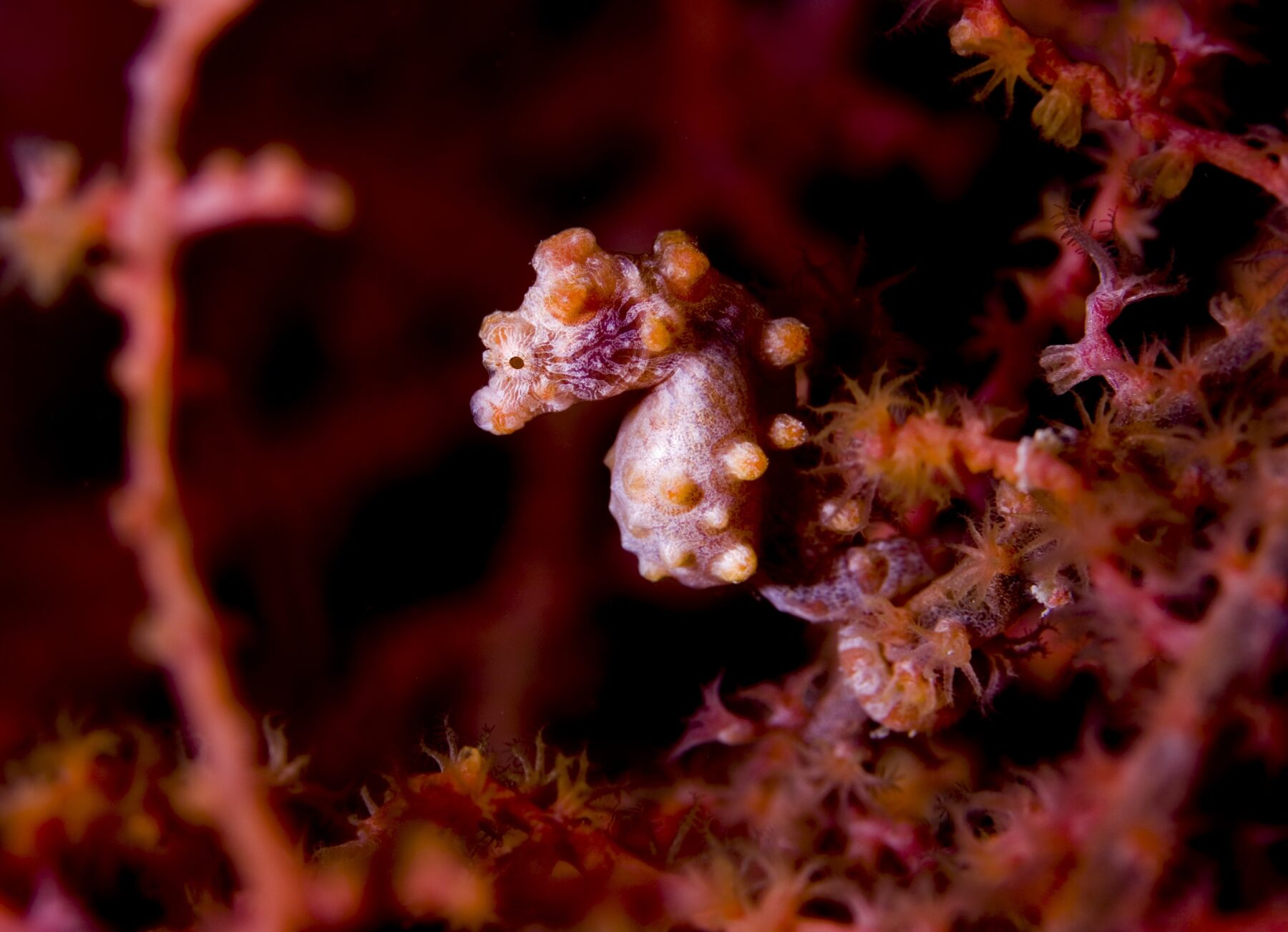
Richard spent time at Wakatobi studying the populations of both Bargibant’s and Denise’s pygmy seahorses. Bargibant’s, Hippocampus bargibanti, was the first species of pygmy seahorse to be discovered. They reach almost 2.7 centimetres in length and are extreme habitat specialists – loyally spending their entire adult lives on a single gorgonian coral of the species Muricella paraplectana. Due to their relative conspicuousness compared to other pygmies, they are one of the most commonly observed of these species by scuba divers.
Denise’s pygmy seahorse – Hippocampus denise – can be found living on the lush coral reefs of Wakatobi’s underwater world. Closely related to the Bargibant’s, it similarly picks a host for it to remain clinging to for the rest of its life – growing to a maximum length of 2.4 centimetres.
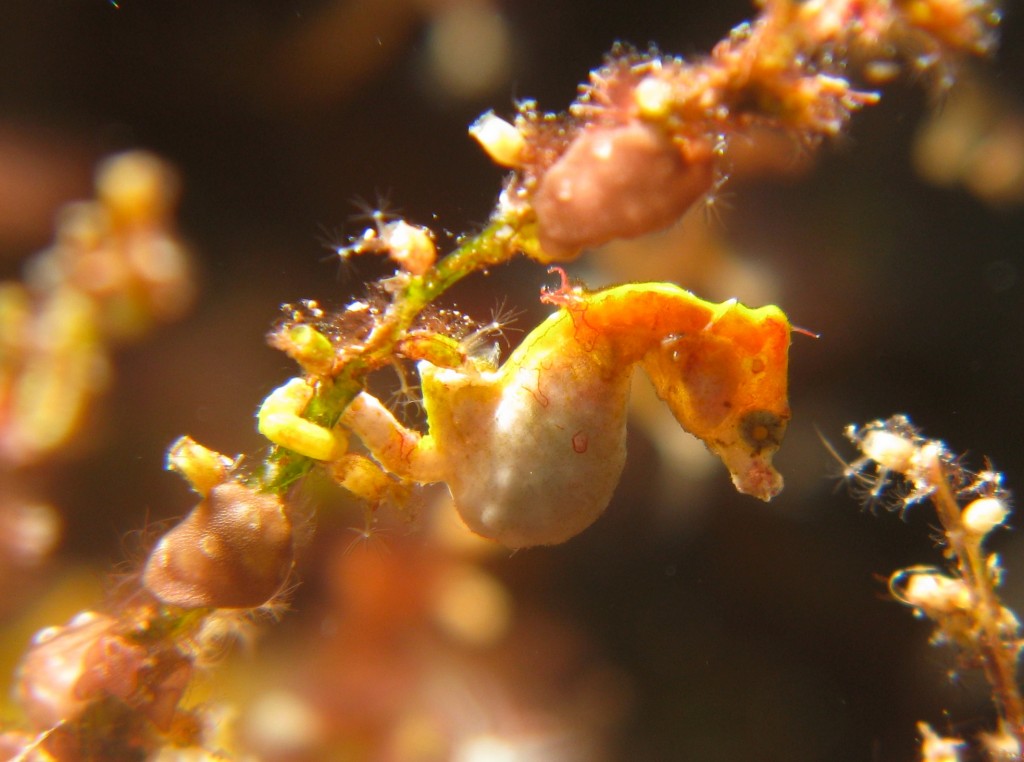
Wakatobi is also one of the top places to see Pontoh’s pygmy seahorse, Hippocampus pontohi. One of the three species officially named in 2008, Pontoh’s is much smaller in size, reaching just under 1.7 centimetres in length from the tip of the tail to the snout. Its colouring is predominantly white with yellow or pink patches, and it is often found in shallower areas.
This is the only place Richard has ever seen the rarer-than-rare Satomi’s pygmy seahorse. The world’s smallest seahorse, Hippocampus satomiae reaches a total length of less than 1.4 centimetres, but is nocturnal and very active. They can be identified by their incredibly small size, small black dot between their eye and snout, as well as orange filaments and markings on the back, tail and chin. Finding one here takes great skill, and a particularly meticulous eye for macro marine life.
The red and white colour form of the Denise’s pygmy seahorse is common in the south of Raja Ampat. With their tails wrapped around the limb of a gorgonian, looking like lifebuoys anchored to their host, these tiny creatures can be carefully studied, in particular their intricate skin textures that make them so hard to spot.
Milne Bay, Papua New Guinea
Richard thought up four chapters of his pygmy seahorse thesis when diving with Denise’s pygmies here. The site is also likely to accommodate Coleman’s pygmies, although he has never seen them there. The Coleman’s pygmy seahorse, Hippocampus colemani, is believed to grow up to 2.7 centimetres in length – there has been little research on the fish so far.
Lembeh Strait, Sulawesi
Here you can find many Pontoh’s, Denise’s and Bargibant’s pygmies. Unfortunately, the destination is frequently visited by many divers, as Lembeh is famously considered a divine critter Mecca. When diving, please ask the guide not to touch the gorgonian or pygmy in any way.
Solomon Islands
Largely unspoiled due to its remoteness, the Solomons are home to the white colour form of Denise’s pygmy seahorse. Once again, you’re likely to come across Bargibant’s and the brown form of Pontoh’s – which used to be known as “Severn’s” and can be found in the slightly undercut areas, sheltered from direct sunlight.
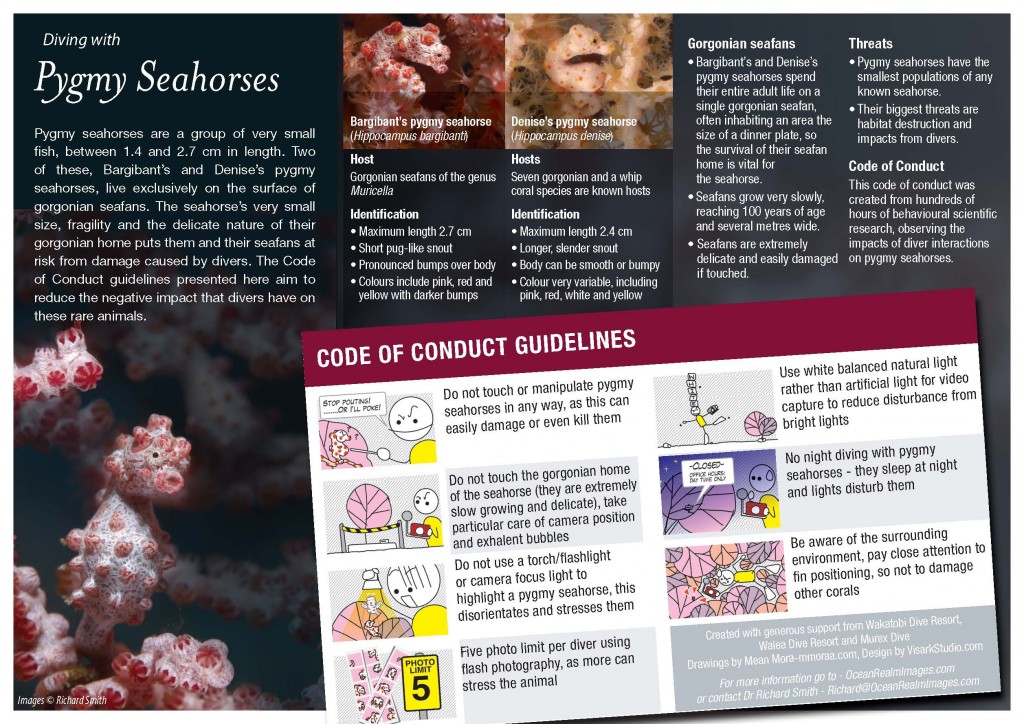
We encourage divers to both discover and photograph pygmy seahorses, and to help raise awareness of the threats they face. Divers should take a great deal of care when diving with these delicate creatures. Allow these “Code of Conduct Guidelines” to help:
Dr. Richard Smith’s Pygmy Seahorse Code of Conduct
Last week, Jon M. Piepkorn, Clare Caroline Brown and Stuart Gow showcased the first part of our two-part feature on the eight best places to dive in Fiji. Here they bring you the much anticipated final four:
The islands of Fiji, which I can proudly state have some of the best diving in the world, are one of a kind. To sports enthusiasts, the Pacific nation is rugby sevens; to topside adventurers, it is its unique traditions and heritage; but to divers, Fiji is a vast unchartered underwater haven, teeming with unique forms of marine life that are yet to be explored. Here are the final four:
The Lomaiviti Group of Islands
Gau Island
Located in the southern Lomaiviti Group of Islands off the east coast of the main island of Viti Levu, the lagoon on the island of Gau is typically only reached via a liveaboard or private charter. On the northern end of the lagoon there are a couple of dive sites to enjoy while waiting for the proper currents, in one of my favourite dive spots in all of Fiji: Nigali Passage. During an outgoing or falling tide, the water actually rushes in through the passage towards the lagoon (opposite of what one might think), bringing cooler, deeper nutrient-rich waters flushing out the channel for usually excellent visibility. At the outer edge of the channel, the depth begins at around 18 metres where you drop in for the dive.
Prepare for the current to gently drift you down the 50- to 75-metre-wide channel which is covered with a sandy coral bottom. Typically you’ll be met by whitetip reef sharks sleeping under the large mushroom coral bommie that sits at the entrance to the channel. As you drift in towards the lagoon, the channel becomes narrower and deeper (with nice walls on either side scratching the water’s surface) and you will be treated to schooling bigeye trevally along with three species of schooling barracuda. Photographers: Turn around and gently fin against the current and you will be in a perfect position to let these schools surround you for a picture that will be sure to impress your friends on Facebook. During your drift into the channel, you’re bound to encounter “Big Bill”, the large resident potato (spotted) grouper who will swim with you throughout the dive. About 15 to 20 minutes into the dive you arrive at The Bleachers – think stadium seating – as the natural coral and live rock walls feature an area for divers to rest gently on their knees with a sandy bottom.
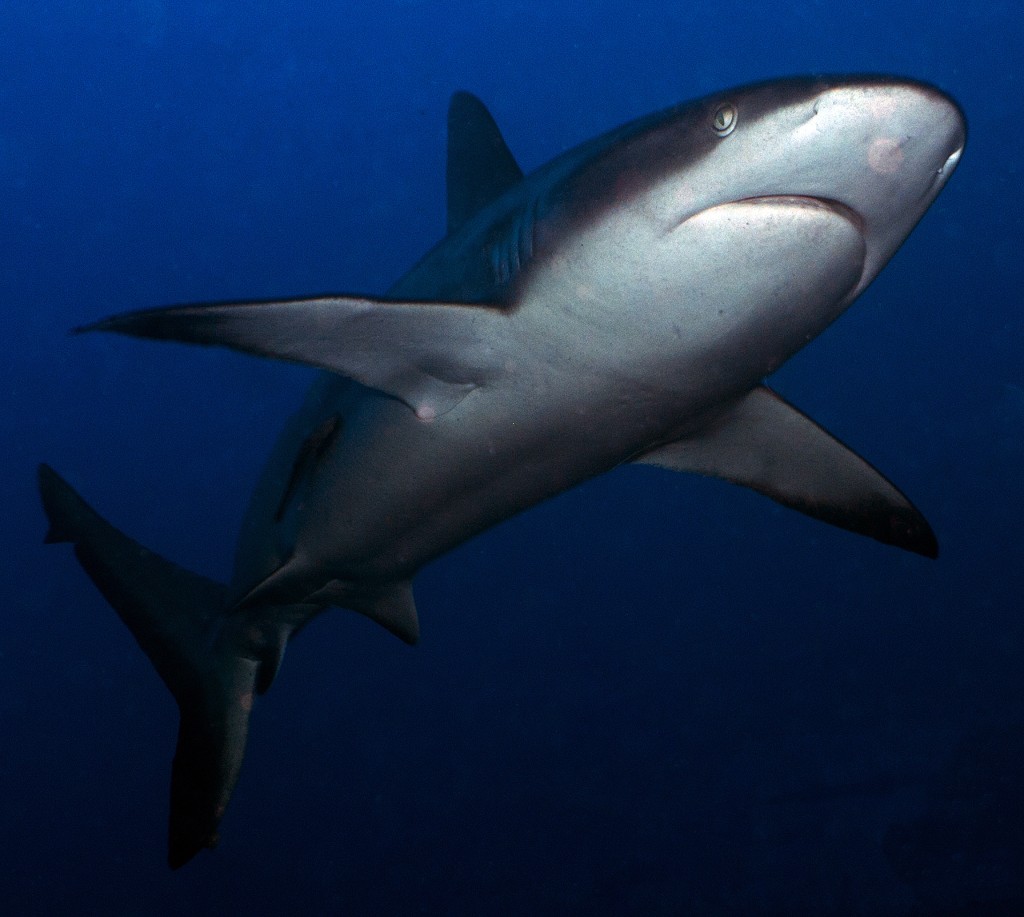
Sitting in The Bleachers you watch the schooling grey reef sharks that are always in attendance. This is the place where the female greys come to give birth to their young – so at the right time of the year you’ll be treated to little grey reef sharks as well. After you have used up your bottom time watching the graceful sharks schooling in front of you while they glide in and out of the schools of bigeye trevally, it will be time to enjoy your ride up the “chute”. This sandy bottom narrow area takes you from about 25 metres up to eight metres, and with a good current can be a fun ride. You might encounter a whitetip reef shark or two gliding back and forth, moray eels, nudis and lobsters.
Moving north from Gau Island you can set your sights on Wakaya Island. Remote from the mainland with a private airport, Wakaya is best accessed either by the resort airplane, or via a liveaboard. With most of the dive sites located on the west side of the fringing barrier reefs, one of the most frequently requested is Vatu Vai – Fijian for “Manta Rock”. It’s a cleaning station for the resident mantas, where you’ll often see black mantas patrolling the outer reef walls during your dives. Lion’s Den is also a favourite dive site on the outer edge of Wakaya Channel. Hard and soft corals with schooling barracuda, reef sharks, and as an added bonus at Wakaya you can often see great hammerheads patrolling the steep walls of the Wakaya barrier reef.
Makogai is just north of, and visible from, Wakaya Island, and is home to a very large marine sanctuary. There is a government station located on the island where they are working to protect and repopulate the turtles and giant clams throughout Fiji. Inside the protected lagoon, which is also designated as a marine sanctuary, you can see some of the largest giant clams in the world. Many dive sites are within minutes of the sheltered lagoon. A favourite dive site of mine is Vatu Vasua (or “Clam Rock”), which is by far one of the best night dive sites in Fiji. This is one remote island and can be accessed by liveaboard, private charter, or yacht.
Namena Island
Located in the Koro Sea and accessible by liveaboard, seaplane or speedboat from Savusavu, this is one terrific area do dive. A small island surrounded by an atoll/barrier reef, there are several areas to dive but the two most popular are the North Save-A-Tack and South Save-A-Tack Passages. The south passage boasts the soft corals that Fiji is famous for. Among scattered bommies, the dive sites’ black forest, chimneys, and “tetons”, will amaze with the colours. Depending on the current, you can spot schooling trevally and groupers, and with a sharp eye you can see painted frogfish, scorpion leaffish, a variety of nudibranchs and pipefish.
Changing tide and current will take you to the north passage, where you start on the wall that drops to more than 800 metres, and can be treated to schooling hammerheads, oceanic silvertip sharks and grey reef sharks. Moving up onto the plateau that is known as Grand Central Station, schooling bigeye trevally and barracuda will greet you. Then moving in towards the arch you can get a great view of mantis shrimps, scorpion leaffish, and pipefish, as well as all the colourful reef fish Fiji has on offer, and the smaller critters (shrimps, anemone fish, etc.). Depending on your air consumption, or adding as a second dive, drop in at the large pinnacle Kansas, which is next to the smaller pinnacle OZ. This is farther up on the plateau where you could easily spend over an hour photographing the smallest of the small pygmy seahorses, Hippocampus severnsi. Nestled amongst the colourful soft corals and the leather corals on top of the pinnacle, the dive site is a favourite of every diver I’ve taken there.
Located on the east side of Fiji, between the mainland and Namena Island, some of Fiji’s best loved dive sites are here: Hi-8, Instant Replay, Mellow Yellow, The Cathedral,Cat’s Meow and E-6, named by Jacques Cousteau for the film and developing that had to be done on the boat after a day’s diving. Some of the pinnacles drop down to a depth of over 3,000 metres. As there is no shelter or any islands in the area, the weather really needs to be cooperative for a trip out to this dive area, which can be reached from some of the northern/eastern resorts on the mainland of Viti Levu by speedboat, or by liveaboard. It’s a very diverse region with some great hard coral dives as well as soft coral. Pelagics are often seen as the currents can be “full on” ripping. If you can reach this area – don’t miss it!
Taveuni and the World Famous Rainbow Reef
“If Cozumel is Cayman on speed, then the Somosomo Strait is Cozumel on Acid” – Buck Butler, 2007
The Somosomo Strait (loosely translated as “Calm Water”) is a relatively narrow channel of water separating Fiji’s second largest island, Vanua Levu, from its third largest, Taveuni – home to some of the world’s best dives. With over 10,000 square kilometres of pristine coral reef, the Somosomo Strait features some of the best diving in Fiji. Most reefs are fringing, bordering nearby shores, with a complement of flat-topped platform reefs. The reefs that make up the rainbow reef system vary in size, shape and underwater topography.
There are several wall dives – The Zoo, Purple Wall and the famous Great White Wall – as well as a scattering of bommies and flat top reefs sitting at different angles in relation to the constant flowing incoming and outgoing tidal currents (north to south and south to north, respectively). These currents dictate where the best dives will be on any given day, so consult local shops and crews for knowledge and tips. These currents are also attributed with the rich nutrient-filled water which feeds the reef system twice a day from the deep waters on the north and south end of the Somosomo Strait. Fiji’s reefs boast a spectacular biodiversity with some 467 species of molluscs, 298 species of hard corals, and around 1,200 species of reef fish – not forgetting the Dendronephthya, a soft coral species that thrives in this area, seen in all colours of the rainbow.
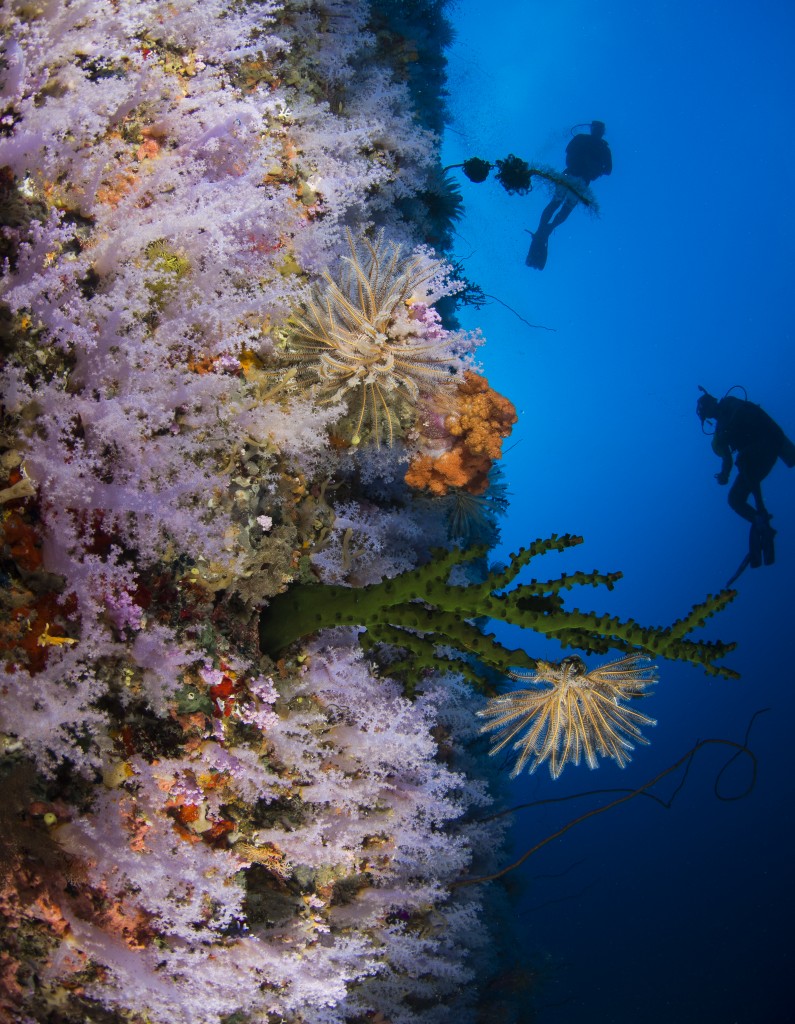
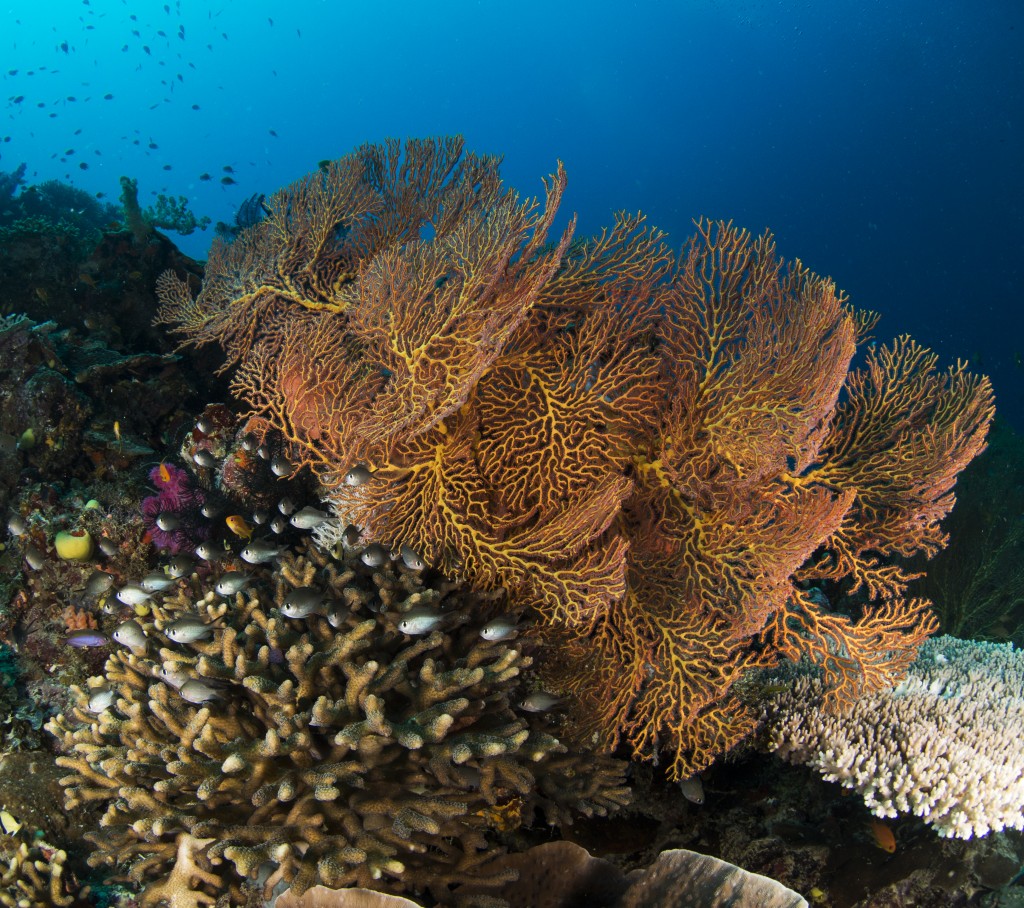
Consistently rated among the top dive sites in the world, the Great White Wall is a reason divers come to Taveuni and Rainbow Reef year after year. Often not mentioned is that this dive is very tide and current dependent. The absolute best time to dive Great White Wall is at low slack tide after the outgoing tide has fed the soft corals. When dropping onto the plateau, your guide will bring you to a large tubular swim-through starting at about 12 metres in depth and ending at about 24 metres. Diving down, take your time to look for nudibranchs, bigeye squirrelfish and huge gorgonian sea fans. Often, large moray eels can be seen in the cervices of the walls, checking you out as you descend the tube. Upon exiting the swim-through, you’ll take a “left hand” turn where you will catch Great White Wall coming into view. White corals will be in full bloom, covering the wall from about 20 metres down to over 60 metres. “No current” conditions are perfect for photographers to get their shots. Diving during the incoming tide ensures you encounter the Great Brown Wall, as the soft white corals contract and will appear as little white nubbies.
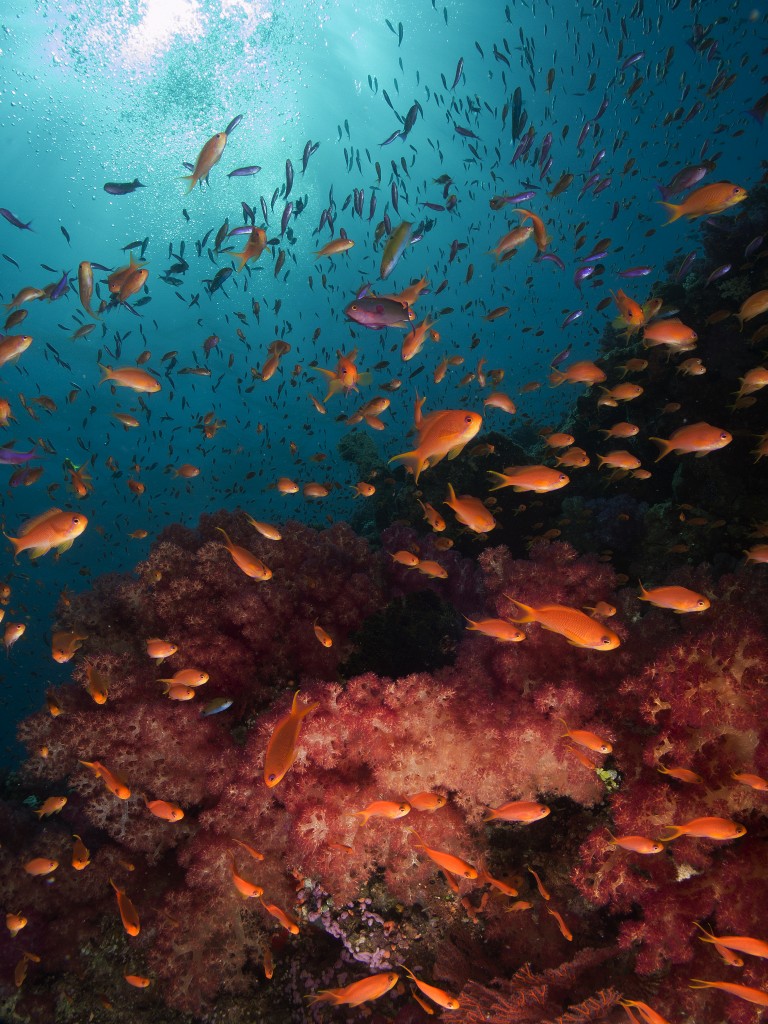
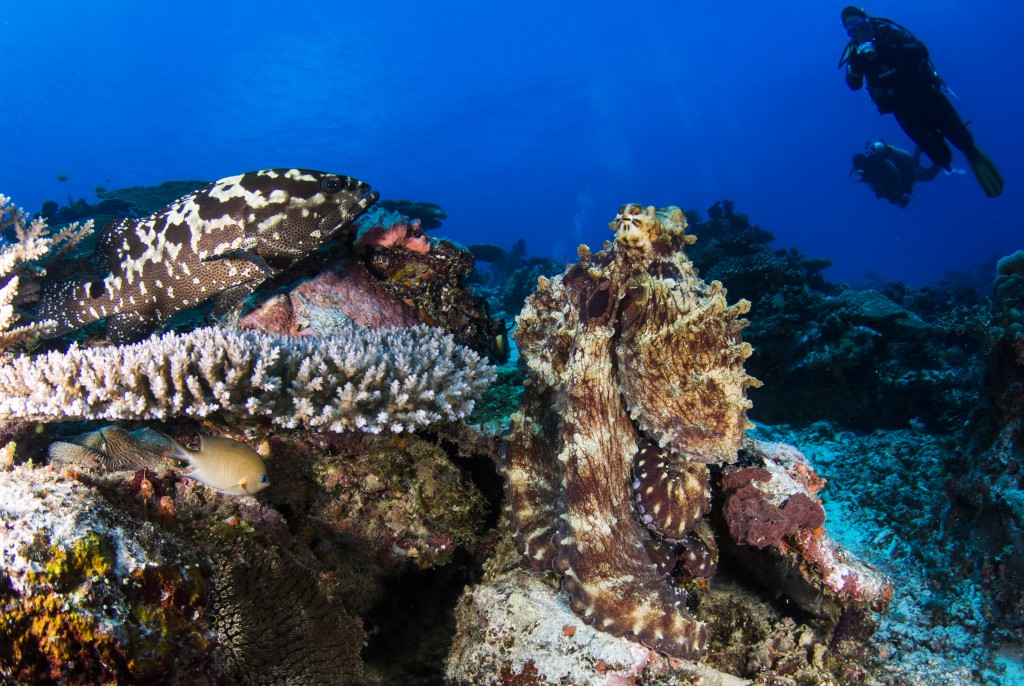
Dropping into the wall in the middle of a Somosomo Strait ripping current means you’ll be lucky to see the wall for 5 to 10 seconds as the strong current takes you past with no hope of stopping. After checking out the wall, finish your dive back up on the top plateau. You will be treated to fields of blood red/purple soft corals, as well as scorpion leaffish, banded pipefish, octopuses, a few whitetip reef sharks, and a couple of large spotted or potato groupers that call this site home. Darting around the corals as well are thousands of colourful anthias and a number of species of clownfish.
Another popular dive site is Annie’s Bommies. Discovered many years ago by local Fijian divemaster, Annie, this dive, many say, is the reason Rainbow Reef has its name. Three bommies ranging in depth from about 20 metres up to six or seven metres give bloom to the soft corals in all colours of the rainbow. Surrounding these bommies is a sugar white sandy bottom, home to thousands of garden eels as well as ribbon eels, hawksbill turtles, and numerous other creatures.
Barracuda Hole located on the northern end of the Somosomo Strait, upon incoming tide, will treat you to large schools of great barracuda, garden eels, whitetip reef sharks and schooling bigeye jacks. At times there are so many small reef fish it’s hard to see! Use your bottom time on the current (northern) side, then enjoy the roller-coaster ride over the top of the reef to the southern side. End your dive exploring shallower hard coral gardens, schooling reef fish and macro critters.
Rainbow Reef extends for several kilometres from the north end of Somosomo Strait and curves along the shoreline of Vanua Levu, heading south. With over two dozen popular dive sites, there are probably two dozen more dived by those who know the reef well and keep their treasure semi-secret. Somosomo Strait marine life ranges from large to small. The Great Fiji Shark Count, held every April and November, shows an increase in shark sightings each year, Somosomo Strait being no exception. Diving Rainbow Reef, you can see whitetip, blacktip and grey reef sharks, as well as occasionally leopard or zebra sharks and great hammerheads. You may even glimpse a resident tiger shark – “Bill” as he’s known locally. Manta rays, spotted eagle rays, mobula (or devil) rays and small blue-spotted rays can all be seen. Turtles, mainly hawksbill, can be seen feeding on many coral reefs. A favourite of many divers are the ribbon eels. All stages of these hermaphroditic creatures can be seen. Also difficult to spot are the small pygmy seahorses, but they can be found on various dive sites on Rainbow Reef. Sharpen your eyes, or get a guide to show you one!
Other popular dive sites include: Jerry’s Jelly, Rainbow Passage, Nuku (sand) Reef, Fish Factory, Yellow Tunnel, Jack’s Place, The Corner and the Cabbage Patch – usually a nice light-to-no-current dive, and home to one of the world’s largest and most pristine cabbage coral patches. Go out and dive!
BMW Singapore Beach Polo Championship 2016 (12 noon to 7pm) 4-5 June, 2016 Tanjong Beach, Sentosa
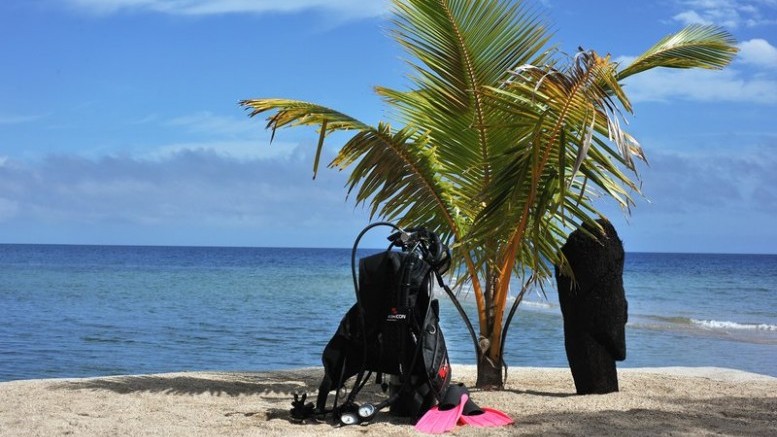
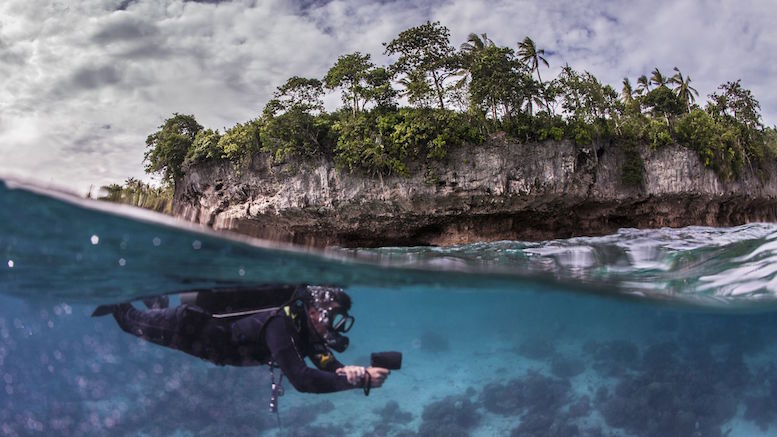
Got your eye on hitting the beach this weekend? Underwater360 is coming to Sentosa, armed with a dive tank and swimming pool for those attending the BMW Singapore Beach Polo Championships 2016 to try diving. If you missed the chance at ADEX Singapore 2016, then we are offering you the opportunity to test it out, on the beach.
The event is being hosted on the beautiful Tanjong Beach, and you can even catch a glimpse of polo being played – which you can watch for free at the public area, or join in at a VVIP marquee offering exceptional cuisine, free-flow alcohol and off-pitch entertainment.
With an incredible entertainment line-up of mermaids, international DJs and polo, this could be one of Sentosa’s most exciting events to date. Catered by IndoChine, who will be offering a blend of classic Indo-Chinese meals, and top drinks – it really is a weekend event not to be missed.
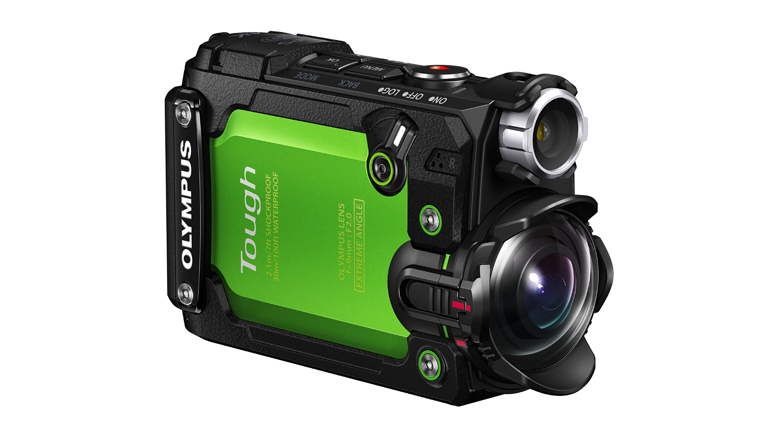
Olympus’s latest Stylus TG-Tracker action camera allows you to embrace the outdoors, in a way like never before. Geared for intrepid adventurers and sport enthusiasts, the TG-Tracker lets you vividly re-live your sporting adventures by combining 4K video recording and positional data logging.
It’s the ideal companion for the adrenaline junkie. Boasting a TG-Tracker’s Field Sensor System which simultaneously records GPS, compass, barometer (altitude/depth), accelerometer and thermometer data for an enhanced data video recordings. Incorporating Olympus’ proven Tough technology, the TG-Tracker is crush-proof, freeze-proof, shock-proof and water-proof to a depth of 30m without the need for an accessory housing – it’s quite simply built to survive your wild journeys. Whether you are 40,000 feet in the air or mountain biking down the slopes, the 5-axis Image Stabilisation will ensure a clean shot all the time. This gadget is perfect for those airborne, diving and or on the dirt tracks.
Feature Highlights:
Field Sensor System data-logging – GPS, Compass, Barometer (Altimeter), Accelerometer & Thermometer
Extreme 204-degree angle lens (13.9mm f2.0 equivalent in the full frame format)
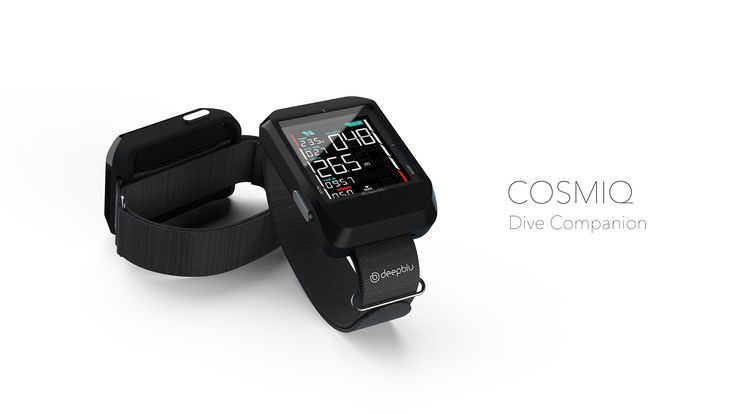
Sophia Yeo, Advanced Open Water Diver tested the brand new COSMIQ Dive Companion from Deepblu. Going beyond the essential functions of a dive computer, with the click of a button, COSMIQ syncs with the Deepblu Mobile App allowing divers to effortlessly create a digital dive log.
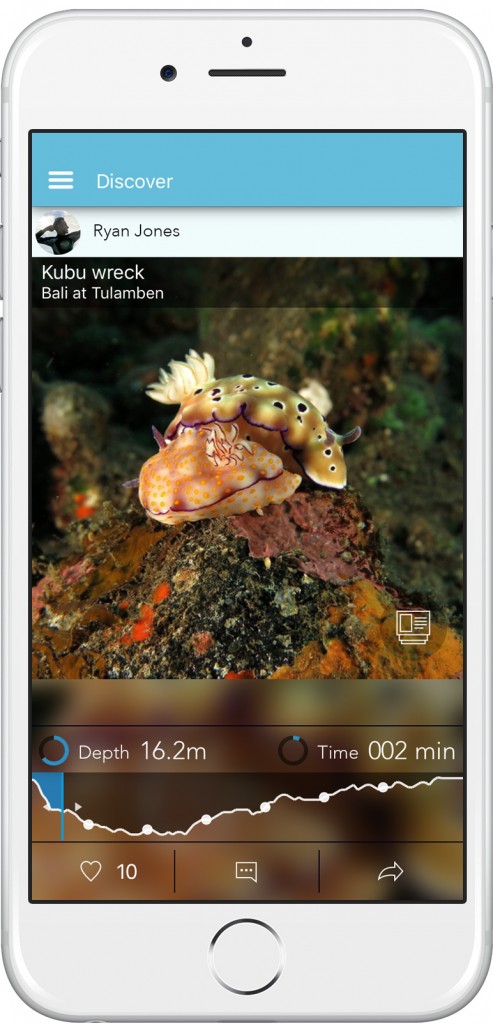
The COSMIQ dive computer by Deepblu comes with an attractive proposition – to allow divers to seamlessly continue the underwater experience after diving. And it delivers on this promise; a simple scroll shows a number of pictures taken at different depths (no more trying to figure out where you saw that animal, or trying to match your dive times to photos after the dive). It’s also easy to use, and syncs well with Deepblu’s iOS app.
The app, which allows users to create dive logs that can be shared in the Deepblu social community, brings you and your buddies closer. These dive logs can also be exported to impress friends on the major social networks, or kept to yourself. The logs display all the relevant log information, in an accommodating format which has the typical social media interactions – when shared to the Deepblu community, other users can “Like” the dive, leave a comment, or share it. You also have the option to tag dive buddies and rate dive sites using the interactive dive site map.
The computer comes with a 24mm Ballistic Nylon NATO watch strap with stainless steel buckles and a Velcro fastener, and if it gets damaged, it is easily replaceable. The battery is also easily chargeable with the magnetic USB connector, which proves extremely useful. Using the Dive Plan function allows you to plan your upcoming dive with maximum safety – it shows you how long you can safely remain at various depths without surpassing no decompression limits and requiring a decompression stop.
In addition, there is a “Freedive mode” designed specifically for freediving. During the freedive, COSMIQ measures your current depth, dive time and the surrounding water temperature. If you fancy, you can set a Max Depth and/or Max Time alarm.
The COSMIQ dive computer gives you a fresh new insight into your dive, and a brand new perspective on the underwater environment – it allows you to track things like the relationship between wind, currents, upwelling and visibility at specific dive sites, and also track the ideal conditions for finding marine life. This, in turn, can create a whole new dive experience, allowing you the best chance of spotting rare marine animals, keeping you aware of dangerous currents and changing the way you view the underwater world.
It is ideal for divers to build new diving friendships through the emerging Deepblu social community, and offers a fun, interactive alternative to keeping on top of dive statistics. For more information visit Deepblu



 Got your eye on hitting the beach this weekend? Underwater360 is coming to Sentosa, armed with a dive tank and swimming pool for those attending the BMW Singapore Beach Polo Championships 2016 to try diving. If you missed the chance at ADEX Singapore 2016, then we are offering you the opportunity to test it out, on the beach.
 exported to impress friends on the major social networks, or kept to yourself. The logs display all the relevant log information, in an accommodating format which has the typical social media interactions – when shared to the Deepblu community, other users can “Like” the dive, leave a comment, or share it. You also have the option to tag dive buddies and rate dive sites using the interactive dive site map.