Home Blog Page 32

Finding Your Inner Whale

0
Find your inner whale
Our bodies can do what our minds cannot fathom.


Text by Darja Tjioe

Image by Lia Barrett

While the incredible and often bizarre characteristics of the ocean’s creatures are a never-ending source of fascination for us, as a species human beings are also capable of exhibiting some extraordinary physiological attributes. Some of these talents, presumably buried deep within the genome, typically go unnoticed in our day-to-day lives and are only manifest when we are faced with unusual circumstances.

To illustrate this, imagine putting your face into water. The water temperature should be about 21 degrees Celsius or less. What happens? First, your face will feel cold. Second, of course, you won’t be able to breathe. (Clearly, you won’t be able to sustain this experiment indefinitely.) In reasonably short order, however, if all is well and you are a fairly typical example of our species, your heart rate should drop to about three-quarters of its normal rate. That, in itself, is actually a rather extraordinary thing.

The phenomenon is part of something known as the mammalian diving reflex. It exists in all mammals – aquatic mammals such as seals and dolphins in particular, and even some diving birds, but also in land-dwelling mammals, including humans. It’s our bodies’ involuntary response to immersion in cool water. Are we, if only for a brief moment, accessing the body’s evolutionary memory of water? After all, before we were born, we were floating around for nine months in amniotic fluid. Are our bodies designed for being in water?

A BODY BUILT FOR DIVING

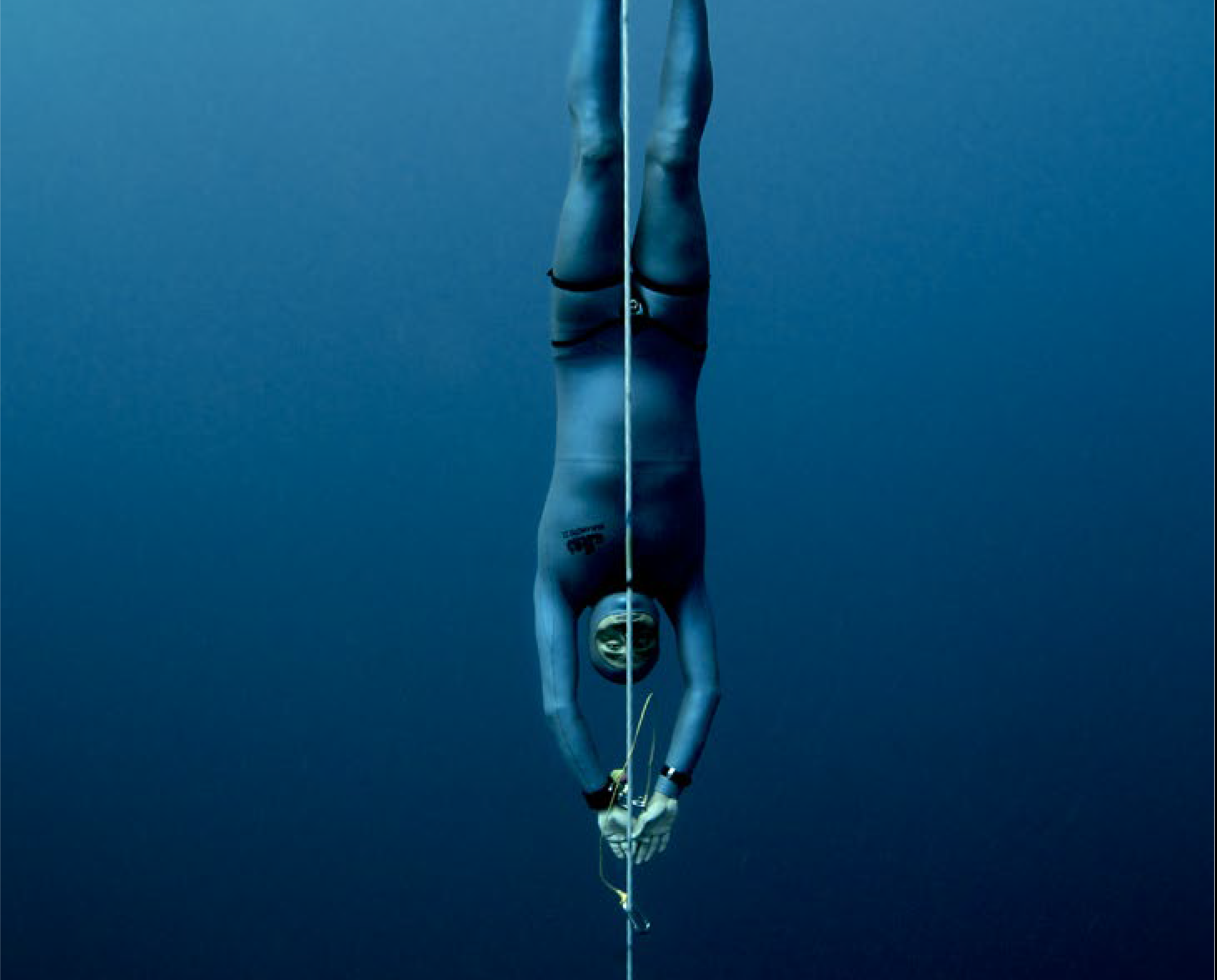
When we submerge the face, the following things happen. Firstly, the muscles surrounding our blood vessels contract, causing a reduction in the amount of blood flowing to our peripheral organs. In this way, more oxygen is concentrated around the organs that have a much greater need for it, like the heart, lungs and brain. We don’t need perfectly oxygenated arms and legs when we are underwater, but we do need to conserve the oxygen we have as long as possible.

The second physiological reaction that occurs affects the number of heartbeats per minute. For the average person, heart rate reduces by between 10 and 30 percent. In trained freedivers, the reduction is by as much as half. Reducing heart rate helps reduce oxygen metabolism, making a single breath of air last longer. Myths abound about people’s ability to control their heartbeat (Buddhist monks are supposedly able to stop their hearts completely simply through meditation) but this phenomenon is no such myth. This is your body’s real, purely physical, response to an outside stimulus.

There are two further changes that are part of the mammalian diving reflex, and are automatic responses to deep, breath-hold diving and subjecting the body to extremely increased pressures. One is the so-called “blood shift”: The blood that has moved away from the extremities travels to the chest cavity, filling the space created by the compression of the lungs. It also fills the alveoli, the tiny air sacs in the lungs where the actual gas exchange occurs. These are now surrounded by fluids that are not subject to change by pressure.

Finally, there is the “spleen effect”. Because huge volumes of red blood cells circulate through the spleen, it acts as a blood reservoir. When extra volume is needed, the spleen constricts and releases oxygen-enriched haemoglobin into the system. It’s like carrying around a little spare air in our bodies.
 

Image by Lia Barrett


DISCOVERING THE MASTER SWITCH OF LIFE

Medical science commonly refers to the mammalian diving reflex as a survival mechanism. Several incidents of near drowning turned out to be only near drownings because of this very reflex. In a number of cases, people submerged in cold water, aspirating water and causing their breathing and circulation to stop, have actually been resuscitated successfully. Essentially, their body’s reaction to the cold liquid on their face slowed down their metabolism to a point where, ordinarily, the damage to the brain due to lack of oxygen would have been irreversible. In some of these cases, very little or no damage followed the incidents.

The effects of the reflex are even more pronounced in young children, whose smaller body cools down much faster than an adult’s. Indeed, there are cases of children surviving despite being underwater for incredible lengths of time and having no circulation for even longer.

In the 1870s – undertaking experiments that would be considered highly controversial today – French physiologist Paul Bert became the first to observe the slowed heart rates of ducks submerged in water – also noting that bleeding the duck reduced its diving capability. Some years later, one of Bert’s students, Charles Richet, deduced the reduction in metabolic rate during diving based on the fact that oxygen stores alone could not account for the length of the dives achieved by the animals.

Despite the inhumane nature of these experiments, they were also highly effective at showing the existence of the mammalian diving reflex. However, definitive proof wasn’t recorded until the 1950s, when Norwegian Per Scholander finally confirmed the presence of the reflex in other animals, including humans. In a 1963 paper in Scientific American, he called it the “master switch of life”.

In the 1960s, the very idea of freediving any deeper than 50 metres was dismissed as impossible and dangerous. Scientists insisted that it couldn’t be done, largely because of the pressures to which the body would be exposed. Imagine that for every 10 metres you dive down, your body has to withstand another one bar of pressure. At 100 metres, your lungs would be reduced to less than 10 percent of their size at the surface. Thus, it was claimed that beyond 50 metres, the pressure would cause a diver’s lungs, or even the entire rib cage, to collapse.

Unsurprisingly perhaps, all this talk of limitations only seemed to motivate certain extraordinary individuals to prove the theories wrong. Italian Enzo Maiorca was the first to dive to 60 metres, closely followed by Frenchman Jacques Mayol. Both were well-known freedivers of their time, each breaking one diving record after another. It was studies on Mayol in the 1970s that revealed the workings of the spleen effect. Today, freedivers have shattered these limits with both male and female world record depths now exceeding 100 metres. 
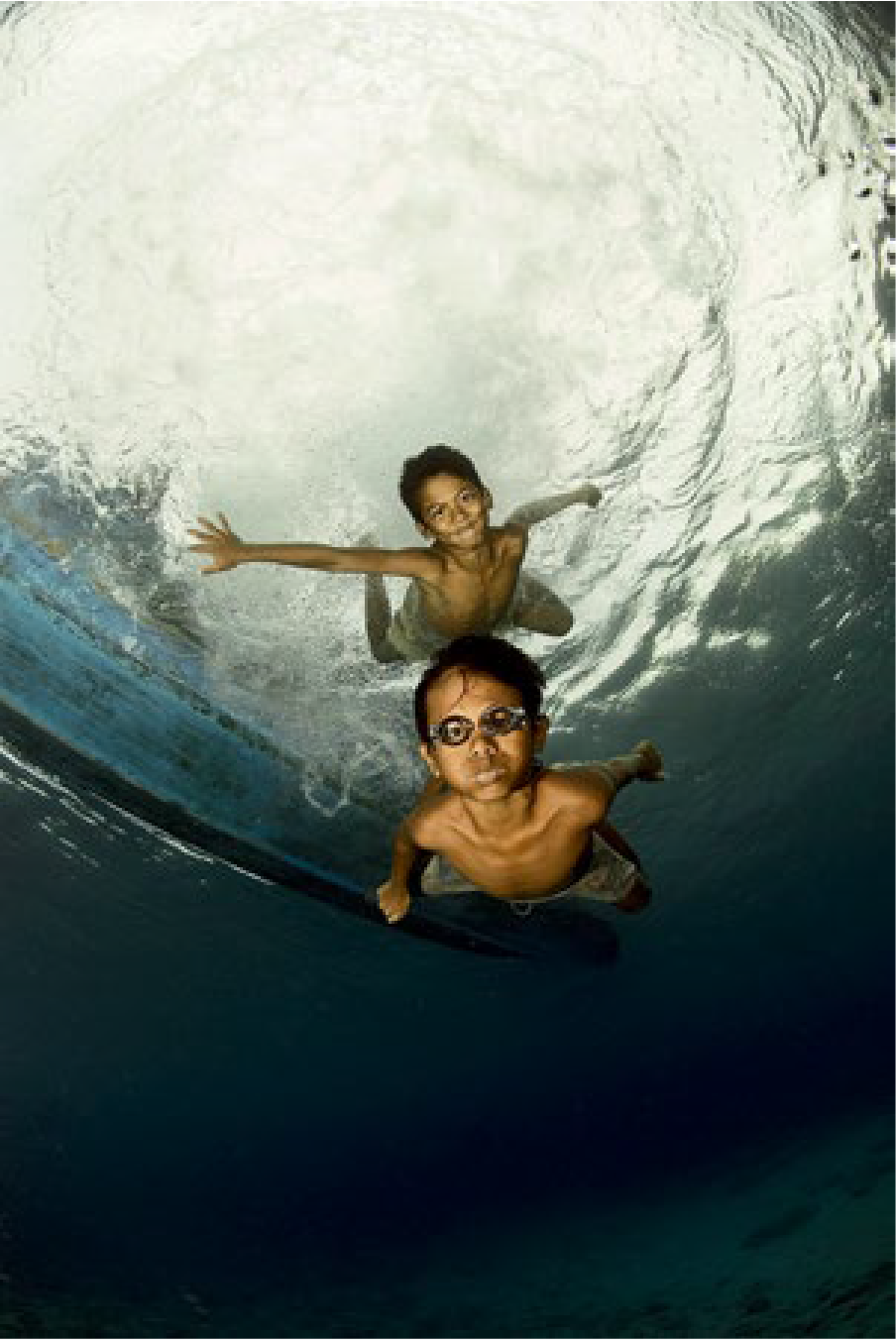
 

Image by Chris Simanjuntak


ZEN AND THE ART OF BEING A MAMMAL

For most animals, marine mammals in particular, the reflex is part of their daily fight for survival. For us, it’s a little different. Yes, it’s a reflex and there is not much we can do about the way it works. But we already know that with training divers can slow the heart even more than would be considered natural. How much of an influence do cerebral processes have on the reflex? And how much influence does the reflex have on our mental processes? Is this the reason that some people like being underwater so much? Does it relax us? Does it make us more “Zen”?

Ask any freediver why they do it. Of course, if they’re being honest, they’ll admit that their thirst for one-upmanship plays a part. But mostly they will tell you that it’s to experience the unique sensations of being underwater, the silence, to truly experience the “now” – because deep below the surface is probably one of the few places left in the world where you can be in the present most completely.

For those of us who spend half our lives underwater, it’s about so much more than mere survival. It’s a way of life, a capacity that we can utilise and develop. It is what allows us to do what we love most – being immersed, being part of this other world. And simply being.

For the rest of this article and other stories, download a digital copy of Scuba Diver australasia No. 79 Issue 5 /2014 here! And for a limited time only, get the best e-magazine deals at USD7.99 for 6 issues* (Usual rate: USD29.94) 

Celebrating International Day of Charity

0
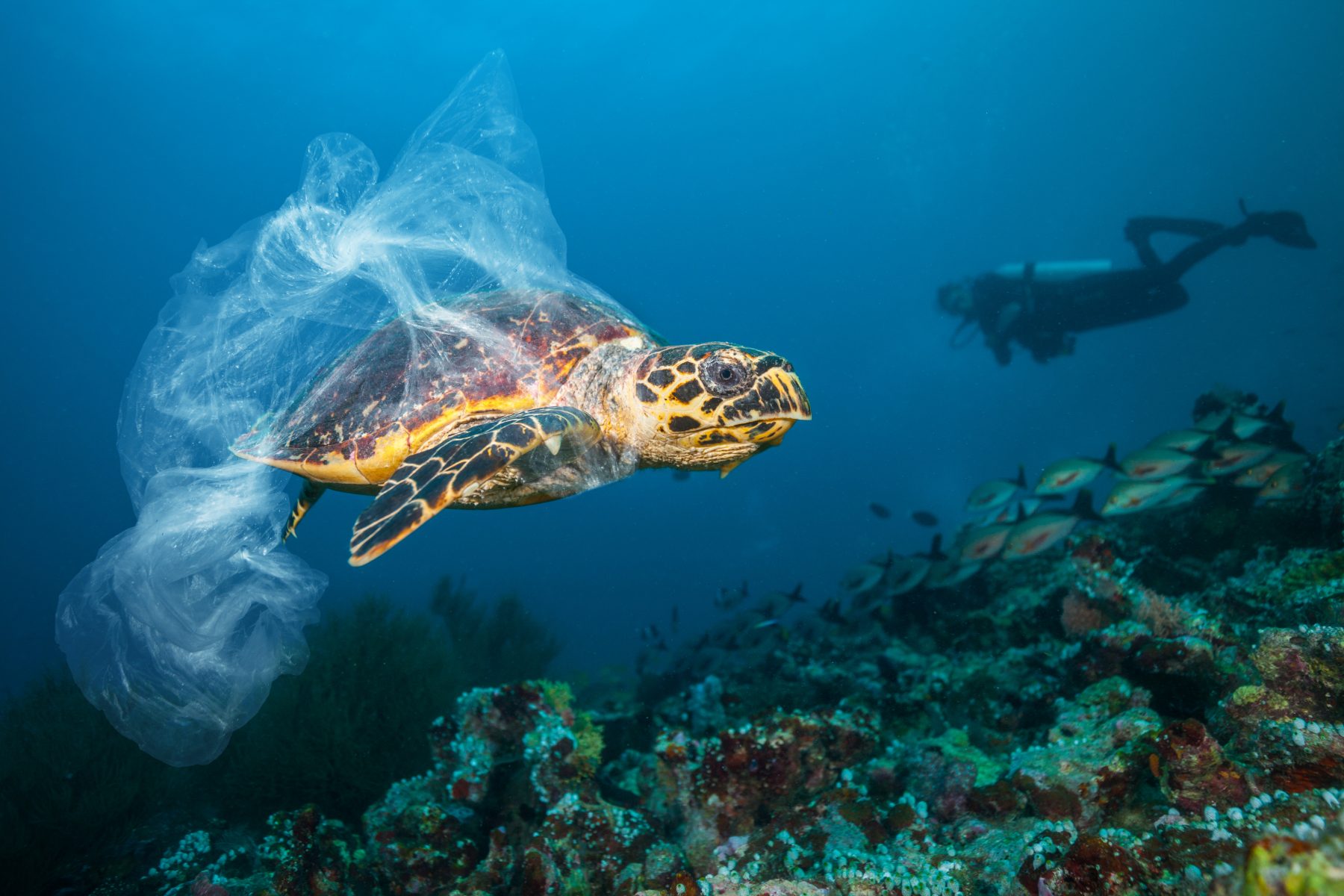
A turtle being trapped by a plastic bag

The importance of charity is irrefutable. Within our societies, it allows us to reach out and aid vulnerable communities, giving hope and support to millions of people around the world. On an environmental level, charities and nonprofit organisations are often found leading the fight against pollution and championing the need for conservation and sustainability.

In 2012, the United Nations General Assembly declared 5th September as the International Day of Charity. The day serves to raise awareness about charities and their work, get people to recognise their responsibility within society as well as inspire them to take action and help others. 


The Spirit of Diving in the face of COVID-19

In these trying times of the COVID-19 pandemic, the diving community has once again shown its goodwill and humanity through charity work. 

In the Philippines, Hammerhead Spearguns promptly addressed the nationwide shortage for face masks by converting their wetsuit factory into a surgical mask factory and donating them to the hospitals and first responders in Cebu. 

Meanwhile, in Australia, the instructors and staff of Passions of Paradise, a scuba diving eco-tourism company, have repurposed their unused dive boats, taking them to the Great Barrier Reef to plant corals as part of the Coral Nurture Programme. Within three days, the programme has planted over 1,000 pieces of coral on Hastings Reef. 


[embedyt] https://www.youtube.com/watch?v=Ye3bbF3gxBg[/embedyt]


However, when the COVID-19 crisis struck the world, the diving community also became one of the hardest-hit industries. Concerns from the virus in the early part of this year has led many dive centres, resorts and liveaboard operators to close their businesses. Marine parks struggling to cope with the drop in visitors and entry fees have seen themselves encountering greater challenges regarding the protection of marine biodiversity in these areas.

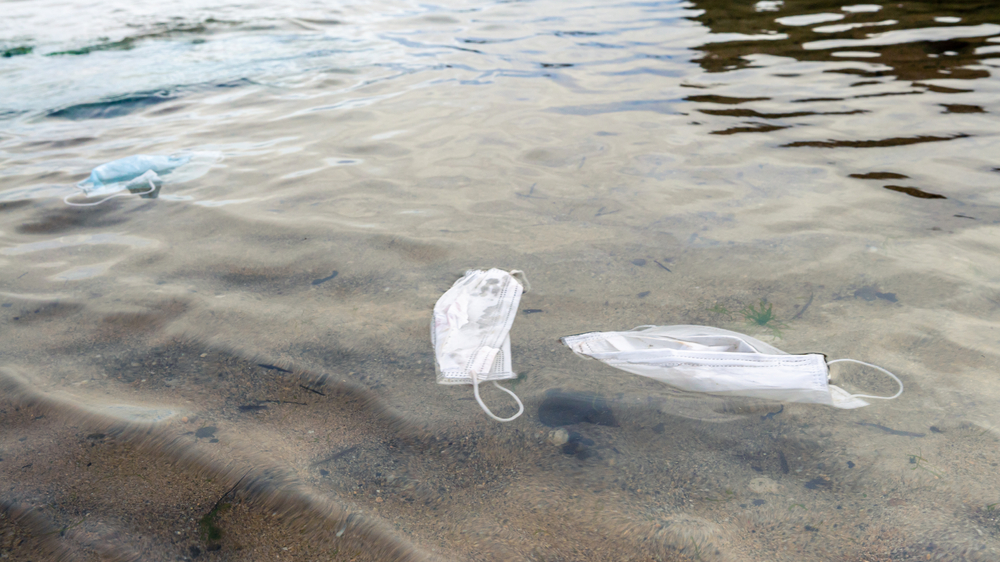
 Our oceans have also been dramatically affected. Despite the decrease in pollution levels worldwide as millions across the globe are placed under lockdown, the quarantine has left dive sites unprotected from illegal fishing within the Marine Protected Areas (MPA). Waste from the pandemic has become a new form of pollution as well, with single-use personal protective equipment swamping the oceans. 


Single-use personal protective equipment are polluting our oceans


How can you celebrate the International Day of Charity?

While the onslaught of news revolving around the coronavirus may have left many of us feeling helpless and uncertain, every little action that we make as a community can have a profound impact on the oceans and those dependent on it. This International Day of Charity, here are some ways you can get involved.

Reach out to your local dive centres or resorts to find out if there are ways to support their businesses. Donating to marine parks can also aid the preservation of marine species in these areas.

If volunteer programmes are available in your country, joining activities such as conducting fish counts, getting rid of invasive species, planting corals or removing marine debris from the oceans will positively impact marine biodiversity. Supporting charities at the forefront of ocean conservation and their work can also aid in the protection of our blue planet.


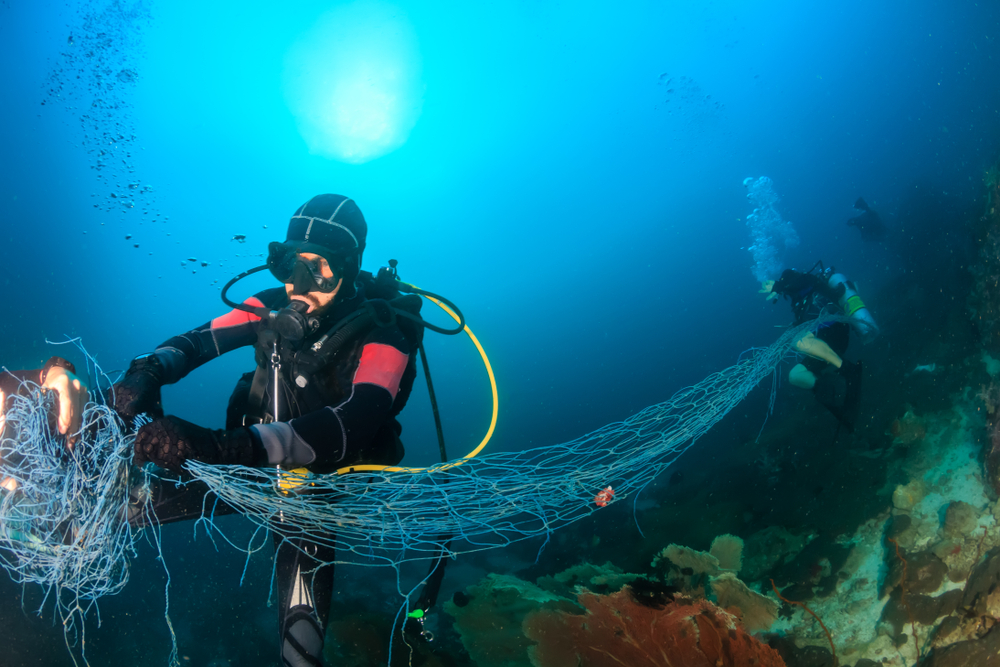
Divers removing ghost nets from the ocean


Here are some ocean-saving charities and non-profit organisations as well as charitable campaigns launched by those from our very own diving community to consider giving your support to:

Project AWARE

Project AWARE works with volunteer scuba divers and focuses on implementing lasting change in two core areas: shark conservation and marine litter. Their actions collectively protect the most vulnerable marine species and decrease pollution.

Mission Blue

Headed by Dr Sylvia Earle, Mission Blue focuses on areas around the world that are critical to the health of the ocean and our survival. Known as Hope Spots, the team embarks on expeditions to these places to document vital ecosystems and ignite support to safeguard them as marine protected areas.

Sea Shepherd Global

Sea Shepherd Global is an international, non-profit marine conservation organisation that engages in direct action campaigns to defend wildlife and conserve and protect the world’s oceans from illegal exploitation and environmental destruction.

Oceana

An international organisation exclusively working for the conservation of oceans, Oceana is dedicated to achieving measurable change by conducting targeted, science-based policy campaigns. They advocate for increasing marine biodiversity, restoring ocean abundance and protecting habitat by winning policy victories in countries that deliver nearly 29% of the world’s wild marine fish catch. 

Ocean Quest Global

Founded in Malaysia in 2010 by Anuar Abdullah, Ocean Quest Global is an environmental organisation working in seven countries through Southeast Asia and the Indian Ocean. Through their programmes and courses dedicated to securing a sustainable future for coral reefs, the organization focuses on giving back to local communities and protecting the marine environment

The Greenfins Initiative

Green Fins, a public-private initiative of the United Nations Environment Programme and Reef-World, supports members of the diving and snorkelling industry in their efforts to reduce their environmental impact by providing training, posters, information, videos and guides.

OceansAsia

Founded by Gary Stokes and Dr Teale Phelps Bondaroff, Oceans Asia investigates and researches wildlife crimes, exposing and bringing to justice those destroying and polluting marine ecosystems. 

The Bloody Long Walk

Mitochondrial disease robs the body’s cells of energy, causing multiple organ dysfunction or failure. David Strike is walking 35 kilometres in The Bloody Long Walk to help Australians living with this disease and raise funds for research into desperately needed treatments and cures.

Misión Ko’ox Hanal Fall 2020

Launched by CINDAQ, Mexico, the campaign provides food and basic supplies to rural Maya communities impacted by the coronavirus pandemic due to a loss of income from ecotourism. As their communities depend on the tourism industry as their main source of income, they have been greatly affected by the coronavirus pandemic which led to a dramatic loss of income.

BALI Needs Your Help!

The campaign was created by Paul Tosh Tanner to support the people of Bali during this economic recession brought on by the pandemic. With 80% of Bali’s economy coming from tourism, the country’s shutdown from March 2020 till the end of the year means that the island will go a year without 80% of its economy. Paul makes use of donations to buy basic supplies for sustenance, purchasing food from local farmers and superstores and passing it to NGOs, SOS Children Village International and Food for the Soul Denpasar, to give food directly to those who need it. To help out, you can contact Paul on his Facebook for more details here.  

Feed the Hungry of Riviera Maya

Feed the Hungry of Riviera Maya, Mexico is a GoFundMe set up by Todd Essick to help feed the children of families in Riviera Maya that are going hungry as a result of the COVID-19 crisis. In Mexico, where there are no organised food banks or reliable government programmes to help feed those in need, Todd has been working with Father Hubert Rainer and a group of dedicated individuals to feed the hungry in Riviera Maya. The funds collected are used to provide additional food packages in impoverished neighbourhoods and to buy food for the soup kitchen run by Father Patrick at the Church of the Sacred Heart in Playa del Carmen.

Ultimately, charity comes in different forms. Whether volunteering your time or donating, the impacts of charity are significant and can make a world of difference for vulnerable communities and the environment. Underwater360 would like to thank all charities for their tireless work and wish everyone a Happy International Day of Charity!

India’s Volcanoes

0
Barren Island
Largely closed off to tourists, the volcanic islands of Narcondam and Barren offer some of India’s most pristine and exotic dive sites. But these islands are facing a grim reality, and it’s time for divers to step in and intervene


Text and images by Umeed Mistry

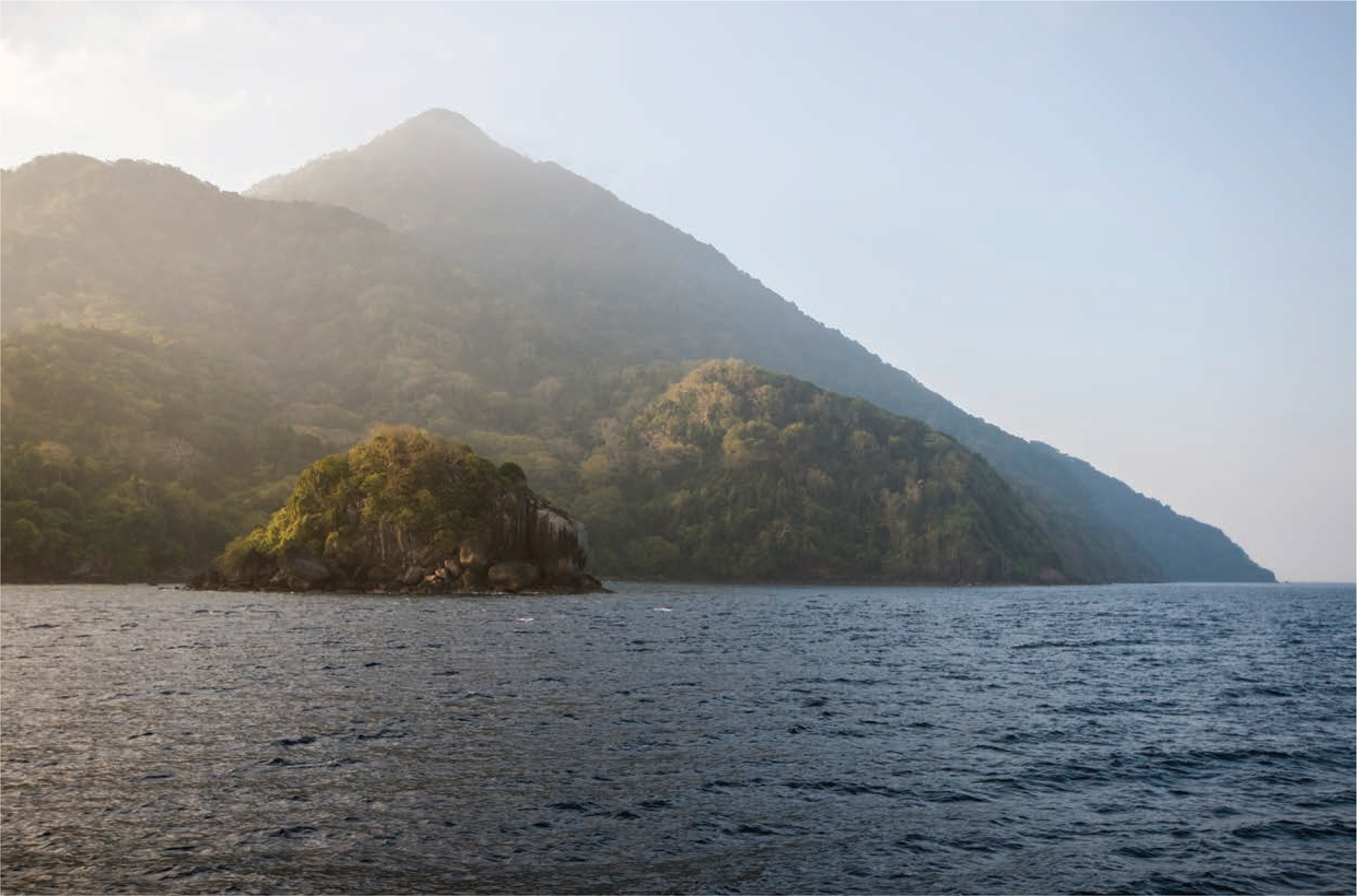
The first islands in the Andaman chain to witness a new day dawning are India’s two volcanic islands – Narcondam and Barren. These two sentinels stand-alone, further eastward into the Andaman Sea, with Thailand being the next great landmass 500 kilometres away. Barren and Narcondam are located along the north-south trending volcanic arc extending between Sumatra and Myanmar, with Barren still erupting to this day.

The two volcanoes are isolated mountains in the Andaman Sea, with the foundations of Barren Island resting more than two kilometres below sea level. It is only natural, therefore, that both the active Barren Island and the dormant Narcondam Island have aroused curiosity and a sense of adventure

in those of us who like to wander. And with the bureaucratic and administrative whimsy regarding visits to these islands – making them sometimes accessible, and at other times off-limits to civilians, tourists and diving vessels – these are adventures for the taking, should the opportunity arise! 


BARREN ISLAND


Barren Island


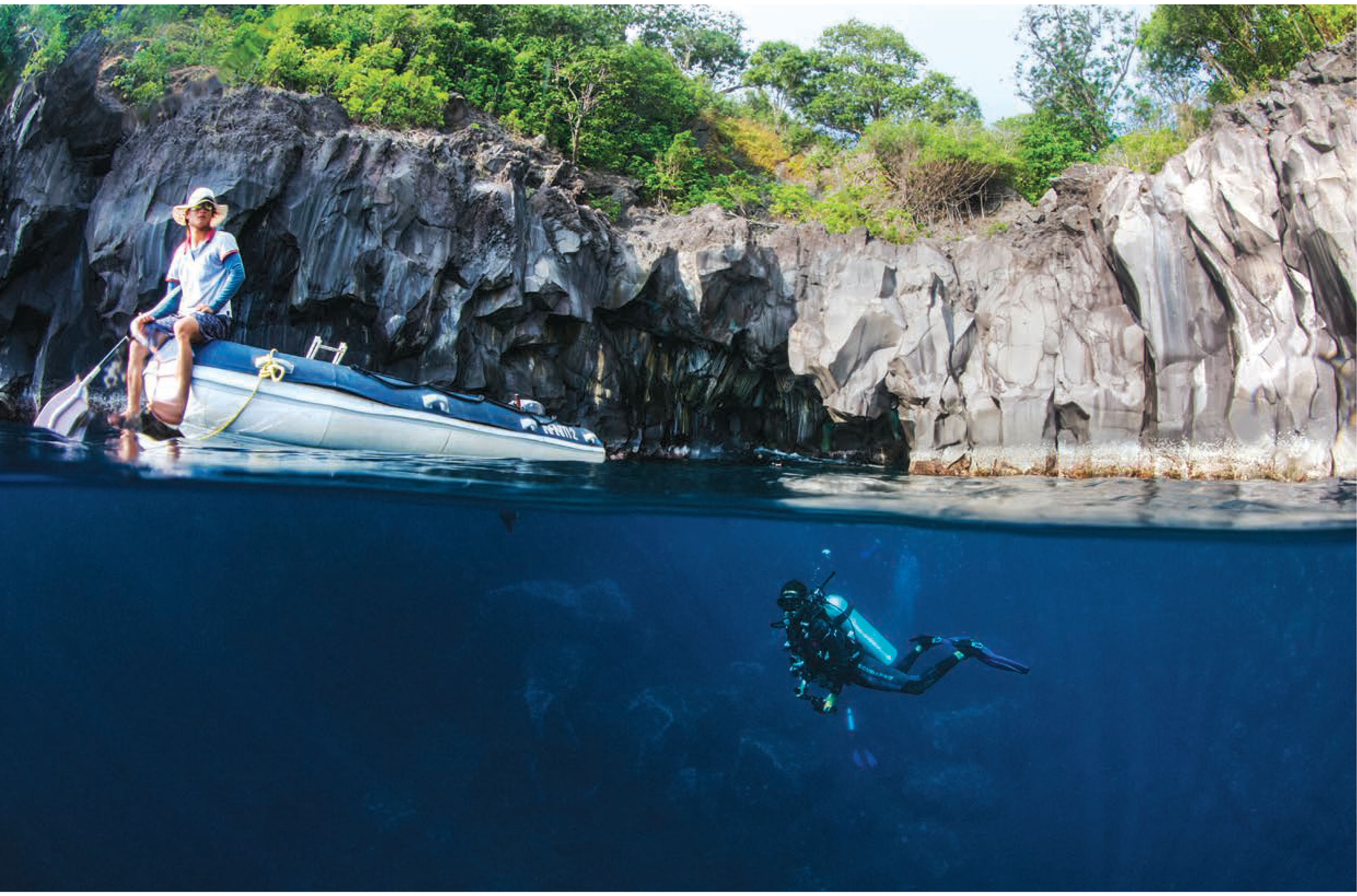
There are many things that are unpredictable about a visit to Barren island. Sometimes the island is quiet, almost serene against an absurdly blue sky and a placid sea. Other times, a giant plume of ash and smoke rises from its caldera, blotting out the sun, raining ash into a sea that roils with crazy currents. The eastern and southern side of the island have trees that have colonised the parts of the landmass that no longer are affected by the lava flow. White-bellied sea eagles, feral goats left there by British sailors, bats, rats and crabs inhabit these areas. The western side, in direct contrast, is an ash-brown lava slope ending in jagged rocks at the ocean’s edge.

Underwater, Barren goes from long, seemingly empty, black sand flats to near-vertical drop-offs covered in massive gorgonian fans. A submarine circumnavigation of the island reveals grottos, weird geometric rock formations, slopes and ridges carpeted in purple soft coral, sheer dark drop-offs that have no visible bottom, and shallow coral gardens that sparkle in the sunlight. There are days when the visibility is so good, and the water so still, that a manta ray near the surface can be spotted while observing coral-covered shelves 60 to 80 metres below. The black substrate is sometimes almost devoid of life, until the next corner where, supposedly, the high mineral content of the lava flowing into the water has created a bay of some of the most healthy and fast-growing coral in the entire Andaman chain. 

One part of the dive, a site called Washing Machine, has divers clinging to the wall, their fins flailing towards the surface in an up-current that threatens to shoot them up and over the shallow anthias-covered ridge. Round the next corner, just 30 metres away, exhaled bubbles are swirling downwards along the steep drop-off, disappearing into the blue-black. Manta rays always seem to be around Barren, sometimes solitary and other times in small groups. Whether they are transient visitors or year-round residents is hard to say, because nobody has spent the time diving Barren through the year. Dive boats tend to visit these sometimes treacherous waters only in the calmer months of February to May. 


NARCONDAM ISLAND


Narcondam Island


Narcondam, green-and-gold in the morning light, is the more benign of the two volcanoes. A dense forest has grown over the entire mount – dormant since humans have been recording its history. A small police outpost on the rocky eastern beach stands guard to protect this remote island lost to time. High up in the trees overhead roosts the only population of the exceptionally-rare Narcondam hornbill – a beautiful bird that somehow came to exist only on this island. The hornbill shares its island home with pigeons, sea eagles, flying snakes, lizards and rodents by the thousands. The little hairy mammals emerge in huge numbers at dusk and have struck up a live-and-let-live status quo with the policemen, who have little choice in the matter.

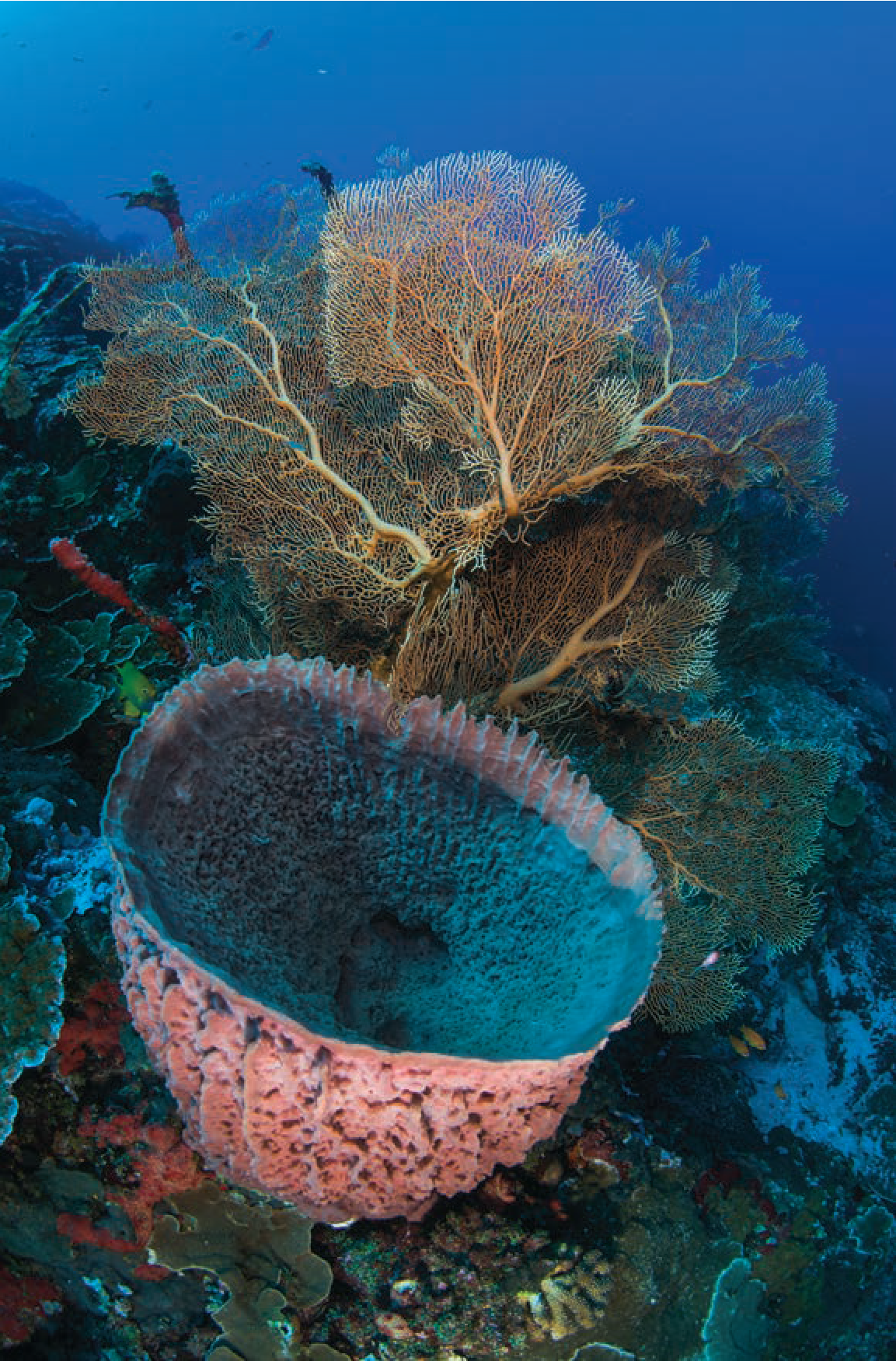
Underwater, Narcondam is a little more forgiving than Barren. The island’s sides don’t drop off as precipitously, and coral seems to have colonised most of its underwater circumference. Giant boulders have come to rest on some parts of the reef, forming incredible underwater topography. Huge schools of bigeye trevally and barracuda have made their residence here, along with the variety of other reef fish found in the Andaman chain. While coral bleaching has left only skeletons in the first 10 metres of water, the deeper reefs are incredibly vibrant and diverse. The presence of huge gorgonian fans and the biggest barrel sponges in the Andaman Islands are indicative of the currents that sometimes tear through these waters. Here too, manta rays and the occasional whale shark make an appearance.

Whales and dolphins are often sighted sailing to Barren and Narcondam. Depending on the time and tide, these reefs can teem with pelagic fish, or simply host their regular reef residents. Fishermen’s tales speak of large numbers of sharks that used to inhabit these waters. But these are stories that haven’t been corroborated by the divers from Havelock Island and Port Blair (the capital of the Andaman Islands) who have visited these two islands with increasing frequency over the last decade.


resting on Narcondam’s seabed


Barren and Narcondam have watched over this part of the Andaman Sea for eons. But their realities have changed significantly in the last century, and are rapidly changing further. Poachers from Thailand

and Myanmar regularly visit these poorly-patrolled islands. And as regulations for visiting yachts and local dive operators are tightened, divers and tourists with the potential for intervention are kept out of bounds. These two islands have been separated from the main Andaman chain through the geological history of the formation of these islands. Given that the Andamans itself is a hotspot for biodiversity and endemism, the scientific community should be encouraged to study these two islands thoroughly. 

But so far, beyond territorial bragging rights and discussions about maritime security, Barren and Narcondam are, for the most part, ignored. However, as plans for tourism development in the Andaman Islands are quickly unfolding, the future of these islands remains to be seen. 


For the rest of this article and other stories, download a digital copy of Scuba Diver australasia + ocean planet No. 113 Issue 3 /2018 here! And for a limited time only, get the best e-magazine deals at USD7.99 for 6 issues* (Usual rate: USD29.94)
Dive Psychedelic

0

The underwater world is renowned for playing host to the most colourful ecosystems on the planet, but there are some dive sites so vibrantly vivid, they prove that you really don’t need anything more than a scuba set up to take a Technicolor trip…


E6

Text and image by Todd Winner


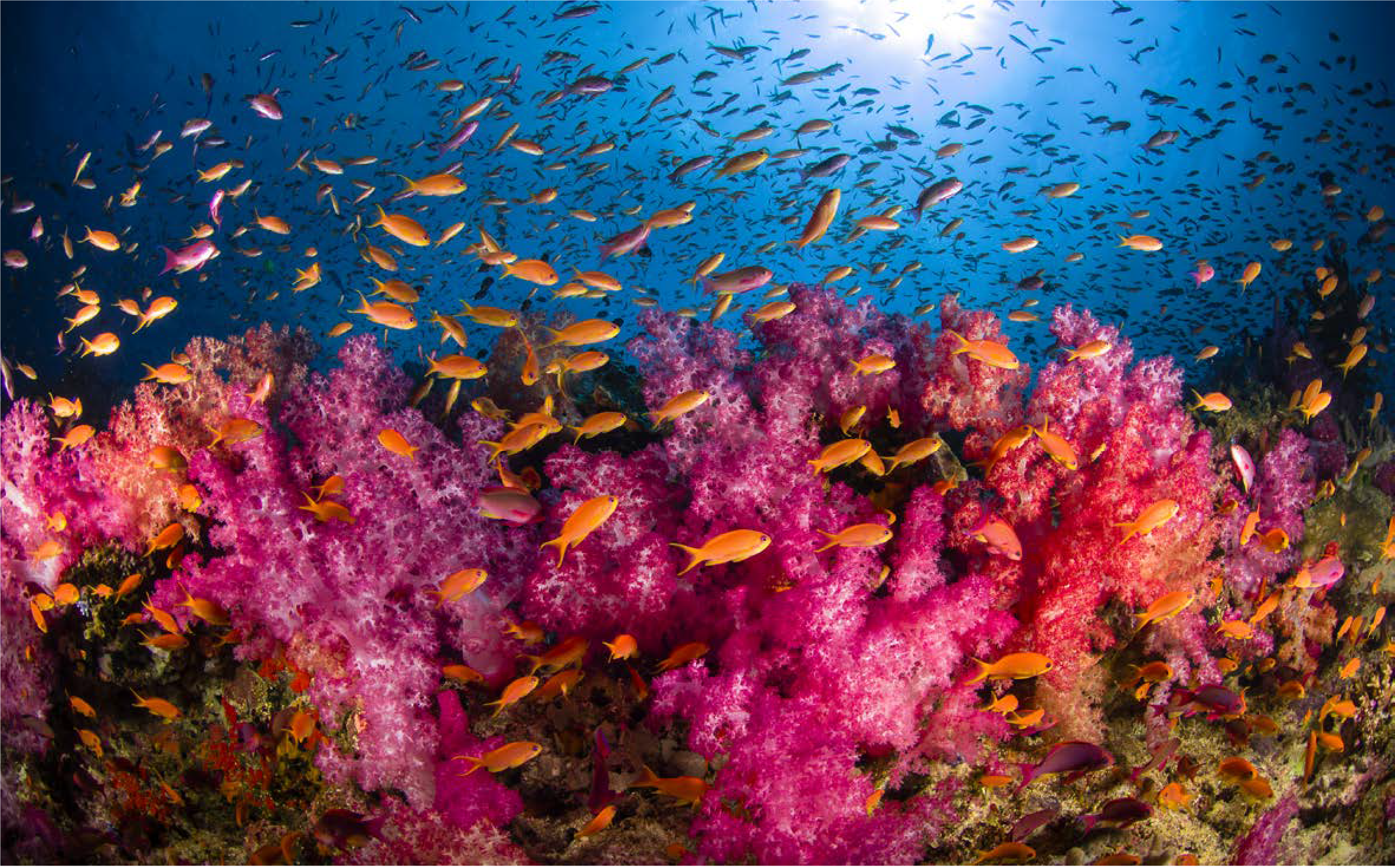
E6 dive site


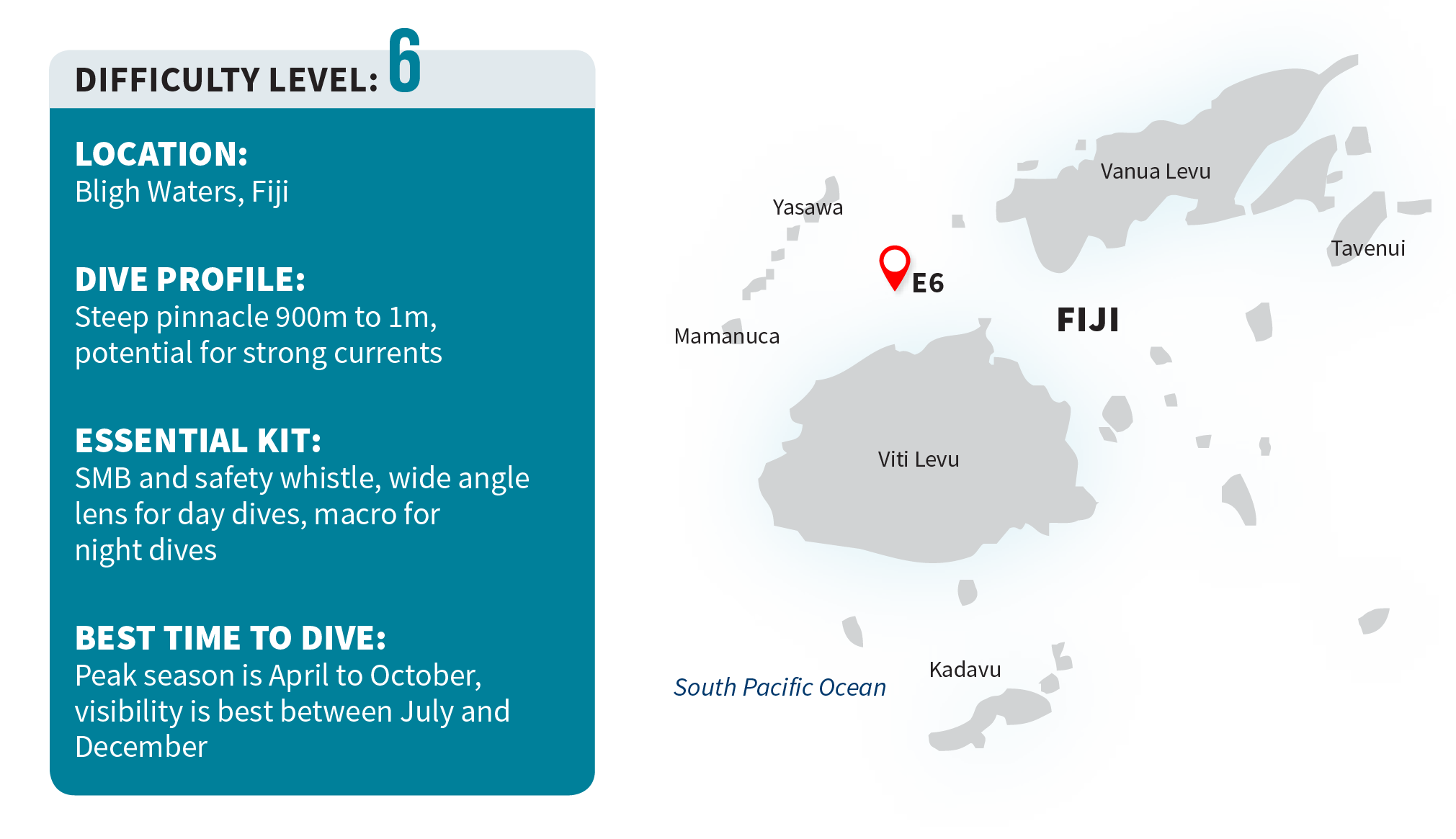
FIJI IS KNOWN AS the soft coral capital of the world and after a dive at the Bligh water site, “E6,” you’ll know why! The Bligh waters, named after Captain Bligh of the Bounty, are a nutrient-rich stretch of water between the islands of Vanua Levu and Viti Levu. E6 is a pinnacle that rises from 900 metres to less than a meter from the surface. It is typically accessed from liveaboards but also visited by a few of the day boats from the local resorts.

The site gets its name from the good old days of film and all the E6 slide film that was shot there. E6 is covered in soft and hard corals of every shade. Large schools of pelagic fish are not uncommon and colourful fish can be seen darting in and out of the reef. There is a swim-through in the middle of the site called The Cathedrals that is home to huge gorgonian fans that make fantastic wide-angle subjects. E6 is best dived by advanced divers because of strong currents and the potential to get too deep without proper buoyancy skills, but with the right training, it’s a colourful site not to be missed. 


Hot Rocks

Text and image by Al Hornsby


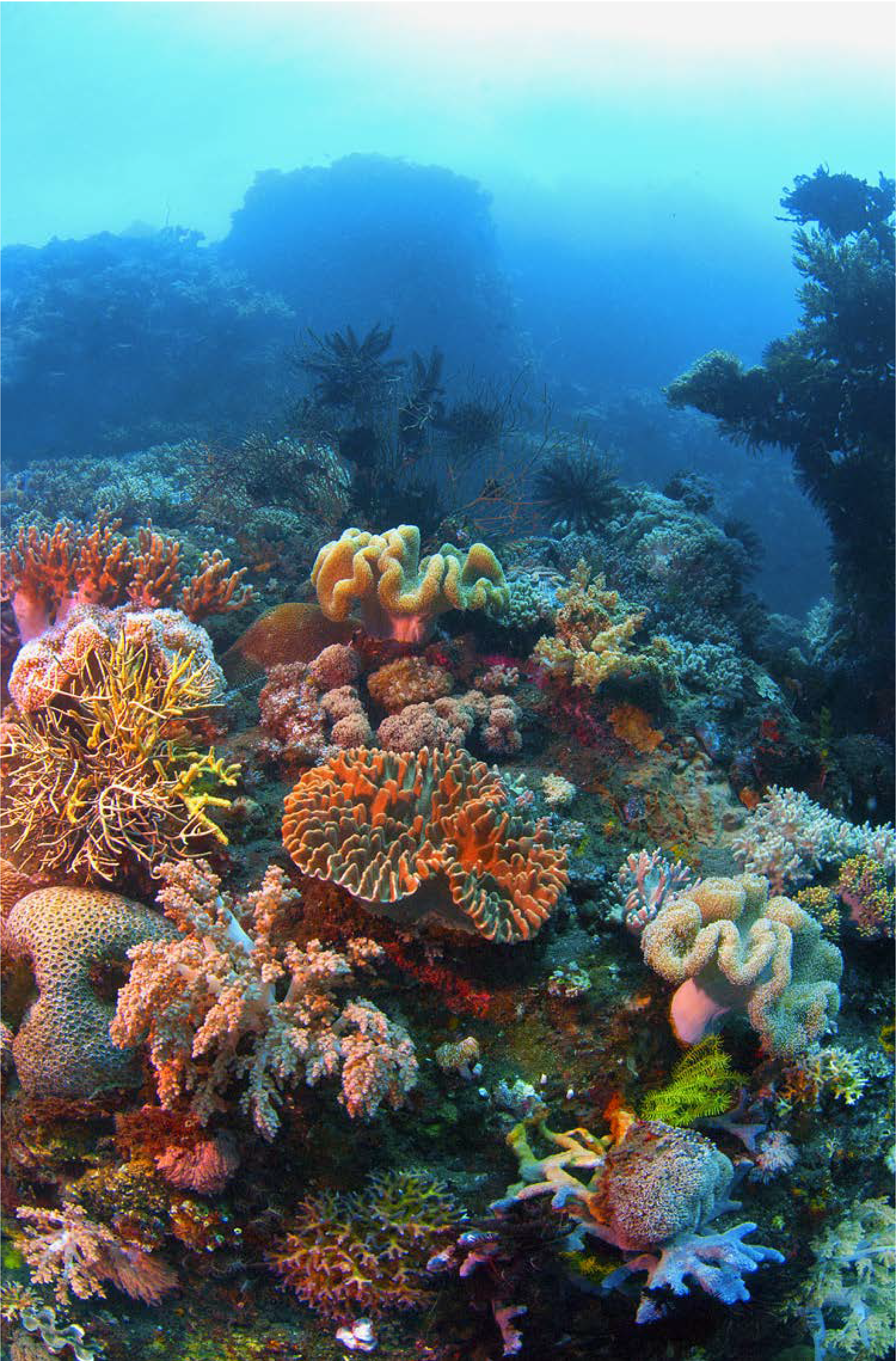
Hot Rocks dive site


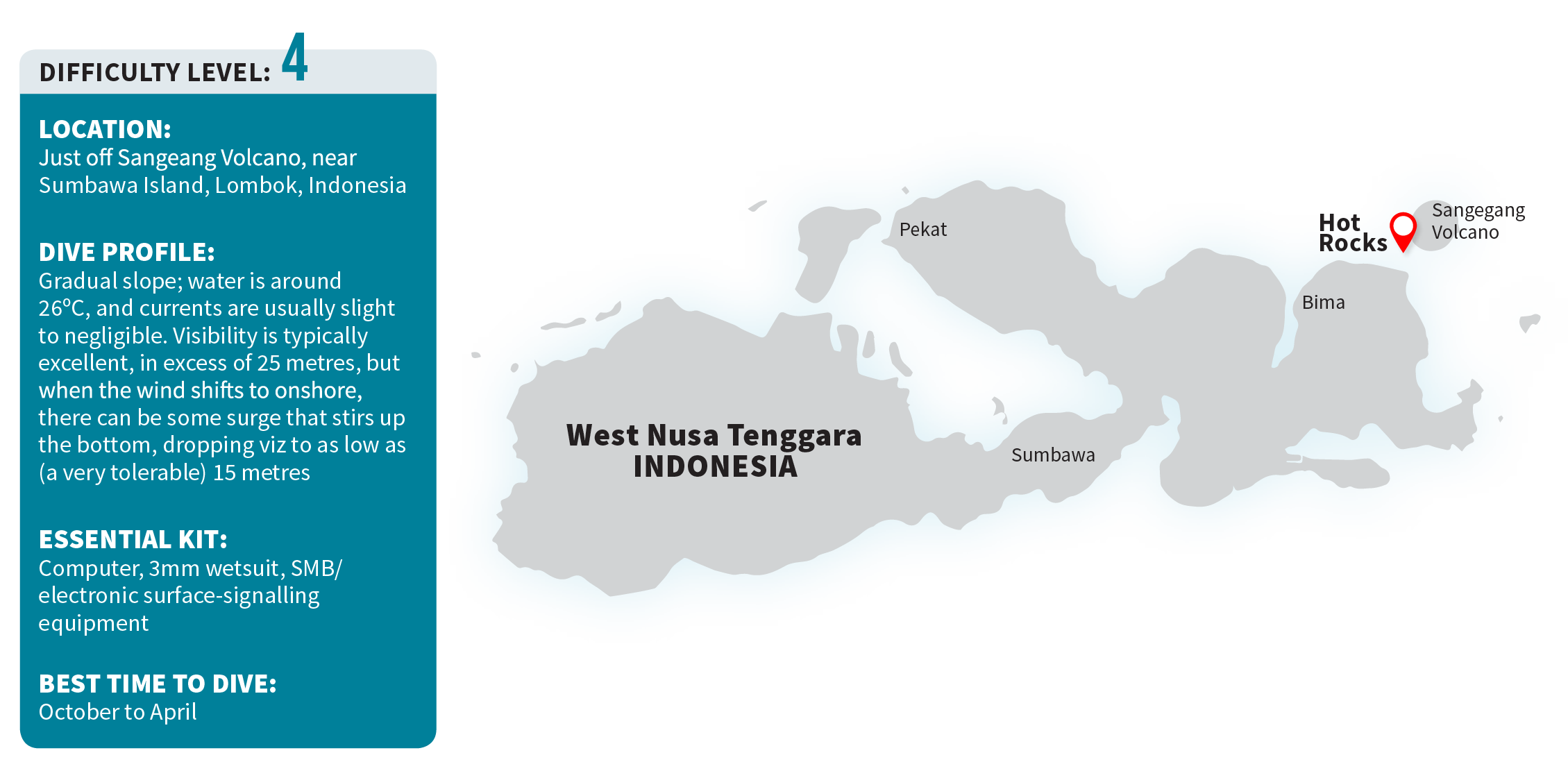
AT THE BASE of Sangeang Volcano, Indonesia, a remarkable dive site known as Hot Rocks sits just a few metres offshore. The beach’s black volcanic sand hints at the composition of the seafloor. The moment you slip in, you find the “hint” woefully inadequate, as you drop onto an incredible, unfathomable panorama – as far as you can see, a dark, tumbling plain stretches away in every direction. Large volcanic boulders lie jumbled about, each one covered and overgrown in a riot of twisting, swaying soft corals, crinoids, gorgonians, black coral bushes and wire corals of every hue in Nature’s arsenal. Anthias, butterflyfish, sweetlips, angelfish and schools of yellowfin surgeonfish and golden-lined snappers hover like painted motes, and streams of bubbles – escaping hot volcanic gas – twinkle in the sun as they trickle upward from the bottom. The overall scene is inexplicable – a surreal grey moonscape splashed in a kaleidoscope of every brilliant colour imaginable.


Cannibal Rock

Text and image by Al Hornsby


Cannibal Rock


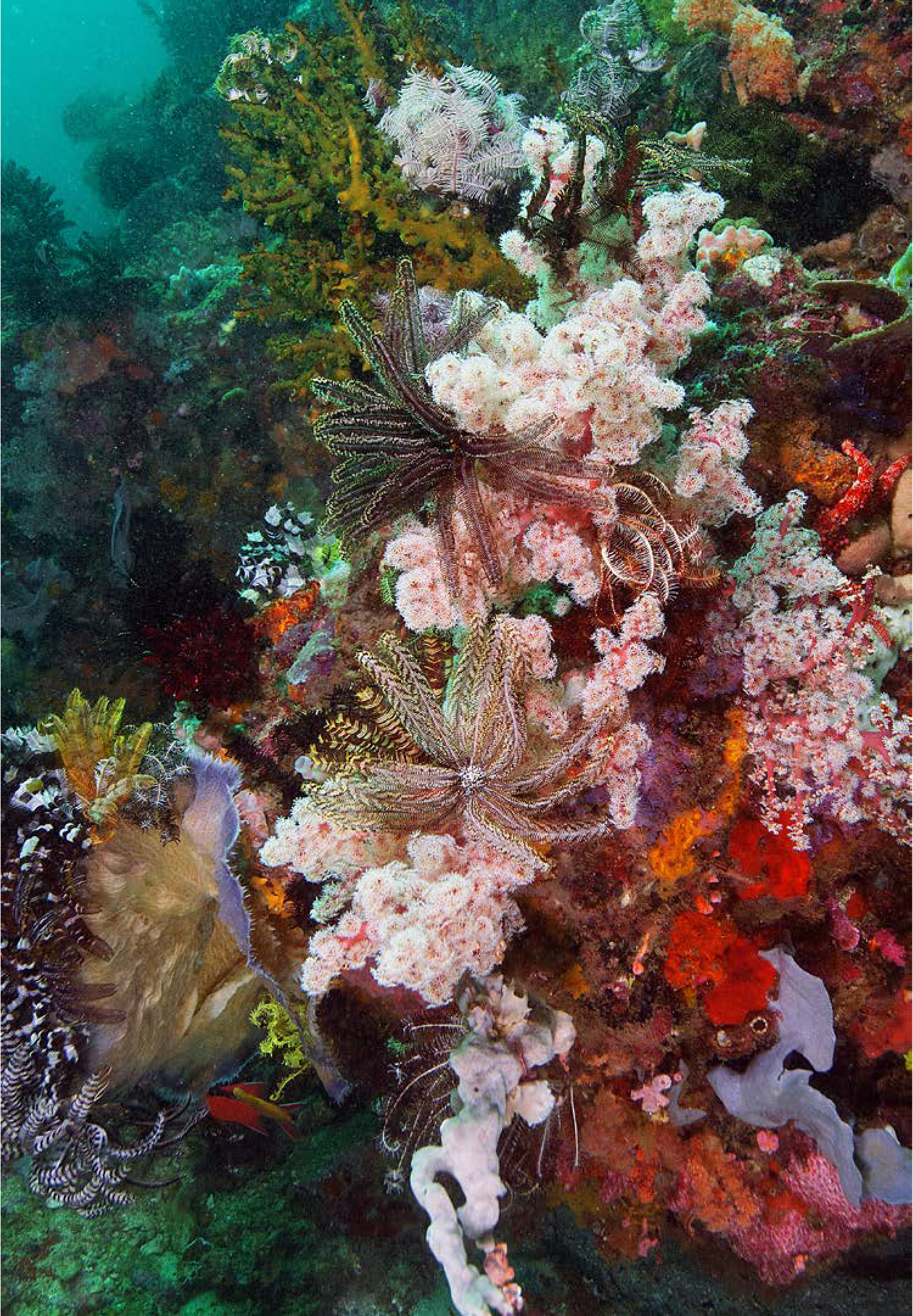
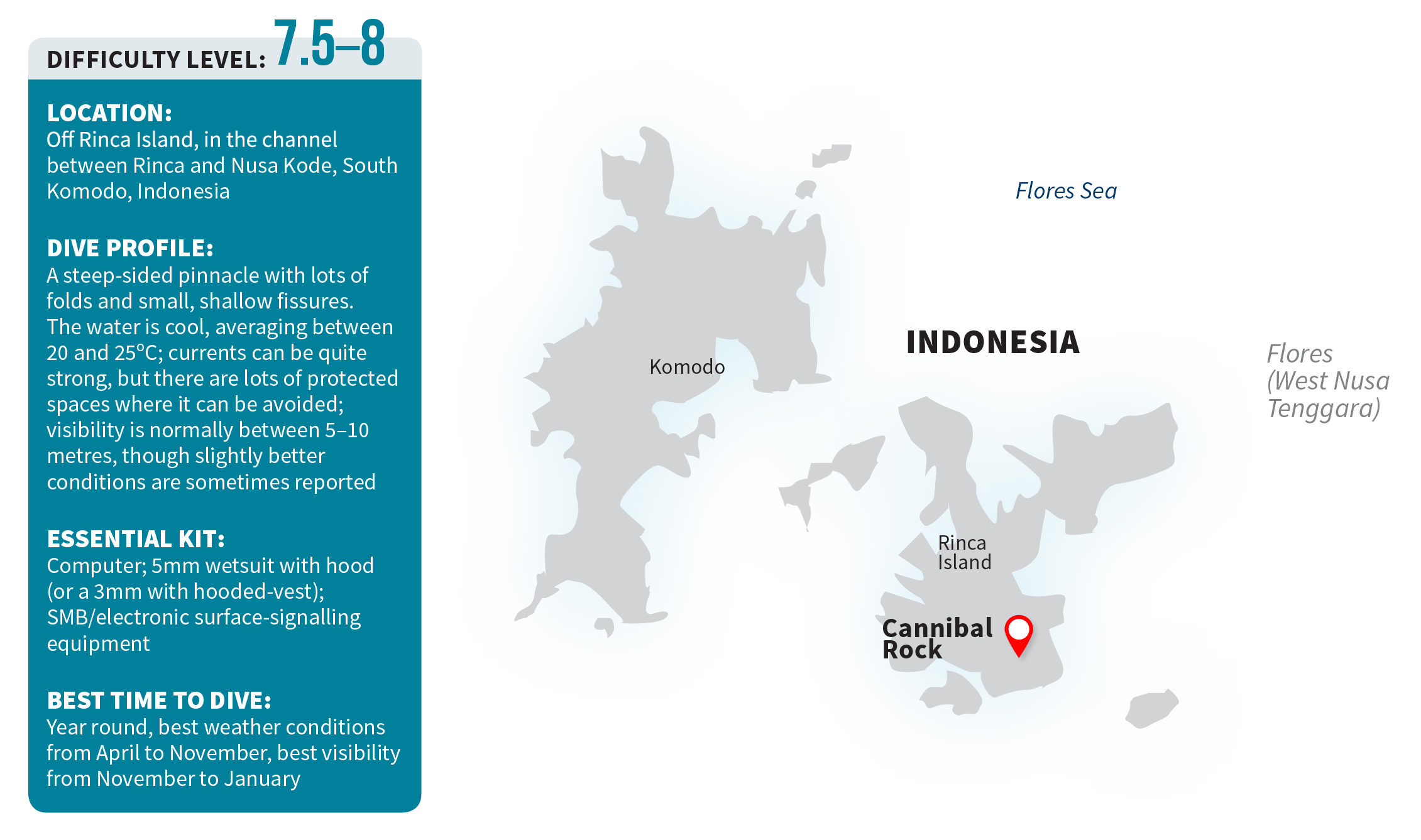
IN THE COOL, nutrient-rich waters of South Komodo, Indonesia, is a unique dive site that, in this divers’ experience, may actually qualify as one of the single-most colourful places on the planet. Unimposing topside, just a wave-washed bit of rock breaking the surface of a channel’s greenish water, underwater, Cannibal is an extravagant surprise of Nature – a huge, rock pinnacle utterly buried under a layer, a metre or two thick, of the most exotic, outrageously-coloured life imaginable.

Huge, purple gorgonian fans, dark green stands of Micrantha corals, lime-green sea whips, spiral corals, soft corals of seemingly every colour of the palette, and thousands of rainbow-hued crinoids are just the beginning, for much of the effect is created by the combined mosaic of vibrant, small life crammed into every possible space – yellow and white miniata sea cucumbers, brilliantly coloured sea apples, zebra fire urchins and so much more. And, did I mention the haze of schooling fish swirling over everything…?


Atlantis Resort House Reef

Text and image by Brandi Mueller


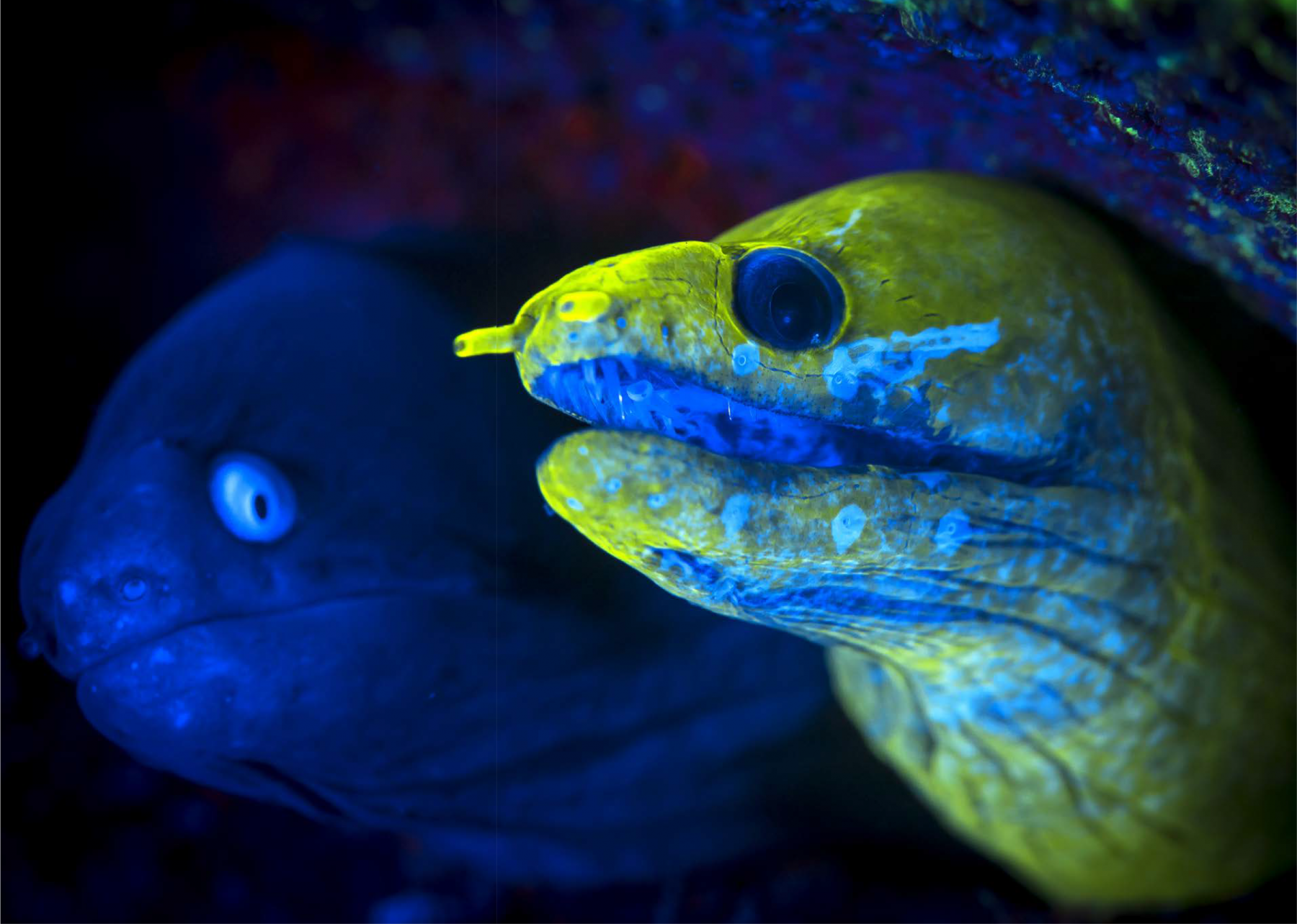
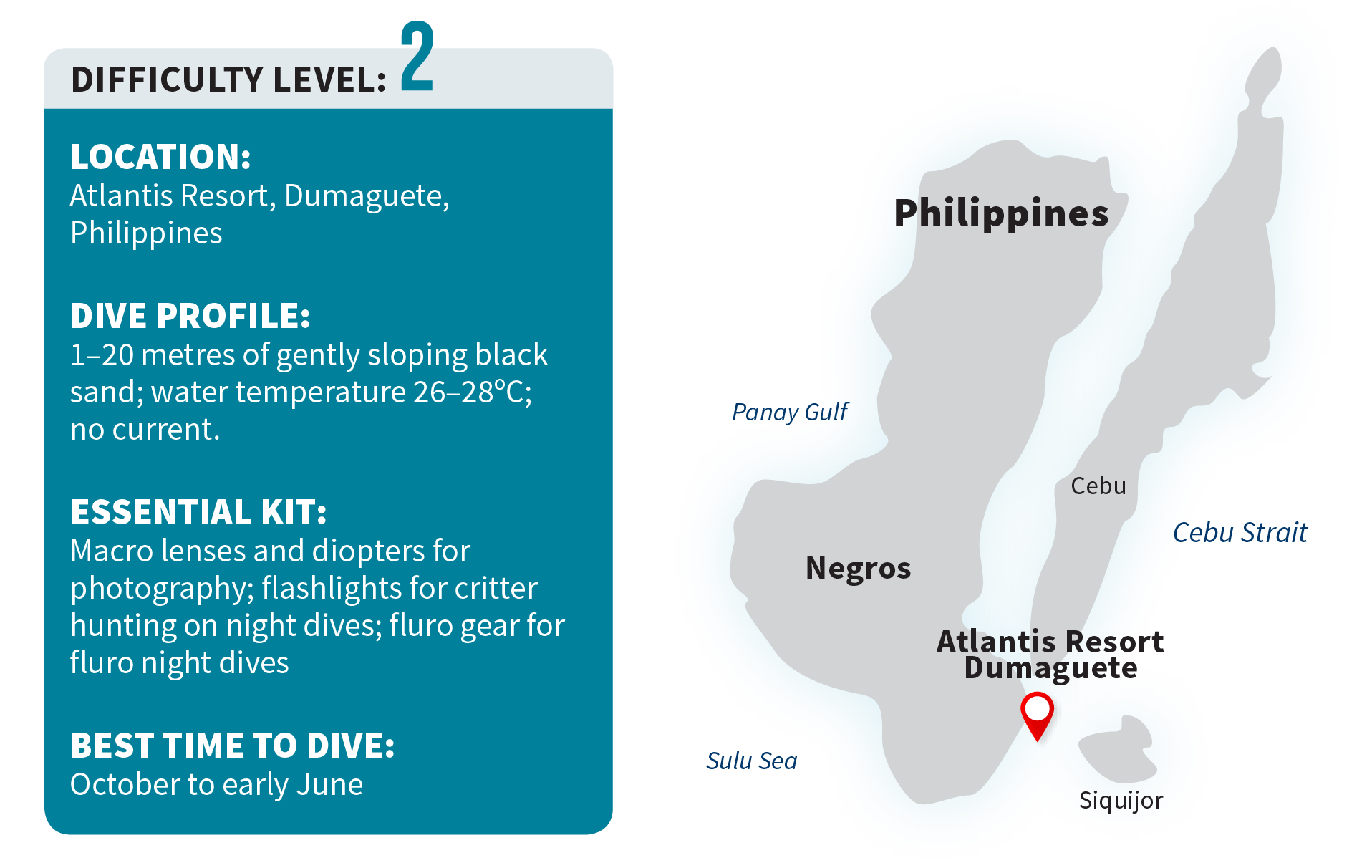
FOR A UNIQUE UNDERWATER colour experience, fluorescence night diving is the way to go. Using blue or ultraviolet light and yellow barrier filters, divers can see the fluorescence of the ocean. Many corals fluoresce and some species of fish, nudibranchs, shells, crabs, and recently even a turtle was found to fluoresce!

Atlantis Dumaguete Resort’s house reef, which is known for the abundance and variety of muck critters, had turned to neon green, yellow, red, and orange. Swimming through what felt like a neon video game it was so interesting seeing what would fluoresce and what wouldn’t. Sometimes only one of two of the same species of coral sitting side by side would fluoresce and my favourite part of one night dive was seeing something very bright neon green and on closer inspection, it turned out to be an eel! Fluorescence night dives are a way to see a whole new set of colours underwater. 


For the rest of this article and other stories, download a digital copy of Asian Diver No. 140 Issue 1/2016 here!

Green Fins Global Hub Development to Boost Industry Protection of Reefs

0
Reef-World has been shortlisted as a finalist in 2020’s Con X Tech Prize to help develop this digital sustainability solution


The Reef-World Foundation – the international coordinator of Green Fins in partnership with the UN Environment Programme – is delighted to announce it has officially been shortlisted as a finalist in the 2020 Con X Tech Prize.

The Con X Tech Prize provides opportunities for seed funding to anyone, anywhere to turn their bold new ideas for conservation into reality. The current round of the Con X Tech Prize attracted 167 submissions from around the world – including Uganda, Malaysia, Cameroon, the Philippines, Brazil, & more – and Reef-World has been named as one of the 20 finalists with the potential for exponential conservation impact. The Grand Prize Winner will be announced by Conservation X Labs after finalists complete a 12-week prototyping period

Reef-World’s entry is the development of The Green Fins Global Hub: a digital global solution to help dive professionals protect fragile coral reefs. This first-of-its-kind online support system will motivate marine tourism operators to improve their everyday environmental practices. This product will leverage innovation to meet increasing consumer demand for sustainable tourism practices by empowering tourism organisations to minimise environmental impacts associated with their business and protect their natural assets.


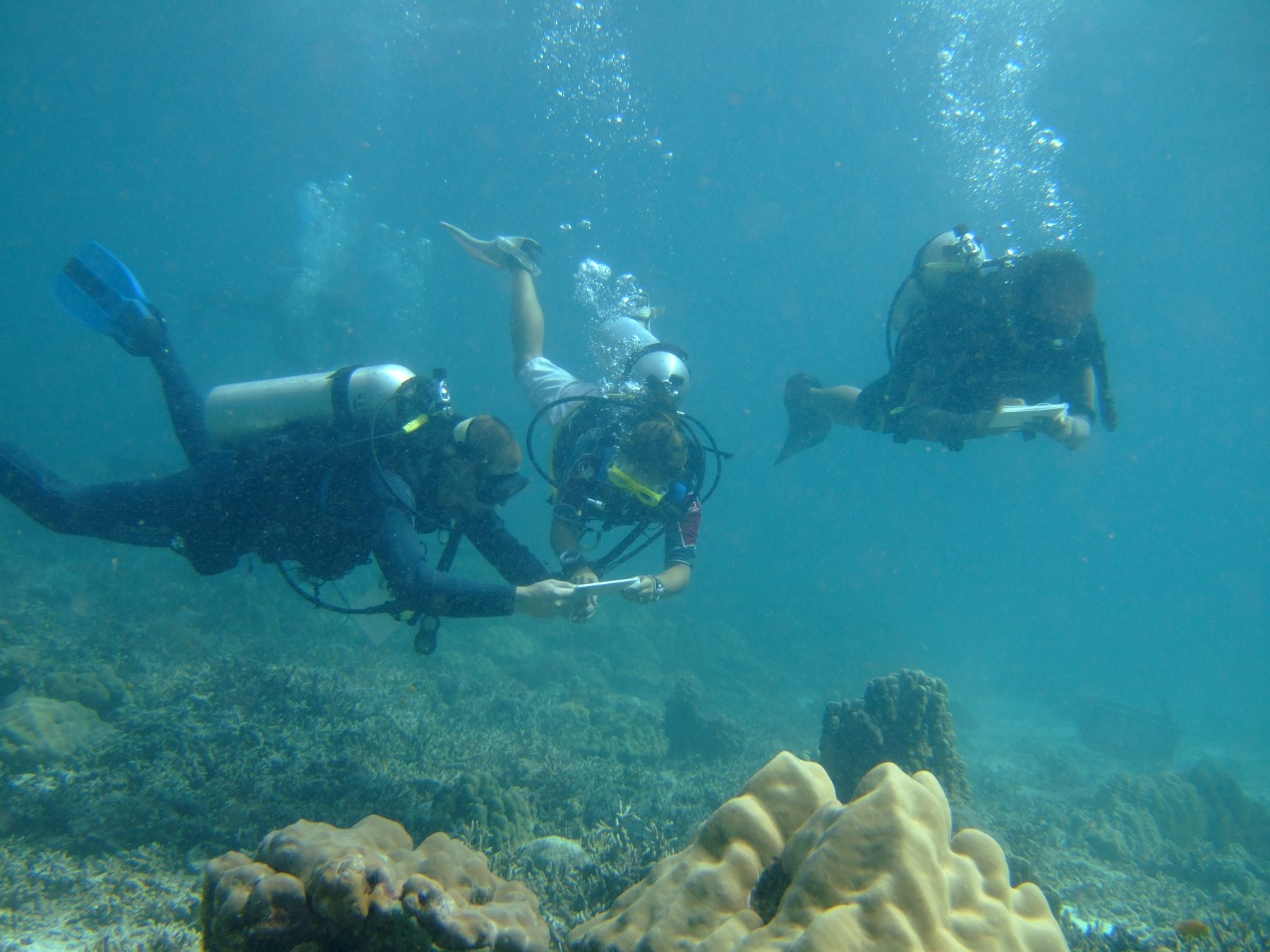
Dive shop staff receive their environmental awareness-raising presentation from Green Fins assessors.
 

Harnessing Reef-World’s 20+ years’ grassroots experience in environmental behaviour change, the Hub allows Reef-World to upscale its conservation impact by moving the proven Green Fins tools online. This will significantly boost knowledge and capacity for improved sustainability worldwide. This project has immediate potential to upscale globally: digitising Green Fins’ offering overcomes traditional capacity and time constraints. In this way, it allows Reef-World to reach previously inaccessible operators and help them take the first steps on their sustainability journey. Going digital in this way opens up an opportunity to reach 30,000 dive and snorkel operators across 100 coral reef countries. This means Reef-World can educate and empower over 48,000 guides and building sustainability into the trips of the 171 million tourists who visit coral reef sites each year. The potential cumulative impact of this on global coral reef health is significant.

This project creates a tipping point for sustainable reef tourism by helping the industry identify pressing environmental threats and providing proven solutions, such as responsible waste management measures. Complementing Green Fins’ proven conservation approach, the Hub will boost reef resilience by empowering people in biodiversity hotspots worldwide to alleviate local threats.

Tourism operators’ owners, managers, staff and crew will directly engage with the Hub for access to robust, evidence-based sustainability practices. Following online registration and self-evaluation, they will receive proven solutions for their highest environmental threats, continued access to implementation action plans, tools and resources and user forums for support and encouragement. Data captured from self-evaluations, access to solutions, tools to address threats and on-site verification assessments will also inform where strengthened policy and regulation can have the greatest impact.


The resultant measurable reduction of local threats to coral gives reefs a better chance of surviving mounting global threats. Reef resilience is a growing marine ecosystems conservation approach focusing on alleviating local threats, allowing them to be healthier, more robust & resilient to climate change impacts. Green Fins is a proven conservation approach that works in line with resilience-based management by reducing coastal ecosystems threats posed by marine tourism. It is traditionally implemented by trained government teams conducting on site environmental assessments and training. Already active in 11 countries, demand for Green Fins participation globally greatly exceeds current capacity & complementing on-the-ground activity with a novel, digital approach is required to achieve conservation impact scale.


“The Hub will enable operators to train and empower their staff to adopt better environmental behaviours and collaborate with other businesses. We’re excited about the project’s potential to benefit reefs globally!”

– James Greenhalgh, Digital Strategy Manager at The Reef-World Foundation


Reef-World has already completed in-depth market research and prepared a business plan, product requirement document and sustainable finance model. By the end of the 12-week prototyping period, the charity will have: drafted a design specification document; mapped out the evaluation and onboarding processes for members; developed wireframes for the onboarding process and key sections of the system; designed a visual mock-up of the user interface; and begun collaborating with software development agencies to ensure all outputs are realistic and achievable.

James Greenhalgh, Digital Strategy Manager at The Reef-World Foundation, said: “We’re proud to have been shortlisted alongside these impressive conservation innovations. There is no other product like the Global Hub on the market and our market research shows strong industry demand for a service providing this type of solution. The Hub will enable operators to train and empower their staff to adopt better environmental behaviours and collaborate with other businesses. We’re excited about the project’s potential to benefit reefs globally!”

Tom Quigley, Community Manager at Conservation X Labs, said: “The Con X Tech Prize is meant for opportunities just like this – where some funding and support through a prototyping sprint can help a product like Green Fins make a transformative leap in the scale of their impact. We’re excited to see what Reef-World builds over the prototyping period!”

Each of the 20 shortlisted teams have received $3,500 to turn their idea into a prototype over 12-weeks. At the end of the prototyping period, one project will be awarded the $20,000 grand prize to support the future of their project.

Reef-World has already secured funding for this project from the United Nations Environment Programme, The Matthew Good Foundation, and G-Research and is continuing to fundraise to cover the remaining development costs.

The Reef-World Foundation is a registered UK charity which delivers practical solutions for marine conservation around the world. Its flagship initiative, Green Fins, is implemented in partnership with the UN Environment Programme (UNEP). This proven, established approach focuses on driving environmentally friendly scuba diving and snorkelling practices across the industry globally. By driving compliance to marine tourism environmental standards, Green Fins helps to reduce local threats to coral reefs in popular tourism destinations. It unites tourism organisations, governments and operators to preserve natural resources by implementing proven sustainability measures.

To see the full list of 20 finalists please visit https://conservationxlabs.com/cxtp3-announcement.


About Reef-World

The Reef-World Foundation is a registered UK charity which delivers practical solutions for marine conservation around the world. The charity promotes the wise use of natural resources – particularly coral reefs and related ecosystems – for the benefit of local communities, visitors and future generations. It is dedicated to supporting, inspiring and empowering governments, businesses, communities and individuals around the world to act in conserving and sustainably developing coastal resources.

Reef-World leads the global implementation of the UN Environment Programme’s Green Fins initiative, which focuses on driving environmentally friendly scuba diving and snorkelling practices across the industry globally. As such, the charity provides low cost and practical solutions to local and industry-wide environmental challenges associated with the marine tourism industry. It provides education and capacity building assistance to empower environmental champions (within the diving industry, local communities, authorities and governments) to implement proven coastal resource management approaches.

Please visit www.reef-world.org to learn more or follow us on FacebookInstagram and Twitter.


About Green Fins

Green Fins is a proven conservation management approach – spearheaded by The Reef-World Foundation in partnership with the UN Environment Programme – which leads to a measurable reduction in the negative environmental impacts associated with the marine tourism industry. The initiative aims to protect and conserve coral reefs through environmentally friendly guidelines that promote a sustainable diving and snorkelling tourism industry. It provides the only internationally recognised environmental standards for the diving and snorkelling industry and has a robust assessment system to measure compliance.

Green Fins encourages and empowers members of the diving industry to act to reduce the pressures on coral reefs by offering dive and snorkel companies practical, low-cost alternatives to harmful practices – such as anchoring, fish feeding and chemical pollution – as well as providing strategic training, support and resources. By reducing the local direct and indirect pressures tourism puts on coral reefs, it helps make corals healthier and more resilient to other stresses such as the effects of climate change. Look for the Green Fins logo when booking your next dive trip.


Please visit https://www.greenfins.net/ to learn more or follow the initiative on FacebookInstagram and Twitter.

Seventh Annual United Nations World Oceans Day Photo Competition Results 2020

0
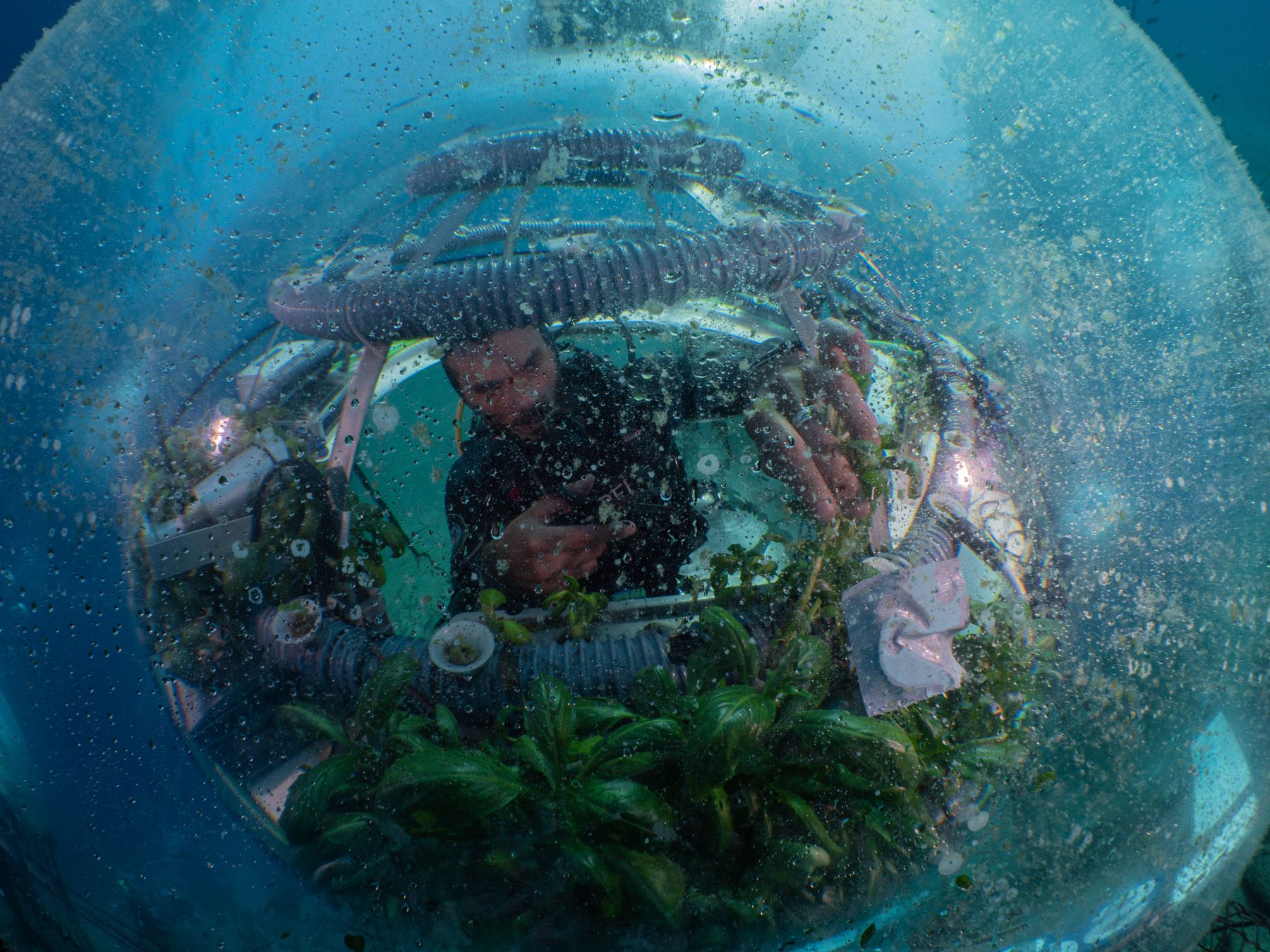
Featured image by Innovation for a Sustainable Ocean and 2020 World Oceans Day Theme winner: 
Joanna Smart (Australia)

The winners of the United Nations World Oceans Day Photo Competition were announced during the first UN World Oceans Day 2020 Virtual Event on June 8, 2020. The event and competition are coordinated by the UN Division for Ocean Affairs and the Law of the Sea, Office of Legal Affairs, and were produced in partnership with Oceanic Global. The competition is curated by Ellen Cuylaerts, hosted by DivePhotoGuide (DPG), and made possible in part through the support of the Blancpain Ocean Commitment.

Ten judges announced the first, second and third place images from around the world in 10 categories during a 20-minute video segment. A 2020 World Oceans Day Theme winner was also selected by the organizers. The team of judges comprised the guest judge for the theme, Jim Standing; and the panel of judges, Adriana Basques, Adam Hanlon, Jill Heinerth, Darren Jew, Jane Morgan, Amos Nachoum, Miriam Stein Battles, David Salvatori, and John Thet.

Congratulations to Joanna Smart for her winning image in the World Oceans Day 2020 theme category “Innovation for a Sustainable Ocean”; and to the other category winners: Leighton Lum (“Rejuvenation”), Hannes Klostermann (“Underwater Seascapes”), Michael Gallagher (“Underwater Life”), Geo Cloete (“Above Water Seascapes”), Renata Romeo (“Human Interaction: Making a Difference”), Sirachai Arunrugstichai (“Clean Our Ocean”), Frahttp://www.divephotoguide.com/charter-world-oceans-day-photo-competitionncisco Sedano (“Digital Ocean Photo Art”), Kyla McLay (“Youth”), and Matthew Potenski (“Science in Action: Ocean Decade 2021–2030”); as well as to all the runners-up.

All participants signed a Charter of 14 commitments regarding ethics in photography.

For the announcement by DPG, please see:

www.divephotoguide.com/underwater-photography-scuba-ocean-news/announcing-winnersseventh-united-nations-world-oceans-day-photo-contest

For more information about the results, for the images and captions, please contact:

Ellen Cuylaerts, Curator  – ellen.cuylaerts@me.com

For more information about UN World Oceans Day, please contact:

François Bailet, Senior Legal Officer, UN Division of Oceans Affairs and the Law of the Sea – bailet@un.org

Seventh Annual United Nations World Oceans Day Photo Competition 2020

0
Image: Dan Charity

April 20, 2020 New York, NY – Photographers (professional and amateur) from around the world are invited to enter the United Nations World Oceans Day Photo Competition 2020. Winning images will be recognized at the United Nations World Oceans Day 2020 virtual global conference on Monday, June 8th produced in partnership with Oceanic Global. The winners’ photos will also be published on the official UN World Oceans Day website www.unworldoceansday.org as well as on social media including the UN World Oceans Day Instagram @unworldoceansday.


This photo competition aims to inspire the creation of imagery capturing the beauty, the challenges and the importance of the ocean. Photography engages people from around the world across diverse cultures, geographies and generations. A powerful image can change people’s behaviors and encourage them to be active participants to promote change rather than merely bystanders.


“Our past encounters with marine life are now more cherished than ever before. So many of us around the world are longing to be in the water again and enjoying the beauty of our seas. Today we need to be reminded of how vital a resource the ocean is and how urgently we need to protect it for present and future generations. This photo competition not only showcases stunning photography but also reveals the emotional stories behind the images from people who are dedicated ocean ambassadors.”

– Ellen Cuylaerts, Curator for the UN World Oceans Day Photo Competition


This year the competition has ten thematic categories for submissions including four new ones which include Innovation for a Sustainable Ocean, Rejuvenation, Digital Ocean Photo Art and Science in Action: Ocean Decade 2021- 2030. There is also a youth category for photographers under 18 years of age. All participants are obliged to agree to a charter ensuring that they are committed to a code of ethics as it relates to the competition, and conservation rules will be strictly observed as flora and fauna should never be stressed or endangered for the sake of a photo. Participants must also commit to bringing education and awareness around their experiences to help preserve the oceans. Dive Photo Guide (DPG) is hosting this year’s competition; the organization has been involved since the contest’s inception in 2014. All entries are required to be submitted by 12:00am Eastern Standard Time on May 3, 2020.

Countries globally have celebrated World Oceans Day since 1992, following the UN Conference on Environment and Development, held in Rio de Janeiro. In 2008, the UN General Assembly decided that June 8th would be officially designated by the UN as “World Oceans Day”. This day gives communities around the world the opportunity to raise global awareness on how critical it is to keep our oceans healthy and use its resources sustainably. UN World Oceans Day 2020 will focus on innovations for a sustainable ocean across categories including technology, systems infrastructure, resource management, consumer products, and scientific exploration.


WORLD OCEANS DAY 2020 PHOTO COMPETITION GUEST JUDGE FOR “INNOVATION FOR A SUSTAINABLE OCEAN” THEME CATEGORY

Jim Standing

Jim Standing is the co-founder of Fourth Element, and along with Paul Strike, has spent the past 20 years building a company and brand dedicated to improving divers’ thermal protection and apparel.

In recent years, the company has undergone a shift to develop products with a greater focus on sustainability and environmental responsibility, beginning with the OceanPositive swimwear line, progressing to wetsuits made from plant-based materials.

The company actively supports conservation projects around the world, dedicated to sustainability and the preservation of the environment.


WORLD OCEANS DAY 2020 PHOTO COMPETITION JUDGES

Adriana Basques

Adriana Basques is a former IBM executive turned professional underwater photographer whose creative and award-winning imagery is devoted to bringing awareness and encouraging environmental conservation. Born in Brazil, Adriana was hooked on scuba diving during her first experience back in 1996 in the Caribbean. She finally combined her love for the underwater world with photography in 2008, when she purchased her first DSLR camera.

In 2010, she took a sabbatical from IBM and moved to California, focusing her interest on photography and diving. Three years later, the corporate life had lost its appeal, and she began to focus full time on nature and wildlife photography.

Adriana’s work has been featured in the Smithsonian Natural History Museum, National Geographic magazine, CNN, The Wall Street Journal, and numerous other magazines, calendars and books. Adriana also leads exclusive trips to remote and exotic locations around the world.

Adam Hanlon

Adam Hanlon is the owner of the underwater imaging community website Wetpixel and has been diving and taking pictures underwater for over 30 years.

Fascinated and completely captivated by the marine environment, he actively seeks to use his imagery both to show the beauty and fascination of the world’s oceans, and to highlight the challenges they face.


Jill Heinerth

Jill Heinerth is an underwater explorer, writer, photographer, speaker, and filmmaker. Jill was a lead technical diver on the ground-breaking Wakulla2 project, where she piloted the first 3D underwater cave mapping device—technology bound for space. A pioneer of technical rebreather diving, she led a team into underwater caves beneath the massive B-15 iceberg in Antarctica. From desert oases of the Sahara to the cold waters of Baffin Bay, Jill Heinerth becomes the hands and eyes for climatologists, archaeologists, and engineers.

Jill serves as the first Explorer-in-Residence of the Royal Canadian Geographical Society and is a presenter on radio and TV broadcasts worldwide. Her book, Into the Planet, has been lauded by The Wall Street JournalO, The Oprah Magazine and the New York Times. Jill is a Fellow of the International Scuba Diving Hall of Fame, Underwater Academy of Arts and Sciences, Women Divers Hall of Fame, and the Explorers Club, which recently named her as the recipient of the William Beebe Award for ocean exploration.

Darren Jew

After photography studies at the Queensland College of Art and work in darkrooms and commercial studios, Darren Jew spent eight years as photographer for the Queensland Parks and Wildlife Service, where his photographic skill found harmony with his profound love of nature. The last two decades have seen Darren pursue his passion for capturing and sharing the natural world, producing sought-after nature, travel and scientific images both above and below the water; selling fine art prints; undertaking magazine commissions; and leading photo tours to the world’s great wildlife, landscape and marine destinations.

Darren is the author of three books: Australia: Reef, Rainforest, Red HeartFar and Wild: South; and most recently, Underwater Australia. His images regularly appear in magazines and books, he exhibits around Australia, and his work is used by conservation organizations worldwide. Darren’s unique vision has earned him the accolade of AIPP Australian Professional Nature Photographer of the Year six times between 2007 and 2018.

Jane Morgan

Jane Morgan has a BA (Hons) Marine & Natural History Photography degree from Falmouth University, where she now works as Dive Safety Officer. Although Jane took up diving in 1991, she didn’t pick up a camera until 2001 after a period of working in marine conservation and wondering what to do underwater after the surveys stopped.

She won her first first major portfolio award at the British Society of Underwater Photographers in 2002. In 2005, Jane joined Dive magazine as Online Editor and organizer of the British Underwater Image Festival. She has contributed to many publications around the world including being part of the Underwater Photography Masterclass in Ocean Geographic and a regular contributor to Scuba.

Amos Nachoum

Amos Nachoum is a master of photographing big animals worldwide. Since 1980, he has explored every significant body of water from the North Pole to Antarctica. Amos’s photographic vision is to raise awareness of ocean giants in their habitats. His photographs strive to dispel the myth of “dangerous” wildlife and show harmonious interactions between man and animal. Amos also leads wildlife photography expeditions with his company, www.BigAnimals.com.

Amos’s photos and essays have appeared in numerous publications including National GeographicTimeLifeNew York Times, and Explorers Journal. Among many other awards, he is a two-time winner in the animal behavior category of the BBC Wildlife Photographer of the Year Award. Last year saw the premiere of the movie about his life and diving with polar bears, Picture of His Life.

Miriam Stein Battles

With a background in environmental and marine conservation policy, Miriam Stein Battles specializes as a conservation photo editor. She has worked on magazines, books and websites for nonprofits such as National Geographic Society, Conservation International, The Nature Conservancy, and Ocean Geographic Society.

Miriam was an initial photo researcher on the Smithsonian Sant Ocean Hall, and she photo-edited the companion book, Smithsonian Ocean. She has also worked on numerous marine-themed titles for National Geographic Children’s Books. Having also been the photo editor of National Geographic Explorer magazine, Miriam has a keen eye for the specific parameters required for photography to be used in conservation and education endeavors.

Miriam is a founding affiliate to the International League of Conservation Photographers and a board advisor to Sea Save Foundation. She has been adopting whales since she was eight years old and became PADI certified at the age of 15.

David Salvatori

David Salvatori began shooting underwater in 2008. His main current interest is around nature photography and conservation issues, to which he devotes his travels around the world. As an amateur underwater photographer, David spends all of his free time planning and realizing photographic expeditions to raise awareness about some of the most endangered species on the planet. He also enjoys writing articles about his trips and collaborates with various prestigious international underwater magazines.

Over the past 12 years, David has received a number of awards in some of the most important international underwater photography and nature photography competitions. In 2015, he published his first photographic book, Reflections from the Past, documenting his personal journey around Italy’s Tirino Valley and the fascinating submerged ruins of Capo D’Acqua Lake.

John Thet

John Thet, the current President of the Media Publishers Association of Singapore, is the founder of Underwater360, the Historical Diving Society Asia, and Asian Geographic Society. He has been involved in the publishing industry since 1993.

John is the Publisher and Editorial Director of Asian Geographic Magazines. The company took over magazines Scuba Diver Australia (later renamed Scuba Diver Australasia) and Asian Diver in 2001 and 2007, respectively. In 2009, he took over as the official organizer of the Asia Dive Expo (ADEX), Asia’s largest and longest-running dive show. Under his leadership, the company has won close to 70 international awards in both the publishing and creative arenas.

Underwater360—the group that brings together Scuba DiverAsian Diver and ADEX—is a key player in the dive media and events industry, with more than one million readers and followers worldwide. ADEX has also expanded outside Singapore to Beijing, Shanghai, and Mumbai. John is actively involved in the editorial and art direction of the magazines, books, and events.


WORLD OCEANS DAY 2019 PHOTO COMPETITION CURATOR

Ellen Cuylaerts

Ellen Cuylaerts received her master’s degree in modern history and education, but worked in IT until she decided to homeschool her two gifted teenagers, relocating from Belgium to the Cayman Islands in 2009 and taking up scuba diving two years later. She became a Master Scuba Diver and soon began photographing the wonders of the underwater world.

Ellen aims to shoot images that draw the viewer in so an emotional bond is established between marine life and people who might not have a link with the underwater world. By creating an image that captures how she feels rather than what she sees, she hopes to get people involved in protecting our blue planet. Ellen has received many awards for her images, which has helped her to have a louder voice in marine conservation and also to mentor more people to use their images to contribute to education, conservation and awareness. Her work has been shown at exhibitions in Paris, St. Petersburg, Valencia, Marseille and New York.

In June 2017, Ellen addressed heads of state on World Oceans Day at the General Assembly of the United Nations, highlighting the role of photographers and filmmakers in the protection of the oceans. As a Fellow International of the Explorers Club, she became a member of the Flag & Honors Committee, hence having a front seat at future explorations. She was inducted into the Women Divers Hall of Fame in March 2019.


For more information on the photo competition as well as all activities and events celebrating World Oceans Day 2020, go to www.unworldoceansday.org.


Media Contact:
Francois Bailet: email bailet@un.org

Ellen Cuylaerts: email ellen.cuylaerts@me.com


Feature image by Dan Charity

Profile images by DivePhotoGuide