Home Blog Page 80

Tips & Techniques: Underwater Photography At Night

0

The first hurdle of night diving is to actually do it. Getting a beer at the bar and calling it a day is often more tempting than jumping into the water again. But once in, there is almost always one encounter or one shot that makes forgoing that beer worth it. For the best results, here are some important considerations to take with you.

The first and most important thing to bring is a torch. One for you and one for your camera. It’s equally important to be able to focus underwater at night as well as to communicate with your dive buddy or the boat that is going to pick you up afterwards. Underwater photographers often think that they have enough lights as they have their focus light or pilot lights built into the strobes. But when the focus light is on throughout the dive and the strobes have emptied out by the end, you face the risk of not having any light at the surface, which can be a serious safety hazard. It’s always better to bring a second, handy dive torch with you as a backup.

Regarding the focus light, wide and soft light will do the job well. Ideally, it should not be too strong or dimmable to low power to avoid scaring the animals away with the light. If you have the option of using a red light, it could be very useful for animals that are easily scared, but take note that the landscape will be set to a monochrome scene and it makes finding animals more difficult compared to using white light.

MACRO PHOTOGRAPHY

To start off, I would recommend using a macro lens with the focus light on top of the camera. The technicalities are similar to what one would apply during the day, though the environment has obviously changed: Animals are more difficult to spot and their behaviour is different. But this can be an opportunity to capture animals in situations that can’t be seen during the day, like a sleeping parrotfish or a hunting lionfish. At night, settings such as aperture and shutter speed are about the same as in the day. To avoid any light interference from the focus light, or from another diver, it is best to set the shutter speed to at least 1/200s. Make sure that there is no disturbance in the background when photographing subjects; you would want either a full black background or a textured backdrop from a soft coral. This can often be achieved by positioning yourself close to the seabed.

BLACK-WATER PHOTOGRAPHY

For black-water dives, where divers drift in the open water with the dive light attached to a line, it is ideal to use a 50mm or 60mm macro lens. Focusing can be very challenging and the best thing to do is to have your buddy hold a spotlight to the critter and shut off your own. This method will also help reduce backscatter. You can set the shutter speed on high to avoid interference from other lights. Strobes can come from the side or slightly from behind to emphasise the animals.


Read the rest of this article in No.111/2018 of Scuba Diver magazine by subscribing here or check out all of our publications here.


The Airplane Graveyard: The Forgotten WWII Warbirds of Kwajalein Atoll

0
"But still there stand those photographers that hone an ability to capture incredible moments in a frame, and turn common sights into wonders time and time again." © Brandi Mueller

At the end of WWII, around 150 American airplanes, all veterans of the Pacific war, were dumped in the lagoon of Kwajalein Atoll, Marshall Islands. A master diver and superb underwater photographer, Brandi Mueller has dived to depths of 120 feet to capture rare images of these forgotten war birds, many looking as if they could still take off and return to the war-torn skies at any moment.

Encrusted in coral, these haunting aircraft are now home to a colorful array of tropical Pacific marine life, including fish, turtles, and even the occasional shark.

Located in the geographic region of Micronesia, Kwajalein (kwa-ja-leyn) is one of 29 atolls belonging to the Republic of the Marshall Islands. So far to the east, the Marshall Islands are just slightly west of the International Date Line and just a bit north of the equator. The islands cover over 1.26 million square kilometres (larger than South Africa), although only 171 square kilometres of that area is land (about the same size as Indonesia’s Komodo Island).

Atolls are ring islands that enclose a saltwater lagoon. They are formed by coral reefs that built up around a former island that has since disappeared over millions of years due to erosion. Flat and skinny islands of sand are left behind, usually with sheer walls on the ocean side and a protected lagoonal area fed by tidal influxes on the inside.

For Kwajalein this means spectacular walls dropping hundreds of metres right offshore with untouched, healthy corals and lots of pelagic life, and a lagoon of around 20 to 40 metres deep with sporadic coral heads and, thanks to World War II, copious wrecks including American and Japanese warships and planes.

World War II

The lagoon of Kwajalein Atoll is the resting place for a huge concentration of Japanese and American WWII wrecks, including more than 25 ships and over 160 planes. The Japanese took over and colonised the Marshalls in 1914 and used Kwajalein as an important military defence base during WWII. In early 1944 American forces invaded Kwajalein, bombarding and destroying all of the Japanese aircraft and sinking many ships.

When the war ended, the Americans were faced with the question of how to get their excess material back, including around 150 planes. It was decided it would be cheaper to get rid of the planes than to bring them back on ships, so they were simply pushed off the back of barges in the lagoon near Roi half a dozen square kilometres. These planes can be found at both deep and shallow diving depths, most around 30 metres, and in one area as many as 13 planes can be seen on a single dive.

The Airplane Graveyard has been called the most extensive collection of American WWII planes in one place. You’ll find Corsairs, Wildcats, a Helldiver, Avengers, Dauntless, PBJ-IH Mitchells, and more. Most of them sit on the sandy bottom looking like they have just landed, while others are nose down, upside down and in all other directions. There is also a Japanese Zero, which likely went down as a result of an accident while it was trying to take off or land before the end of the war.

The Airplane Graveyard : The Forgotten WWII Warbirds of Kwajalein Atoll

Photographed by award-winning underwater photographer Brandi Mueller, these extraordinary images of the forgotten American WWII Airplanes at the bottom of the Kwajalein Atoll lagoon, never before published in book form, have now been compiled and published in a new book The Airplane Graveyard : The Forgotten WWII Warbirds of Kwajalein Atoll

With this new book, readers can discover the stories of these historic aircraft, their heroic role in the Pacific Theater of WWII, and how and why they ended up at the bottom of the Kwajalein Atoll lagoon.

In The Airplane Graveyard, Brandi takes you below the ocean’s surface to discover the forgotten remains of Douglas SBD Dauntless, Vought F4U Corsair, Curtiss SB2C Helldiver, Curtiss C-46 Commando, Grumman F4F Wildcats, Grumman TBF Avengers, and an astounding eleven PBJ-1 Mitchell Medium Bombers. The haunting images are accompanied by a text that includes a historical account of the aircraft by military historian Alan Axelrod. The book is due for release on December 4 2019 and is available now on pre-order at Amazon and other Asian bookstores like OpenTrolley Bookstore.

This article is based in part on an feature article written by Brandi Mueller first published in Scuba Diver Australasia magazine (All images are by Brandi Mueller). Read the rest of this magazine article in SD Issue 7/2014, AA No.80 of Scuba Diver magazine by subscribing here or check out all of our publications here.

 

Rajan – India’s Magical Diving Icon

0
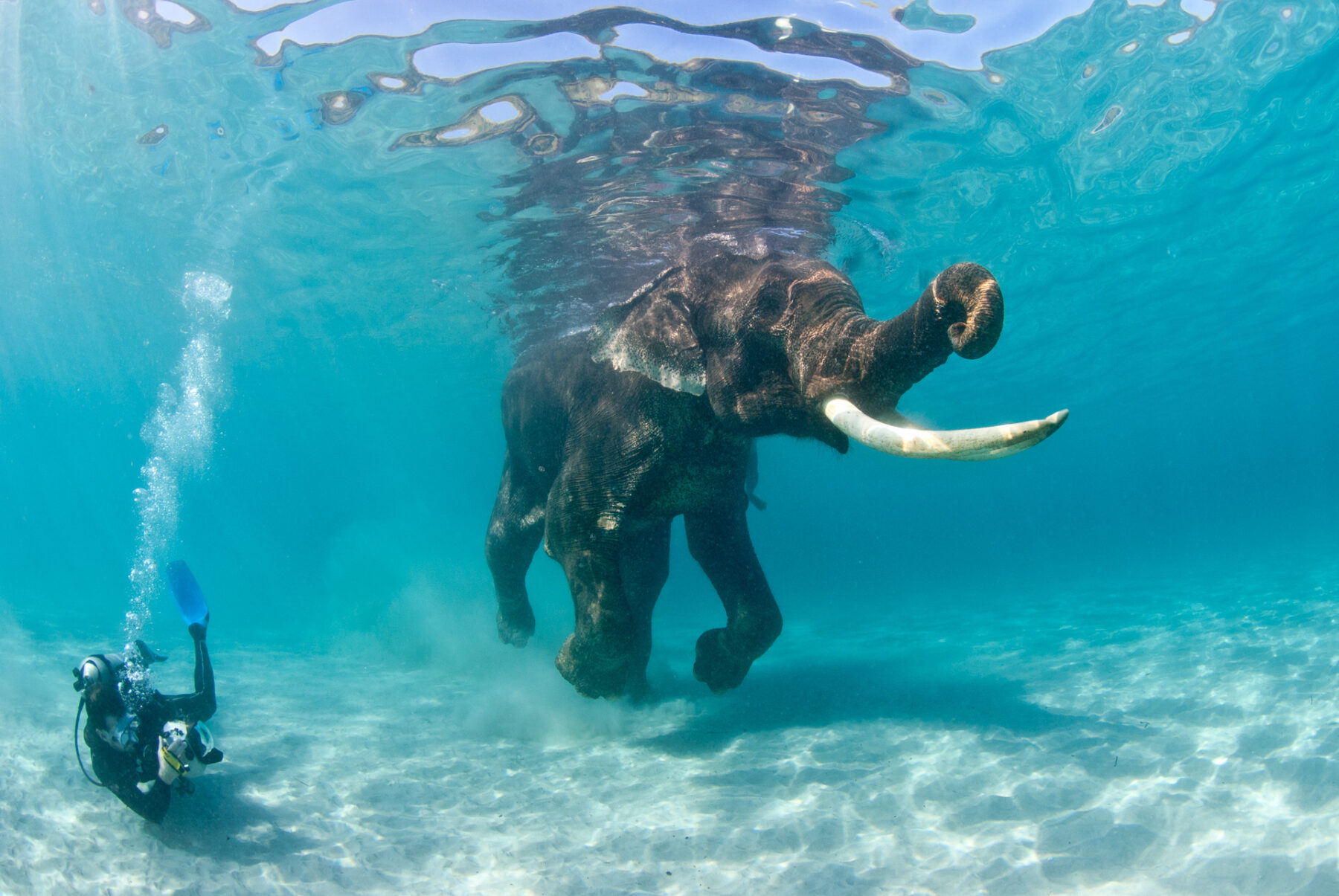
Rajan the Asian Elephant, Elephas maximus, accompanied by photographer Jeff Yonover at Radhanagar Beach, a.k.a. Beach Number 7, Havelock Island, Andaman Islands, Andaman Sea, India, Indian Ocean

Text and Images by Mark Strickland

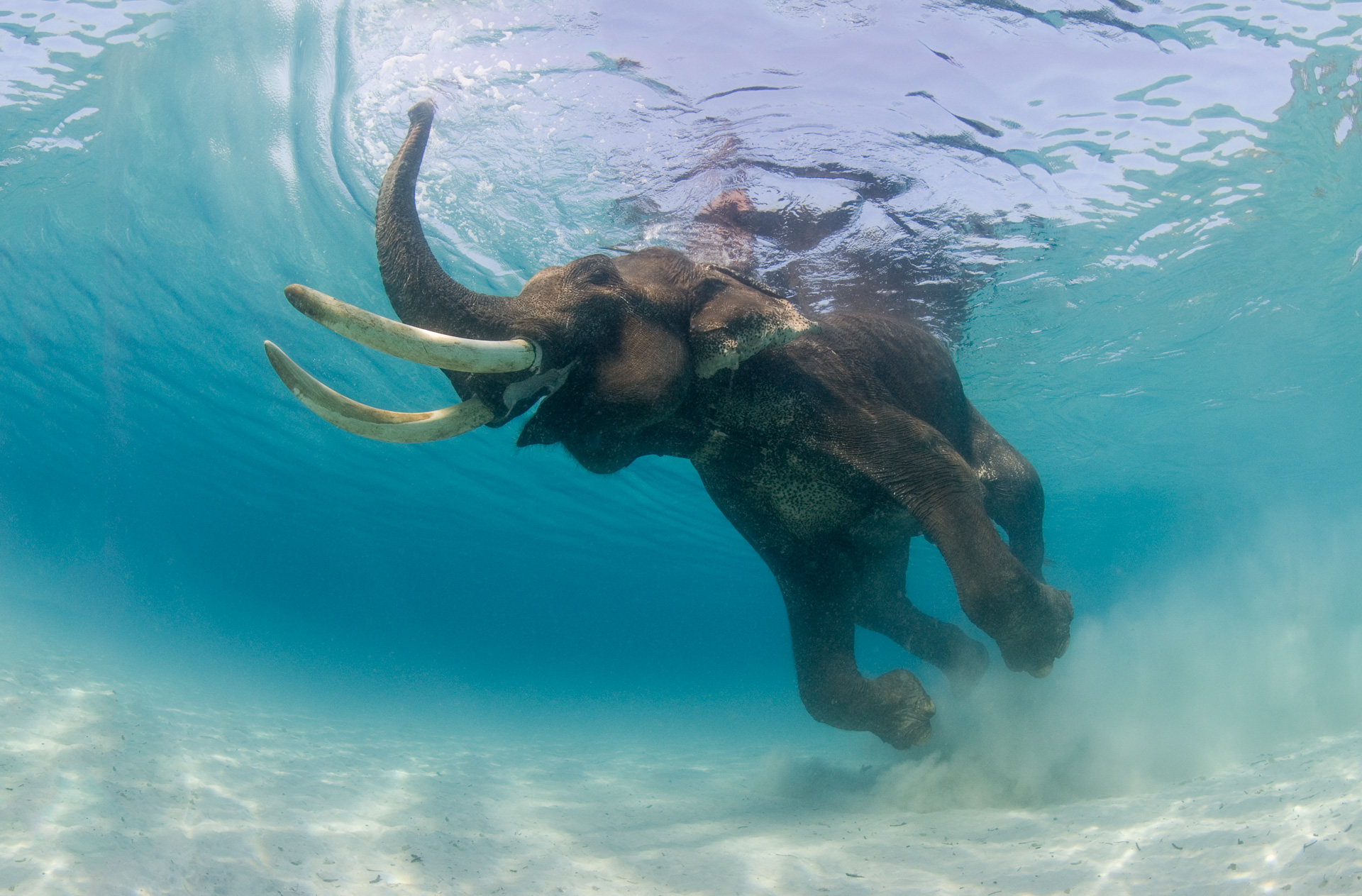
At first, the idea of encountering an elephant underwater seems rather strange. After all, these huge mammals are adapted for life in the jungle, not below the waves. If you think about it, however, with their long, flexible “snorkel” of a trunk, there are few land animals that are better suited for an aquatic existence. Enter Rajan, India’s famous swimming elephant. Widely celebrated for his willingness to pose for underwater photographers, this gentle giant was born in southern India around 1950, then brought to the remote Andaman Islands as a young adult to labour in the logging industry. His life was not easy but Rajan did find time for romance, eventually meeting a female with whom he was clearly smitten­. Relationships between the sexes are typically fleeting affairs with elephants, but their case must have been an exception, as the two were seen together frequently over the years. The female was an avid swimmer and Rajan soon followed suit, often joining her for a refreshing dip in the sea after work. Swimming was also something of a job requirement as the logging companies occasionally swam their elephants between neighbouring islands, rather than hiring barges to transport them. The pair lived happily together for several decades, until a few years ago the female was bitten by a cobra and succumbed to complications.

Rajan the Asian Elephant, Elephas maximus, cavorts in shallow water at Radhanagar Beach, a.k.a. Beach Number 7, Havelock Island, Andaman Islands, Andaman Sea, India, Indian Ocean

Grief stricken, Rajan was inconsolable and slipped into a deep depression for more than a year following her death. Normally a hard worker, he became disinclined towards his log-hauling duties, and therefore useless to his employers. With no hint of when or if he might get his mojo back, the elephant’s future looked grim. Fortunately for Rajan, it was about this time that movie director Tarsem Singh heard about his affinity for the sea and tentatively cast him in a film called The Fall. Rajan’s then-current location was not suitable for the shoot so arrangements were made to move him to Havelock, an idyllic, mostly undeveloped island in the central Andamans. Apparently, the surroundings and job description agreed with him and Rajan gradually regained his former joie de vivre.

After filming was completed for the movie, the photogenic pachyderm settled easily into the sleepy pace of life on Havelock, spending much of his time foraging in the forest with his mahout (handler). Before long, however, his owners announced their intention to ship him back to the mainland, where he would likely have spent his remaining years chained to a temple wall. Thankfully, the owners of Barefoot Resort, who’d been looking after him during his time on Havelock, came to the rescue. The elephant’s owners had demanded a huge sum for the animal, so the resort enlisted Rajan to raise the money via paid photo sessions with visiting divers. Averaging only a few sessions each month, Rajan eventually raised enough cash to earn his freedom, and officially retired from underwater modelling in 2014. Since then, he could often be seen wandering in the forest near the resort, enjoying his well-deserved retirement while entertaining visitors and locals alike.

Rajan recently passed away at the ripe old age of 66.

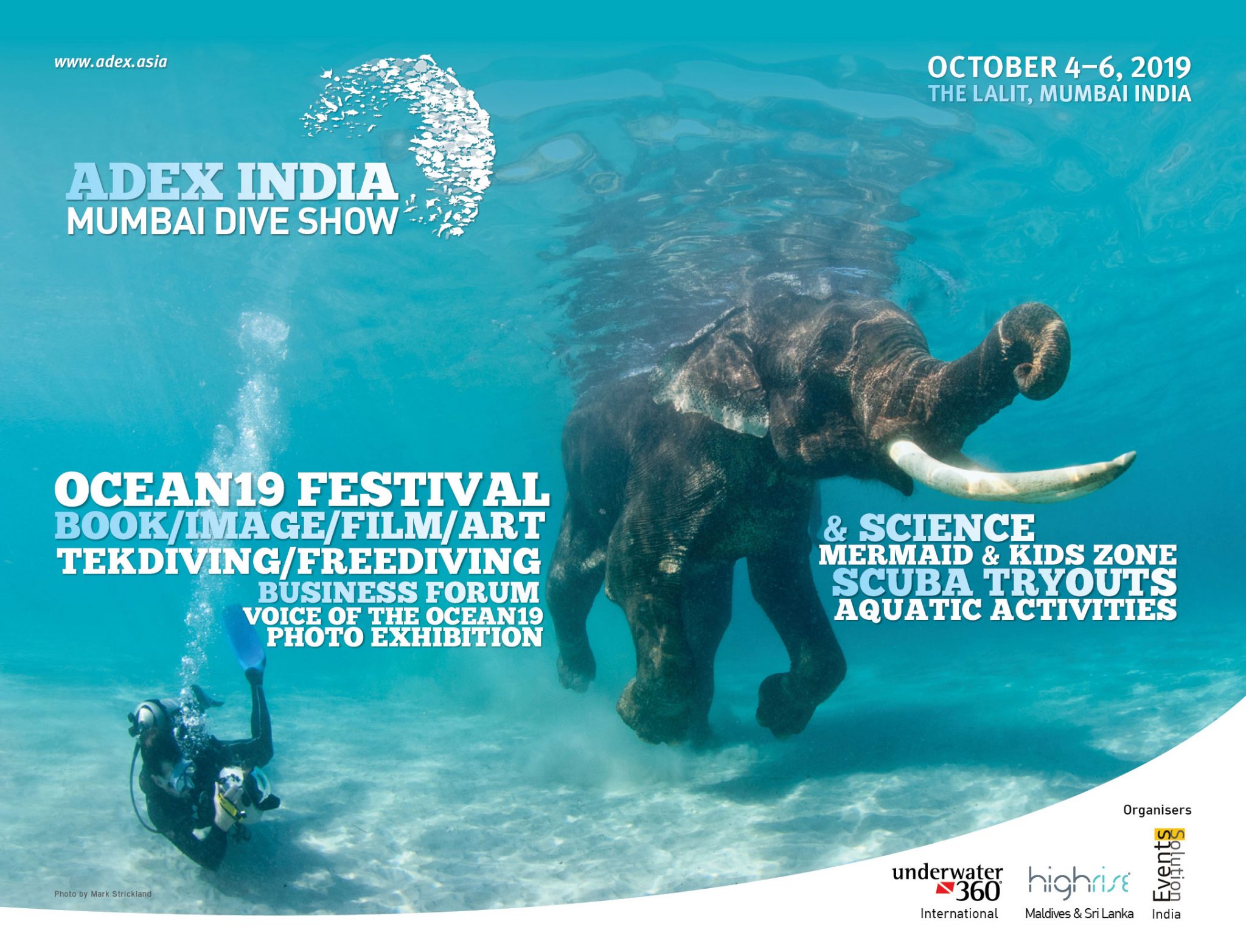
To find out more about diving in India, join us at the ADEX INDIA MUMBAI DIVE SHOW 2019 from October 4 to 6 2019 at THE LaLiT, Mumbai, India

Photo by Mark Strickland

Tips & Techniques: Responsible Shark Photography

0

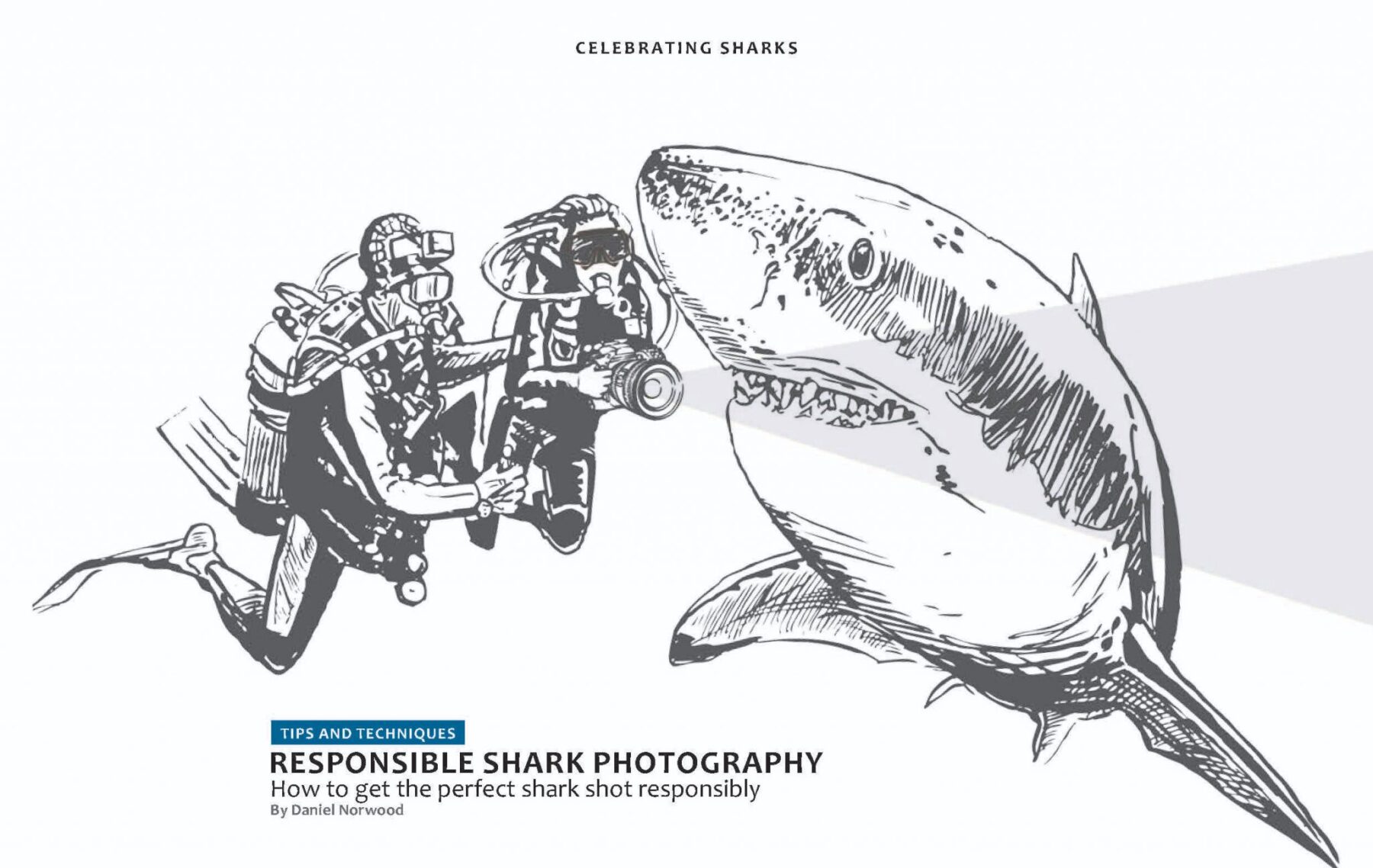
Unsure about what to do when shooting sharks underwater? Daniel Norwood provides valuable tips on how to get the perfect shark shot in a responsible way

Sharks are some of the most amazing and successful predators in the animal kingdom, and despite years of rampant overfishing, which has decimated populations globally, it is still possible to dive with them in a number of different locations around the world.

Experienced operators in countries such as Fiji, the Bahamas and Mexico have been introducing people to sharks without incident for many years, and as the public perception of sharks finally begins to change for the better, the number of people wanting to swim with them continues to rise. This is good news for sharks, because participating in sustainable shark tourism provides countries with an economic incentive to protect them and their habitat. It is also the best way for underwater photographers to get close to sharks and capture a variety of iconic species.

SAFETY FIRST

Before joining a shark diving trip, it is important to consider your diving ability and experience level, while choosing the location and tour provider carefully. Do some research and dive with responsible people that know what they’re doing. Unfortunately, a small number of individuals in the industry continue to take unnecessary risks and intentionally harass or manipulate animals for attention. Recent trends such as riding sharks and aggressive nose rubbing only encourages other people to do the same, and more importantly shows a complete lack of respect for the animals. If you happen to find yourself on a shark dive where the operator goes too far in an effort to put on a show, refrain from taking or posting images of the incident and by all means voice your concern after the dive. Avoid such dive centres and dive with companies who genuinely care about the welfare of sharks instead. Photographers are also often guilty of pushing the limits in an effort to get a better shot, but no image is worth risking your safety for, so avoid acting foolishly and abide by the rules.

GETTING GREAT IMAGES

Before discussing techniques specific to different types of shark dives, it is important to first prepare your equipment and camera settings.

All shark photography will require some kind of wide-angle lens and ideally two strobes. Always shoot in RAW for non-destructive post-processing and use a shutter speed no slower than 1/125s unless you are intentionally shooting motion blur images. Start with an aperture around f/8 and make adjustments to experiment with different shades of blue water. Finally, increase the ISO if you are deep or if light is an issue. Most modern cameras still produce great results at high ISO levels and on certain dives you will need it.

Now that the camera is ready to go, it is time to consider the type of sharks you will be shooting and how you can make the most of each situation and come away with some great images.

BAITED SHARK DIVES

Contrary to popular belief, most sharks do not normally approach humans, and will avoid groups of divers at all costs. For this reason, it is often necessary to attract them with food. There are a number of ways to do this that all serve the same purpose: to get as close as possible to otherwise elusive species. This type of diving is great for photographing large predatory sharks such as tiger sharks and great hammerheads in the Bahamas, bull sharks in Fiji and Mexico, and blue sharks and makos in the Azores and California.

My lens of choice for these dives is a Tokina 10–17mm (used on a cropped-sensor DSLR), but if you do not like the fisheye effect, a rectilinear lens in the 12–24mm range would also be a good choice. Having the ability to zoom in and out is a huge plus and I tend to make constant adjustments to my focal length throughout each dive. I also manually adjust the power output of my strobes; it can be easy to blow out the white belly of a shark if the light is too bright, so start low and adjust accordingly.

While sharks are mostly gentle by nature, inappropriate behaviour by divers may cause unnecessary accidents. Here are some general guidelines that should be followed by everyone participating in a shark dive:


– Never reach out to touch

or grab the sharks

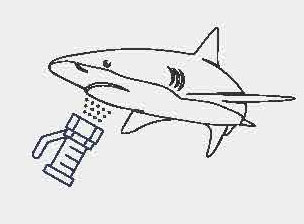
– Never touch the food

or the bait box


– Always wear appropriate

safety equipment


– Never chase or harass

the sharks


– Do not spend unnecessary

time on the surface


– Always pay close attention

to the safety briefing and

any rules specific to that

particular dive

– Always pay close attention

to your surroundings and

the sharks close to you

Most importantly, always remember that sharks are wild and potentially dangerous animals that should always be treated with caution and respect. For a list of recommended dive centres, go to www.globalsharkdiving.org

Read the rest of this article in No. 111/2018 of Scuba Diver Ocean Planet magazine by subscribing here or check out all of our publications here.
On the Brink: Polar Bears

0
Photo from Shutterstock

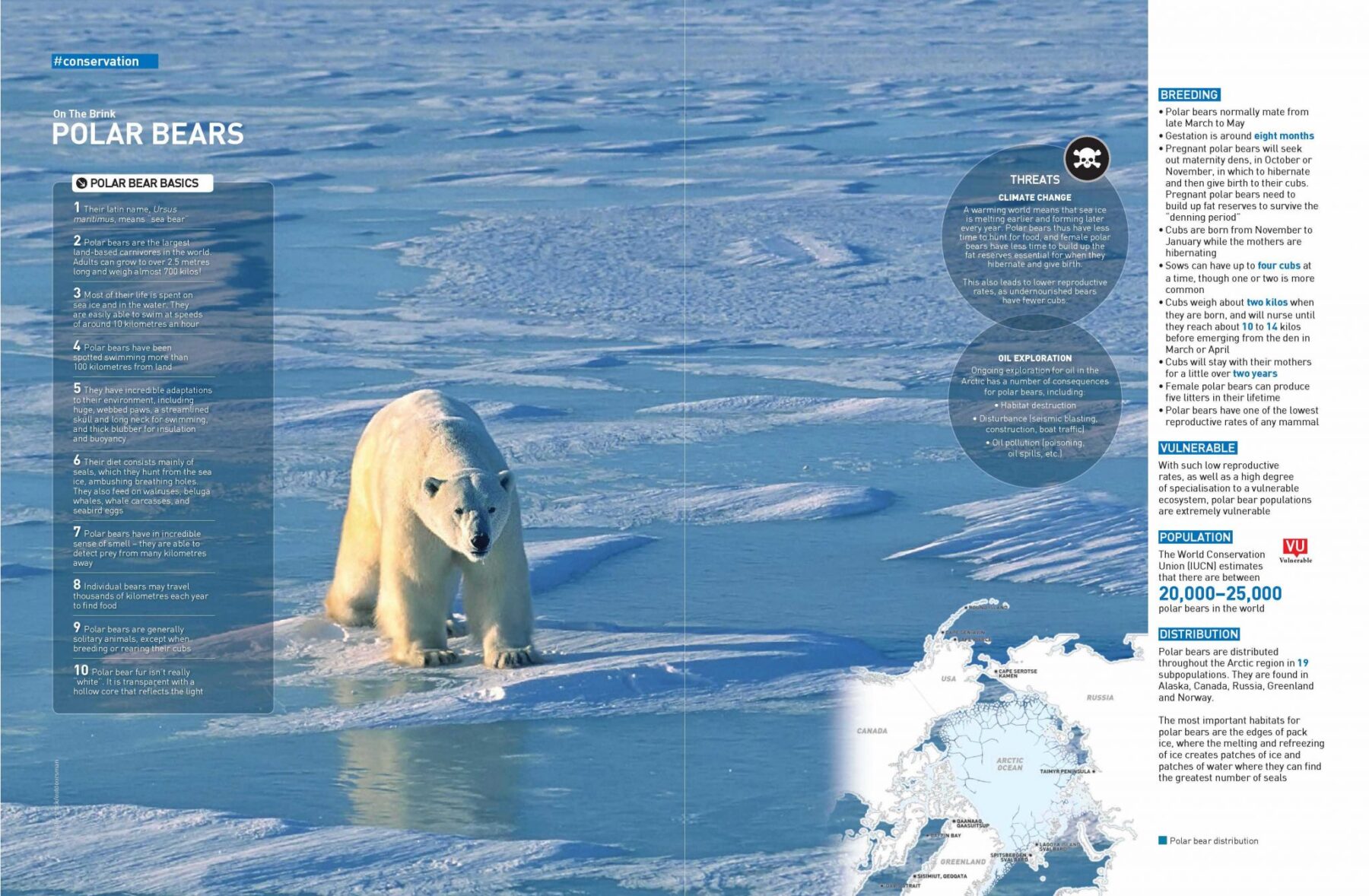
Threats

Climate change

A warming world means that sea ice is melting earlier and forming later every year. Polar bears thus have less time to hunt for food, and female polar bears have less time to build up the fat reserves essential for when they hibernate and give birth.

This also leads to lower reproductive rates, as undernourished bears have fewer cubs.

Oil Exploration

Ongoing exploration for oil in the Arctic has a number of consequences for polar bears, including:

• Habitat destruction

• Disturbance (seismic blasting, construction, boat traffic)

• Oil pollution (poisoning, oil spills, etc.)

Polar Bear Basics

1 Their latin name, Ursus maritimus, means “sea bear”

2 Polar bears are the largest land-based carnivores in the world. Adults can grow to over 2.5 metres long and weigh almost 700 kilos!

3 Most of their life is spent on sea ice and in the water. They are easily able to swim at speeds of around 10 kilometres an hour

4 Polar bears have been spotted swimming more than 100 kilometres from land

5 They have incredible adaptations to their environment, including huge, webbed paws, a streamlined skull and long neck for swimming, and thick blubber for insulation and buoyancy

6 Their diet consists mainly of seals, which they hunt from the sea ice, ambushing breathing holes. They also feed on walruses, beluga whales, whale carcasses, and seabird eggs

7 Polar bears have in incredible sense of smell – they are able to detect prey from many kilometres away

8 Individual bears may travel thousands of kilometres each year to find food

9 Polar bears are generally solitary animals, except when breeding or rearing their cubs

10 Polar bear fur isn’t really “white”. It is transparent with a hollow core that reflects the light

Breeding

  • Polar bears normally mate from late March to May
  • Gestation is around eight months

  • Pregnant polar bears will seek out maternity dens, in October or November, in which to hibernate and then give birth to their cubs. Pregnant polar bears need to build up fat reserves to survive the “denning period”

  • Cubs are born from November to January while the mothers are hibernating

  • Sows can have up to four cubs at a time, though one or two is more common

  • Cubs weigh about two kilos when they are born, and will nurse until they reach about 10 to 14 kilos before emerging from the den in March or April

  • Cubs will stay with their mothers for a little over two years

  • Female polar bears can produce five litters in their lifetime

  • Polar bears have one of the lowest reproductive rates of any mammal

Vulnerable

With such low reproductive rates, as well as a high degree of specialisation to a vulnerable ecosystem, polar bear populations are extremely vulnerable

Population

The World Conservation Union (IUCN) estimates that there are between 20,000–25,000 polar bears in the world

Distribution

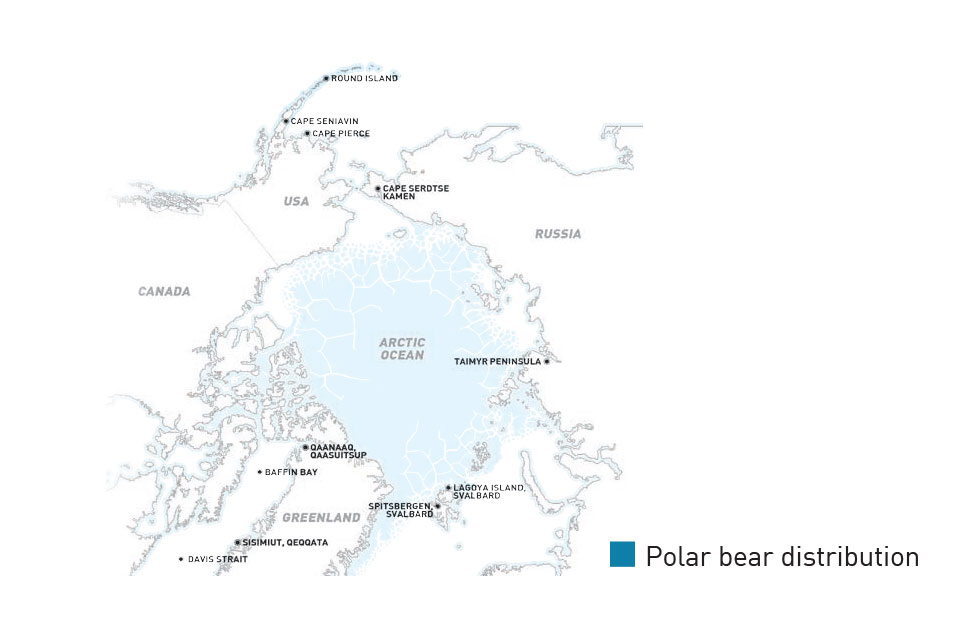
Polar bears are distributed throughout the Arctic region in 19 subpopulations. They are found in Alaska, Canada, Russia, Greenland and Norway.

The most important habitats for polar bears are the edges of pack ice, where the melting and refreezing of ice creates patches of ice and patches of water where they can find the greatest number of seals


Read the rest of this article in No. 89 Issue 1/2017 of Scuba Diver magazine by subscribing here or check out all of our publications here.
 

The Strange Ruins of Yonaguni: Japan’s Atlantis?

0

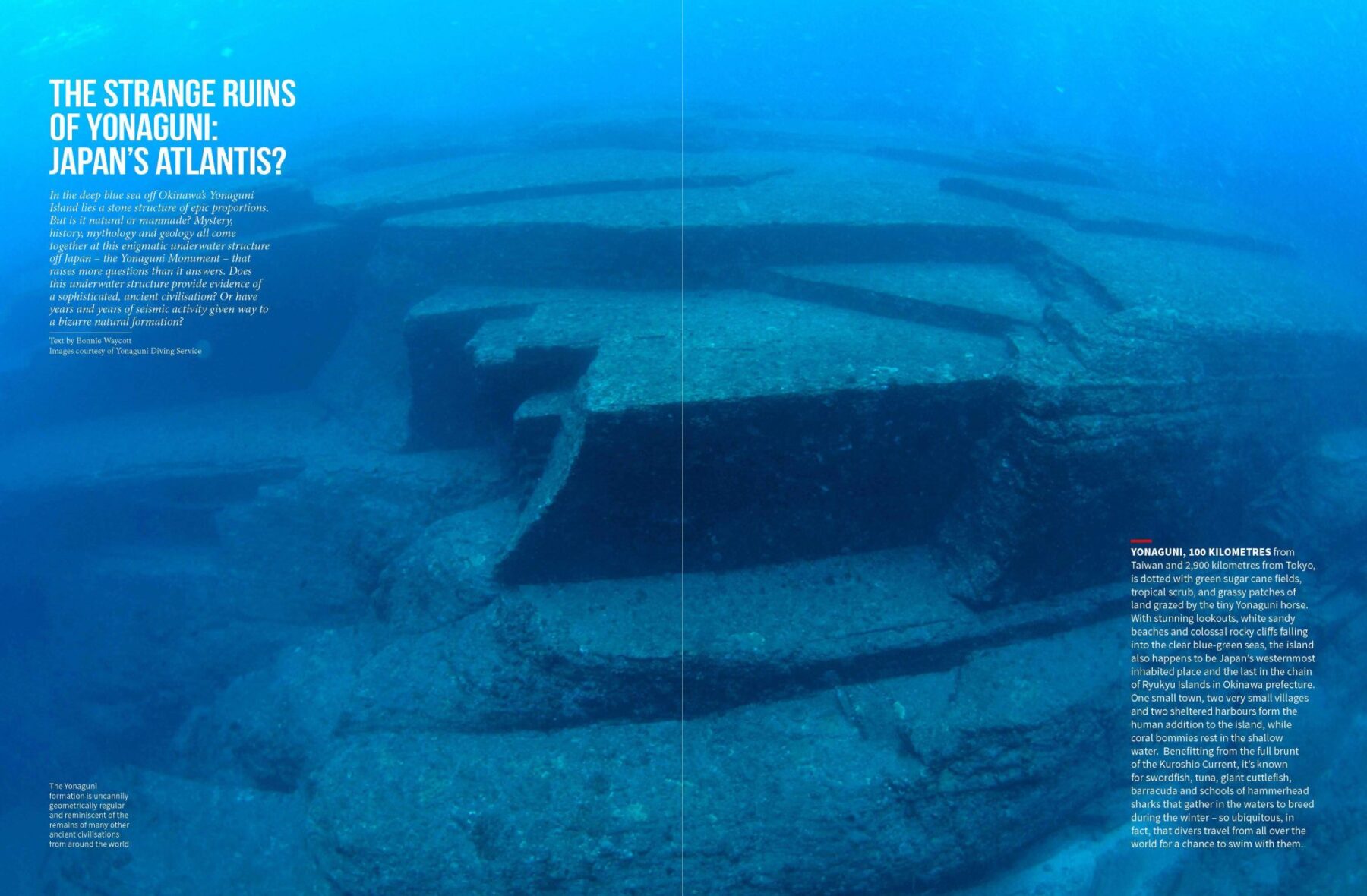
In the deep blue sea off Okinawa’s Yonaguni Island lies a stone structure of epic proportions. But is it natural or manmade? Mystery, history, mythology and geology all come together at this enigmatic underwater structure off Japan – the Yonaguni Monument – that raises more questions than it answers. Does this underwater structure provide evidence of a sophisticated, ancient civilisation? Or have years and years of seismic activity given way to a bizarre natural formation?

YONAGUNI, 100 KILOMETRES from Taiwan and 2,900 kilometres from Tokyo, is dotted with green sugar cane fields, tropical scrub, and grassy patches of land grazed by the tiny Yonaguni horse. With stunning lookouts, white sandy beaches and colossal rocky cliffs falling into the clear blue-green seas, the island also happens to be Japan’s westernmost inhabited place and the last in the chain of Ryukyu Islands in Okinawa prefecture. One small town, two very small villages and two sheltered harbours form the human addition to the island, while coral bommies rest in the shallow water. Benefitting from the full brunt of the Kuroshio Current, it’s known for swordfish, tuna, giant cuttlefish, barracuda and schools of hammerhead sharks that gather in the waters to breed during the winter – so ubiquitous, in fact, that divers travel from all over the world for a chance to swim with them.

MYSTERY UNDERWATER

But underneath the clear blue waters lies something else, a mystery of epic proportions, literally and figuratively. Yonaguni is famous for some mysterious underwater ruins called the Yonaguni Monument, and the mystery comes from the fact that nobody knows what they really are, when they were built or by whom. Their existence has led to countless debates, and neither the Japanese Agency for Cultural Affairs nor the government of Okinawa Prefecture recognises the ruins as important cultural artefacts. In fact, no government research or preservation work has been carried out on them.

Fifteen minutes away from Yonaguni’s harbour, the seas can be mildly rough with fairly strong currents, and the breaking waves look like dark, roiling storm clouds creating the perfect atmosphere for something strange and mysterious. Here, where the ruins are, the stones (sandstone and mudstone dating back to around 20 million years ago) are cleft at sharp angles and there are other shapes like arches and steps, waist-high passageways and conical borings in the rocks. The main feature, the “Monument”, is rectangular, with its top about five metres below sea level.

What is known, however, is that the ruins were discovered in 1987 by a local fisherman named Kihachiro Aratake, who happened to be diving for hammerheads  in the hope of finding a new spot to show tourists the huge sharks. Instead, he came across something even more exciting, and felt shivers up his spine as he back-rolled on top of an enormous pyramidal structure that began relatively close to the surface before its walls plunged into the deep. Aratake, who now runs his own dive centre, Sou-Wes Yonaguni, was convinced that he had discovered the remains of an ancient civilisation, and named the dive point Iseki Hanto, or “Ruins Point”, from the structure’s resemblance to an old pyramid-like temple.

Word then spread across the island, as Aratake began to seek the advice of experts. As the ruins were visited by divers more often and their structure mapped out, further discoveries were made, such as arched entrances and carvings, narrow passageways and matching obelisks that seemed perfectly aligned. Over the following years experts descended upon the site to determine whether the structure was natural or man-made. Yet to this day, it remains a great, unsolved mystery.


Read the rest of this article in 2016 Issue 3 Volume 142 of Asian Diver magazine by subscribing here or check out all of our publications here.
Discovering Vanuatu’s Dugongs

0

Around the INDO-PACIFIC, as part of an international effort called the Dugong and Seagrass Conservation Project, people and organisations are being mobilised to help protect dugongs and their habitats. SDAA talked to Christina Shaw of the Vanuatu Environmental Science Society (VESS), one of the smallest of these initiatives, about what it means to be working on the front line of the fight to protect these wonderful creatures.

1.Why is it important to better understand and protect dugongs and their habitats? And why is it important in Vanuatu specifically?

Dugongs are iconic marine mammals and we have a duty to ensure they do not become extrinct. Dugongs live around the coasts and are at risk because they are competing with humans in the same ecosystems.

Vanuatu is the most easterly country of the dugong’s range, and we think that here there are perhaps not quite as many threats to them (such as habitat loss) as in other industrialised countries or countries with higher populations.

Vanuatu might be one of the places that gives them a better chance of survival. But we don’t know how many are here, and so we don’t know if the population will be too small to survive or whether there is a realistic chance we could be a haven for future generations of dugongs.

Seagrass beds have a hugely important role in the ecosystem as fish nurseries, coastal protection and carbon skinks to help mitigate the effects of climate change. Many people in Vanuatu live a subsistence lifestyle, near the coast, and rely on natural resources for food. Ensuring seagrass beds, along with coral reefs and mangroves, stay healthy in Vanuatu is important for security.

2.How did you get into dugong research and conservation?

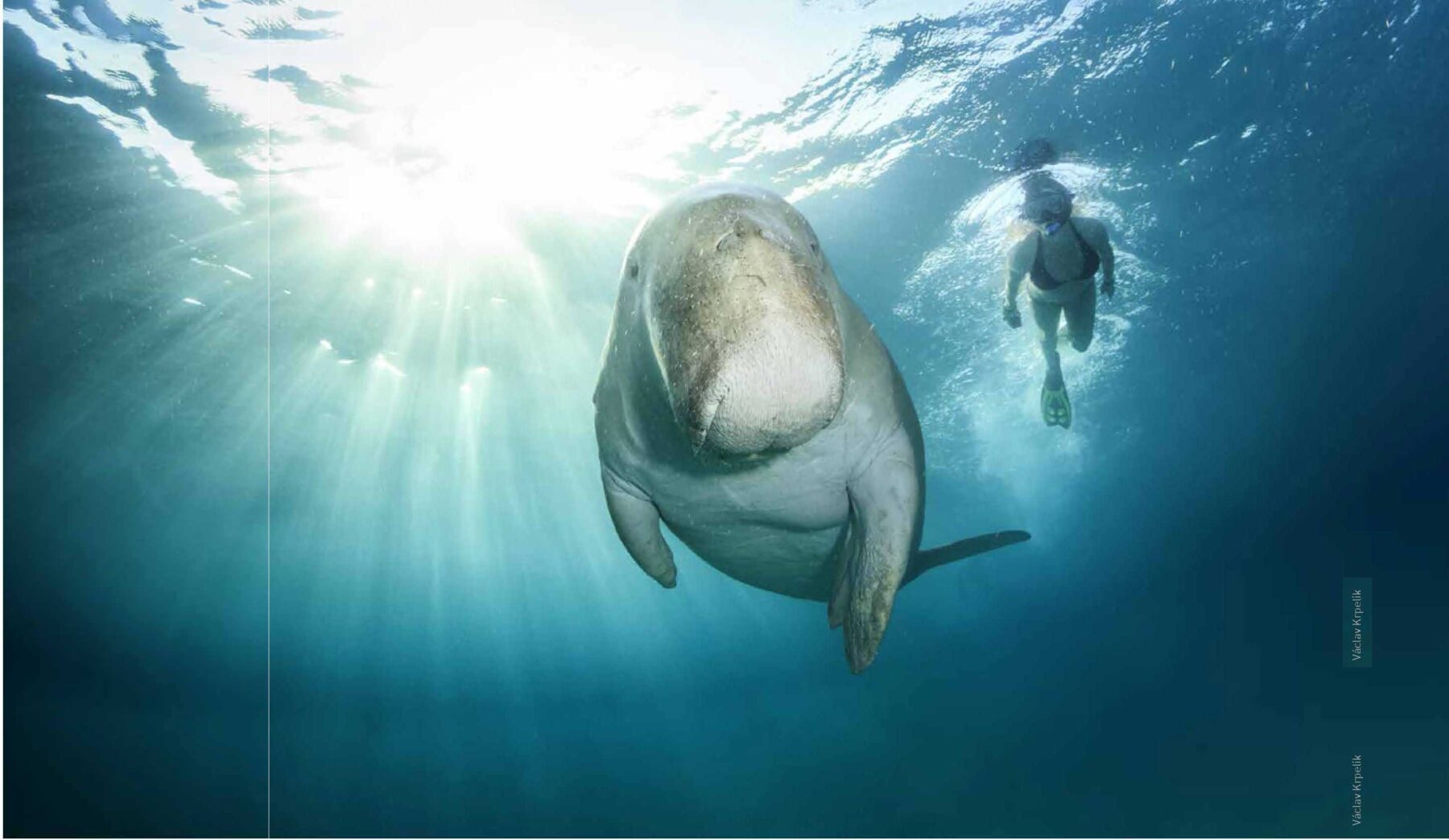
I came to live in Vanuatu seven years ago to work as a vet and was going scuba diving at the weekends. Occasionally a dugong would join us on a dive and it was an amazing experience sharing the water with one of these iconic gentle giants.

Dugongs here have a reputation for being more friendly than they are in other places, possibly because they don’t face many threats. They seem curious and will often stick around for several minutes, even going to the surface and coming back after they have taken a breath. The surfers see the dugongs regularly in one of the villages just outside the capital, Port Vila.

When I decided to stay in Vanuatu indefinitely, I completed a masters in Veterinary Conservation Medicine and wanted to move into work in conservation. Dugongs were one of the threatened species in Vanuatu I had always hoped to work with. 

It just so happened that the Global Dugong and Seagrass Conservation Project was about to begin and I met Donna Kwan from the dugong CMS MoU (Convention on the Conservation of Migratory Species of Wild Animals Memorandum of Understanding) Secretariat who was looking for partner organisations in Vanuatu to implement the project here.

We don’t have many conservation NGOs in Vanuatu and none that had a focus on science. So I set up a new organisation (with funding from the Critical Ecosystem Partnership Fund) and VESS was born. We were then asked by the Department of Environmental Protection and Conservation, Vanuatu (DEPC), and the Vanuatu Fisheries Department (VFD), if we could implement the project here with DEPC and VFD as project partners. So that is what we’re doing!

Since living here, my fiancé has become one of the owners of the Big Blue dive shop (which is where we met) and we still dive with the dugongs sometimes.


Read the rest of this article in Issue 5/2016 No.87 of Scuba Diver magazine by subscribing here or check out all of our publications here.