Home Blog Page 78

Last Frontier: The Clandestine Cave of Palawan’s Paglugaban

0

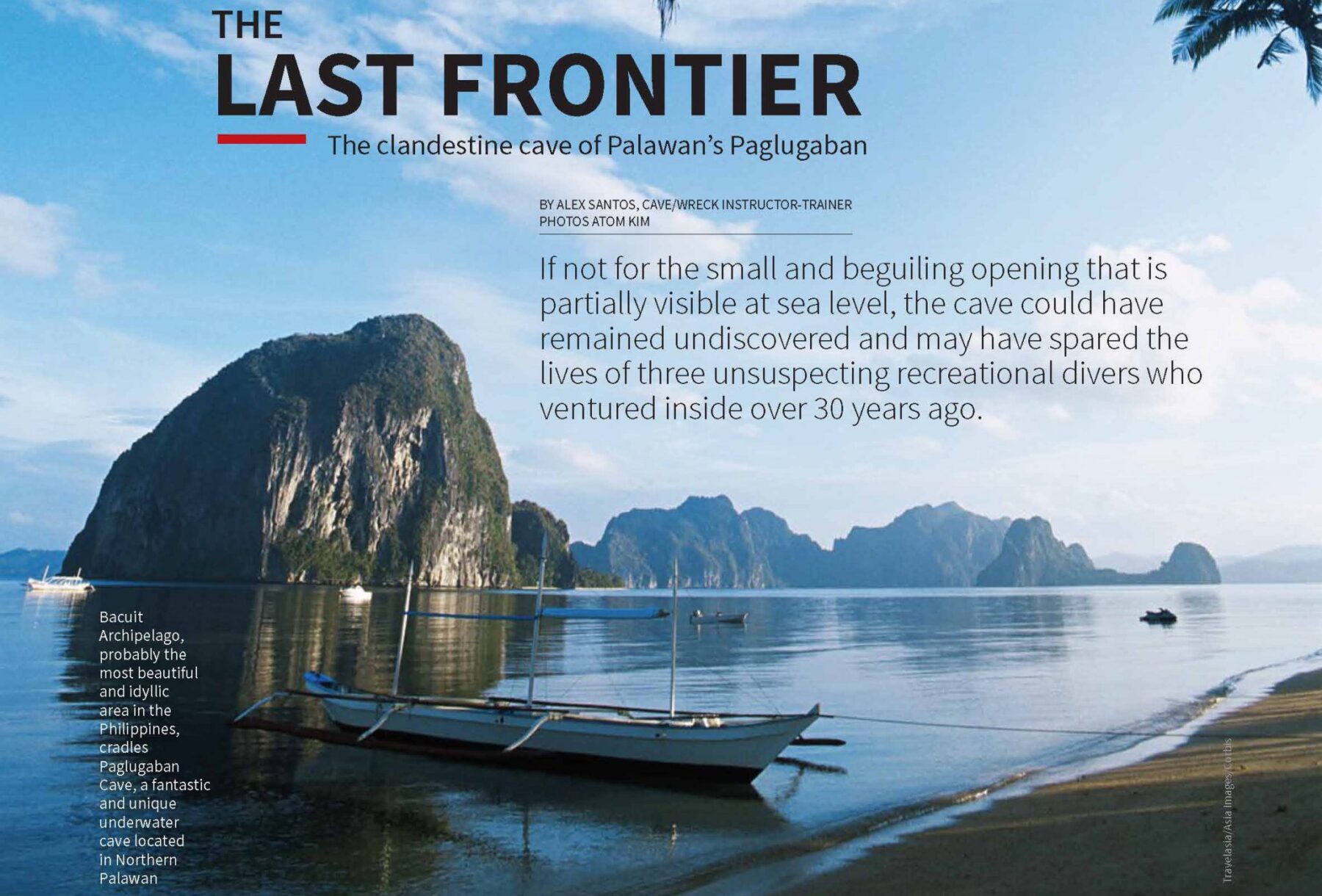
PALAWAN, commonly known as the Philippines’ “Last Frontier”, is famed for its rich biodiversity and complex ecosystems. The striking karst limestone formations of the northeastern zone trace back to the Permian age, about 300 million years ago. There are thousands of these breathtaking island landscapes, but so far only one has revealed a hidden spectacle – Paglugaban Island and its enormous underwater cave. Despite Paglugaban’s infamy being sealed with the unfortunate deaths of three recreational divers three decades ago, the cave is currently experiencing a growth in popularity.

Paglugaban’s deceivingly small and curved entrance spills into a large chamber, half dry and half submerged, but already gleaming with remarkable speleothems. Entering can be perilous when sizable waves and swells strike the entrance; worse, getting out may be impossible. Further inside and completely underwater are colossal formations perfectly preserved by the water. Some of the largest underwater chambers span 25 metres from floor to ceiling, with water-carved columns and jaw-dropping cave formations. We came prepared with five powerful video lights to document the expanse of these massive chambers. But how very naive we were.

Many of the cave walls and passages reveal distinct planes of discolouration, suggesting that the cave has existed during the freezing and melting that occurred over multiple ice ages. Skeletal remains of three giant groupers occupy the cave floor. The first two appear to be disorganised piles, but the third shows the perfectly formed skeleton, exactly as the grouper first laid to rest on its side. There is evidence of a fourth grouper almost completely buried under the cave floor, with just a hint of its protruding skull. If a major geological event was responsible for covering this fourth set of remains, it’s plausible that the floor may have anthropological value. Not far from Paglugaban are dry caves where fossilised remains of humans have been dated at 67,000 years old.

Read the rest of this article in 2015 Issue 1 Volume 136 of Asian Diver magazine by subscribing here or check out all of our publications here.
 

Seafood Guide: Mercury In Fish

0

We have much more mercury in our environment than ever before. Although mercury is a naturally occurring heavy metal it is also highly toxic.

Conservation organisation WWF estimates that around 3,400 tonnes of mercury, two-thirds of the total amount entering the oceans, is emitted each year by human activities.

Mercury And Seafood: 5 Facts

1. Most fish have trace amounts of mercury

2. The bigger the fish, the higher the mercury

3. You can’t see, smell, or taste mercury contamination in fish

4. Cooking has no effect on mercury, and you can’t avoid it by cutting off the skin or other parts of the fish

5. The World Health Organisation (WHO) puts mercury in the TOP 10 CHEMICALS of major public health concern

GOOD NEWS FOR SHARKS

Eating shark is not just bad for conservation. As the predators at the top of the food chain, sharks can have the most mercury of all species. Campaigners have been taking advantage of this fact to protect sharks against the increasing demand for shark fin soup.

The US Food and Drug Administration says 1 in 3 sharks contains a high mercury concentration that passes safe limits.

Indonesia’s National Agency for Drug and Food Control found that sharks off their waters had levels of mercury harmful to human health.

HOW IS MERCURY GETTING INTO OUR SEAFOOD


  • Mercury finds its way to the ocean in a number of ways
  • It is released into the atmosphere as a by-product of fossil fuel burning, smelting or waste incineration

  • It returns to its liquid form and falls into the ocean or it can run off as a pollutant from industries like gold mining process and into waterways.
  • Mercury is then transformed by microbes in the ocean into a form that is digestible to fish (methylmercury)
  • Fish take in tiny amounts of mercury, but that mercury accumulates inside the body of fish – and the bigger the fish, the more mercury

FOOD FOR THOUGHT

The US Food and Drug Administration (FDA) along with the Environmental Protection Agency (EPA) have been recommending certain vulnerable sectors of society cut back on seafood, namely pregnant and breast-feeding woman and young children

WHAT DID THEY SAY?

1.Eat ONLY up to  12 ounces a week of a variety of fish and shellfish that are lower in mercury

2.Do not eat shark, swordfish, king mackerel, or tilefish from the Gulf of Mexico because they contain high levels of mercury

3.Cut back on the amount of tuna

4.Check where your fish comes from HEALTH PROBLEMS OF MERCURY

  • Affects the nervous system even at low levels
  • May have toxic effects on the digestive and immune systems, and on lungs, kidneys, skin and eyes
  • Harmful to unborn children

FINICKY ABOUT FISH

Taking predatory fish off your plate will reduce your mercury intake. Here are some to avoid:

  • King mackerel
  • Marlin
  • Orange roughy
  • Shark
  • Swordfish
  • Tilefish
  • Ahi tuna
  • Bigeye tuna


Read the rest of this article in 2016 Issue 3 Volume 142 of Asian Diver magazine by subscribing here or check out all of our publications here.
 

How Do Marine Migrants Know Where To Go?

0

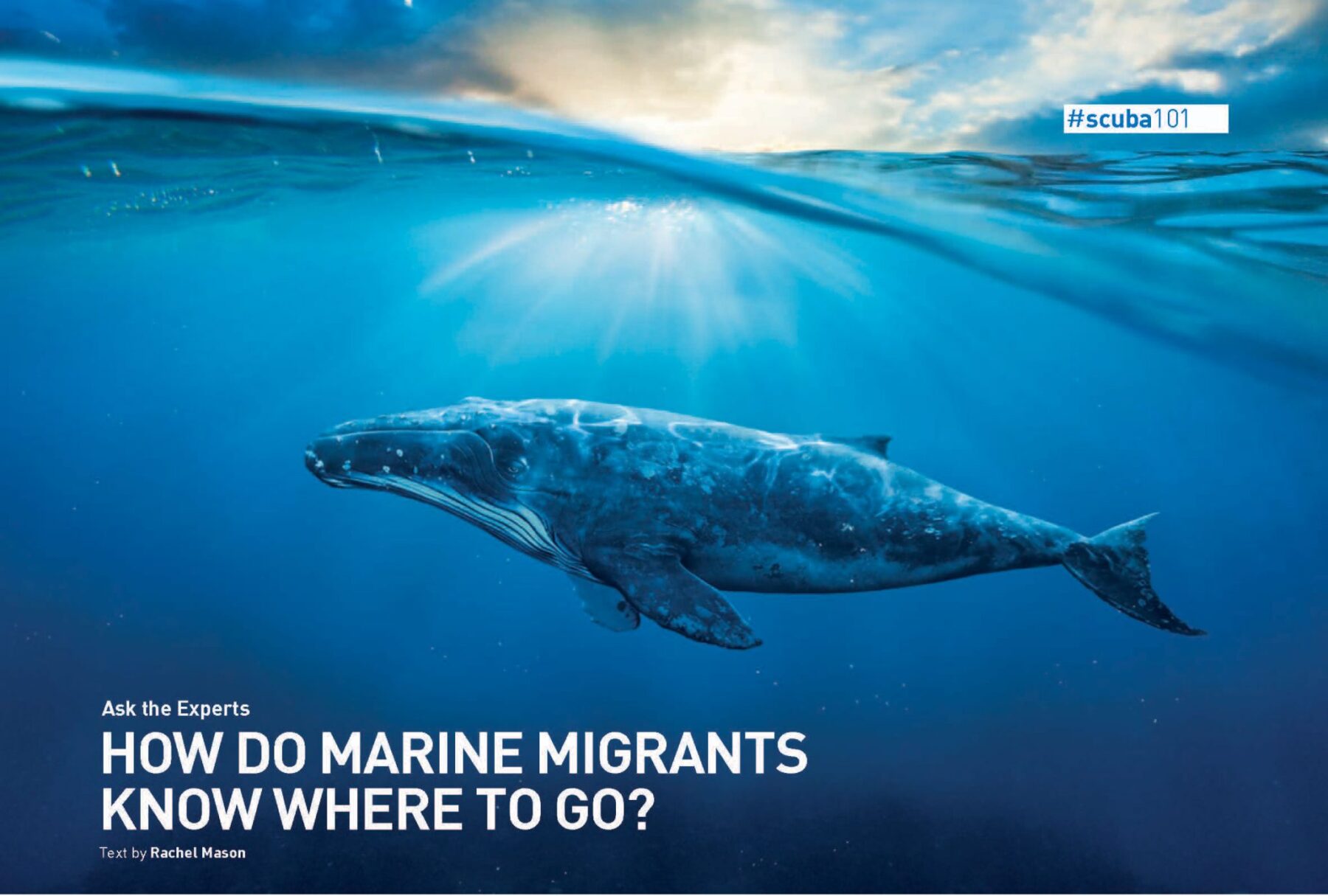
Many marine animals undertake migrations over thousands of kilometres every year, often returning to the place of their birth to breed, or known food sources. Humpback whales have been recorded only altering their trajectory from previous migrations by a staggering 0.4 degrees. The question is: How do they know where they are going?

The answer is not simple unfortunately; little is known about this phenomenon, and navigation methods can vary from one species to another. It is believed the animals use a combination of different cues such as the Earth’s magnetic field and the sun. For those species that have sonar, they can “map” their environment, and for many species that migrate in groups it is also possible that the veterans lead the way, passing the rituals on through the generations. Although there are not many visual cues, things like water pressure will indicate depth, changes in chemical composition of the water can indicate for example where there are estuaries, sound and electrical currents travels better through water than air, and perhaps even the presence of other animals can indicate where or how far through their migration our pelagic friends have progressed.

Marine creatures migrate between countries, through some areas that are protected and through some that are not. This presents challenges for their protection, and necessitates increased collaboration between governments and conservation organisations

Whales

The longest migration on record was by a grey whale, clocking up a 13,987 mile (22,510 km) journey from Russia to Mexico and back.

The Sardine Run

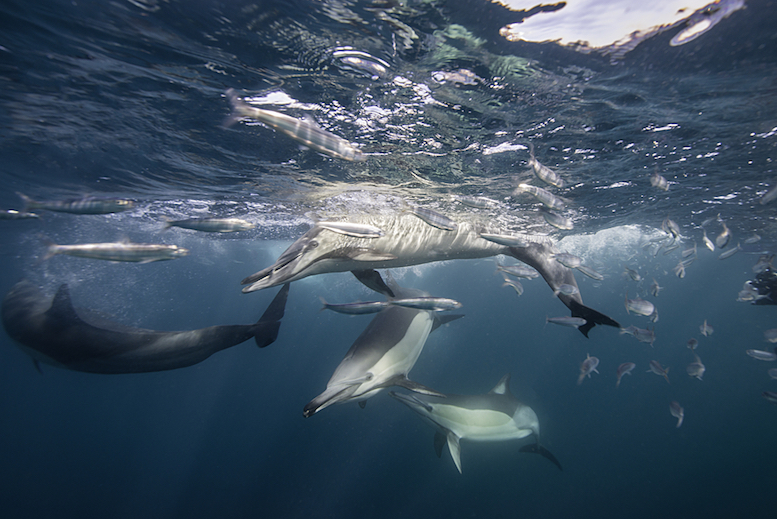
Sardines can’t tolerate temperatures higher than 21 degrees Celsius so spawn then migrate to cooler climes.

Leatherback Turtles

Upon hatching, male leatherbacks spend the rest of their lives at sea; the females migrate back to the tropics to lay their eggs.

Bluefin Tuna

Bluefin tuna migrate several times a year between the US East Coast and the West Coast of Europe in search of food, a round trip of over 10,000 miles (16,100 km).

Golden Cownose Rays

These rays migrate in groups of around 10,000, appearing to change the water surface colour to gold.

Bullsharks

These sharks have an unusual migration pattern because they move from fresh water where they give birth to
salt water.


Read the rest of this article in No. 88 Issue 7/2016 of Scuba Diver magazine by subscribing here or check out all of our publications here.
 

Swimming With Little Giants

0

Text by Cecile Brosolo

Images by Giancarlo Brosolo, Jurgen Freund and various contributors

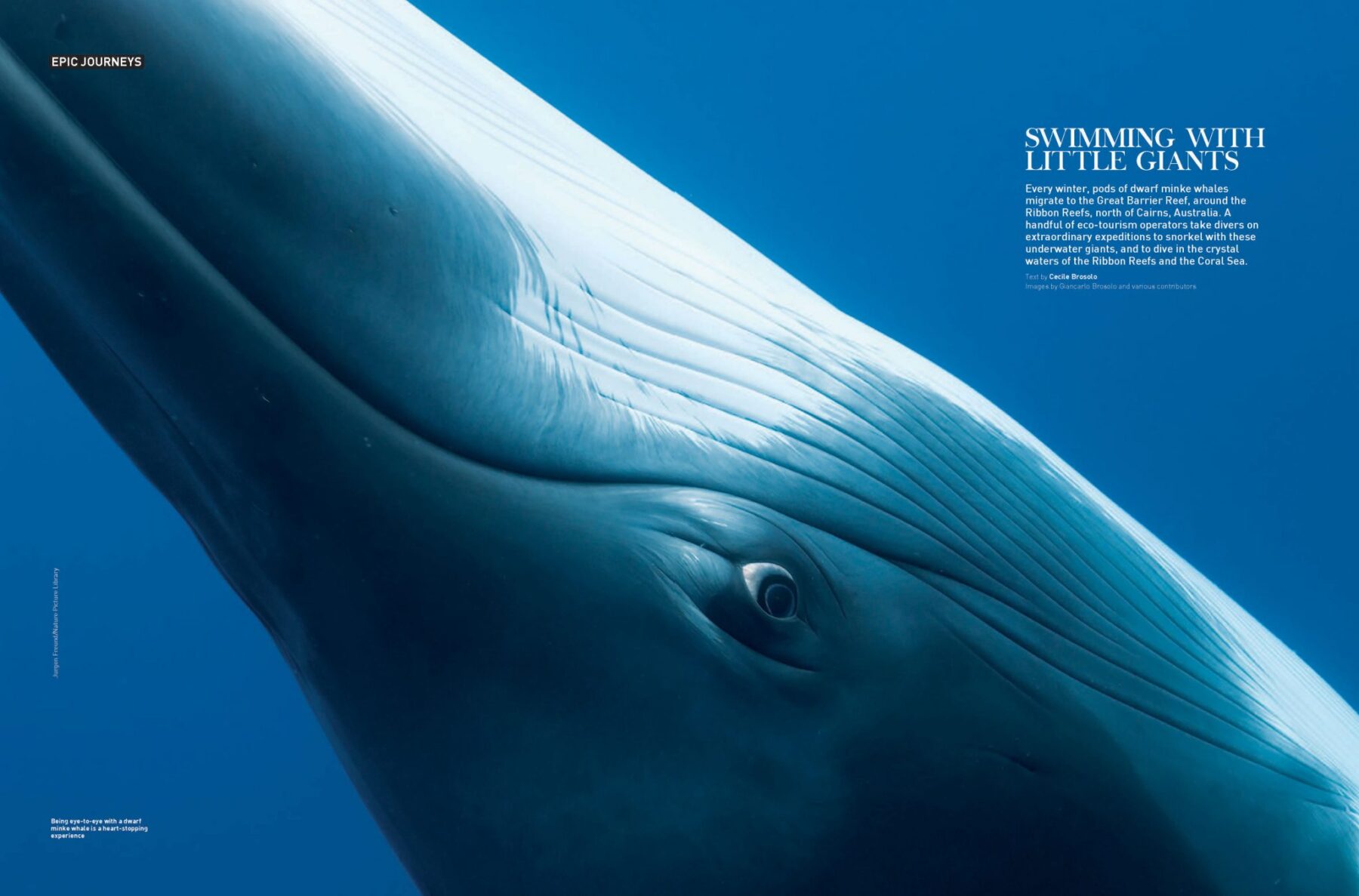
It’s winter in mid-July on the Great Barrier Reef, north of Cairns, and the sea is rough and cold. I’ve been floating in the ocean, hanging to this snorkel line for 15 minutes now, and I can’t help but question: “What on Earth am I doing here?” But just a few seconds later, two massive dark shapes appear from the blue depths. They glide gracefully and effortlessly through the ocean, just a dozen metres away from us. They’re beautifully streamlined, with sharply pointed snouts, large dark-grey backs covered with complex patterns, white flippers with dark tips at their sides, and long tapering tails. There is no doubt that the mighty creatures surrounding me are dwarf minke whales.

This magical encounter lasts for about 20 minutes, whilst the whales come and go as they please. Amongst the many wonders of the Great Barrier Reef, the opportunity to swim with the dwarf minke whales is definitely one of the most memorable. Overcome with emotion, we realise just how privileged we are to share the ocean with these gentle creatures, an awareness that makes us float through the day.

Every winter, from May to August, pods of dwarf minke whales migrate to the tropical waters of the Great Barrier Reef, around the Ribbon Reefs between Port Douglas and Lizard Island, north of Cairns. The vast majority (about 90 percent) of sightings are between June and July.

This extraordinary aggregation doesn’t seem to happen anywhere else in the world, and provides rare opportunities for tourists. Like other baleen whales, minke whales appear to migrate from high latitude feeding grounds in the summer to low latitude grounds in winter. As of yet, scientists are unsure why the whales gather here, but for many this lack of clarity simply feeds the sense of mystery and intrigue that surrounds these incredible creatures.

MINKE EXPEDITIONS, RESPONSIBLE TOURISM

Most countries do not allow tourists to swim with whales, but Australia has adopted a different and interesting approach by developing an ecologically sustainable form of tourism. The GBR Marine Park authorities, together with researchers and tourism operators, have developed a “code of good practice”, ensuring strict protocols for vessels, skippers and crew, as well as for snorkellers and divers, to allow interaction with whales in an environmentally responsible way.

But this cruise is more than just a dive trip; it’s a real exploratory expedition, dedicated to the dwarf minke whales. Hosted by Mike Ball, in association with the Minke Whale Project (MWP), it enables each snorkeller or diver to contribute to the research and monitoring programmes.

Dr Matthew Curnock is also on-board. He’s a passionate and awarded James Cook University researcher, whose fascinating briefings about the minke whale’s biology and behaviour help make this expedition such an outstanding experience.

Matt happily spends stints of six hours in the water in a row to study these mammals. When he’s not below the sea, he’s on the deck scanning the horizon, and it’s never too long before he, or another spotter from the top of the boat, roars “MINKE!”. Time for us to leap into the water, following along the two snorkel lines the crew throws out from the stern. Swimming towards the whales is not allowed, and frankly I don’t think it would have crossed anyone’s mind given the strong current. Anyway, it would be totally unnecessary as these whales are extremely inquisitive and often choose to approach humans. It seems we have a mutual interest in each other!

With the broad experience and depth of knowledge of the researchers and crew, amazing encounters are virtually guaranteed each day. These opportunities usually happen when snorkelling, but occasionally when diving, which is exactly how it happened on the last dive of our expedition, on Steve’s Bommie, when two whales approached the boat just as we began our descent and gave us the greatest of pleasure as they stayed with us for almost the duration of one hour dive.

Read the rest of this article in No. 88 Issue 7/2016 of Scuba Diver magazine by subscribing here or check out all of our publications here.

 

Jakarta To Ban Single-Use Plastic Bags

0

Jakarta is planning to join the ranks of cities that have banned the use of single-use bags with the Jakarta Administration now in the process of drafting a gubernatorial regulation on this issue.

According to the head of the Jakarta Environment Agency, Isnawa Adji, the decision to ban the use of plastic grocery bags was due to the immense amount of plastic waste that was building up in the city and the fact that plastic waste might take as many as 450 years to break down completely.

“Plastics are potentially dangerous for human health because they have carcinogens that can cause cancer. This is important because there is a lot of trash in Jakarta, such as in the gutters, roads and sidewalks,” said Isnawa in an interview with the Jakarta Post.

With more than 90% of the city’s citizens agreeing to reduce their usage of plastics in a survey conducted by the Indonesia Plastic Bags Diet Movement (GIDKP), Isnawa has taken the city’s mandate as an impetus to start reducing the Jakarta’s usage of plastics. One of the ways this was being carried out is by limiting the usage of plastic straws in restaurants. He added, however, that the agency would start out by seeking the opinions of stakeholders and citizens before enacting the ban.

“Perhaps there should be incentives and disincentives for retailers [to reduce plastic use]. That’s what we would try to discuss with retailers. Not that we hate plastics producers – want their opinions too. We will discuss it,” Isnawa added.

In support of this impending ban on plastic bags, the customs and excise directorate general of the Finance Ministry is also considering enacting an excise tax to reduce the usage of plastics bags.

Jakarta’s impending ban on single-use plastics is the latest in a series of similar announcements made around the world with New Zealand’s ban on single-use plastics announced by New Zealand Prime Minister Jacinda Ardern in August this year.

Read more about how plastics are polluting our oceans in our November Muck Diving issue of Asian Diver (Issue 3 Volume 151)

28 Whales Dead in Mass Stranding in Australia

0
Dolphins in the middle of the school © Shutterstock.com

Another mass stranding of whales occurred in southeast Australia when 28 whales were found dead on the beach on November 28. A pilot in a private aircraft had spotted a humpback whale and 27 pilot whales stranded on the beach after having flown over the Croajingolong National Park in Victoria state on Tuesday afternoon.

Eight of the whales were found in a critical state during an initial visit by park authorities later that Tuesday but all were dead when the rangers returned a day later.

Park authorities believe that the humpback whale may have been stranded and died well before the rest of the pilot whales.

“It’s one of the great mysteries, we don’t know why this happens,” said Gail Wright of Parks Victoria in an interview with AFP. She added that samples had been taken from the remains of the whales in a bid to understand the reasons behind the stranding of the whales.

This latest whale stranding incident comes mere days after the tragic mass stranding on Stewart Island in New Zealand killed 145 pilot whales.

An Age-Old Practice

0

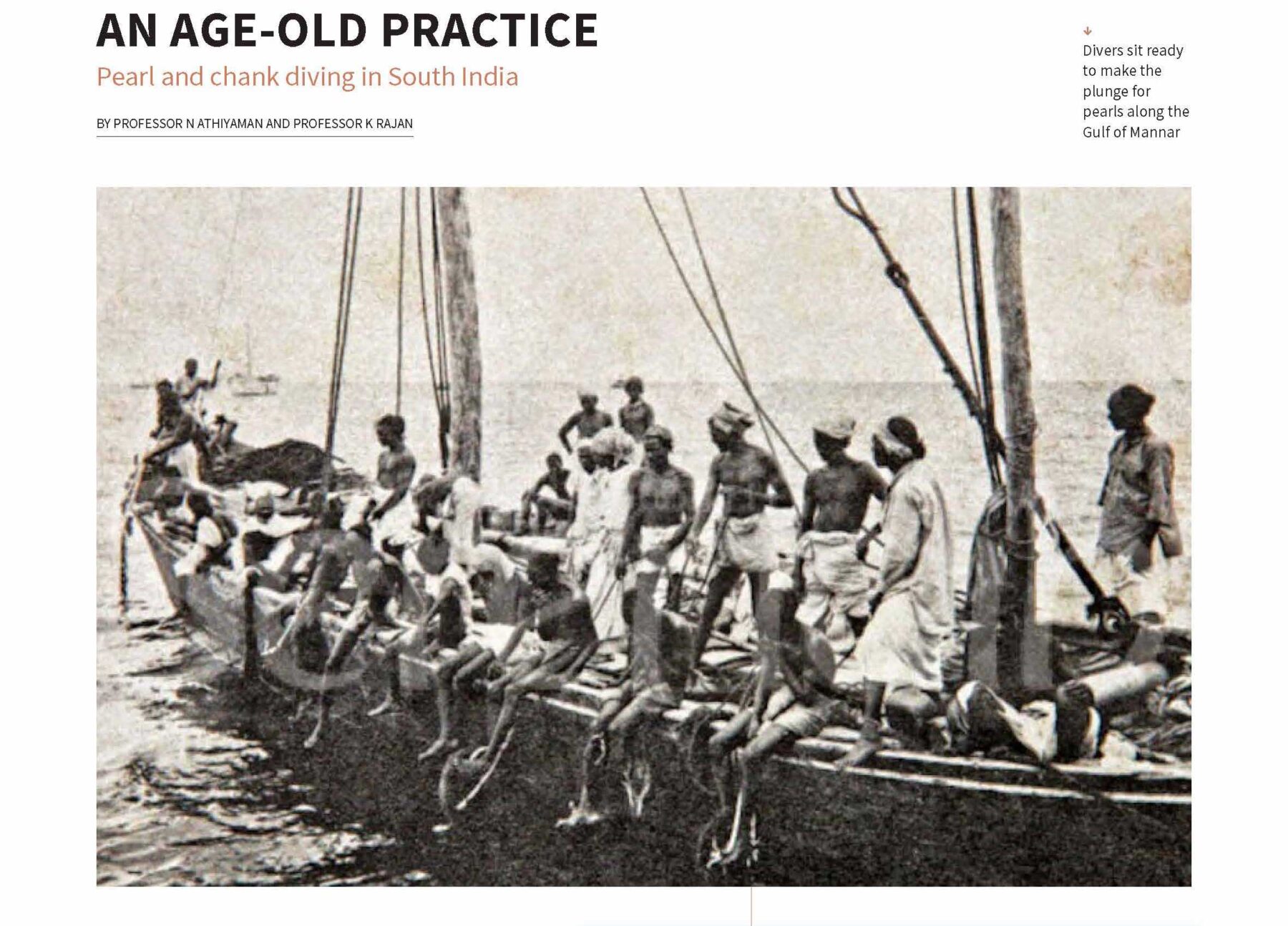
THE pearls and chanks (large spiral shells) obtained from the Gulf of Mannar along the Indian and Sri Lankan coasts were some of the region’s premium exports. Accounts of their popularity feature in the journals of travellers like Megasthenes (third century BC), the anonymous author of The Periplus of Erythraean Sea (60 AD), Sangam-era literature (third century BC to fourth century AD), and archaeological excavations conducted at the ancient port town of Tamil Nadu.

THE CREW

» The history and techniques surrounding pearl fishing cannot be examined separately for India and Sri Lanka, as the people of both countries were involved in both regions.

» Hundreds of boats (sometimes more than a thousand) from the Indian and Sri Lankan coasts have engaged in pearl fishing together over the centuries.

» The number of divers in a boat was not fixed but varied according to the size of boats and the requirements.

» In 1746, the Dutch government created a rule that allowed only 10 divers at most in a boat. This continued during the British period.

» A total of 23 people were allowed in the boat:

One tindil, or steersman

One saman oattee, who took charge of the boat

One thody, who bailed out water and cleaned the boat

10 divers

10 munducks, operational assistants who pulled up the stones and

oysters and aided the divers

WELL-DOCUMENTED METHODS

The first reference to South Indian pearl diving methods comes from Chau Ju-Kua, the author of Chu Fan Chi (1225 AD), who wrote about the trade between Arabia and China and the pearl fishery of South India during the rule of the Cholas. Others, including Marco Polo (1260–1300 AD), a Venetian merchant called Caesar Frederic (1563–1581 AD) and Father Martin, a Jesuit missionary in the early 18th century, have similarly documented the region’s diving methods. The 600 years’ worth of records between the 13th and 19th centuries all offer very similar details regarding pearl and chank diving techniques.

A COMMUNITY OF DIVERS

The literary text Agananuru, from the Sangam era, talks of a community named Parathavar. While the major occupation of this community was fishing, they were also pearl and chank divers, and continued diving even during the later Chola and Pandiya periods. The Muslims from the Persian Gulf were also a part of the diving industry in the Gulf of Mannar, beginning from as early as the 11th century.

TAKING THE PLUNGE

The start of each dive always created great interest and excitement. If there was moonlight, thousands of people assembled on the beach to watch and give their good wishes. At about 10pm, the tindals (steersmen) would get into position, ready to hoist the sails. At midnight, the adappanar (lead diver) would hoist a light at the masthead and set off. Within a few minutes, hundreds of boats would follow suit, amid much cheering from crew members and spectators. The white sails following the signal light of the adappanar’s boat could be distinguished for miles out at sea.

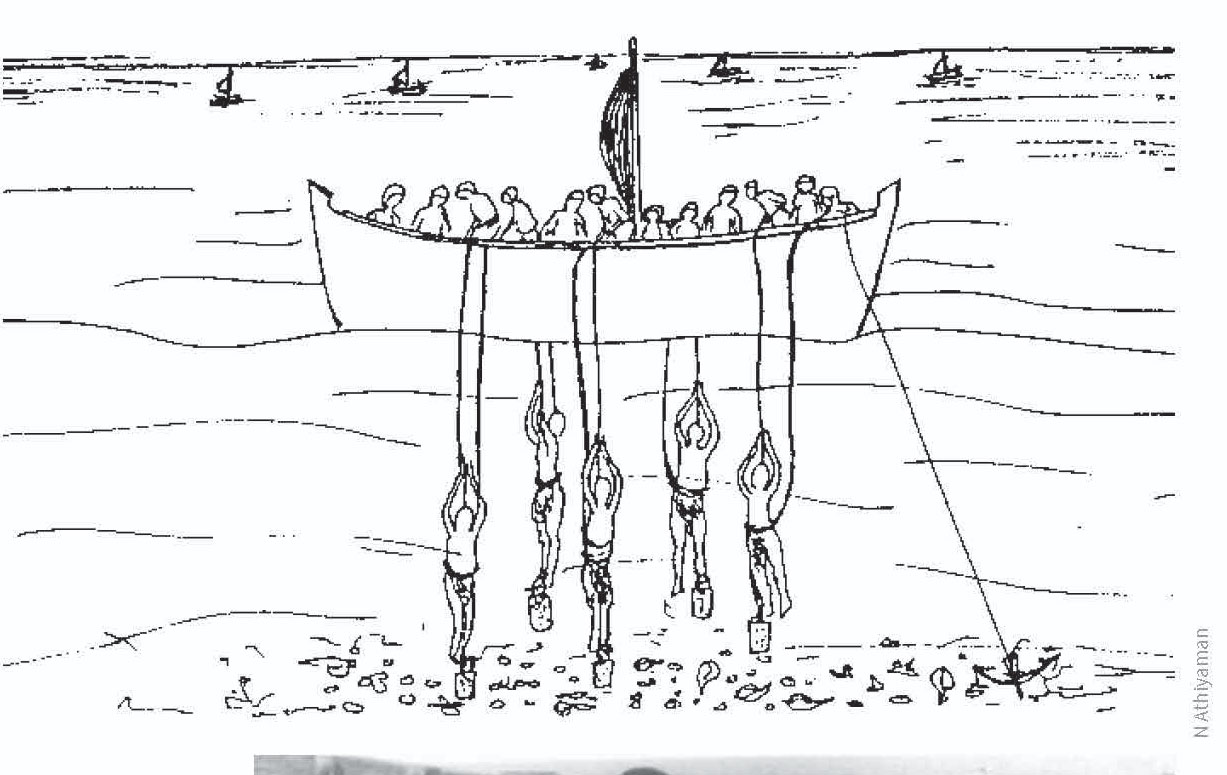
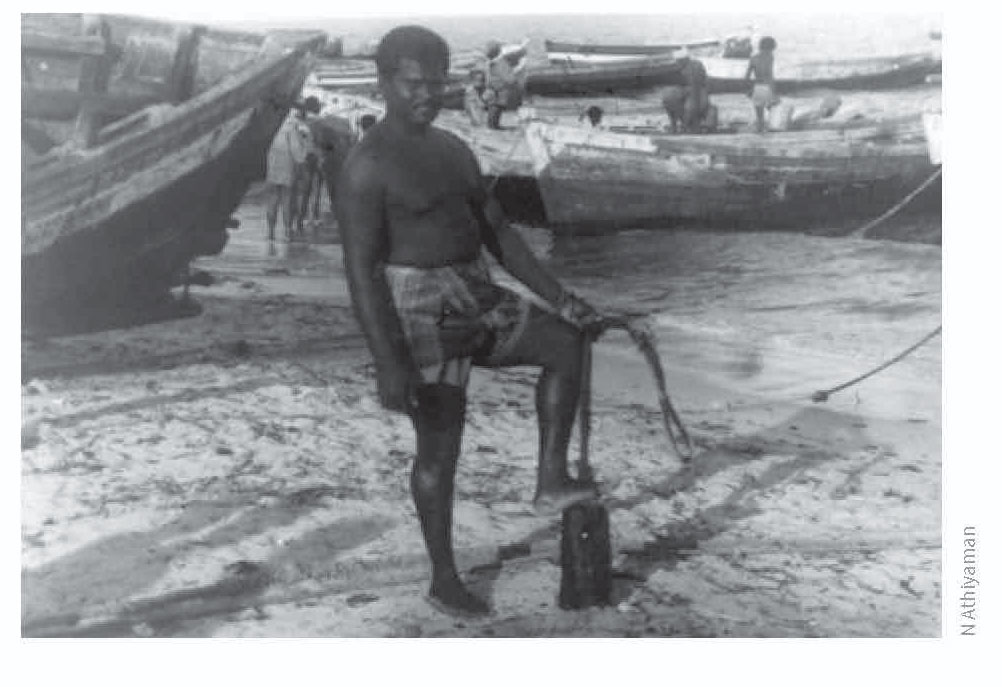
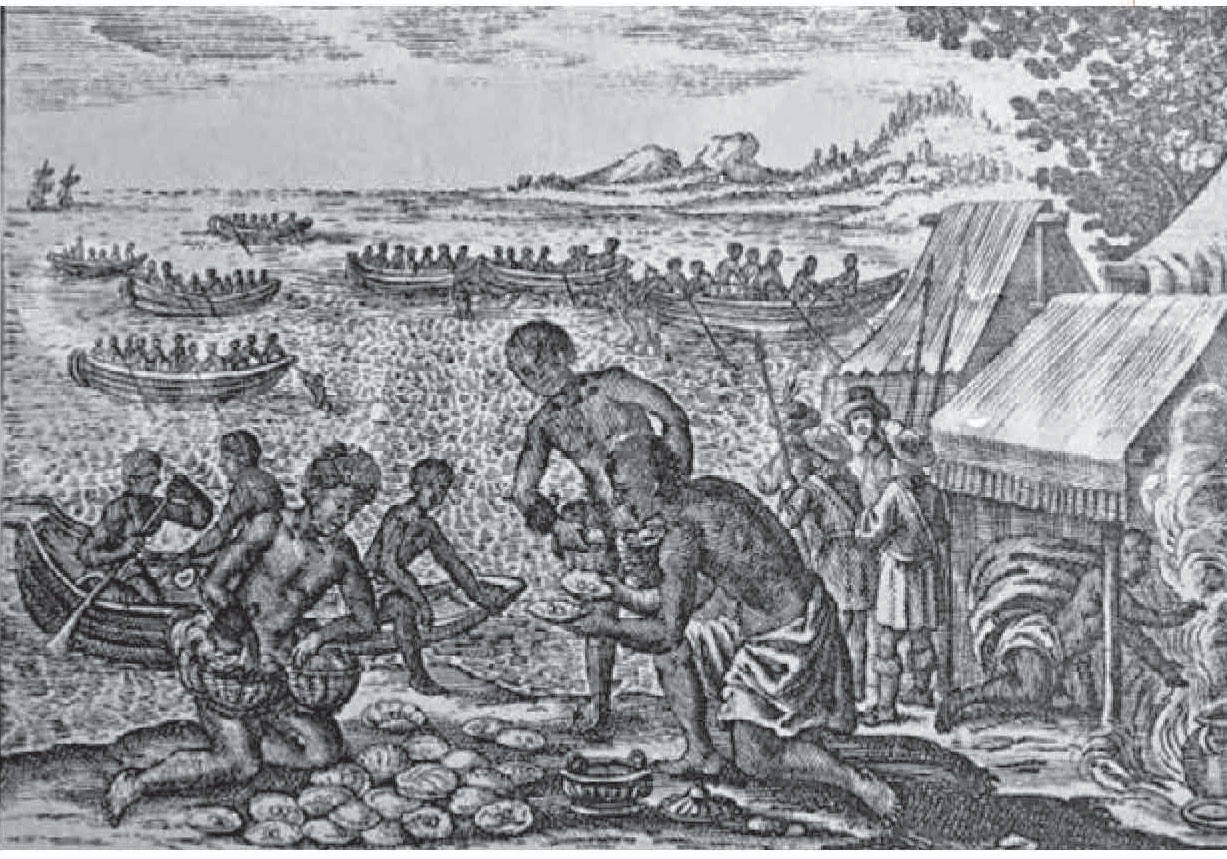
Weighed down by stones, divers descend rapidly while their assistants wait to pull the stones back up
Divers place a foot between the stone weight and the rope while descending and let go before the stone is hauled back up
Temporary huts were built along the coast to store the pearls before they were cleaned and sorted

In the early hours of the morning, the divers would get ready to begin. Ropes tying the divers to stones that acted as weights would be released, while each diver would take a deep breath and descend rapidly. As soon as they reached the seafloor, they would gather as many  oysters as possible and put them into their baskets. Meanwhile, the stones would be lifted up by their assistants. Each diver would signal the completion of his job after about a minute by shaking the rope tied to him. He would then be hauled up. After a few minutes of rest, the process would be repeated. This would carry on until noon, with each diver making about 50 dives, before the boats returned to shore in the evening. Generally, a diver would cover an area of about two-and-a-half square metres at a depth of about 11 metres in a single dive.

Read the rest of this article in 2015 Issue 1  Volume 136 of Asian Diver magazine by subscribing here or check out all of our publications here.