Home Blog Page 127

UW360 Trip Report: Tioman Island Clean-Up

0

Credit: Justin Ong
Soundtrack: Tycho, A Walk

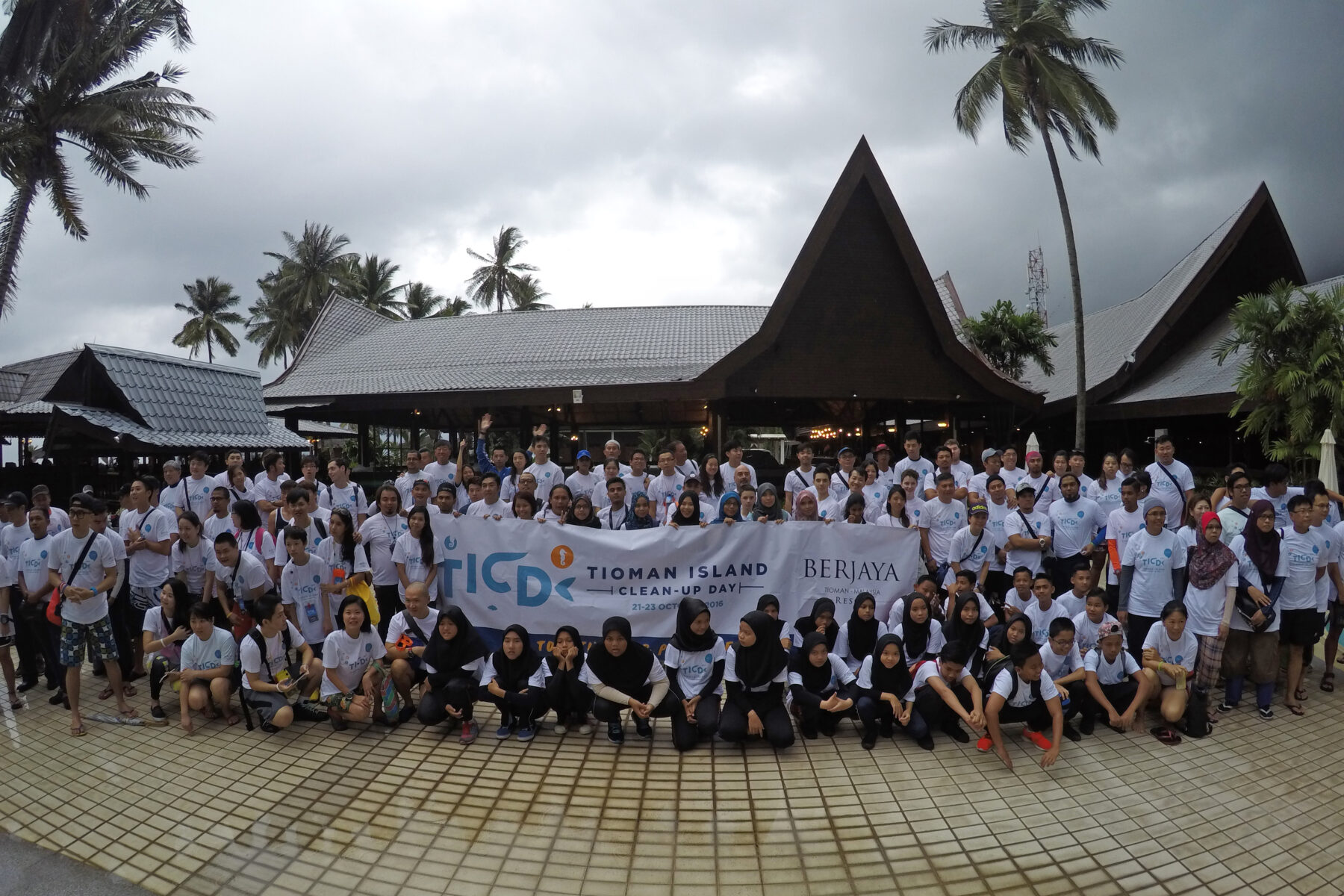
Through stormy seas and heavy rain, the spirit of the Tioman Island Clean-up continued. On the fringe of the monsoon season, the UW360 team stood alongside like-minded divers keen to do their bit to help the surrounding coral reefs. With over 120 divers, from Singapore and Malaysia, the island shallows were filled with people collecting rubbish, planting coral, and meddling with reef-destroying crown-of-thorns starfish.

Held at Berjaya Tioman Resort, the Tioman Island Clean-Up Day (TICD) took place from October 21-23. Representatives from key players in the industry turned up to show their support for the event, from Singapore-based Scuba People, to Reef Check and Shark Savers. The annual event started in 2010, and has continued to grow – with each year creating new sustainable projects to help “give back” to the ocean.

“The objective of TICD is to raise public awareness on the importance of conserving the island’s marine environment,” stated Mr Sonny Gan, the General Manager of Berjaya Tioman Resort. “We believe that TICD unites everyone in one place to give back as much as possible.”

Last year, over 60 concrete pipes were laid down on the seabed to provide new homes for marine species. This year, six units of coral nursery table were fastened down to encourage the productivity of the corals. There were also other projects that happened around the island – all in the name of conservation.

Planting Coral

Roughly one-quarter of coral reefs worldwide are already considered damaged beyond repair, with another two-thirds under serious threat. It’s small events like the Tioman Reef Clean-Up, that give corals a fighting chance as they try to survive the vastly changing oceans. 

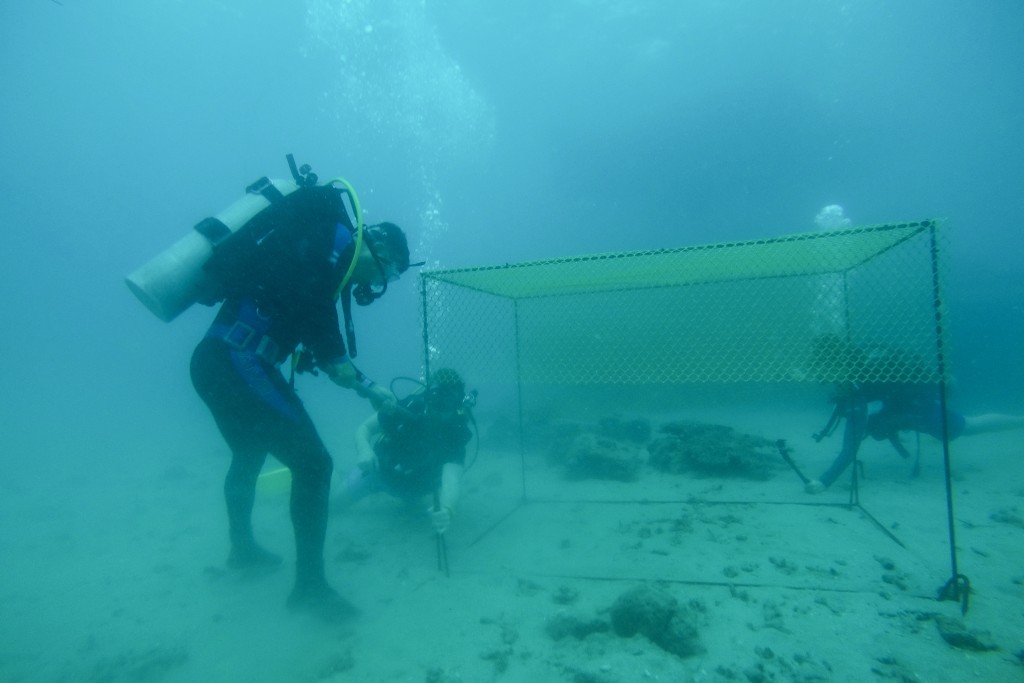
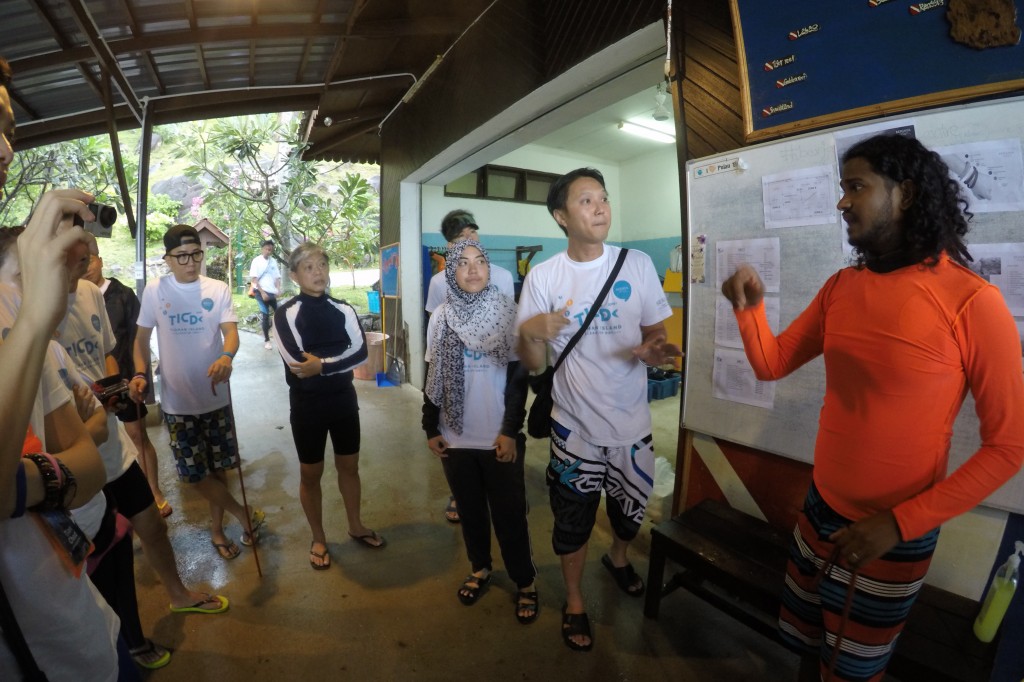
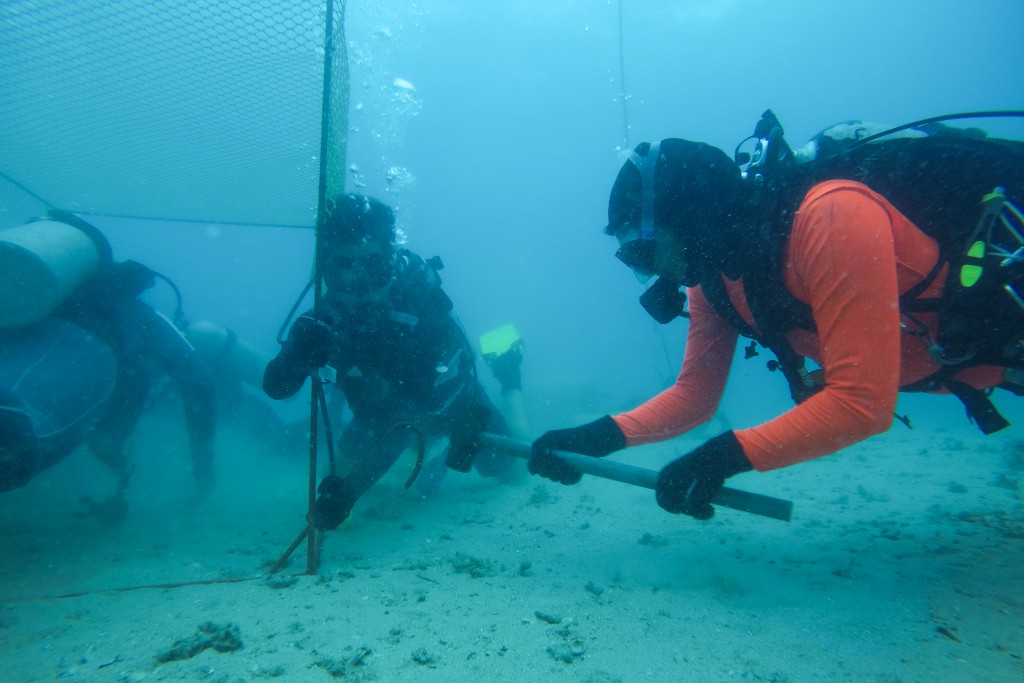
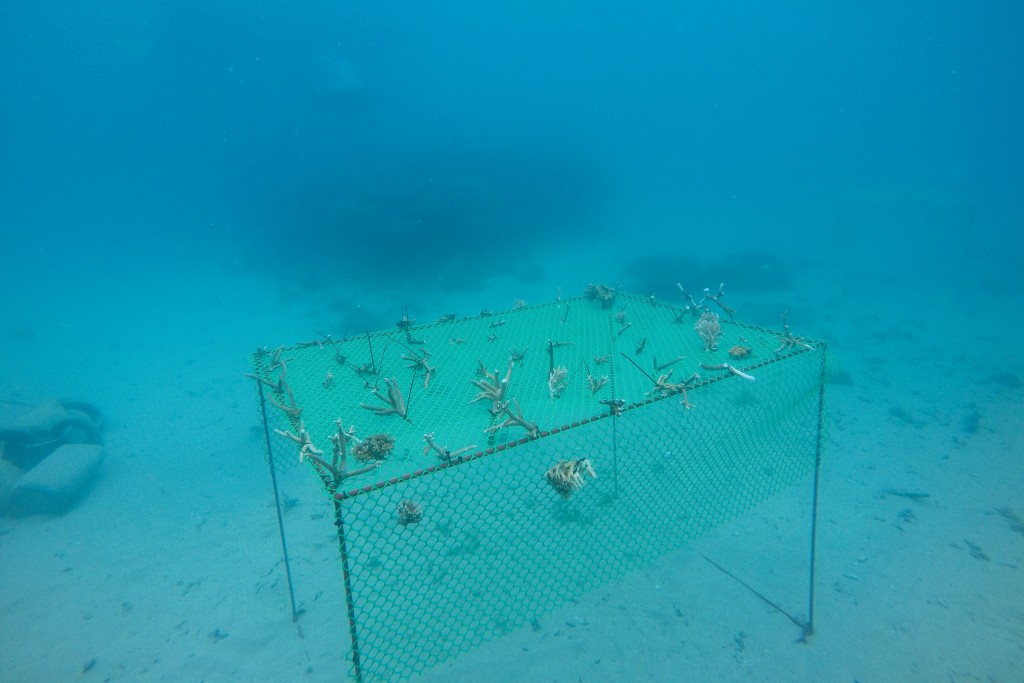
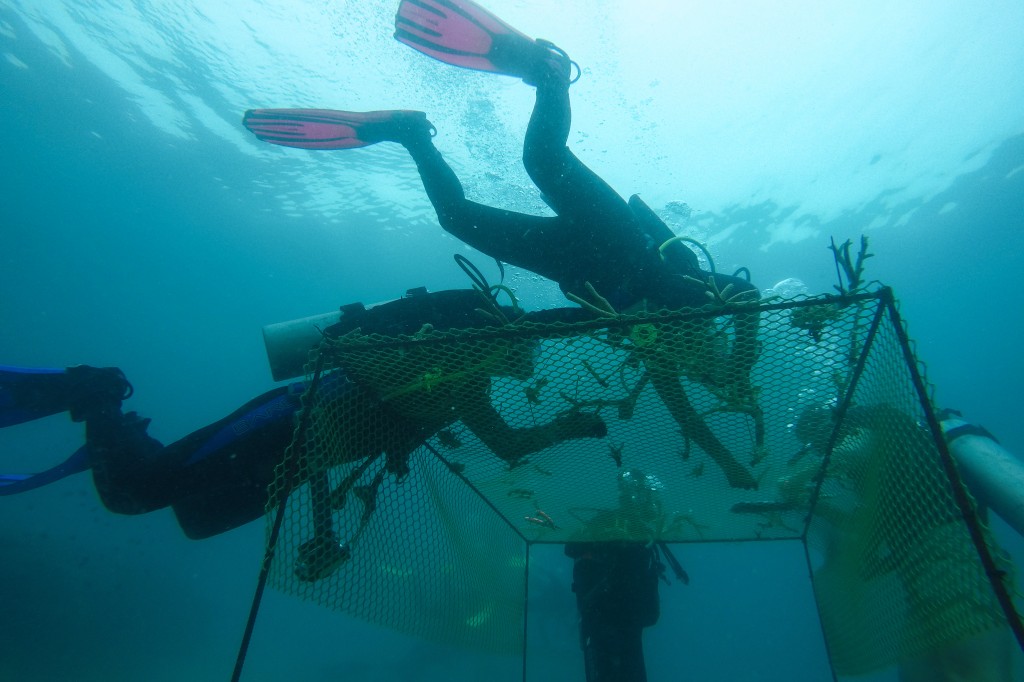
To start, we were given a short briefing and demonstration on how to lay the artificial coral nursery tables: Big structures shaped like dining tables, with wire mesh on top for securing corals. The tables had to be carried out by a team of five divers, and then hammered down by a mallet and held by long iron pegs. Of course, hammering underwater when your sight is filled with sand, and when you’re hoping not to slam your own finger, is challenging – we consumed a great deal of air just trying to get the structures to sit tight. 
DCIM100GOPROGOPR0169.

DCIM100GOPROGOPR0204.
“Hammering underwater when your sight is filled with sand, and when you’re hoping not to slam your own finger, is challenging.” © Justin Ong

After, we shore-dived back into the water with baskets, wire cutters and cable ties. The baskets were for collecting coral, and we had been challenged to collect 20 per pair. Searching for “the correct” coral on the seabed is difficult – it can’t be white or brown, has to be roughly the size of the palm of your hand, and if you give it a wiggle and it doesn’t move, leave it there. So we spent a good half an hour “wiggling” palm-sized coral, hoping to fill our basket up, which was becoming increasingly heavy from the specimens.

We were searching for isolated coral. Coral lost on the seabed and with little hope of surviving unless transferred someplace else. In a way it felt strange to hand-hold coral, textures I had previously been forbidden to touch for fear of damaging its outer shell with my “potent” oily hands – but if we didn’t move this coral, it was going to die. And so we did, carrying it all back to the coral tables to start the next stage of the coral planting.
DCIM100GOPROGOPR0219.

DCIM100GOPROGOPR0278.
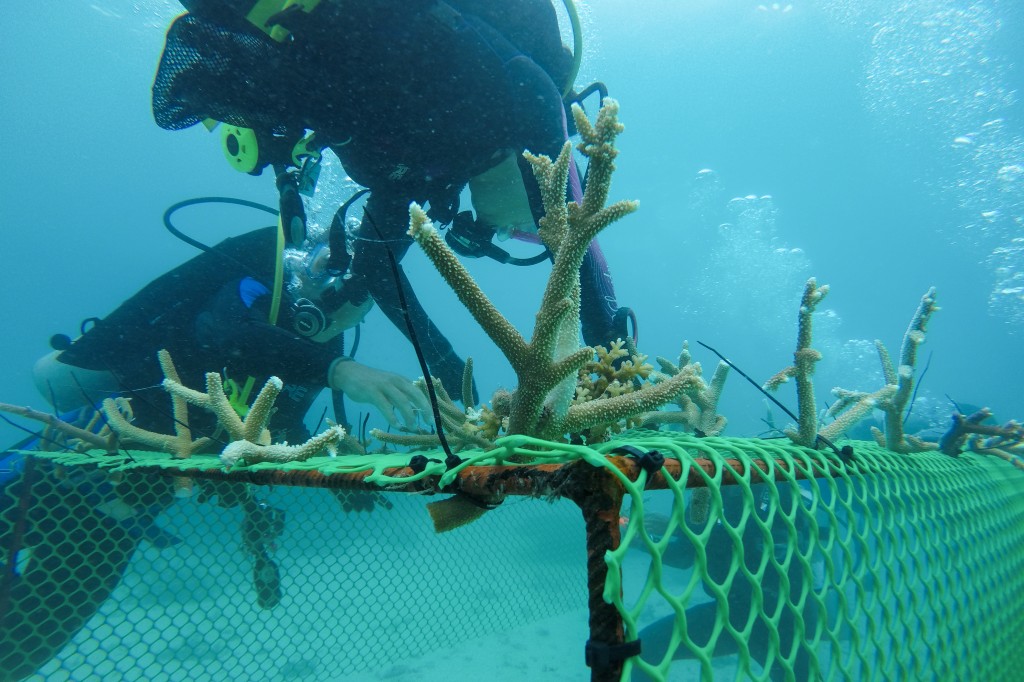
“To fasten the coral to the coral-table, you have to use a cable tie – fasten it down tight, so that no current can sweep it away.” © Justin Ong

To fasten the coral to the coral-table, you have to use a cable tie – fasten it down tight, so that no current can sweep it away. The wire cutter is then used to cut off any excess cables that may catch harmful algae. After the finishing touches are complete, the previously empty coral table is now full of palm-sized coral pieces that will – hopefully – begin to flourish and attract reef life.

In our diving group were representatives of Scuba People, who had supported and dived the previous year’s project. This year, they re-dived the site to see how the coral was coping and whether life had already started to congregate on the structures. It was healthy, and it was on its way to becoming a coral garden – of course, it takes time.
DCIM100GOPROGOPR0318.

DCIM100GOPROGOPR0271.
“After the finishing touches are complete, the previously empty coral table is now full of palm-sized coral pieces that will – hopefully – begin to flourish and attract reef life.” © Justin Ong

Buddying Up

With so many like-minded people getting involved with the project, it was refreshing to see how an awareness for conservation was growing in Malaysia. After the diving, selected speakers gave presentations on aspects of marine biology and sustainable living. Jonn Lu, director of Shark Savers in Asia, spoke about the current concerns facing sharks, whilst the president of the Singapore Underwater Federation, Song Shing Hae, gave an opening speech welcoming people to the event.

The weekend was a pure example of what people can do when they get together and get their hands wet. Conservation is fun, and it teaches you so much about our oceans and the creatures in it. Berjaya Resort, along with Scuba People, brought a like-minded community together, and in turn helped rebuild an ecosystem.


Berjaya Tioman Resort

Berjaya Tioman Resort is situated on Tioman Island, off the east coast in the state of Pahang, Malaysia. Providing a haven from bustling city life, it captures the hearts of many with its traditional Malay-styled chalets set amidst miles of palm-fringed beaches, clear waters and misty mountains. As the island’s only premier resort, Berjaya Tioman Resort offers exclusive chalet-style accommodation and an 18-hole golf course sprawled over 208 acres of tropical rainforest. With its surrounding waters rich with marine life, dive enthusiasts can look forward to wondrous underwater adventures, especially with the resort’s 5-star PADI Gold Palm Instructor Development Centre facilitating diving sessions. Besides the fun-filled land and sea activities, Ayura Spa at Berjaya Tioman Resort presents an array of spa treatments for mind and soul revitalisation. Visit online at www.berjayahotel.com/tioman for more information.

Scuba People

ScubaPeople was established in 2001 with a commitment to provide
quality scuba diving education and pleasant dive holidays for all. From its humble beginnings as a small dive centre located in River Valley Swimming Complex, ScubaPeople has grown from strength to strength over the past 10 years since its establishment.

Situated in Chinatown, the heart of Singapore, ScubaPeople is now an SDI (Scuba Diving International) 5-star and PADI (Professional Association of Diving Instructors) dive centre which has a database of more than 2000 certified scuba divers. With a combined experience of more than 20 years of scuba diving, our instructors are certified to conduct dive courses under both PADI and SDI syllabuses. ScubaPeople is also a travel agent licensed by the Singapore Tourism Board (TA License No.: 02135) to organise and plan overseas holidays.
Scientist's Videos Show Corals Fight, Eat and Die

0
An image taken from the bleaching video, showing coral experiencing the first effects of a warming waters

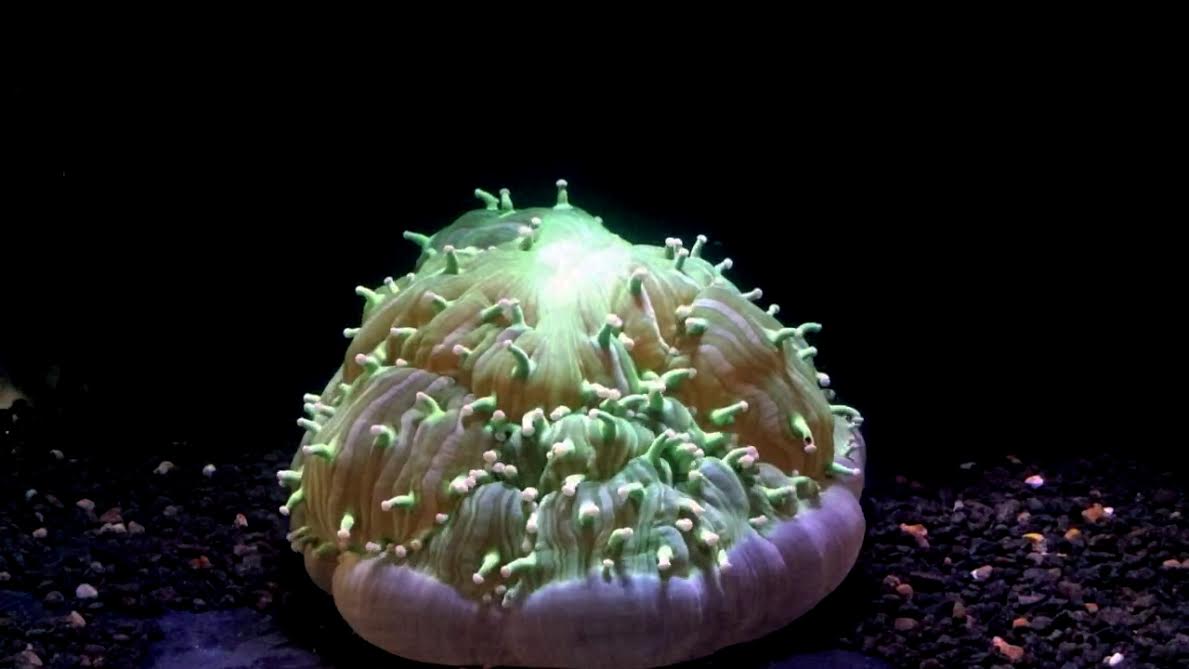
For the first time ever, coral researchers have captured the specific behaviour of a coral as it’s bleaching – and the timelapse footage appears extremely violent.

A team of scientists from QUT in Australia used a combination of microscopes, digital cameras and smart tablets to record close-up, detailed timelapse videos of a coral species’ physical reactions to heat stress. Stress that some coral are currently experiencing as our oceans continue to warm

Researchers Brett Lewis and Dr Luke Nothdurft from the QUT team, simulated rising sea surface temperatures and placed specific corals into controlled waters to see how they would respond in different environments. To find out more about these experiments, and more of the team’s studies, we spoke to Lewis about his timelapse work and what this means for scientific research:

Why did you start filming time lapses of coral life?
Truth was we were just playing around with a trial UV florescence microscope, seeing what it was capable of and how we could potentially apply it in our research. It peaked our interest, and before you knew it I had 10 or so cameras all designed to take different variations of timelapse videos: different angles, different magnification, different quality etc. Videoing these animals in such detail and over long time-frames allowed us to see a world that had rarely been documented due to the hostile conditions for equipment on reefs. It grabbed our imagination.

Recording your first timelapse video, were you surprised to see how active coral could be?
Absolutely. The first video we did was of a juvenile coral eating a shrimp. Simple, but it was so great to watch what normally could take quite a while, or be impossible to catch in the wild, up close like that.

Like a scene straight out of a Sci-Fi movie, this Acanthastrea coral viciously devours a shrimp that it has been fed.
Source: marineQUT

How do these timelapses benefit scientific research?
What we can do with the timelapses is speed up and document activities that are impossible to see on reefs due to the restrictions they place on equipment and on divers. This opens up a whole new way to understand and discover, and potentially help maintain healthy coral reefs.

Though I will also say, on top of this, and arguably just as important, it creates a visual medium in which we can communicate science with the general public in a way that grabs their attention, their imagination. It lets the public engage with the science and our reefs is such a simple way and if the public engage in the science, in the evidence, then we can keep our oceans healthy. It’s crazy how many people didn’t realise coral were animals until they watched our video.

What is the most surprising find, or encounter, you’ve witnessed when filming a coral timelapse?
Well, I can’t talk too much about some of our discoveries, as they’re not quite published yet, haha. But I have to admit, the aggressiveness at which the coral actually expelled the algae was pretty crazy. We never thought it was ever going to be so violent, I mean the coral looks in pain. I think a lot of people just thought it was a passive process, that it just breaks down on a cellular level, and leaches from the coral. Boy, were they wrong.  

Coral bleaching, and coral reef die off is a global concern for scientists, and a key symptom of climate change and the rising ocean surface temperatures. This research highlights the behaviours coral employ during bleaching that was induced by increases in water temperature.
Source: marineQUT

What photography equipment do you use?
We are on a bit of a shoes string budget so to speak, so we use a multitude of things. First and foremost we use dinolite portable microscopes that we have attached to a computer or surface pro. These vary in quality and magnification but all serve a purpose. On top of this, we use an Olympus OMD with macro lense, AV cord and battery pack. We also use tablets to record basic information.

How important is it for people to understand the role that coral plays in the ocean?
So, so important! Our reefs feed our oceans. They produce shelter at some point for almost a third of the pacific oceans animals. They are breeding grounds, food supplies, shelter and protection. If corals continue to struggle in this changing environment, we may lose global reefs, and all the animals that rely on them. This would be nothing short of catastrophic for the environment and just as importantly global economies. I mean, the Great Barrier Reef (GBR) here in Australia indirectly and directly supplies 60% of Queensland’s regional employment and six billion to the GDP. That’s a lot of people, and a lot of money.

Through filming, have you noticed any distinct changes directly caused by climate change (loss of coral/marine life)?
I haven’t. Our research looks more at the responses to climate related stress; like sediment overtopping and damage from storms, thermal and irradiance induced bleaching etc., and how coral act to mitigate these stresses.

Corals live in dynamic and environments that are under regular threat from tropical storms. One danger reefs face from increasing storms is sediment over-topping. This is where debris is deposited via the powerful waves and strong currents that are a result of strong atmospheric events (Storms). This over-topping can directly damage the coral tissue or, as coral require light for photosynthesis, over-topping can block out this light and cause dangerous photoinhibition. Leading to eventual tissue loss or coral bleaching. This video shows how coral used ‘pulsed inflation’ to master these natural threats.
Source: marineQUT

Could you briefly explain what we are witnessing in the “Coral Fight” video?
For six hours we observed two corals commonly found on the GBR, one is known as a Symphyllia (left) and the other a Favia (right), that have come in contact with each other. Corals competing for space on a coral reef will resort to aggressive behaviours, which often end in cannibalism of the in order to preserve their territory and ward off potential competitors.

What we observe here is the two corals, once they have detected each other, inflate their tissue and extend organs known as mesenterial filaments. These organs act like mobile intestines, they are extruded though the corals tissue and onto the adjacent coral.

This is where the filament begins digesting the other coral. These filaments also use a barrage of nematocysts (toxic), just like jellyfish use, to damage or slow down the opposition.
But some are better at it than others. The Symphyllia not only uses the mesenterial filaments it also inflates its tissue, that’s filled with millions of nematocysts to completely suffocate the other coral in mucous and nematocysts that will eventually melt away the Favias tissue. It’s safe to say the Symphyllia won.

The “Coral Fight” video, showing the brutality of coral competition
Source: marineQUT

Featured Destination: St. Kilda, Scotland

0
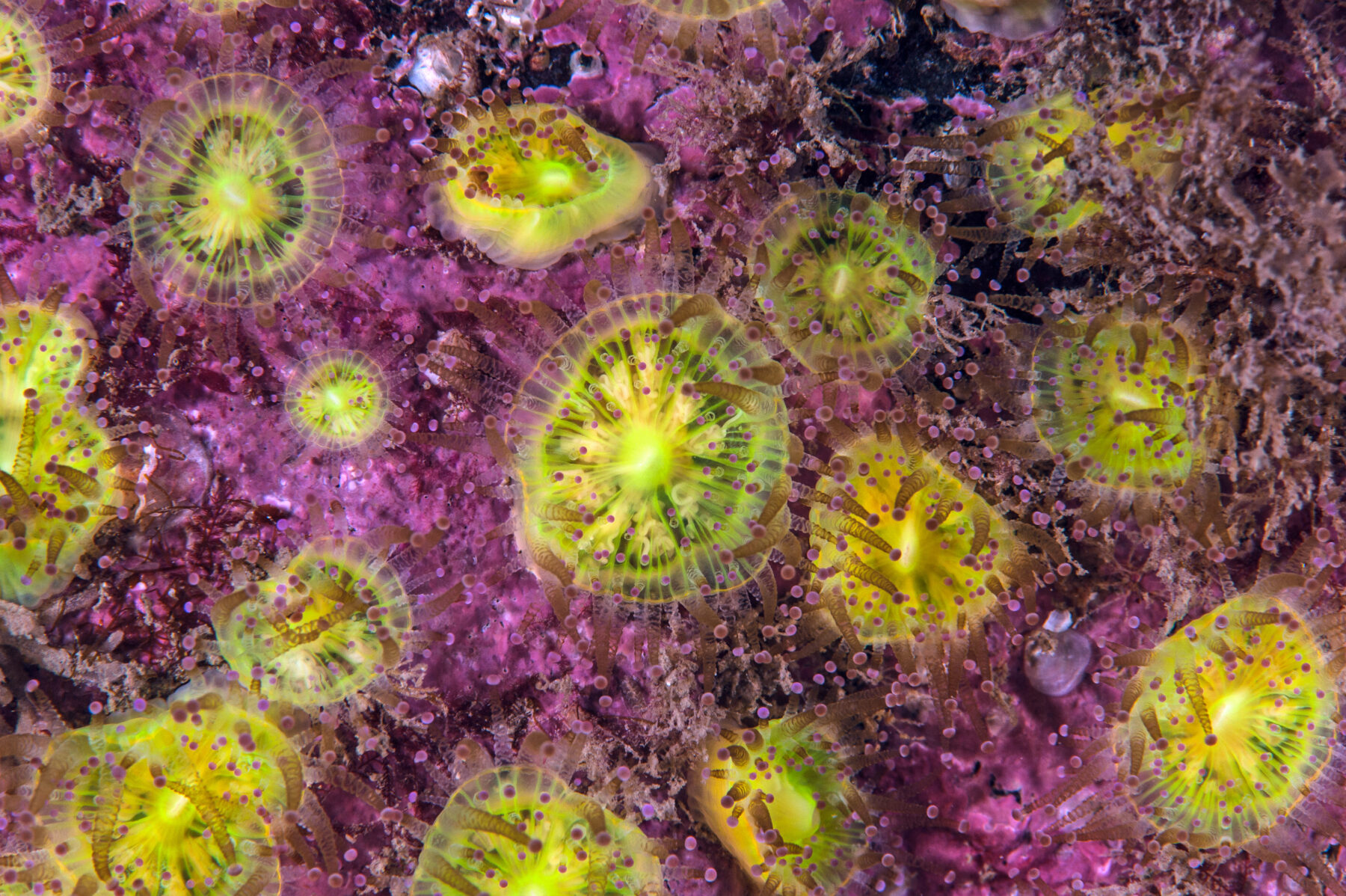
Brightly coloured jewel anemones in St. Kilda © George Stoyles & Richard Shucksmith

The swell that had rocked our night’s passage had passed and I awoke to a steady, silent boat. I reached the deck at sunrise, just as the glorious morning light hit Village Bay on Hirta, St. Kilda’s largest island. To the north, the imposing cliffs of Boreray and iconic pillars of Stac Lee and Stac an Armin rose out of the sea like primeval sentinels keeping watch over Hirta. As I absorbed this dramatic panorama of the UK’s most remote archipelago, I felt a renewed vigour. We had made it at last.

St. Kilda’s waters are designated a Special Area of Conservation (SAC) for their rocky reefs and sea caves hosting a wealth of spectacular sea life. We were part of a scientific dive team commissioned by Scottish Natural Heritage (SNH) and led by Heriot-Watt University to undertake Site Condition Monitoring around both St. Kilda and North Rona and establish whether features of SACs could maintain themselves in the future. We all knew the potential difficulties of surveying these remote islands: strong winds, large swells and cave diving. Our survey vessel, the M/V Halton, was a rugged 21-metre converted trawler skippered and owned by Bob Anderson, an experienced local operator and diver. If anyone could get us there, Bob could, but the forecast for the next week didn’t look great as we embarked from Stromness.

Heading down the dramatic west coast of Hoy to mainland Scotland, our first day goal was as far west as possible. In a moderately uncomfortable swell, weather reports soon showed that steering straight to St. Kilda was unwise, so we approached Loch Eriboll as a contingency.

Loch Eriboll

Jutting inland for almost 16 kilometres, Loch Eriboll is the largest sea loch on the north coast of Scotland. The rugged coastline supports numerous, accessible sea caves, many of which were unexplored providing a perfect opportunity to apply some survey methods. Finding a diveable cave was time-consuming, as we were dependent on the swell, tide and resulting surge. Even a small swell at the wrong tide time caused a surprising amount of surge inside the caves, making surveying incredibly difficult.

We surveyed two caves in Loch Eriboll, both beginning as large cracks in the cliff wall forming deep gullies which narrowed and ascended at around 100 metres in. Near the entrance the sunlight quickly faded. The water was beautifully clear and turning around to look back provided spectacular views to the entrance, with the steep walls rising up to the shimmering, iridescent bluegreen ripples on the surface.

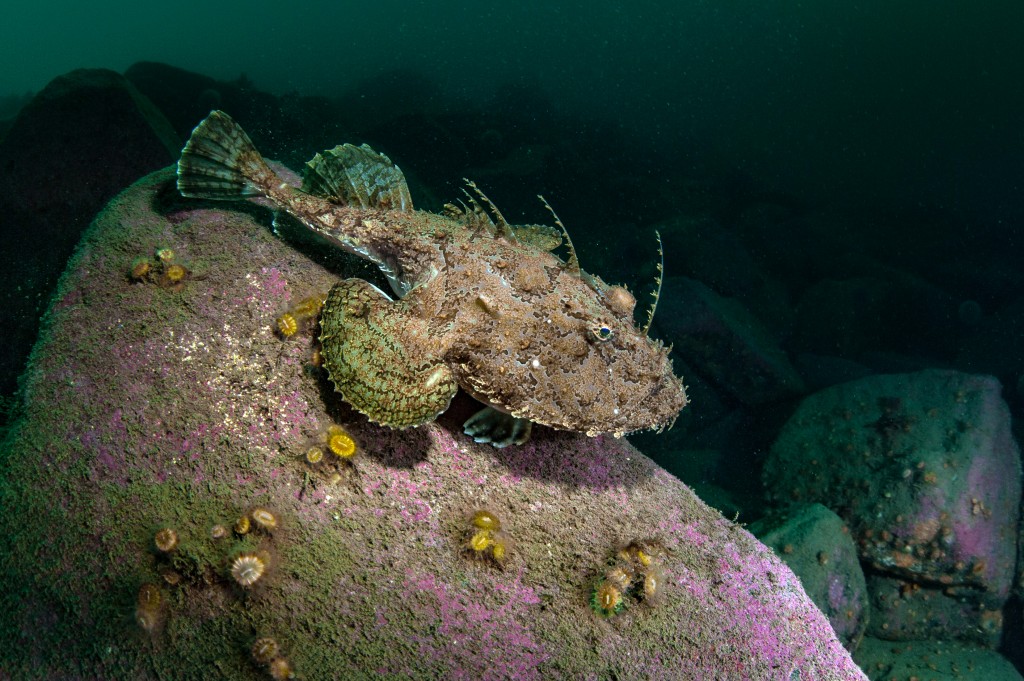
An adult monkfish rests on a rock © George Stoyles & Richard Shucksmith

Loch Laxford

Following this success we pressed on enthusiastically, still cautiously optimistic that we’d get to elusive St. Kilda that week. Meanwhile, we steamed around Cape Wrath and started down the west coast of Scotland to the next contingency location, Loch Laxford.

Loch Laxford is more a series of rocky inlets, small islands and waterways than a distinctive sea loch. This remote section of Scotland’s northwest coast has a fascinating, slightly otherworldly landscape. The sparse, seemingly inhospitable rocky peaks and outcrops give a distinct feeling of isolation, which is quite rare in the UK.

Weather reports grew worse and more than five-metre swells, created by winds far out in the Atlantic, dashed our remaining hopes of getting to St. Kilda by the end of the week, so we shifted the focus of the survey.

Rocky reefs are a designated habitat of the Loch Laxford SAC and, as such, are part of the Site Condition Monitoring programme. These incredibly diverse habitats provide shelter to corals, sponges, sea squirts, fish, crabs and lobsters. We dived along a transect line recording all marine life, estimating abundance, taking still and video images and collecting specimens. The transect started on the shore where another team conducted an intertidal survey.

The survey sites were an interesting mix of shallow kelp and slightly deeper boulders. A couple consisted of some fairly extensive maerl beds, a fascinating habitat of calcareous red seaweed which grows as unattached rounded nodules on the seabed. These are an important habitat for numerous types of marine life living amongst, or attached to, the surface of the maerl, or burrowed in the coarse gravel below the top living layer.

To read on, check out SD OCEAN PLANET “ISLANDS & LIVEABOARDS EDITION” below


website-1This article featured in SD OCEAN PLANET “Islands & Liveaboards”, text and images by George Stoyle & Richard Shucksmith
shutterstock_42695098


Ocean Defender of the Week: Cat Cassidy

0
"I love talking to guests at Scuba Junkie, people from all over the world who are passionate about the marine environment, and hopefully showing them through Scuba Junkie’s work that individual actions do matter and do make a difference – and inspire them to do likewise when they go home."

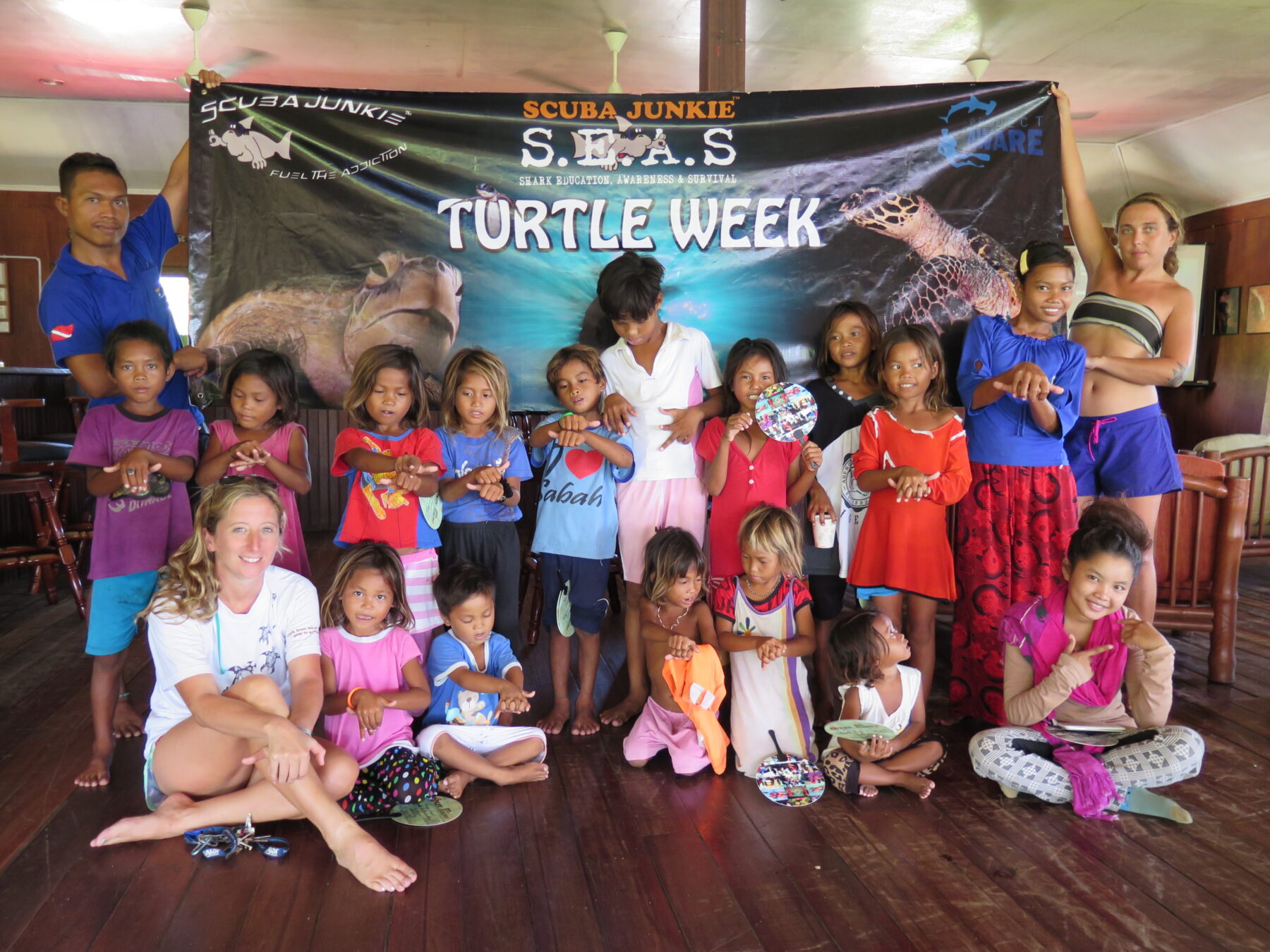
This week’s Ocean Defender, Cat Cassidy is an Environmental Officer and Divemaster for Scuba Junkie, the award-winning dive operator based in Sabah, Malaysia. Her background is in science communications, and she and her partner David McCann run the S.E.A.S. conservation arm of Scuba Junkie.

With projects such as tackling marine debris, shark conservation and turtle conservation, as well as local and international conservation outreach programmes, Cat is on the frontline for making a difference to our oceans, UW360 caught up with her for a quick Q&A:

What got you into marine biology?

"People got excited, thinking it was a shark – but myself and another guide (Wan) thought the fin looked not-quite-right for a shark. We brought the boat in [..]"
“People got excited, thinking it was a shark – but myself and another guide (Wan) thought the fin looked not-quite-right for a shark. We brought the boat in [..]”

Probably a rather odd combination of my Dad and Sir David Attenborough. Some of my earliest memories are of being on holiday, wading through rock pools with my dad telling me about the animals we found in them. He is also a scientist, and would tell me about their life-cycles and how different animals survived different tidal cycles. I was utterly fascinated – a geek from an early age, with lots of books, trying to identify everything I could find. Rather good training for being a divemaster in the Coral Triangle!

I also remember being addicted to Sir David Attenborough’s BBC series, all of them! I love the way he communicates the scientific and environmental information to audiences. I wanted to grow up and do what he does – communicate information in such a way that people are engaged and interested in the topic, and through this become passionate, and hopefully want to do more to protect the world’s different ecosystems. Communicating issues in a fun and engaging way is such a powerful tool for conservation.

What’s the hardest thing/best thing about your job?
I’m living and diving in one of the most biodiverse places on the planet, somewhere I gawped at as a child when it was shown on television. This place is geek paradise, there are just too many critters to identify and too little time.

But for me, the best thing is undoubtedly the people I get to meet. The people of Sabah are genuine, friendly and welcoming. I have also met some of the most incredibly inspiring people while working here – particularly local conservationists, such as Rhena Ismail, who founded Green Semporna, and many international marine conservationists – people who share my passion for the marine environment and conservation. I love talking to guests at Scuba Junkie, people from all over the world who are passionate about the marine environment, and hopefully showing them through Scuba Junkie’s work that individual actions do matter and do make a difference – and inspire them to do likewise when they go home.

The hardest thing for me is knowing all the problems the marine ecosystems face and seeing the repercussions further down the line – and knowing that some people out there just don’t care. For example – take marine debris. A disposable water bottle someone bought and threw away, persists in the environment for 450 years – and is one of the most common objects that we pick up on reef and beach cleans. Why can people not use reusable and refillable bottles? Particularly those in the western world, where tap water is drinkable!

I especially hate seeing marine animals trapped in human debris – for example, I have seen a juvenile whale shark entangled in fishing lines, and turtles trapped in fishing nets. When you can’t do anything to help, it is heart-breaking.

Thankfully, I’m working at one of the most supportive and forward-thinking, conservation-minded dive operators in Asia, if not in the world. I cannot over-emphasise how much I admire the owners of Scuba Junkie in their dedication to have a conservation arm (Scuba Junkie S.E.A.S.), as well as being an ethical and environmentally friendly dive operator. We are able to take action in several key areas of marine conservation – I feel like it all adds up and a real, ongoing positive difference is made.

What’s the craziest thing you’ve ever seen/discovered while on the job?
I have seen just about everything you could wish to see while diving – blue-ringed octopus (with divers who had just finished their open water course!), schooling hammerheads, schooling devil rays, tiny frogfish – I’ve been incredibly lucky.

Quite possibly the most unreal thing that has happened when diving is rescuing a stranded juvenile sunfish (Mola mola) in the shallows around Pulau Mabul. We were on a boat heading back from a dive and noticed what looked like a dorsal fin in the shallows. People got excited, thinking it was a shark – but myself and another guide (Wan) thought the fin looked not-quite-right for a shark. We brought the boat in, and discovered it was a juvenile sunfish (disc size only about 1-1.5m) stuck sideways in the shallows, unable to swim as the anal fin was bent on top of the coral and the dorsal fin was out of the water. The sunfish had also obviously damaged one side of its body on the coral – there were loads of horrible cuts and welts.  I was very proud of how people on the boat reacted – we wanted to help it, rather than just take photos and gawp, and everyone jumped into action. Our guests got in the water as snorkellers – who formed a chain in the shallows – and herded the sunfish out into deeper water, while Wan and myself donned scuba gear and got in beside it, lifting the damaged body and anal fin off the coral and orientating it as best we could back out to sea… gently keeping the body and fin off the coral (and gaining some scratches and cuts ourselves). It took ages, but we managed to get it to the edge of the reef and back out into deeper water, where we watched it swim off.

That was a great moment. We also heard the next day that another company had spotted a sunfish off the south reef of Kapalai (a nearby island) heading out into the deeper waters of the Celebes Sea. I really hope it was the same one. Rescuing an animal is always amazing – but although we have seen sunfish in this region, we are not known for it as they prefer deep cold waters. So this was really a unique moment – especially as I’d travelled to Bali the year before specifically to see them.

But it’s those personal moments with divers that make things memorable – for example, a diver who had a bad boat accident the previous year crying underwater when she saw a school of hammerhead sharks – because seeing one was top of her bucket list after the accident. Having a diver who is scared of sharks realise that they are not the monsters the media makes them out to be, even if you have to hold her hand throughout the first dive. Quite possibly the craziest thing that has happened underwater was with two people, guests to Scuba Junkie who have become firm friends. While diving, the husband and I saw a devil ray, and waved frantically to his wife to get her attention in seeing the ray. But she was engrossed in videoing a batfish, and missed it. Although the devil ray could clearly be seen in the batfish video…!

What do you hope to achieve through your work?
I would love to instil a curiosity and love for the marine environment in people through my passion for diving, conservation and marine life. I would love to pass on my “geek” bug to more people, inspiring them to get involved in conservation issues.  

I would like to see the dive industry step forward and take
a role and responsibility for marine conservation. The dive industry has such a unique position to effect real change in marine conservation, and be a powerful force for positive change.

"I would love to instil a curiosity and love for the marine environment in people through my passion for diving, conservation and marine life."
“I would love to instil a curiosity and love for the marine environment in people through my passion for diving, conservation and marine life.”

Who is your marine biology role model?
I’m torn between Sir David Attenborough and Dr Sylvia Earle. I’ve been such a fan of Sir David for years – one of my deepest frustrations is that I know so many people who have met him, yet I never have! However, Sylvia Earle is such a strong female role model and pioneer in marine biology, particularly given the disadvantages women faced for a career in science in the past. She has done so much for marine biology, and for women scientists, that I think I’d choose her.

What do you think lies ahead for marine ecosystems?
A lot of challenges, and none of them easy. If we continue to treat our land, water and air as we do, the future does not look good for any of our ecosystems. It can be seen as a gloomy outlook – there are so many threats, and a lot of people are not aware of the issues, or think they are unable to do anything about it. As gloomy as it can appear, we must be positive and keep working. If we just focus on the negatives, nothing will change. We must stop overfishing, and do something to stop the sheer mass of plastics that are contaminating our oceans.

Every little thing a person does to alleviate these challenges makes a difference. If we make people more aware of the importance of our oceans, and encourage them to adopt small behavioural changes, together we can all make a difference.

I believe that divers are a strong voice for ocean conservation, and I see more and more positive action being taken by divers – either by spreading awareness of marine issues, or by small local actions such as reef cleans. This, and meeting people who take the conservation message home with them, fills me with hope.

What can the average person do to help protect life in the oceans?
Don’t eat unsustainable seafood, and cut down on your use of plastic – have a reusable water bottle and a reusable coffee cup. That’s two really simple things that will make a lot of difference.

For divers, please dive with responsible operators and dive in a responsible manner – take only photos, leave only bubbles. Help in a beach clean or do a Dive Against Debris on your next dive holiday.

Underwater Photographer of the Week: Mike Veitch

0
“After the photo pro became the captain, I quickly volunteered to take over his job and was thrown straight into the deep end – a photo pro who had never taken an underwater photo before!” © Mike Veitch

Canadian-born Mike Veitch is a professional underwater photographer and has been living in the Indo-Pacific since the late nineties. Starting his full-time diving life in Palau in 1999, he has since worked in Fiji, French Polynesia, Yap, and Indonesia, with many travels in between.

Now based in Bali, Mike is the co-founder of The Underwater Tribe, a dive centre specialising in custom dive safaris on the island. With a passion for teaching others the art of underwater photography, Mike is also the creator of the Bali Academy of Underwater Photography, a dedicated underwater photography instruction centre in, as Mike put it, “the world’s best classroom”. UW360 interviewed Mike to find out more about his life and his work:

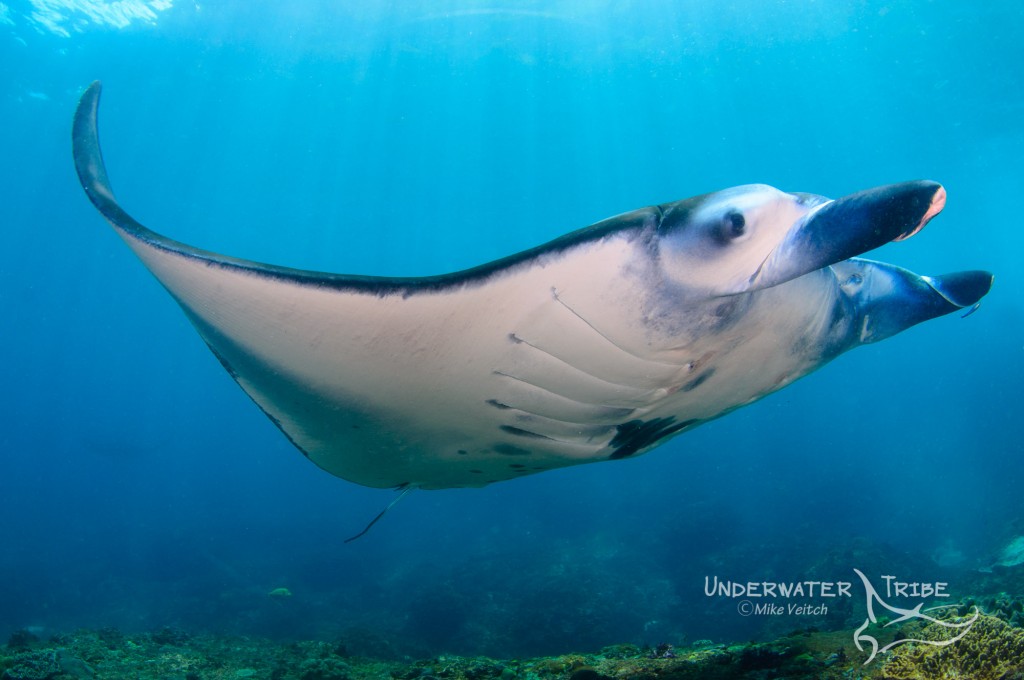
Cleaning Manta Ray

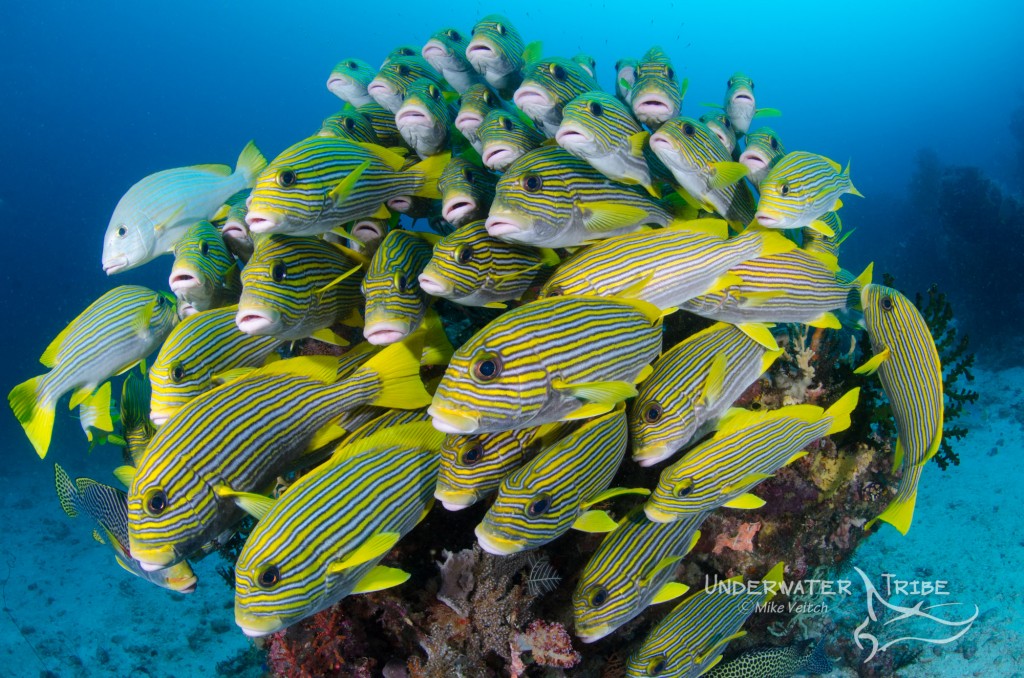
Schooling Sweetlips
“I often watched as camera-toting guests acted like excited kids on Christmas morning when they received their roll of developed film from the photo pro. Of course, that made me want to try my hand at it to see what the excitement was all about!” © Mike Veitch

What made you want to become an underwater photographer?
During my first job as a guide/instructor on a liveaboard in Palau, I often watched as camera-toting guests acted like excited kids on Christmas morning when they received their roll of developed film from the photo pro. Of course, that made me want to try my hand at it to see what the excitement was all about! After the photo pro became the captain, I quickly volunteered to take over his job and was thrown straight into the deep end – a photo pro who had never taken an underwater photo before!

Your first underwater shot?
Some random guest for the weekly slideshow on the liveaboard. I am sure there was plenty of backscatter.

The story behind your most memorable underwater shot?
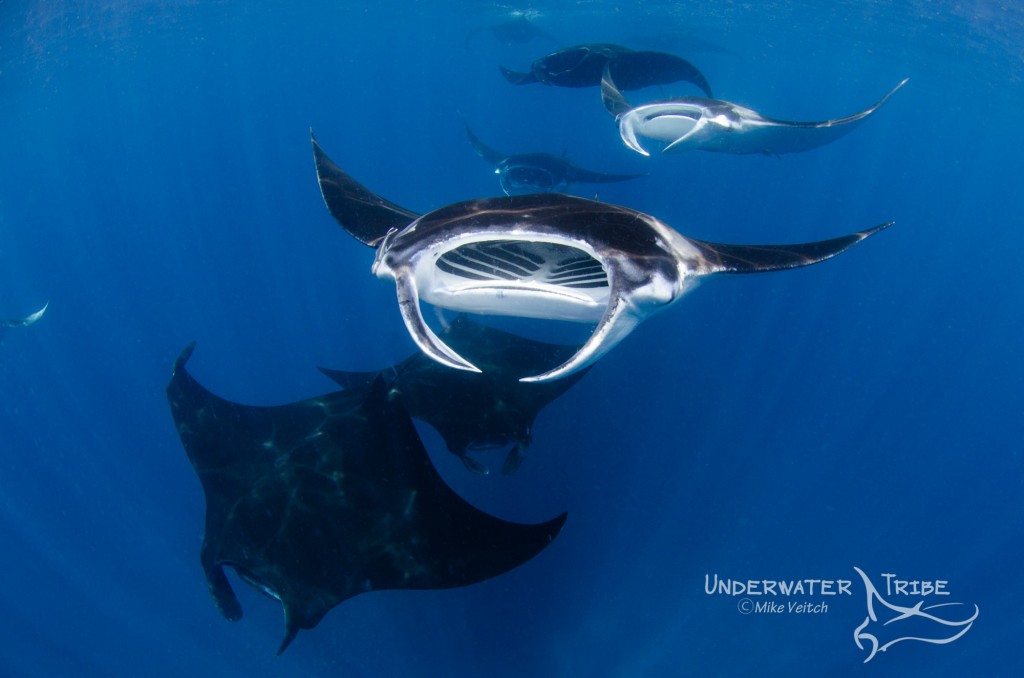
I was sitting on a tender boat in Raja Ampat waiting for our guests as they were socialising after a dive, not ready to head back to the mother ship. I looked up to see some mantas splashing in the near distance and decided to sneak in for a quick snorkel with my camera. Lo and behold, as I approached the mantas I saw it was more than just a few – more like 30-plus individuals in what can only be termed a feeding frenzy! I didn’t want to tell the guests about it but knew they would not be happy if I didn’t!

Feeding Manta Rays

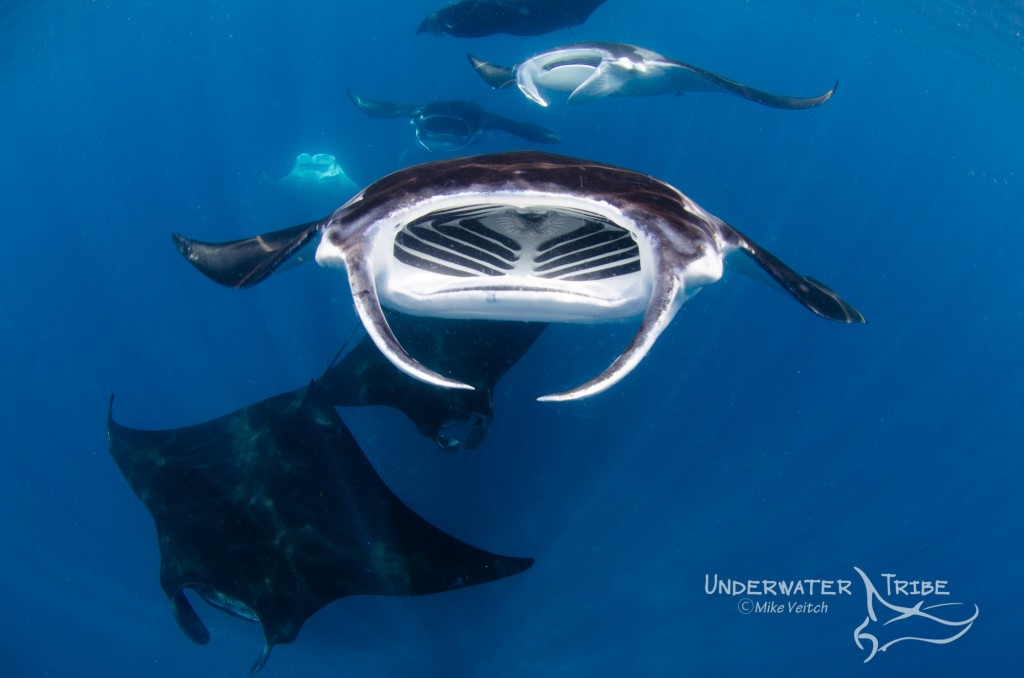
Feeding Manta Rays
“Lo and behold, as I approached the mantas I saw it was more than just a few – more like 30-plus individuals in what can only be termed a feeding frenzy!” © Mike Veitch
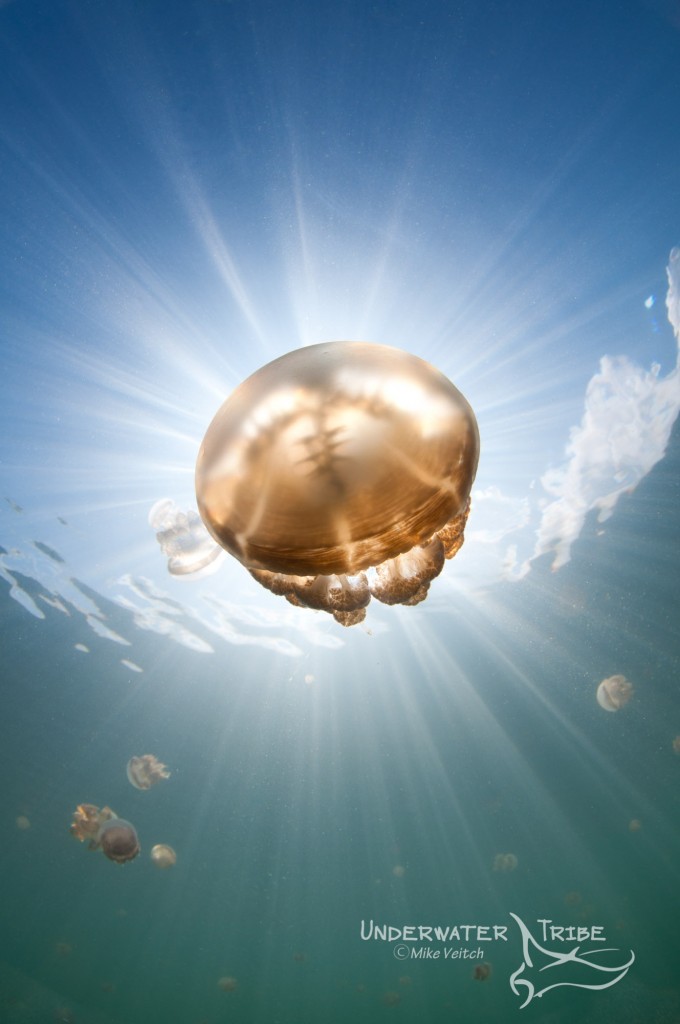
Jellyfish and Sunbeams
“Respect the environment and the creatures under the sea. No photo is worth damaging the environment.” © Mike Veitch

Where is your favourite dive destination?
Raja Ampat, Indonesia. There is so much variety there and I am always excited for every dive that I do, no matter how many times I have done it before.

The site you’d most like to dive, but never have?
Not really a site in particular, but I would love to spend time with the humpback whales in Tonga.

The weirdest thing you’ve seen underwater?
Not involving people doing dumb things? That is a tough one! Actually, it’s not so tough. I have spent a lot of time diving in Ambon underneath local longline fishing boats, and the number of different animal carcasses I have discovered on the sea floor can be rather astounding at times! Variety is the spice of life as they say…

What camera equipment are you currently using?
A Nikon D7200 with Nauticam housing, FIX Neo lights, and Sea and Sea strobes.

What is the highlight of your career?
Winning the “World in Our Hands” category of the BBC Wildlife Photographer of the Year competition [in 2013] and attending the awards ceremony in London.

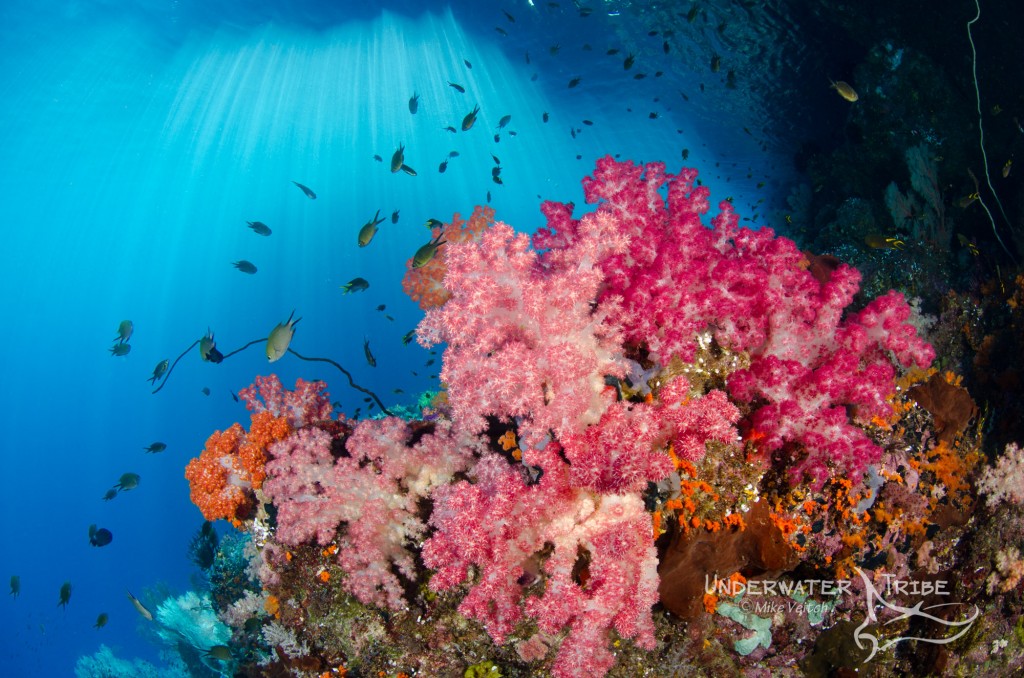
Soft Corals Under Island

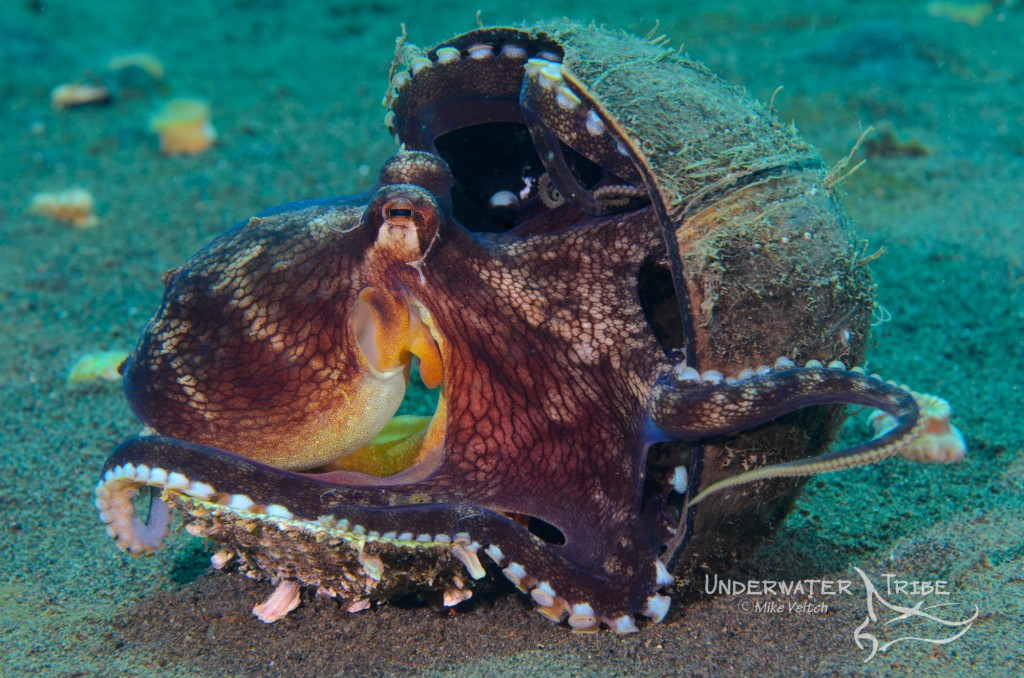
Coconut Octopus
“I have spent a lot of time diving in Ambon underneath local longline fishing boats, and the number of different animal carcasses I have discovered on the sea floor can be rather astounding at times!” © Mike Veitch

…And the low point?
Descending on a dive site in a protected national park and seeing the incredible damage from dynamite fishermen, who had destroyed a large coral head and killed thousands of fish just moments before.

Have you any advice that you’d like to give aspiring underwater photographers?
Easy. Please, please, please, perfect your buoyancy before attempting to take photos underwater! Also, respect the environment and the creatures under the sea. No photo is worth damaging the environment to “get the shot”, no matter how many “Likes” it receives on social media.

Is there any particular shot that you still want to get?
No particular shots, but rather encounters that I would love to experience: any and all whale species, tiger sharks, white sharks, and any other adrenaline inducing large marine life encounters.

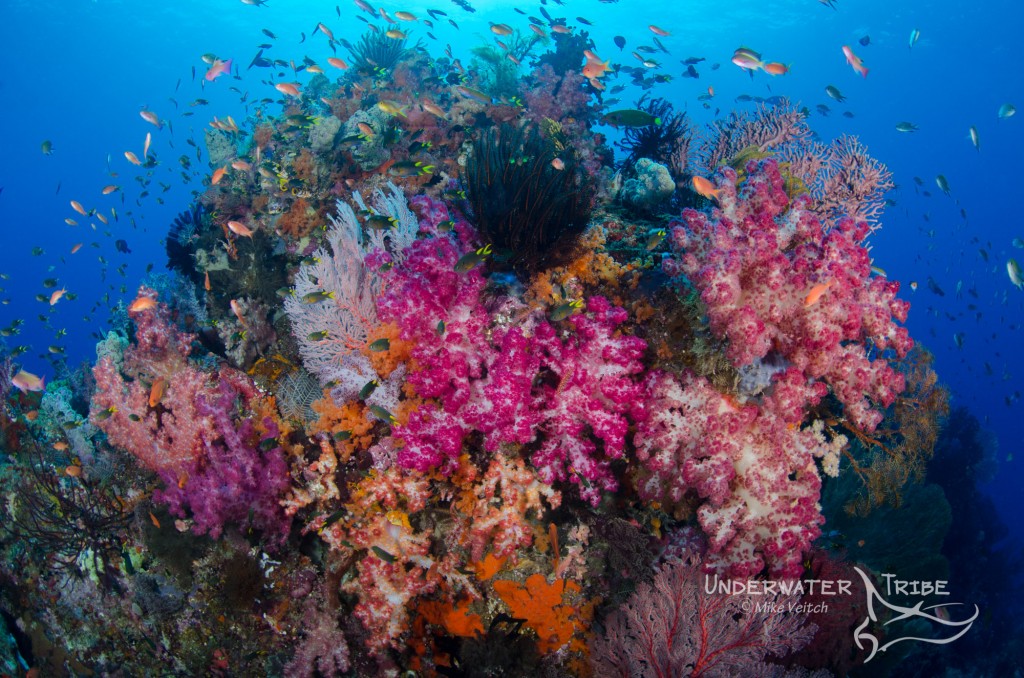
Soft Coral Covered Reef

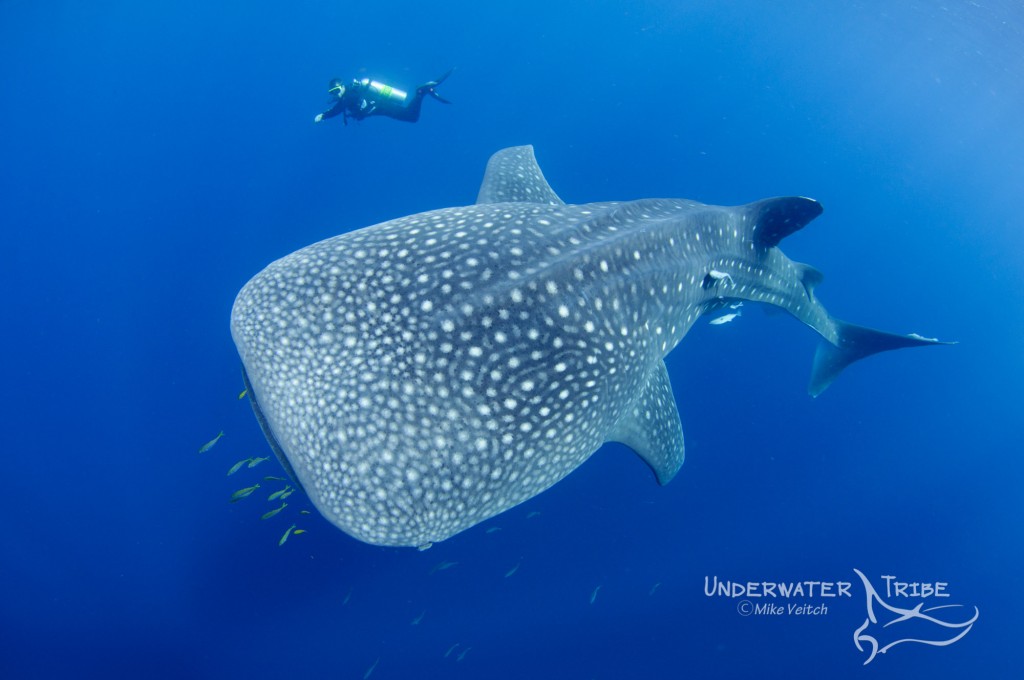
Rhincodon typus, Cendrawasih Bay, Papua Province, Indonesia, Pacific Ocean
“Encounters that I would love to experience: any and all whale species, tiger sharks, white sharks, and any other adrenaline inducing large marine life encounters.” © Mike Veitch

For more of Mike’s work click here, and check out the Bali Academy of Underwater Photography here.

Research Vessel Finds Deep-Sea Volcanoes Full of Absurd Life and Obscure Coral

0

It appears that rare deep-sea creature finds are becoming a common headline on ocean news feeds and Live Science updates – finally, ocean exploration is starting to shine a light on what creatures thrive in the dark depths of the sea. But with so many discoveries, there are bound to be huge surprises. Surprises that could change the way we view ocean ecosystems, forever.

Scientists recently descended deep into the waters of Hawaii to explore underwater mountain ranges of dormant and active volcanoes, what they found was truly remarkable. Creatures behaving completely different to how they should, complex ecosystems hosting life forms living side-by-side that they believed couldn’t co-exist, and species of coral that could be new to science. The latter find being one that nobody expected – such an ecosystem to exist in the dim, cold, and mysterious mesophotic coral zone.

A brittle star clings to a purple plexaurid coral that is one of two species discovered on Cook seamount that could be new to science. September 6, 2016. © Conservation International

Exploring these underwater seamounts, which had peaks rising over 3,000 metres above the seafloor, Conservation International (CI) researchers wanted to find what life could reside in such a harsh environment.

“CI wanted to turn its focus to the deep sea – a vast, lesser-known area that we think is critical for better understanding ocean productivity,” Dr. Greg Stone, the executive vice president and marine biologist for CI, told UW360. “Much of the deep sea is so hostile to life people compare it to the desert, however seamounts are these diverse, vibrant, and mostly unknown ecosystems.”

Seamounts are undersea mountains formed by volcanic activity, scientists believe they’re unexplored goldmines in terms of biological richness. They’re extremely important for the ocean ecosystem, due to their effect on ocean currents and steep slopes that carry nutrients upwards from the depths of the oceans and provide food for creatures ranging from corals to fish crustaceans. These extinct or active submarine volcanoes typically rise to at least 3,000 metres from the seafloor in a conical shape and never reach the surface. Still much research is being carried out on the number of seamounts in the global oceans, but new estimates suggest that, taken together, they could encompass around 28.8 million square kilometres of the Earth’s surface – larger than any stretch of desert, tundra, or land-based global habitat on the planet. Even today, with our advanced technology systems and satellite mapping, the significance of seamounts, their ecological function, biodiversity, and relationship to humans is poorly understood.

One of the main aims was to discover how different one seamount could be from another in regards to ecosystem and life: To test this out, during the dives the scientists visited the McCall Seamount, the Lōʻihi Seamount and the Cook Seamount.

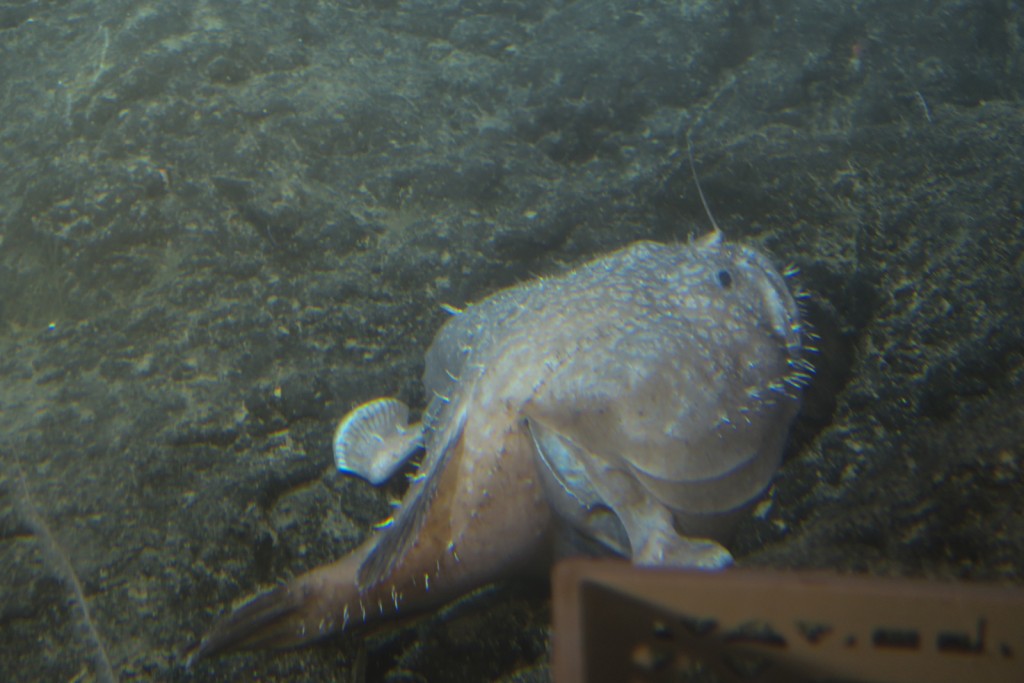
A goosefish rests on the the rocky bottom at Cook seamount. Shot from Pisces IV on Cook Seamount on September 6, 2016. © Conservation International

“Cook and McCall seamounts, as part of the geologist chain share many common features including their geology and many species of corals, but they are each unique, especially because each seamount ecosystem has evolved in semi-isolation from one another, relying upon currents to cross populate each site with non-pelagic species.” Stated Dr. Stone.

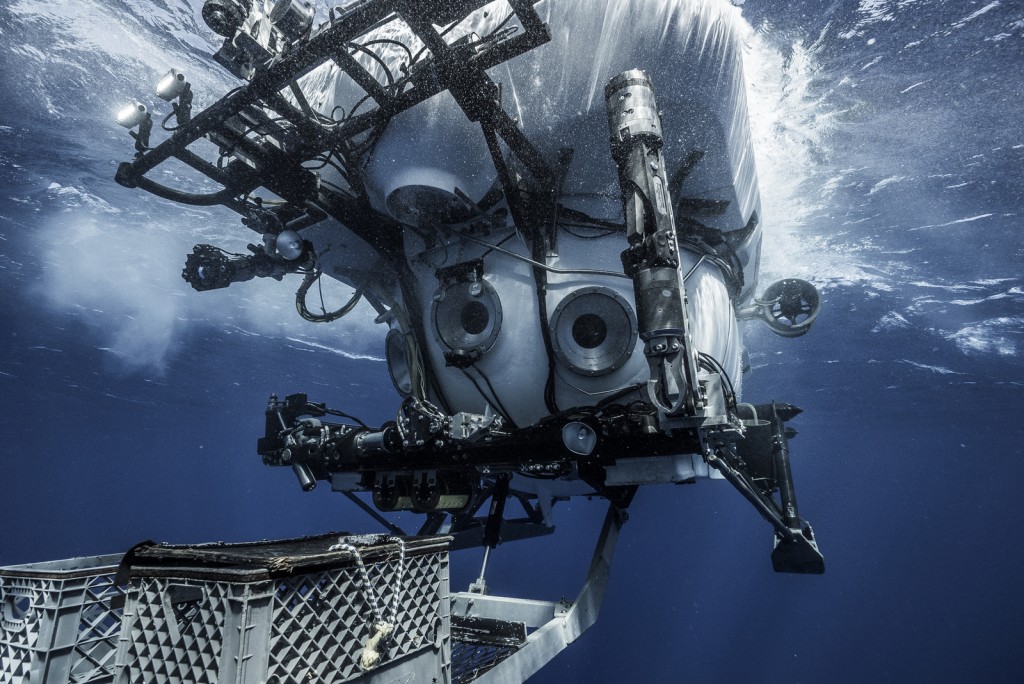
These deep sea expeditions require manned submersibles to dive deep into the ocean, in harsh conditions, to come face-to-face with unique organisms. It’s a common wonder for the recreational diver or ocean enthusiast on what it feels like to be so deep in these research vessels.

“The first thing you notice on dives like these is actually all of the bioluminescent plankton that you see on the descent. It just floats past the portholes as we dive. It’s stunning to stare into a dark abyss and see a light show. Once you land on the bottom and turn on the lights, the first thing you notice is the alien seafloorscape. From the craggy ravine rock bottom of Cook and McCall seamounts to the extreme conditions of Lō’ihi’s hydrothermal vents and volcanic activity, you feel like you have traveled to another planet.”

Pilot of the Pisces V, Terry Kerby, maneuvering the submersible on McCall seamount. Shot from the Pisces V on McCall seamount on September 7, 2016. © Conservation International

Incredibly, during the dives, the team observed seamounts that supported robust and diverse ecosystems.

“Across all the dives, we saw a multitude of gorgonian (fan) coral, as well as several dozen eels, kitefin sharks, dumbo octopuses and a Pacific Sleeper Shark.

“[Our most surprising find] was on the first day of diving. We came across at least one – and possibly two – species of coral that could be new to science. That is always an exciting discovery. The other thing that was surprising, observing kitefin sharks in groups when they visited our bait stations. This particular species of shark lives a predominantly solitary life and it was surprising to see so many of them at the same time.”


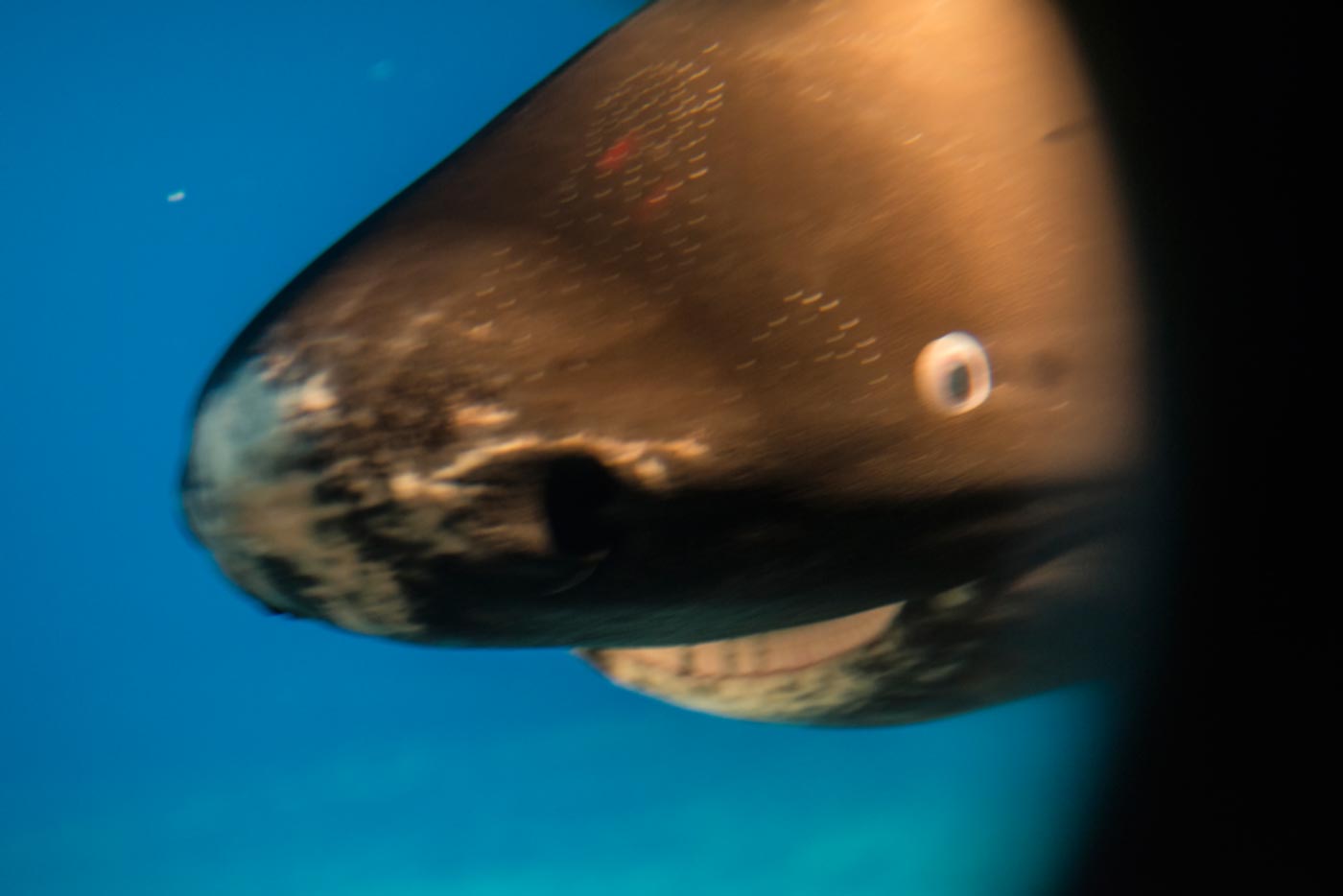
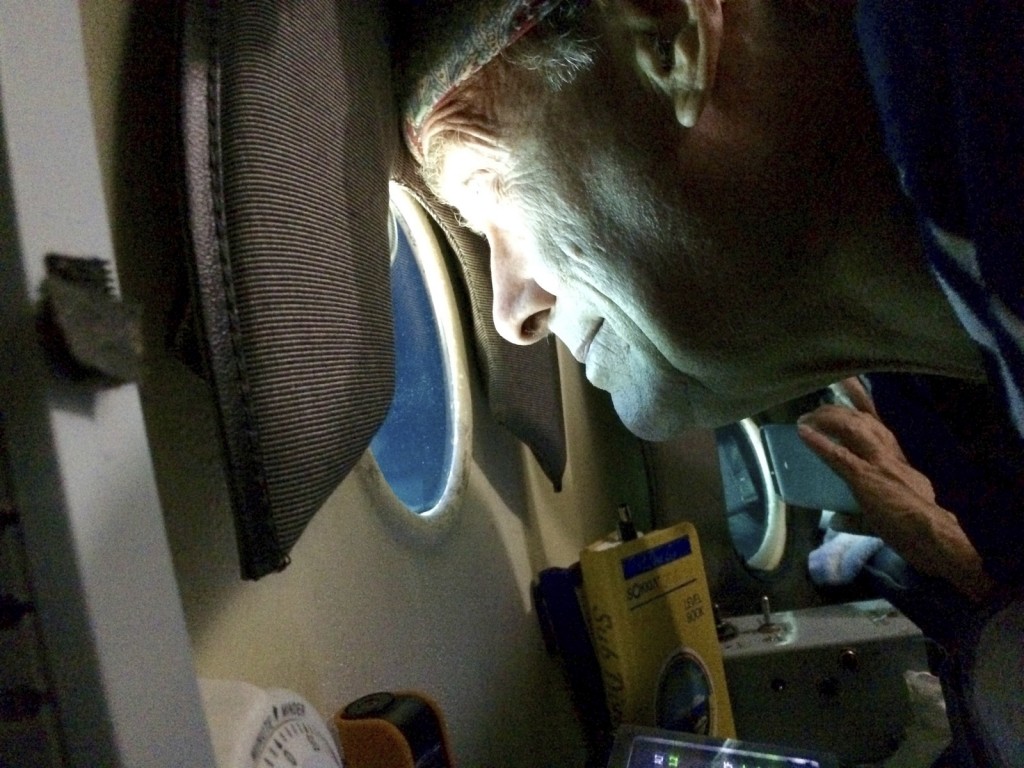
Perhaps one of the most incredible moments from the project was the reaction of a seemingly overwhelmed scientist as a Pacific Sleeper shark glided right up to the vessel’s window.

“That was an enthralling moment. We had been hoping to observe deep sea sharks and that Pacific Sleeper shark glided right up to the window of the Pisces V, which I was inside, and looked right back at us as if he was just as curious as we were. It’s astounding that large sharks can exist in an inhospitable habitat where food can be so hard to come by.” Dr. Stone recalled.

Experience some of the incredible finds that the researchers discovered © Conservation International


To capture this incredible footage, and aid in the research, the team had high definition cameras and even a 4K camera mounted on both of the submersibles. The submersibles themselves were the most special of the equipment used.

“They are essentially spaceships for exploring the inner space of our planet. Though they were designed in the 1970s, based on technology and concepts learned from the space program, they have had substantial updates and were each technological marvels.”

Launch of the Pisce s IV from RV Ka’Imikai-O-Kanaloa to dive on the McCall seamount on September 7, 2016. © Conservation International
Launch of the Pisces IV from RV Ka’Imikai-O-Kanaloa to dive on the McCall seamount on September 7, 2016. © Conservation International

What the discoveries showed was the need for an increase in the scientific understanding of the deep lying ecosystems at the depths of the ocean, these surprising finds – including the new coral species – will help develop an idea of how the world’s oceans may function.

“Our comprehensive scientific study of our findings remains pending, however on the broadest scale, the outcomes of this exploration will inform important, real-time issues in the high seas, including increasing scientific understanding about the ecological function of seamounts, national and international policy relating to marine issues, and, quite importantly, the future of seamount conservation.”

Dr. Stone and his team are looking to begin exploring more seamounts across the Pacific over the coming decade.

“The future outcomes of this exploration will help build our knowledge of ocean processes around seamounts and beyond, making seamounts an exciting new frontier for ocean conservation and research.”

OZTek2017 Has Grown and is Relocating to Darling Harbour

0

Playing a key role in creating awareness of new techniques and technologies that transform and push the boundaries of underwater knowledge, OZTek is a major international event and is part of the Beyond Ocean Network group (BON). The incredible BON unites the big boys of Asia Pacific’s diving industry and brings together the companies that organise the region’s best ocean-based events.

Through collaborative marketing and exclusive discounts, BON partners support each other and all share a commitment to supporting sustainable conservation projects. Through their collaboration, BON members use their marketing powers to highlight ocean concerns and promote worldwide marine conservation projects. It was created to grow and unite the scuba and watersports adventure industries.

We bring you the latest news that OZTek2017 has moved to incorporate its growing amount of speakers and exhibitors.


Press Release

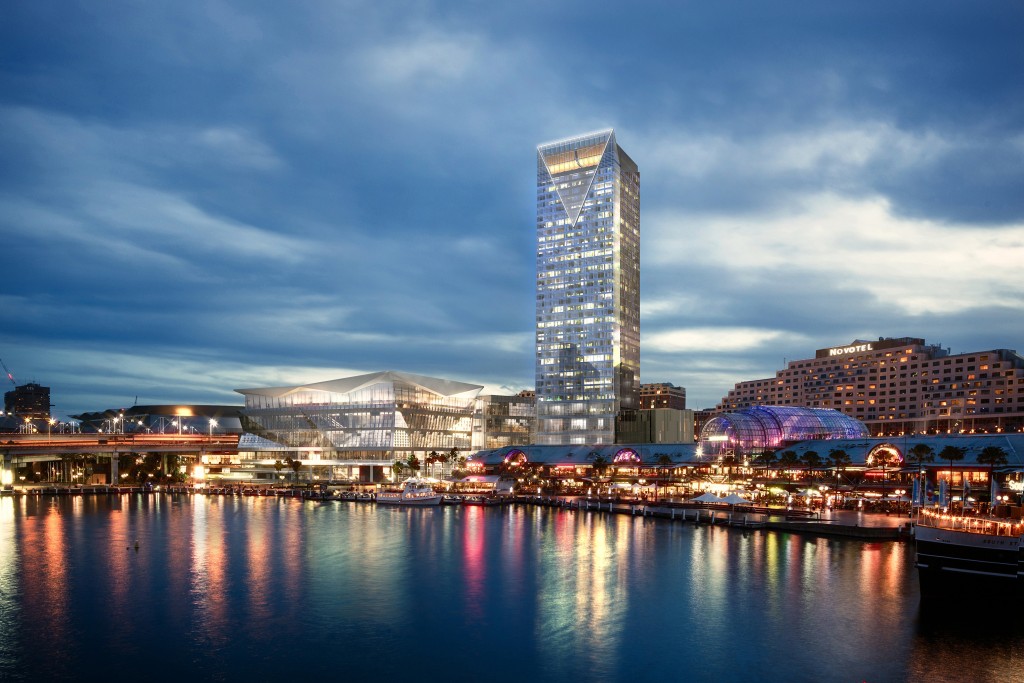
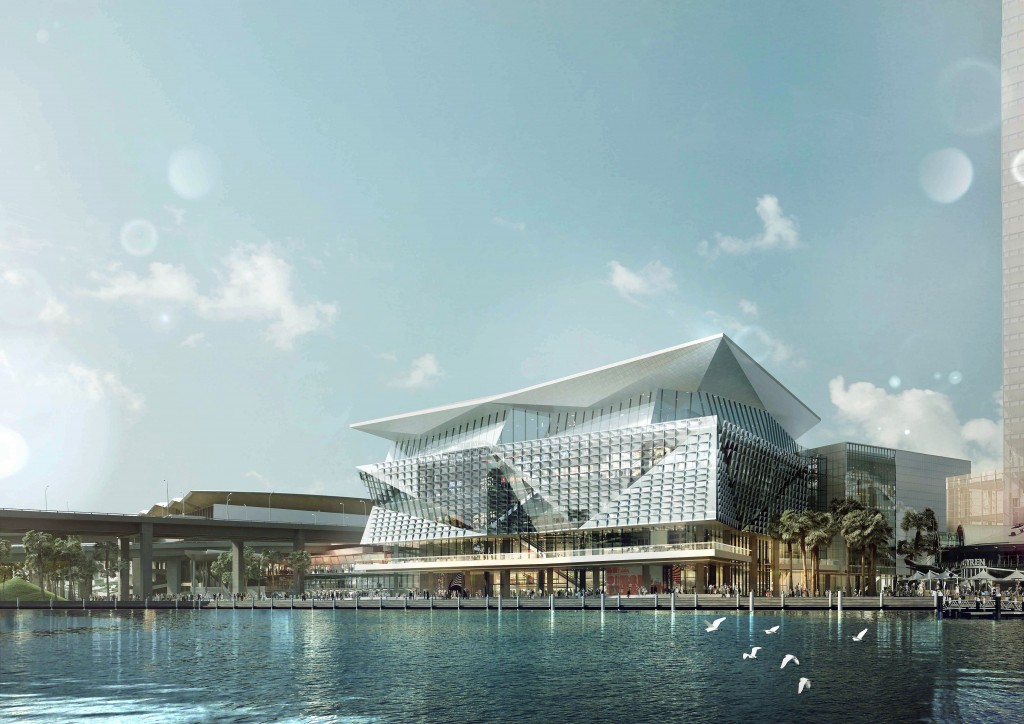
OZTek again breaks new ground with a new home, more exhibitors and more speakers than ever before. With the relocation to the fantastic new exhibition centre at the International Convention Centre, Darling Harbour (ICC Sydney), OZTek cements itself as the premier event for all things diving related.

Technical, photographic and advanced diving topics will be presented along with the industry’s best suppliers exhibiting the latest in diving equipment, travel and training. The OZTek conference and exhibition is the “must see” event in 2017.

icc_darling_harbour_night-2

The show will open on March 18/19, 2017 in Hall 1, ICC Exhibition Centre Darling Harbour. Our custom-built main theatre is located right on the exhibition floor, along with the workshop areas, and these, coupled with the additional conference rooms directly above, ensure plenty of interaction between attendees and exhibitors.

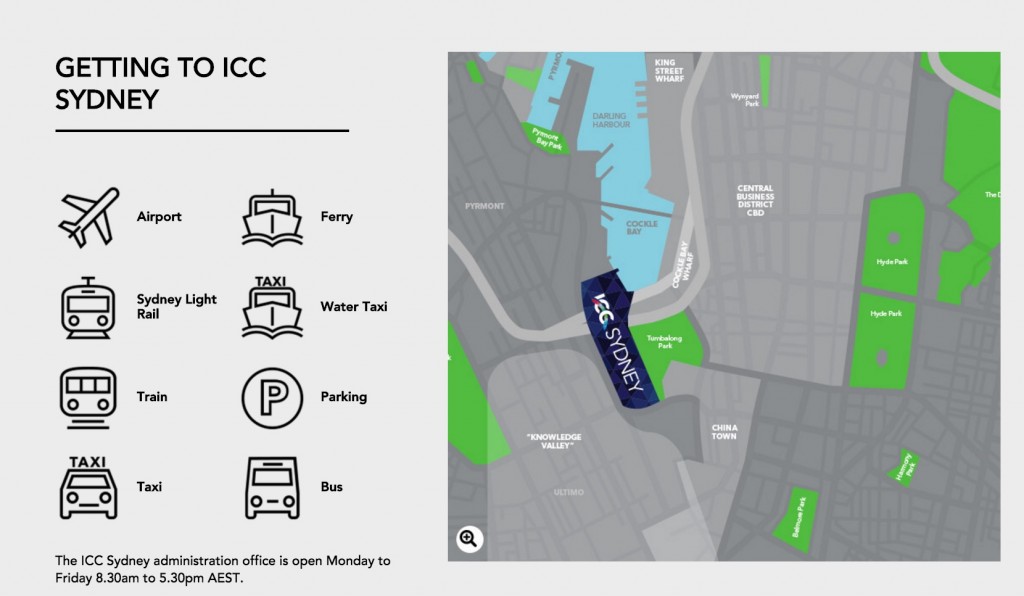
Located at the heart of Sydney’s Darling Harbour and entertainment area, our new address is easier to find, easier to get to by car or public transport, with the new Goods Line walk taking you on a 10-minute scenic walk from the ICC directly to Central station, without crossing a road! Check out more information on the venue here: http://www.oztek.com.au/The-Venue.

gettin-to-icc-sydney-1

After two years of complete re-design and re-build, the ICC proudly opens its doors in late December, making OZTek one of the first premier events held at the new facility. For more information about this superb location, visit http://www.iccsydney.com.au/.

Inspired by our new home, bigger facilities and ease of access, expect more awesome presentations from incredible, inspiring speakers, sharing their adventures and experiences. www.oztek.com.au/The-Speakers

An impressive, growing list of Exhibitors bringing new innovations, new ideas, new destinations (or destinations not yet visited) plus all the latest in dive equipment, training, travel and photography will provide interest for all levels of divers. More info here:  www.oztek.com.au/OZTek2017-Exhibitors.

icc_sydney_darling_harbour

Plus, with the additional space, enjoy more glorious Underwater Images and for the first time, George’s Cameras Image Centre will be holding complementary photographic technical workshops.

Our own OZTek Photographic Exhibition will showcase the latest in up-and-coming talent for underwater imagery. Meet the competition winners at the show and visit the inaugural Nikon Dive Portfolio of the Year. Find out more:

AND, finally, to top off what will be a brilliant weekend, the unmissable OZTek Gala Dinner Awards night. A ticketed event including a magnificent meal, unlimited beers, wines and soft drinks, guest speakers and the presentation of the OZTek2017 Awards.  Relax, socialise and unwind –  the perfect finish to a memorable weekend.

When? March 18-19, 2017

Where? Hall 1 Exhibition Centre, ICC Sydney, Darling Harbour.

For up-to-the minute information go to: www.oztek.com.au or contact the organiser, Sue Crowe at info@diveoztek.com.au


BEYOND OCEAN NETWORK EVENT PARTNERS


adex-2017waterplay-logo   April 7 – 10, 2017
  Asia Dive Expo (ADEX) Singapore
  www.adex.asia
  Organised by the Underwater360 group, Asia Dive Expo (ADEX) is the longest and biggest dive expo in Asia featuring irresistible dive deals (gear, resorts) as well as engaging talks and programmes focusing on marine conservation, underwater photography and videography, and plenty more.
     
  May 12 – 15, 2016
  Thailand Dive Expo (TDEX)
  www.thailanddiveexpo.com
  Organised by the N.C.C. Exhibition Organizer Co., Ltd. and supported by the Tourism Authority of Thailand, the Thailand Dive Expo (TDEX) aims to highlight the nation’s pristine dive destinations alongside the hundreds of scuba-related offers by the industry’s leading and up-and-coming brands. 
     
  August 10 – 13, 2016
  International Pacific Marine Educators Network Conference 2016
  www.ipmen.net/ipmen-indonesia-2016
  Marine educators from across the Pacific will gather in Manado (and elsewhere via web-conferencing) in August 2016 to exchange knowledge, experiences and ideas to improve the quality and effectiveness of teaching about the marine environment, conservation, resources and human impacts.
     
  September 7 – 10, 2017
  Asia Dive Expo (ADEX) China
  www.adexchina.cn | www.bidsid.com
  ADEX China – China’s leading dive trade show – aims to gather all diving enthusiasts, from industry leaders to leisure divers.
     
  February 2 – 5, 2017
  Moscow Dive Show
  www.moscowdiveshow.ru
  Tech diving, freediving, spearfishing, underwater photography and videography, dive resorts, liveaboards, scuba gear – Russia’s biggest dive event, the Moscow Dive Show, is a must-attend for all ocean lovers and water sports fans. 
     
  March 18 – 19, 2017
  OzTek Dive Conference and Exhibition
  www.oztek.com.au
  A major international event highlighting the adventure & excitement inherent in diving. OZTeK plays a key role in creating awareness of new techniques & technologies which transform & push back the boundaries of underwater knowledge.
     
  2017
  DEEP Indonesia
  www.deepandextremeindonesia.com
  Visit DEEP Indonesia to find out more about Indonesia’s countless dive destinations and enjoy great deals on equipment, gear, and dive trips. The show is held simultaneously with EXTREME Indonesia, a major adventure sports event.